
Mahjong vs Scrabble: How Two Tile Games Compare
Last updated: Nov 23, 2026
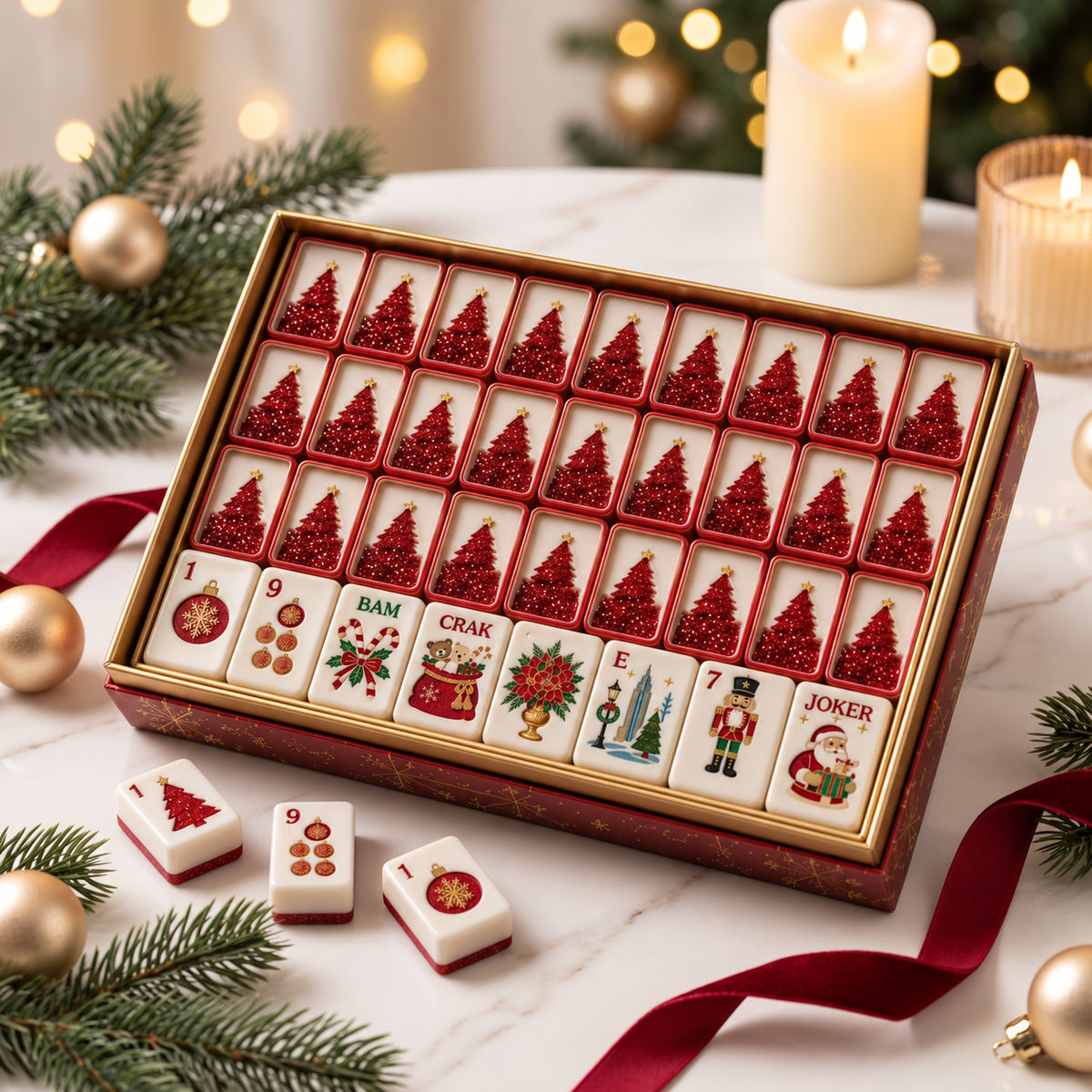
Mahjong and Scrabble are both classic tile games played with 2–4 people, but they're fundamentally different in how you play, think, and win. Scrabble is a word-building game where players score points by placing letter tiles on a board to form interlocking words; a standard set contains 100 letter tiles, racks, a board, and a dictionary reference. Mahjong (American, the most common English variant) is a hand-building game where players draw and discard tiles from three suits—Bams, Craks, and Dots—plus winds, dragons, flowers, and jokers; a 160-tile set gives you the 152 playing tiles needed plus extras. Scrabble rewards vocabulary and board vision; mahjong rewards pattern recognition, memory, and luck of the draw. Both require strategy, but mahjong demands you memorize winning patterns from an annual card, while Scrabble lets you use any words in a shared dictionary. Game length differs too: a Scrabble round typically runs 45–60 minutes, while an American mahjong hand takes 15–25 minutes. Neither game favors complete beginners equally—Scrabble has a lower entry barrier, while mahjong takes 2–3 hours to grasp pattern-reading and joker use.
Do mahjong and Scrabble use the same tiles?
No. Scrabble uses 100 letter tiles (A–Z, blank wildcards) placed on a 15×15 board; each letter has a point value and specific placement rules on premium squares. American mahjong uses 152 playing tiles divided into three numbered suits (Bams, Craks, Dots, each 1–9), 16 wind tiles (four each: North, East, West, South), 12 dragon tiles (Red, Green, White), 8 flower tiles, and 8 jokers. Scrabble tiles sit in individual racks; mahjong tiles stand in racks or are held in your hand and must be kept hidden from other players until they're played or exposed in groups (called pungs, kongs, or melds). Mahjong tiles are permanent—the same set plays indefinitely; Scrabble sets can wear letters off tiles.

Which game teaches you more strategy?
Both demand strategy, but differently. Scrabble rewards vocabulary breadth, spatial reasoning, and tactical board control: high-value letters (Q, Z, X) earn extra points, and premium squares multiply your score. You must plan which words block opponents' triple-word squares. Mahjong strategy revolves around hidden information: you can't see what tiles others hold, so you must infer their hands from their discards, memorize winning patterns from the annual National Mah Jongg League card, and decide when to call (claim) a discarded tile or wait. Mahjong has no public board—it's entirely mental and card-based. Scrabble beginners can win by knowing a few high-scoring words; mahjong beginners often lose until they've learned 20–30 patterns from the current year's card. Scrabble strategy can be self-taught in a weekend; mahjong strategy takes weeks of play. If you love planning ahead and spatial puzzles, Scrabble wins. If you enjoy memory, pattern spotting, and reading opponents, mahjong wins.
🀄 Shop best-selling mahjong sets →
How long do games take and how social are they?
A Scrabble game averages 45–60 minutes for four players; each turn takes 2–3 minutes as players place tiles, tally points, and consult the dictionary if challenged. Gameplay is turn-based and methodical—only one player acts at a time, and downtime between turns is common. Talk happens mostly before and after, not during. An American mahjong hand runs 15–25 minutes; four players take turns drawing and discarding in rapid succession. The pace is brisk, and much of the excitement comes from the speed of calls, the tile-passing ritual before play (called the Charleston), and the risk-reward of claiming another player's discard. Downtime is minimal. Mahjong is inherently louder and more social during play—players comment on draws, joke about missed patterns, and celebrate wins immediately. Scrabble allows quiet, cerebral focus. If your goal is intense social bonding and energy, mahjong suits a game night better. If your goal is deep strategic thinking and friendly challenge, Scrabble may appeal more.
What skills do you need before you start?
Scrabble: You need basic spelling, familiarity with common word lists, and the ability to recognize patterns on a board. Most players start playing competently after learning tile values (which are printed on each tile) and board premium squares (double/triple word or letter scores) in under 10 minutes. No external reference material is required during casual play, though competitive Scrabble uses a shared official dictionary. Children as young as eight often play casually; competitive leagues include junior divisions.
Mahjong (American): You need pattern recognition, short-term memory, and the ability to read symbols on tiles—Bams (circles), Craks (cracks/lines), Dots, winds (compass points), dragons, and flowers. Most crucially, you must refer to the current year's National Mah Jongg League card every single hand; the card shows 100+ legal winning patterns, and only those count. Learning to read the card takes 30–45 minutes. Understanding how jokers work, the Charleston tile-passing sequence, and how to call a tile safely takes 2–3 full game sessions. Children often learn mahjong by age 10, but rarely play competitively before their teens. If you've never played either, Scrabble's learning curve is gentler; mahjong rewards patience and repeated exposure.

Which game is easier to travel with?
Scrabble travel sets exist but are rare and often flimsy. A full Scrabble set (board, 100 tiles, racks, tile bag) weighs about 2–3 pounds and occupies a box roughly 10×10×2 inches—bulky for a backpack. American mahjong sets are more portable: a 160-tile acrylic set weighs 1.5–2.5 pounds depending on tile material. Many players buy dedicated travel bags and cases designed to hold a complete mahjong set, mat, rack, and pushers in a single compact carrier. Mahjong also doesn't require a board, so you can play on any flat table. For road trips, weekend getaways, or play-anywhere versatility, mahjong wins. Scrabble is stay-at-home friendly; mahjong is built for portability.
Comparison | Scrabble | American Mahjong |
Tile count & setup | 100 letters + 15×15 board | 152 tiles (four of each) + annual card reference |
Play time per game | 45–60 minutes | 15–25 minutes per hand |
Turn structure | Sequential; one player per turn | Rapid; all players draw/discard simultaneously |
Social energy | Quiet, cerebral | Fast, loud, celebratory |
Learning curve | Low (10 minutes) | Medium (2–3 hours) |
Travel friendly | Bulky, needs board | Compact, mat/bag optional, no board required |
Skill focus | Vocabulary, board control | Pattern memory, inference, joker strategy |
Rule changes per year | None | New card issued annually (spring) |
🎁 See our most-loved mahjong sets & accessories →
If I'm buying one game for friends, which should I choose?
That depends on your group's preferences and how often you'll play.
Buy Scrabble if: Your friends enjoy word games, crosswords, or Wordle. You want a game that works as a one-off activity. Your group has mixed ages (ages 8–85) and you want minimal setup explanation. You prefer a portable board game that doesn't need an annual update.
Buy Mahjong if: Your friends want a game they'll play weekly or monthly and won't tire of quickly. Your group includes people who enjoy memory challenges, pattern puzzles, or Asian cultural activities. You want fast-paced rounds that pack many mini-games into one evening. You're willing to invest time in learning the patterns together—it becomes a bonding ritual. You value portability and beauty; acrylic mahjong sets are often considered decorative and collectible.
Many households keep both. Mahjong is for standing game nights; Scrabble is for solo competitive evenings. If you're already leaning toward mahjong, our best-selling sets include acrylic tiles in classic and contemporary designs, many with matching mats and racks with pushers to build a complete, beautiful setup. Scrabble sets are widely available in any bookstore or general retailer.
What if I'm a beginner—which is faster to start playing?
Scrabble. You can open a box, read the rules in 10 minutes, and play a real game within 20 minutes. Mistakes are obvious (invalid words can be challenged), and the rules don't change year to year. A beginner's first Scrabble game is usually competitive and fun.
Mahjong takes longer: unpacking a set, learning the tile symbols and suits (10 minutes), reading the National Mah Jongg League card and finding a few legal hands (20 minutes), learning the Charleston passing ritual (10 minutes), and joker placement rules (10 minutes) brings you to about 50 minutes of prep. Your first hand will feel chaotic; you'll likely call the wrong tiles or miss winning opportunities. The payoff comes after 3–5 hands, when patterns begin to click and you feel confident. If you're hosting new players, budget an hour for introduction and two full practice hands before "real" scoring begins. For a detailed guide, see how to play American mahjong and our beginner primer.
✨ Find your Mahstead set — free US shipping →
What to check before you buy
For Scrabble: Verify the box contains a full 100-tile set, a sturdy board, four tile racks, a tile bag, and a score pad. Check that tiles are crisp and letters aren't faded. If buying used, confirm no tiles are missing and the board closes cleanly.
For Mahjong: Confirm you're buying a 160-tile set (152 playing tiles plus spares). Check that all three suits (Bams, Craks, Dots) are represented, plus winds, dragons, flowers, and jokers. Count tiles if possible—a short set ruins gameplay. Verify the acrylic is scratch-resistant and tiles have clear symbols. Decide whether you want a mat and racks with pushers; these aren't essential but improve play and protect your tiles. Make sure you have access to the current year's National Mah Jongg League card (printed or digital); without it, you cannot play American mahjong legally.

FAQ
Can you play mahjong with a Scrabble board?
No. Mahjong doesn't use a board—you build melds in hand and on the table in front of you. A Scrabble board has no relevance to mahjong structure or scoring.
Is mahjong harder than Scrabble for an adult beginner?
Yes, mahjong has a steeper learning curve. You must memorize patterns, learn symbols, and refer to an annual card. Scrabble relies on vocabulary you likely already know. Plan 3–5 hours of guided play for mahjong; Scrabble takes 30 minutes.
Can you win mahjong if you're lucky but not strategic?
Partly. Mahjong does involve tile luck—you can't control what you draw. But understanding which patterns are more likely to come together and avoiding dangerous discards requires strategy. A beginner who gets lucky might win one hand; strategy and memory win repeatedly.
Do the tiles in mahjong and Scrabble wear out the same way?
No. Scrabble letter tiles fade with handling and the wood can warp if exposed to moisture. Mahjong acrylic tiles (the most durable kind) resist fading and scratching for years. Bone or bamboo mahjong tiles are beautiful but require care to avoid chips.
Which game is better for a rainy weekend with four friends?
Mahjong. Games are faster (15–25 minutes), so you can play 8–10 rounds in an evening and everyone stays energized. Scrabble players typically finish one long game and call it done. Mahjong also builds momentum—each hand teaches you more patterns, and the table energy stays high.
Can you play mahjong with a Scrabble rack or vice versa?
You shouldn't. Scrabble racks are designed for small letter tiles and have a word tray (not needed in mahjong). Mahjong racks have deeper slots for larger tiles and built-in pushers to slide tiles smoothly. Using the wrong rack slows play and risks tile damage.
Is American mahjong the only type?
No. Chinese, Hong Kong, Taiwanese, and Riichi (Japanese) mahjong all use similar tiles but different rules, hand patterns, and scoring. American mahjong is played primarily in North America and uses an annual card. If your friends play Cantonese or Japanese mahjong, rules differ significantly.


View More
View More
View More
