
Maj in Mahjong Examples: Winning Hand Patterns Explained
Last updated: Nov 23, 2026
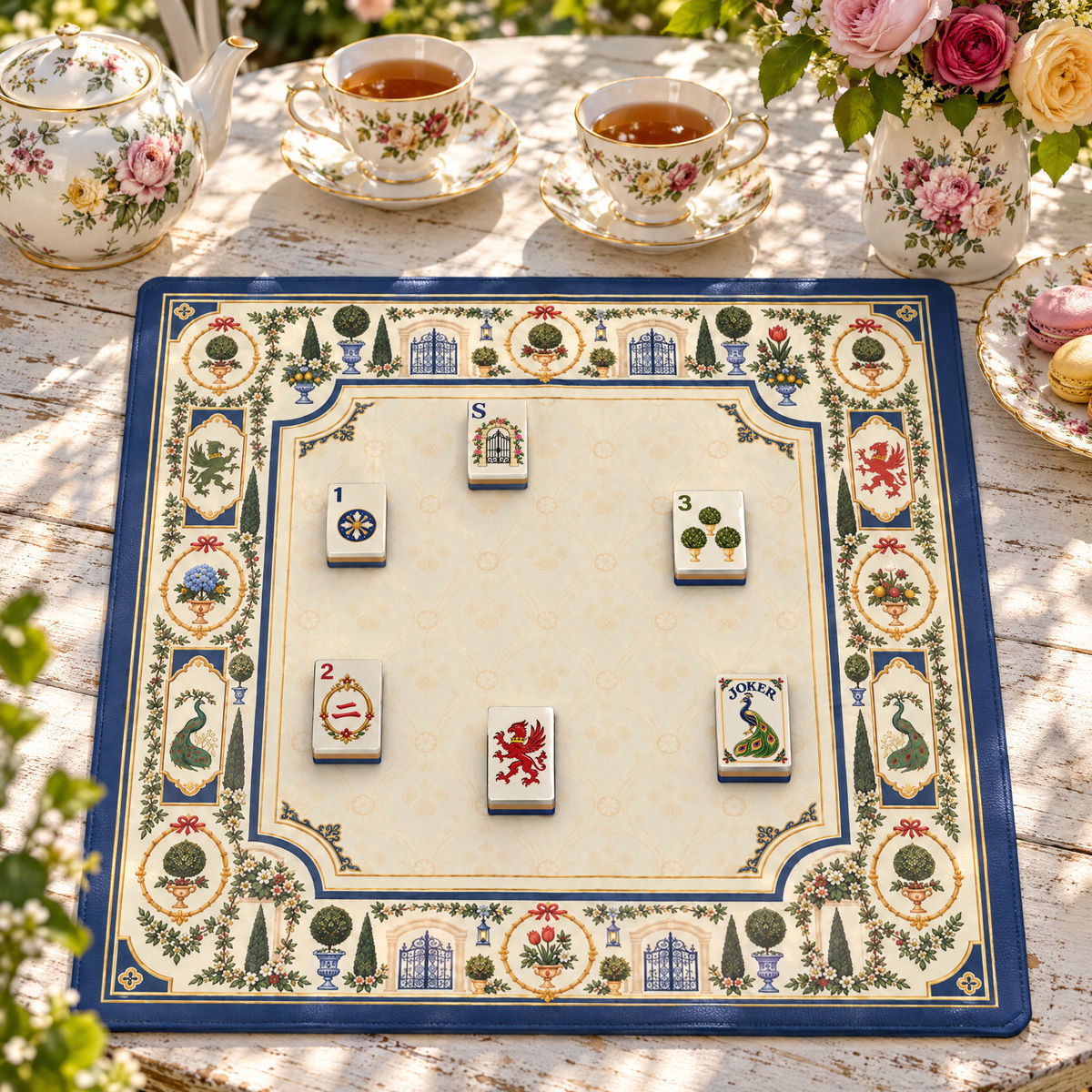
In American mahjong, a "maj" is any hand pattern—called a "like hand"—printed on the current year's National Mah Jongg League card. The card lists hundreds of winning combinations organized by suit, number of jokers, and hand type (all pungs, all kongs, mixed suits, etc.). To win, your 14 tiles must match one pattern exactly: for example, a hand might require three identical Bam tiles, three identical Crak tiles, and so on, arranged as pungs or kongs with no substitutions. Players consult the card during every hand because hand legality depends entirely on it. You cannot invent hands or play sequences—only the card's patterns count. Mastering the card layout and learning to read hand notation quickly is the foundation of competitive play; Mahstead's engraved sets come with durable tiles that survive the constant tile-checking and shuffling. 🀄 Shop best-selling mahjong sets →
How Do You Actually Read a Maj on the Card?
The National Mah Jongg League card is divided into sections—each marked by a Roman numeral and a suit symbol (Craks, Bams, Dots) or by hand type (Like Hand, Consecutive, etc.). Within each section, rows list individual hand patterns using shorthand: for instance, "2020 Like Hand" means two identical pungs in Craks and two identical pungs in Bams, where a "pung" is always three identical tiles. Jokers are shown as wildcard placeholders. To read a maj, find the hand code on the card, check how many jokers you're allowed, identify which tiles you need as sets (three, four, five, or six identical tiles), and verify your 14 tiles match that pattern exactly with no swaps or substitutions.

What Are the Main Types of Winning Hands?
American mahjong hands fall into a few broad categories: Like Hands (same tile repeated in different suits or numbers), Consecutive Runs (e.g., 1-2-3-4-5 Craks in sequence, though each number must be a complete pung or kong, never a sequence), All Pungs (14 tiles forming four or five complete sets of three identical tiles), All Kongs (four sets of four identical tiles), Mixed Hands (pungs and kongs in multiple suits), and Special Hands (quints and sextets—five or six identical tiles). Each card year updates which hands are legal, so a maj valid in 2025 may not appear in 2026. The card allows you 0, 1, or 2 jokers per hand (never more than two in American play), and jokers can only fill wild spots within a pung, kong, quint, or sextet—never as a single tile or a pair. Every maj ends with a pair (two identical tiles that cannot be jokers).
Can You Use Sequences (Chows) to Build a Maj?
No. American mahjong hands contain no sequences or chows—no 1-2-3 or 4-5-6 of the same suit counted as one set. Instead, every group in a maj must be a complete pung (three identical tiles), kong (four identical), quint (five identical), or sextet (six identical). If a hand notation on the card shows "1 Crak, 2 Crak, 3 Crak," that does not mean a sequence; it means you need three separate pungs using the 1, 2, and 3 of Craks (with each pung a different suit or number to keep them distinct). This rule is one of the biggest differences between American mahjong and Asian variants like Hong Kong or Riichi, which heavily feature sequences. Beginners often struggle with this rule, so clarify it before your first game.
How Do Jokers Work Inside a Maj Pattern?
Jokers in American mahjong are wildcards: they can replace any single tile within a pung, kong, quint, or sextet to help you complete a set. For instance, if a maj requires three 5 Craks and you hold only two 5 Craks, a joker can stand in for the missing third tile. However, jokers have strict limits: you may use no more than two jokers per hand total, and jokers cannot form a pair, appear as a single tile, or fill a pair slot at the end of your hand. This means if your maj requires a pair of White dragons, you must hold two real White dragon tiles—no joker substitute. Because joker placement is so critical, understanding joker rules prevents costly discards and challenges. Many players keep a small note card listing joker restrictions to avoid mistakes under pressure.
How Do You Spot a Maj You Can Call During Play?
During a hand, you draw and discard tiles, building toward a maj. Once you hold 13 tiles after drawing and believe your next discard or the next tile drawn will complete your 14-tile maj, you "call" (declare the hand complete). Before calling, mentally verify: (1) your tiles match a hand on the current year's card exactly, (2) you use no more than two jokers, (3) your pair is two real identical tiles (never jokers), (4) every group is a true pung, kong, quint, or sextet (never a sequence), and (5) your hand uses the exact number of jokers shown on the card for that maj pattern. Most errors occur when a player misreads the card notation or forgets the joker limit. Experienced players keep the card in front of them at all times and use the discard edge of their rack or mat to lay out potential hands before calling. A good mahjong mat with clear tile wells and a recessed card slot keeps the card visible and tilts slightly to reduce eye strain during long comparison checks.
🎁 See our most-loved mahjong sets & accessories →

Real Hands: A Side-by-Side Comparison
Hand Type | Example Pattern | Tiles Needed | Jokers Allowed | Common Mistake |
Like Hand (all same rank, mixed suits) | Three 3s in each suit (Crak, Bam, Dot) + pair | 3 Crak, 3 Crak, 3 Crak, 3 Bam, 3 Bam, 3 Bam, 3 Dot, 3 Dot, 3 Dot, + 2 identical | 0–2 | Using a sequence (1-2-3) instead of same number |
All Pungs (four triples) | Any four complete pungs + pair | Four groups of three identical tiles + pair | 0–2 | Mixing pungs and kongs incorrectly |
Quint + Sextet | One 5-identical set, one 6-identical set + pair | 5 of one tile, 6 of another + pair | 0–1 | Forgetting the pair must be real tiles |
Mixed Suits | One pung in Craks, one in Bams, one in Dots + pair | Depends on card notation | 0–2 | Reading "1-2-3" as a sequence rather than three separate pungs |
Kong Heavy | Three or more 4-identical sets + pair | Groups of four identical tiles | 0–2 | Using too many jokers or exceeding the card limit |
Each maj on the card is unique; you'll see hundreds across a season. Study the card layout once, and you'll recognize sections by symbol in seconds.
What to Check Before You Buy Your First Set
Before purchasing a mahjong set, confirm it includes the current year's card or that you can access it online (the League releases a new card every spring). You need exactly 152 tiles for play: 108 suit tiles (Craks, Bams, Dots in ranks 1–9, four of each), 16 winds (four of each direction), 12 dragons (four Red, four Green, four White), 8 flowers, and 8 jokers. Spare tiles in a 160-tile set are extra jokers and blanks for replacement, never added to active play. Choose a set with durable acrylic or wood tiles (not plastic that chips), clear suit markings, and a mat or storage bag if you'll transport it. Our best-selling collection includes sets with engraved tiles for lasting clarity and protective cases for safe travel.
Key Takeaway: The Card Is Your Bible
The maj—the winning hand—exists only on the card. No hand is legal outside it. Beginners should spend the first 30 minutes before their first game simply reading the card: find a section, decode two or three hand notations, then lay out those tiles on a mat to see the pattern physically. This trains your eye to recognize maj shapes fast. After a few hands, you'll internalize the common patterns (all pungs, all kongs, like hands with jokers) and start calling hands with confidence. The card changes yearly, so refresh your card knowledge each spring when the new season starts.
✨ Find your Mahstead set — free US shipping →
Our Pick: Gear That Makes Maj Recognition Easier
Spotting a maj on the card is easier when your tiles are clearly marked and your setup is organized. Engraved acrylic sets have laser-cut suit symbols and numbers that won't fade after hundreds of shuffles. Pair your set with a sturdy mat that includes a dedicated card slot, so the current year's card stays visible without taking up table space. If you host weekly games, racks with pushers let players organize their 13 tiles and instantly see potential maj patterns before drawing. Free US shipping on all Mahstead sets means you can focus on learning hands, not logistics.

FAQ
Can I use a joker as the pair at the end of a maj?
No. The pair must always be two real identical tiles. Jokers fill only spots within pungs, kongs, quints, or sextets—never the final pair.
What's the difference between a pung and a kong in a maj?
A pung is three identical tiles; a kong is four identical tiles. Both are legal set types. The maj card specifies which sets (pungs or kongs) your hand must contain.
Does the card change every year, and can I use last year's card?
Yes, the card changes every spring. You must use the current year's card; old cards no longer show legal hands and will cause disputes at the table.
If a maj shows "1-2-3 Craks," do I need a sequence?
No. You need three separate pungs: three 1 Craks, three 2 Craks, and three 3 Craks (each group in a different suit or context on the card). Sequences are not allowed in American mahjong.
How many jokers am I allowed in one maj?
The card specifies 0, 1, or 2 jokers per hand. Never more than two, and jokers cannot be the pair or a single tile.
Where do I find the current year's card?
The National Mah Jongg League publishes the card every spring. You can order a printed card from the League or many mahjong retailers; digital versions are also available online.
What does "all pungs" mean on the card?
It means your entire hand consists only of pungs (three-tile sets)—no kongs, quints, or sextets—plus a pair, for a total of 14 tiles.


View More
View More
View More
