
Do You Need Mahjong Racks? When to Use Them
Last updated: Nov 23, 2026
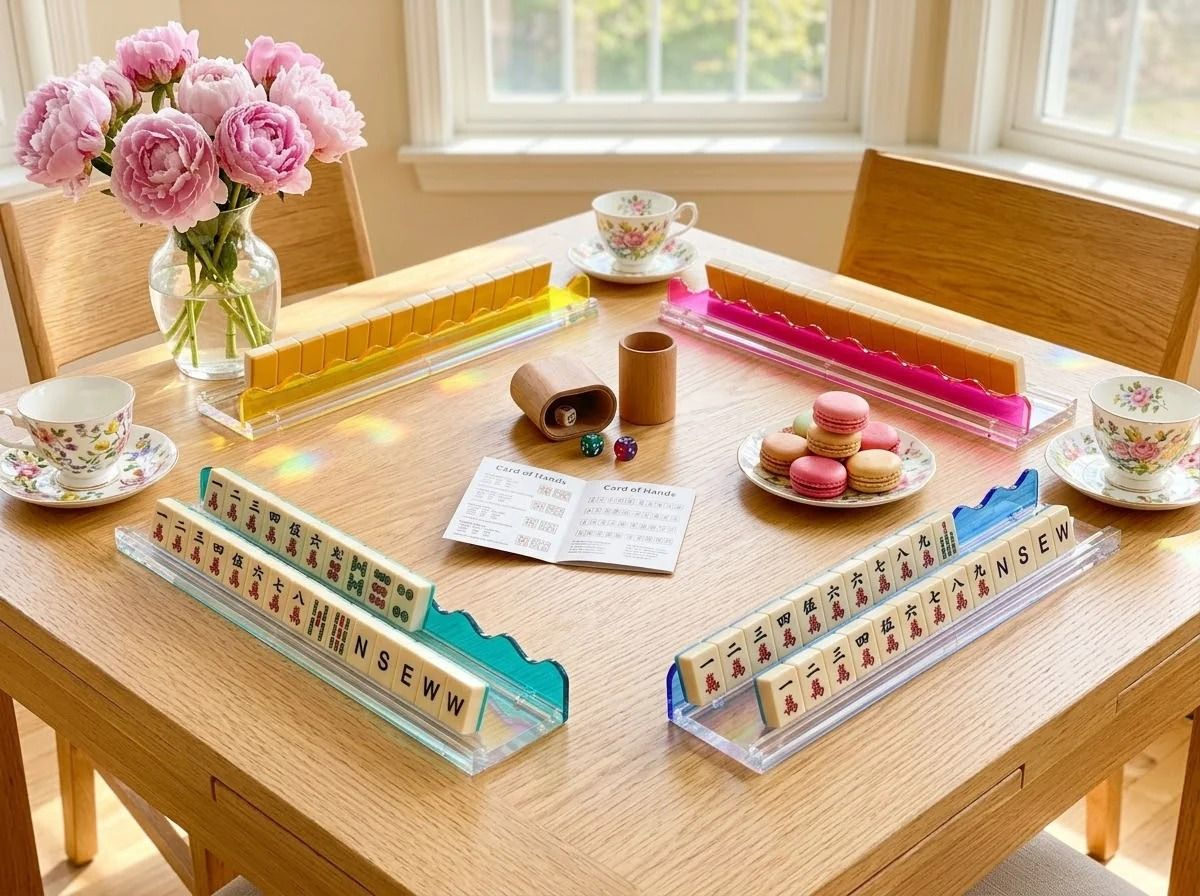
You don't need racks to play mahjong—millions of players rest tiles flat on the mat or table. But racks solve three real problems: they conceal your hand from other players (critical for fair play), reduce wrist and hand strain during long games, and keep tiles organized so you can quickly spot what you hold. Most players at a four-person table benefit from them, especially if you play weekly or for more than an hour at a time. Racks come as individual tile holders or pushers (which let you slide tiles along a rail), and many include pushers for faster play. You'll find styles ranging from simple acrylic to decorative designs. Quality racks last through hundreds of games.
What does a rack actually do for your game?
A rack holds your 13 tiles upright and hidden behind a low wall, so opponents can't see your hand. Without one, tiles sit flat on the table—visible to everyone, and easy to bump or knock over mid-hand. Racks also tilt slightly, so your tiles face you at a comfortable angle. During a two-hour game, this prevents the hand fatigue and wrist strain that comes from bending forward or holding tiles in your palm. The best ones come with pushers: small sticks that let you slide tiles along the rack without lifting them, which speeds up play and keeps tiles organized as you draw and discard. Many players who switch to racks never go back.
🀄 Shop best-selling mahjong sets →
Who actually benefits most from racks?
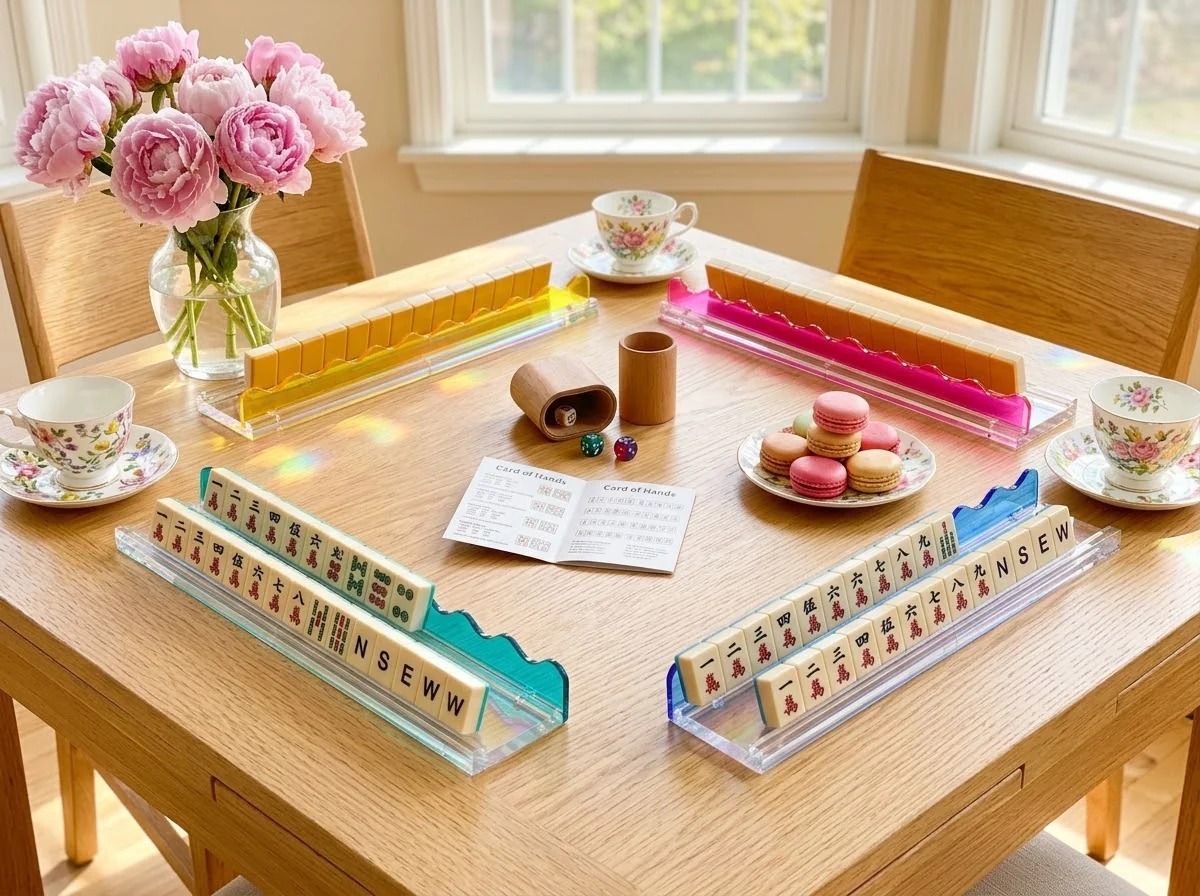
Weekly or regular players gain the most value—those who play every Friday night or join monthly tournaments. If you play once or twice a year at a friend's house, you're fine without them. Players with hand pain, arthritis, or wrist issues see immediate relief. Competitive players and leagues use racks because they prevent accidental exposure of your tiles and speed up turns. Beginners learning to read tiles sometimes skip racks at first, but find them helpful once they've memorized the suits and numbers. If your table is small or your tiles are large, a rack becomes less convenient; if your table is roomy and your tiles are standard size, they fit naturally. Ask yourself: "Do I play more than twice a month?" and "Does my wrist or hand hurt after an hour?" If both answers are yes, a rack pays for itself in comfort.
What's the difference between racks, pushers, and stands?
Racks hold tiles upright and hide them; pushers are small tools that slide along a rail inside or below the rack to move tiles. A rack with a pusher system lets you organize tiles efficiently—push a tile forward to discard it, then draw a new one and slot it in. Some racks are solid walls (you lift tiles by hand), while others integrate a pusher rail. A stand is a fixed rack without a pusher—tiles go in, you manage them manually. Pushers save time and reduce fumbling, especially during fast play. Stands work fine for casual games but feel clunkier during league or tournament play. Integrated rack-and-pusher designs (sold as sets) are the most fluid for serious players.
Style | Best for | Speed | Setup time |
Flat tiles on mat | Casual, occasional players | Slowest | None |
Simple rack (no pusher) | Weekly players, comfort-focused | Moderate | <1 minute |
Rack with pusher | Regular/competitive players | Fast | 1–2 minutes |
Tournament pusher set | League or high-stakes play | Fastest | 2–3 minutes |
How do you set up and use a rack correctly?
Place the rack at the edge of the table closest to you, about six inches from the edge. Line up your 13 tiles inside, arranging them left to right so you can scan them quickly. The tiles should sit at a slight angle toward you—usually 15 to 30 degrees—so you see the numbers and suits clearly. If your rack has a pusher system, insert the pusher rod along the bottom or side rail. To draw a tile, reach across the table to the discard pile or the live wall, then place it in an open slot on your rack. Slide the pusher to tighten the spacing. To discard, push a tile forward with the pusher, lift it, and place it on the table. Keep your rack clean—dust and tile wear mean the pusher slides less smoothly. Orient the rack so the "front" (tile-facing edge) points toward the center of the table, not at opponents.
What should you check before you buy?
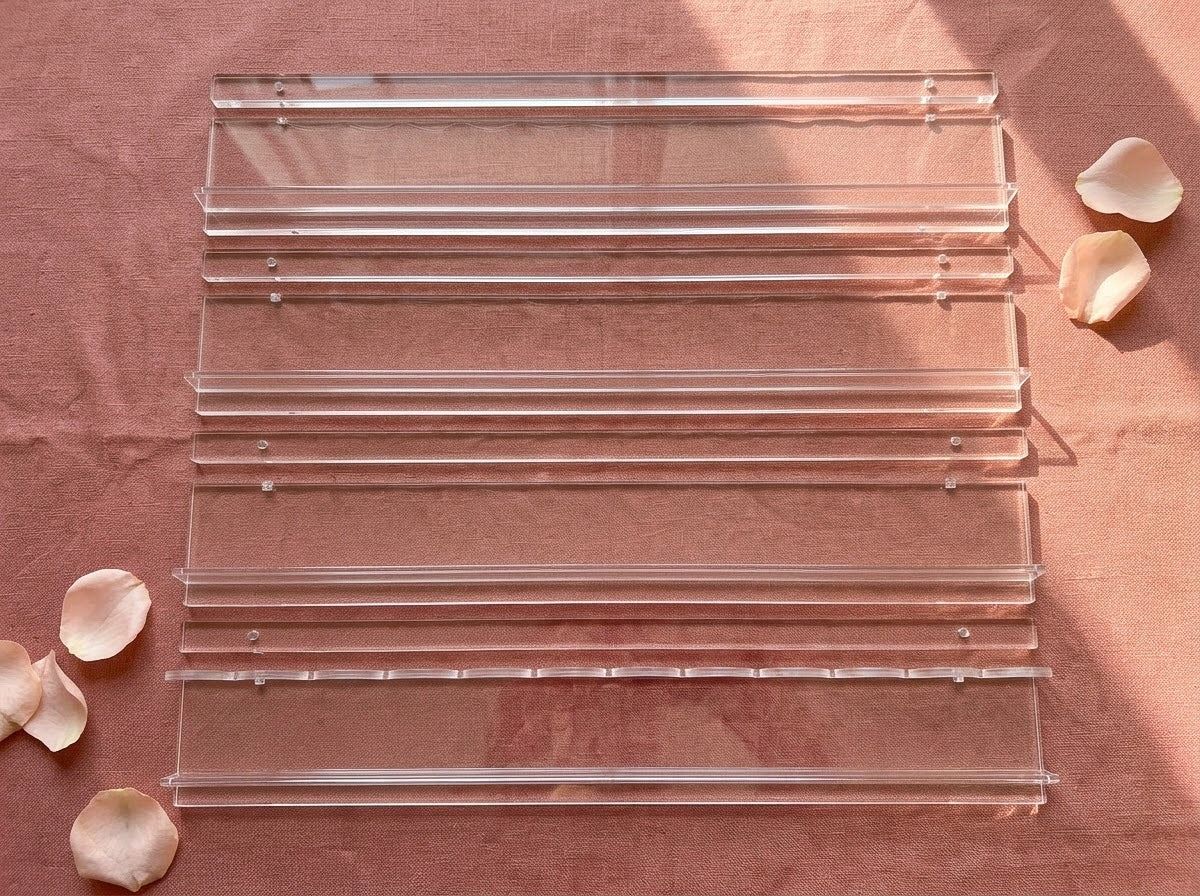
Measure your table first. If it's under 48 inches wide or square-shaped, racks might feel cramped—test one at a friend's house if possible. Check the tile size your set uses; large tiles (like the ones in Mahstead's best-selling mahjong sets) fit some racks better than others. Verify that the pusher (if you choose one) moves smoothly; rough or sticky pushers defeat the purpose. Make sure the rack material—usually acrylic or plastic—won't scratch your tiles or mat. If you buy mahjong racks with pushers, test the pusher feel before committing to a full set of four. Racks come in singles or as matched sets of four (one for each player); matched sets cost less per unit and look cohesive. Read the care notes: some racks need hand-washing, others wipe clean. Free shipping across the US means you can order and return easily if a style doesn't work at your table.
Is a pusher worth the extra cost?
Yes, if you play regularly. Pushers shave 10–15 seconds per turn, which adds up over a two-hour game. They also keep tiles aligned and prevent the "scattered hand" effect that slows down gameplay. For weekly or tournament players, the speed boost and cleaner play experience justify the cost. For casual or annual players, a simple rack without a pusher is plenty. Pushers do wear out over time—the rail can become sticky or the pusher rod can warp if stored in heat—but a good one lasts hundreds of games. If you're unsure, start with a simple rack and upgrade to a pusher-equipped model after a few seasons if you find yourself playing more often.
🎁 See our most-loved mahjong sets & accessories →
Common mistakes players make with racks
Buying a full set of four before testing one. If you've never used a rack, ask a friend to borrow one for a game. Styles vary, and not every design suits every player or table.
Choosing a pusher system without checking smoothness. A stiff or sticky pusher is worse than no pusher—test it in-store or during a trial if possible.
Placing the rack too far from the table edge. This forces you to reach awkwardly and defeats the comfort benefit.
Ignoring tile size. Standard American mahjong tiles fit most racks, but if your set is oversized or custom-engraved, verify clearance before ordering.
Storing racks in direct sunlight or heat. Acrylic can warp or become brittle, and the pusher rod can bend.
Mixing mismatched racks at the same table. It's not a game-breaker, but using four identical racks keeps the table balanced and makes play smoother.
✨ Find your Mahstead set — free US shipping →

FAQ
Can you play American mahjong without racks?
Yes. Many players rest tiles flat on the mat or table. Racks aren't mandatory, but they hide your hand, reduce strain, and speed up organized play. If you're casual or play infrequently, you'll do fine without them. Weekly players usually find them worth the investment.
Do all mahjong racks fit all tile sizes?
Most racks are sized for standard American tiles, but oversized or custom-engraved tiles may not fit snugly. Measure your tiles (usually about 1 inch wide) and check the rack's interior width before ordering. Mahstead sets use standard sizing, so they pair well with most racks on the market.
What's the difference between a rack and a pusher?
A rack holds tiles upright and hidden. A pusher is a tool (usually a small rod) that slides along a rail inside or below the rack to move tiles without lifting them. Many racks include a pusher system; some don't. Pushers speed up play but add cost.
Do I need a special mat if I use racks?
No. Mahjong mats and racks are separate tools. A mat protects the table and keeps tiles from sliding; racks hold individual hands. You can use racks with any mat or no mat at all.
How long does a rack last?
A quality acrylic rack lasts hundreds of games if stored away from direct heat and sunlight. Pushers may need replacement after years of heavy use (typically 2–5 years depending on frequency), but the rack itself is durable. Avoid dropping them, and hand-wash if recommended.
Are racks allowed in league or tournament play?
Yes. Most American mahjong leagues and tournaments require or strongly encourage racks because they prevent accidental hand exposure. Check your local league rules, but racks are standard at competitive tables.


View More
View More
View More
