
Mahjong vs Bunco: Which Game Should You Play?
Last updated: Nov 23, 2026
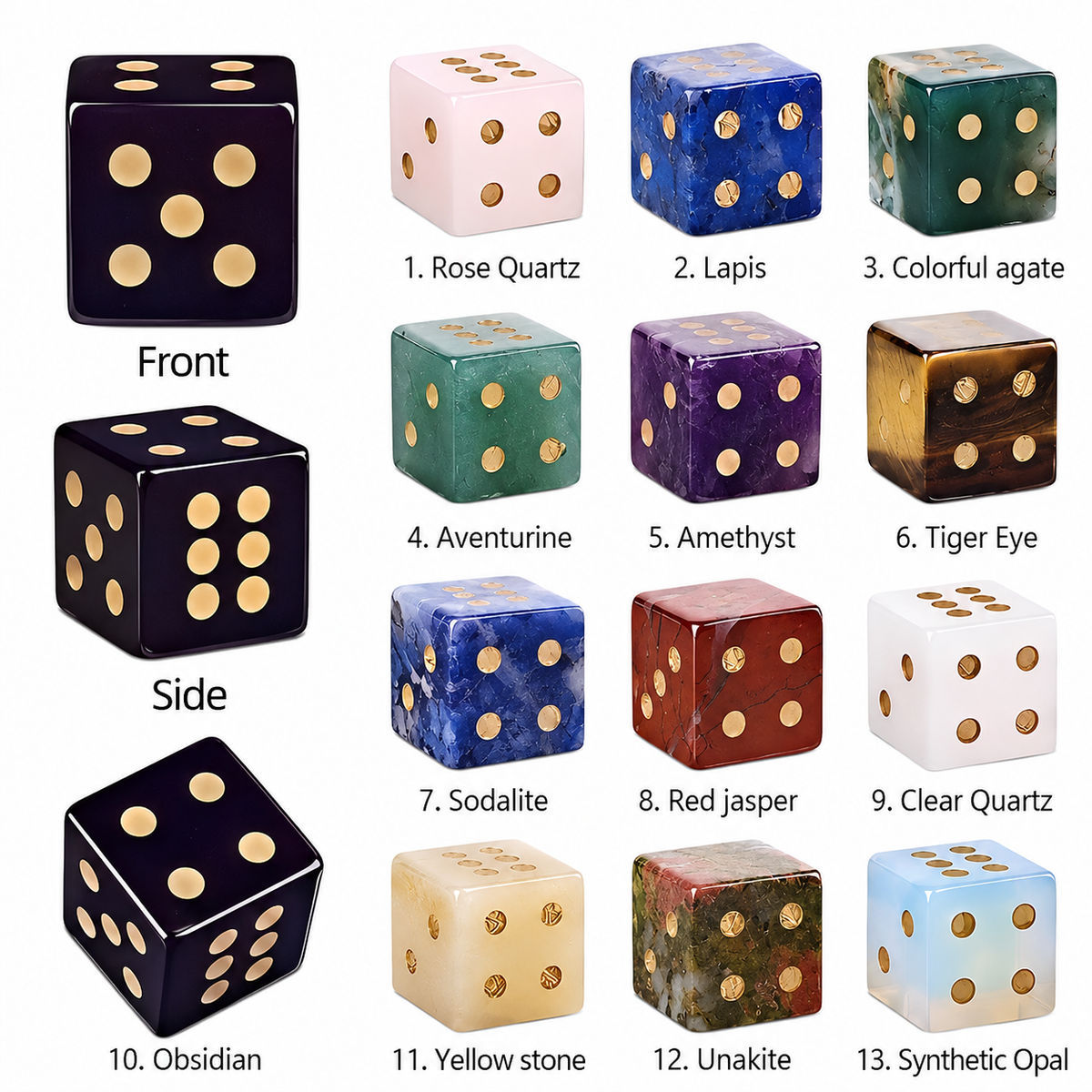
Mahjong is a 152-tile matching game requiring memory, strategy, and pattern recognition from a seasonal hand card; bunco is a fast-paced dice game where luck dominates skill, rounds last minutes, and no preparation is needed. Mahjong takes 45–90 minutes per game and involves the Charleston (a tile-passing ritual) before play begins; bunco plays in 90 minutes total with multiple mini-rounds. Mahjong rewards players who study combinations; bunco suits casual socializers who want no learning curve. American mahjong includes 144 tiles (three suits × 1–9, winds, dragons, flowers, jokers); bunco needs only three dice. Mahjong involves risk: you can "go down" (expose tiles publicly) and block others or lose your advantage; bunco is lower-stakes and faster-moving. Both host well with engraved sets from our best-selling collection, though mahjong needs a mat and racks with pushers for serious play.
What Is Mahjong, Exactly?
Mahjong is a tile-matching game where four players draw and discard tiles to build a "hand" of melds—patterns of identical tiles (pungs, kongs, quints) or sequences—shown on an annual card issued by the National Mah Jongg League. Each player draws 13 tiles, then one draws a 14th; you win by building one of about 80–200 legal hands from that year's card and calling "mahjong." A single game takes 45–90 minutes; a session usually runs 2–4 rounds. Rules vary by region: American mahjong forbids chows (sequences) as callable melds—only pungs (3), kongs (4), quints (5), and sextets (6) count. The game requires a seasonal hand card (replaced every spring), the Charleston (tile exchange before play), and a strong memory for who discarded what. Mahjong suits players who enjoy strategy puzzles, enjoy sitting for an hour, and like learning a rule system deeply. We use acrylic tiles and pushers to keep games organized and scores clear.

What Is Bunco, Exactly?
Bunco is a turn-based dice game where four players sit at rotating tables, rolling three dice to score points on a sheet. Your goal in each "round" is to roll combinations matching the round number (round 1 = ones, round 2 = twos, etc.); a "bunco" is three matching dice in one throw, worth 21 points. A game is six rounds played against three different opponents—each round lasts 10–15 minutes, and the whole event finishes in 90 minutes. No card is needed; no memory is required; no preparation happens before the first roll. Bunco is pure luck: the best player and the newest player have nearly equal odds. Rounds are loud, social, and fast; people chat while others roll. Bunco suits casual group gatherings—holidays, neighborhood meetups, fundraisers—where the goal is speed and laughter, not mastery. Bunco favors social energy over strategy and requires only a score sheet, three dice, and three small tables or table sections.
🀄 Shop best-selling mahjong sets →
How Do Setup, Pace, and Learning Compare?
Factor | Mahjong | Bunco |
Setup time | 10–15 min (Charleston) | <1 min (hand out sheets) |
Learning curve | 4–8 weeks (average) | None (15 min intro) |
Game duration | 45–90 min per round | 90 min total, 6 rounds |
Strategy depth | High (puzzle-solving) | None (luck-based) |
Skill gap | Experienced beats new | Nearly equal odds |
Relearn each year? | Yes (new hand card spring) | No (rules unchanged) |
Noise level | Moderate (focused play) | High (celebration-driven) |
Tiles/equipment | 152 tiles, card, mat, racks | 3 dice, pen, paper |
Mahjong demands a seasonal rule card (replaced every spring by the National Mah Jongg League) and a 10–15 minute ritual called the Charleston—a structured tile pass where players exchange tiles three times before the first hand is drawn. Bunco flips this: you deal score sheets, read one paragraph of rules, and roll. A mahjong player joins as a novice and improves over weeks; a bunco newcomer plays as competitively as a veteran on round one. Mahjong play is deliberate and quiet (players track discards mentally); bunco is celebratory and loud. If your group values ritual and long-term skill growth, mahjong wins. If you want zero friction and fast turnover, bunco is the play. We see both in home games: friends who've played mahjong for decades keep seasonal hand cards and engraved sets; casual groups rotate in bunco for holiday parties.

Which Game Builds Better Social Connection?
Mahjong creates bonds through shared learning: you study the hand card together, celebrate a player's first win, and replay the same round to teach newcomers what happened. Players sit in one place for an hour, building shorthand (nicknames for tile types, jokes about bad luck). Over time, a mahjong group develops inside humor and tacit strategy. Bunco creates bonds through rotation and variety: every 10 minutes you move to a new table, meeting different players. No one "owns" a victory; everyone laughs at the same random rolls. Bunco works for large, fluid groups (15–30 people); mahjong needs a stable four (though 2- and 3-player variants exist). If your goal is deepening a core group, mahjong builds tighter bonds over seasons. If your goal is connecting many people quickly, bunco spreads energy wider. Many communities host both: a mahjong league meets weekly with the same players; a bunco club meets monthly with rotating guests. Choose mahjong if you want a "team" feeling; choose bunco if you want a "gathering" feeling.
🎁 See our most-loved mahjong sets & accessories →
When Should You Pick Mahjong Over Bunco (and Vice Versa)?
Pick mahjong if:
Your group plays regularly (weekly or twice monthly).
You want players to improve visibly over time.
You have 45–90 minutes uninterrupted.
You enjoy rule systems and pattern-spotting.
You want a mat and organized tile racks to reduce tile mess and speed up scoring.
You appreciate ritual (the Charleston, seasonal card updates, tile-passing courtesy).
Pick bunco if:
Your group is large, casual, or rotating (new people often join).
You want zero ramp-up time.
You have 90 minutes but want multiple short games.
You prioritize laughter and randomness over mastery.
You host a holiday party, fundraiser, or neighborhood event.
You want to spend money on dice and paper, not equipment.
Pick both if you host frequently: a mahjong group for your core weekly friends and a bunco night for broader social events. We see this often—families keep an engraved mahjong set for standing game nights and invite wider circles to bunco tournaments. The investment in mahjong pays off over months; bunco stays perpetually free to enter.
What to Check Before You Buy
If you're starting mahjong, verify your group can commit to 4–6 weeks of weekly play before the learning clicks; bunco requires no such commitment. Buy the current year's National Mah Jongg League hand card before your first game—old cards are worthless. If you're gifting a mahjong set, ask whether your recipient has a mat and racks with pushers; without them, scoring becomes chaotic. For bunco, all you need is paper and dice. Mahjong tiles wear: acrylic sets last far longer than paper or bamboo and survive regular washing. Check that any set you buy includes exactly 152 tiles plus spare jokers. Bunco requires almost no equipment checks—just confirm the dice roll evenly (no bias).
✨ Find your Mahstead set — free US shipping →

FAQ
Can I teach a complete beginner mahjong or bunco in under 10 minutes?
Bunco, yes—one paragraph of rules and they play. Mahjong, no—expect 30–60 minutes for a new player to grasp the hand card, tile types, and first legal play. Mahjong mastery takes weeks.
Do I need special equipment for mahjong but not bunco?
Yes. Mahjong needs 152 tiles, the seasonal hand card, ideally a mat and racks with pushers to stay organized. Bunco needs only three dice, a pen, and paper.
Which game is better for a one-time event?
Bunco. Set it up in 30 seconds, rotate players every 10 minutes, finish in 90 minutes. Mahjong rewards regular replay; one session leaves most newcomers frustrated.
Can an experienced mahjong player beat a novice?
Often yes—strategy and memory matter. In bunco, odds are nearly equal; luck trumps skill. Both novices and experts roll the same dice.
Do I need a new set of rules or card each year for mahjong?
Yes. The National Mah Jongg League releases a new hand card every spring; hands from last year are illegal. Bunco rules never change.
How much time should I budget for a mahjong game vs. bunco?
Mahjong: 10 min setup (Charleston) + 45–90 min play + 5 min scoring = 60–105 min total. Bunco: <1 min setup + 90 min total = 90 min flat.


View More
View More
View More
