
Birthday Mahjong Party Invitations: Wording & Ideas
Last updated: Nov 23, 2026
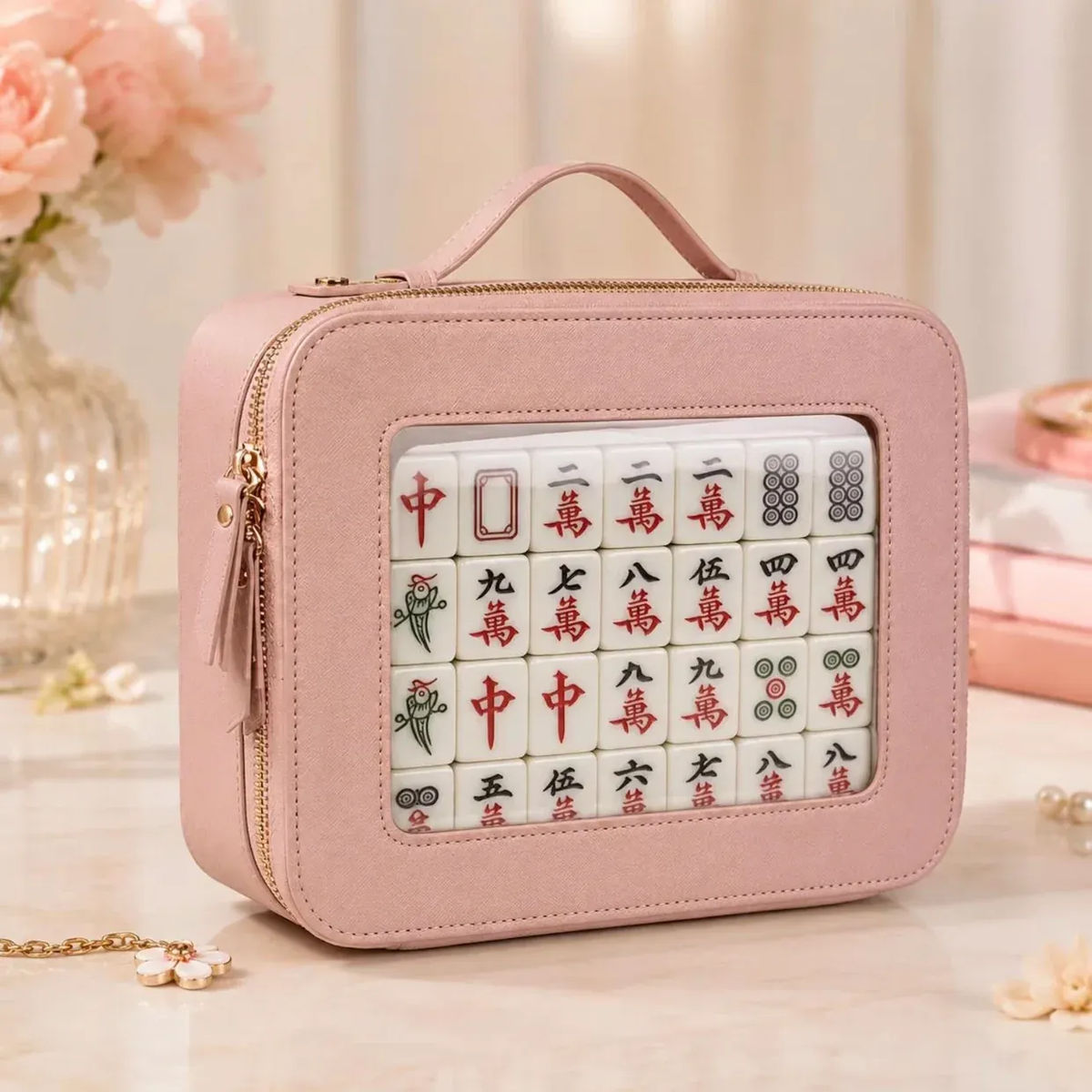
A birthday mahjong party invitation should include the date, time, address, RSVP deadline, and tile-experience level required—plus a touch of personality. State whether beginners are welcome or if players must know the National Mah Jongg League card. Mention if you're providing the set and mat, or asking guests to bring one; clarify if snacks and drinks are included. A sample: "Join us for [Name]'s 60th birthday mah-jong party! Saturday, March 15, 2–5 PM, [address]. Beginner-friendly. We'll teach you. RSVP by March 8. Snacks & drinks provided." Avoid vague times like "afternoon" and unclear skill levels. Our sets come ready to play out of the box, so you can confidently host mixed-experience groups without fussing over tile setup.
What information must every mahjong party invitation include?
Every invitation needs the date (day and full date), start and end time (not just "afternoon"), complete address with parking notes if needed, RSVP date and method, and skill level. For mahjong specifically, clarify whether players need prior experience or if you'll teach beginners. Say upfront if you're supplying the set, mat, and tiles, or if guests should bring equipment. Mention the number of seats you have: mahjong is played with exactly four players per table. This honesty prevents surprise, no-shows, and awkward gaps.
🀄 Shop best-selling mahjong sets →

Should you use humor in a mahjong birthday invitation?
Humor works brilliantly in mahjong invites because the game itself attracts playful people. Light jokes help set a fun tone. Try: "Celebrate [Name]'s birthday—and bring your best tile strategy and worst luck" or "RSVP before we kong your spot" (a kong is four matching tiles in mahjong). Avoid jokes that belittle the game or confuse non-players. The goal is to welcome and excite, not to make anyone feel left out. A warm, funny invite signals the day will be relaxed and social, not cutthroat.
How do you word an invitation for mixed-skill mahjong players?
For a group where some are seasoned players and others have never touched tiles, write: "Beginners and veterans welcome. Experience unnecessary—we'll cover the basics." Then add a line about timing: "Plan for a 20-minute learn, then games." This sets realistic expectations. If you're the host, offer to sit out the first hand to teach, or pair a beginner with an experienced player as a silent coach. Making space for newcomers inside your invite text ("Come as you are") signals your table will be inclusive and patient.
What details prevent confusion about date, time, and duration?
Write the date in full ("Saturday, March 15, 2026") and give both start and end times ("2:00–5:00 PM"). Three hours allows for one teaching round, two to four complete games, and social chat. Avoid "sometime Saturday afternoon" or "we'll play for a while." Specify parking if your venue is tricky. Add a line like "Feel free to arrive 10 minutes early" if you want to set up before introductions. Clear timing respects everyone's schedule and avoids guests arriving two hours late.
Invitation Element | Why It Matters | Example |
Skill level | Prevents mis-matched tables and anxiety | "All levels welcome—we teach." |
Start & end time | Guests plan around the event | "2:00–5:00 PM, not 'afternoon'" |
RSVP date | You know table count (groups of 4) | "RSVP by March 8" |
Whose set? | No one brings the wrong gear | "Set & mat provided" |
Game count hint | Realistic expectations for play time | "Plan for 3–4 games" |
Snacks/drinks | Reduces surprise, shows hospitality | "Light refreshments & cash bar" |
How do you handle equipment in your invitation?
Decide before you write: Are you supplying an acrylic set and mat, or asking each guest to bring one? State it clearly: "Our Mahstead set is set up—bring yourself, not tiles" or "Bring your own set if you have one; we have spares." If you're asking for contributions, be specific: "We have a mat; can someone bring a second set?" This prevents the awkward moment when two people show up with identical racks or no one brings a mat. For hosts new to mahjong, explore our collection of best-selling mahjong sets designed for group play, complete with mats and racks included.

What makes an invitation feel welcoming vs. exclusive or stressful?
Welcoming language is warm, clear, and reassuring. Stressful language uses "advanced players only," demands prior card knowledge, or lists complicated house rules in the invite. Welcoming: "Celebrate [Name]'s birthday over tiles and snacks. No experience needed." Stressful: "Experienced players only. Must know 2026 card. House rules enforced." A birthday party is social first, competitive second. The invitation should reflect that tone. If you do have competitive players in the group, save house-rule details for a follow-up chat with that subset, not the mass invite.
Should you mention cost or ask people to contribute snacks?
Mention cost only if guests are paying. Be direct: "Suggested donation: [amount] to cover set use and snacks" or "Free—I'm treating to celebrate." If you're asking for snack contributions, say so upfront in the invite, not day-of. Try: "Celebrate [Name]—please bring an appetizer or beverage to share." This avoids the awkward "Can you grab chips?" text. For a birthday host, absorbing the cost of the set and mats is a gift; if budget is tight, hosting a small group of four is still memorable and easier to set up.
🎁 See our most-loved mahjong sets & accessories →
Real invitation templates you can adapt
Formal & warm: "You are cordially invited to celebrate [Name]'s 65th birthday over an afternoon of mah-jong. Saturday, April 12, 2026, 1:00–4:00 PM. [Address, parking info]. Beginner-friendly. Set, mat, and snacks provided. RSVP by April 5 to [email/phone]."
Casual & funny: "It's [Name]'s birthday. We're playing mah-jong. Bring your tiles, your luck, and your A-game—or just show up and learn. Saturday, April 12, 1–4 PM. [Address]. Free snacks, free lessons, free bragging rights. RSVP: [contact]."
Inclusive & practical: "Join us to celebrate [Name]'s birthday with mah-jong, friends, and food. Saturday, April 12, 2026, 2:00–5:00 PM. [Address]. All skill levels welcome—beginners especially. We'll teach. Set & mat provided. Please bring an appetizer or drink to share. RSVP by April 8."
Checklist before you send your invitation
[ ] Full date, day of week, start and end time written clearly
[ ] Complete address with parking notes (if helpful)
[ ] RSVP deadline and contact method (email, phone, text)
[ ] Skill level stated: "beginner-friendly," "all welcome," or "experienced players"
[ ] Clarify who provides the set, mat, and other gear
[ ] Mention snacks/drinks included or ask for contributions upfront
[ ] Note the game is four players per table (manage expectations if you have 5–6 guests)
[ ] One warm or playful line that matches the vibe of the birthday person
[ ] Proofread address and RSVP deadline for accuracy
When your invitation clearly states experience level, setup, timing, and tone, guests arrive on the same page. They know what to expect, what to wear, and how to contribute. The invitation is your chance to set a welcoming, exciting mood—and a well-hosted mahjong birthday party is one guests ask you to repeat next year. Choose from our engraved American mahjong sets to add a personal touch to your table, or pick a bright, durable design from our best-selling collection that feels festive and ready to go.
✨ Find your Mahstead set — free US shipping →
What to check before you buy (or borrow) a set for your party
If you're hosting for the first time, confirm the set includes 152 playing tiles, an acrylic mat (or fabric mat you can wipe clean), four racks with pushers, and jokers. Most acrylic sets ship with everything. Check that the tile marks are deep and easy to read from across the table—this matters when guests are learning. If lending from a friend, test one game yourself to make sure no tiles are chipped or stuck. Acrylic sets are durable and low-maintenance; choose a mat that suits your table size so players sit comfortably. A mat with a fabric top prevents tiles from sliding and makes the game more enjoyable for newcomers.

FAQ
How many people should I invite to a mahjong birthday party?
Invite four people (plus the birthday person makes five, but only four play per table). If you want multiple games running, invite eight or twelve. If you have five or six, one person sits out each round—rotate them. Mahjong is always played with exactly four players per table.
Should beginners sit at a different table from experienced players?
Not necessarily. Mixed tables work if one experienced player volunteers to teach and answer questions. Avoid seating four total beginners at one table without a coach nearby. Pair inexperience with patience, not with speed-players focused on winning. Rotation between games naturally shuffles skill levels.
What if my invitation doesn't fit on one page or card?
Keep it short: date, time, address, RSVP, skill level, and one personality line. Save details (snack sign-up, house rules, parking) for a follow-up email or text after they RSVP yes. A crowded card feels overwhelming; a clean, short invite is actually more likely to get an immediate yes.
How do I know if my guest list works for a mahjong party?
Start with four people you like spending time with—skill level doesn't matter if the group is relaxed and social. Avoid mixing very competitive players with people playing for the first time at the same table. If you have six to eight guests, plan for two tables or a rotation so someone sits out each round.
Should the invitation mention specific house rules or scoring?
No. Mention house rules only in a separate message after RSVPs confirm. An invite that lists complex rules scares off newcomers. Save that detail for a pre-game chat or email: "We play by standard American rules. No exotic melds—you'll learn as we go."
What if someone RSVPs but hasn't played mahjong before—should I send them learning materials?
A friendly heads-up helps: "Excited to have you! Mahjong is easier than it looks. Don't worry—we'll explain everything." Skip dense rule sheets unless they ask. If you want to send something, a two-minute video clip or a line like "It's like rummy with tiles" frames it well. Let the game teach through play.
How early should I send the invitation?
Three to four weeks ahead for local friends; two weeks for casual acquaintances. Last-minute invites (one week) work for small, close groups. For a milestone birthday, give people four weeks' notice so they can clear their calendar.
What if I don't have a mahjong set yet but want to host?
Order one now. Acrylic sets ship and arrive well before a party date weeks away. Our best-selling collection includes complete sets with mats and racks. Test one game yourself before guests arrive so you feel confident teaching.


View More
View More
View More
