
Bone and Bamboo Mahjong Sets: What to Know Before You Buy
Last updated: Nov 23, 2026
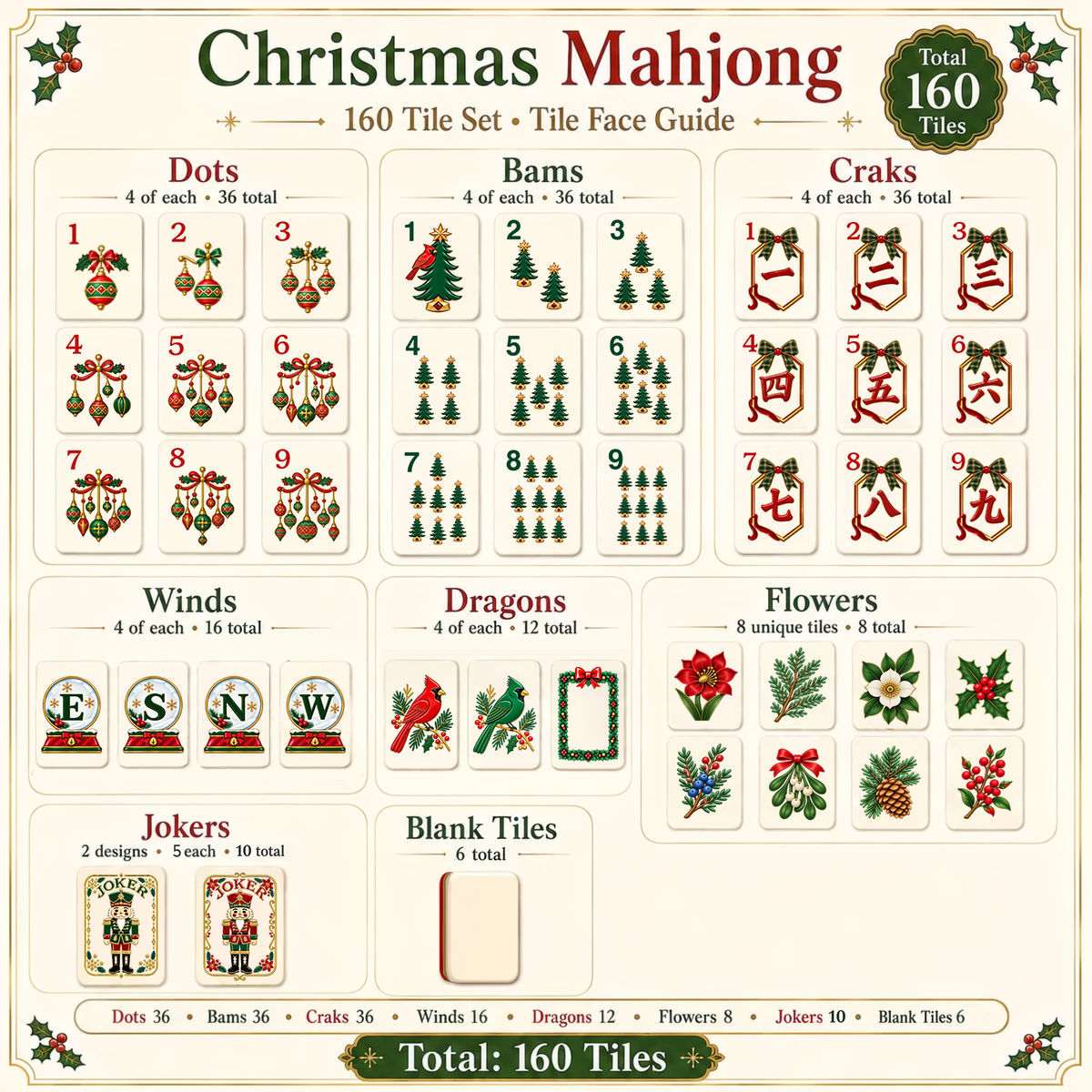
Bone and bamboo mahjong sets are hand-carved tiles made from animal bone or plant bamboo, prized for their authentic weight, click-clack sound, and durability. Bone tiles are denser and more resistant to chipping; bamboo is lighter, warmer to touch, and often more affordable. Both require more care than acrylic (no extreme heat or dry air). A complete American set contains 152 playing tiles plus 8 jokers (160 total). Bone sets typically weigh more and last decades with proper storage; bamboo sets feel elegant but can warp or crack if exposed to humidity swings. Cost varies widely based on carving detail and tile thickness, but both outperform plastic for serious weekly games. The best choice depends on your table frequency, climate, and whether you prioritize authentic feel or low maintenance. Mahstead offers engraved American mahjong sets in acrylic, which requires zero maintenance and ships free across the US. 🀄 Shop best-selling mahjong sets →
Why does bone feel so different from bamboo?
Bone tiles are carved from cow or camel bone—a byproduct of the meat industry—and are harder and denser than bamboo. They produce a sharper, more resonant click when tiles are placed or drawn. Bamboo is softer, lighter (easier on wrists during long games), and produces a gentler, warmer sound. Bone holds carved detail crisper and resists wear longer; bamboo develops a patina but can dull or splinter at edges after years of heavy play. Neither is "better"—bone suits players who value durability and traditional weight; bamboo attracts those who prioritize comfort and aesthetic warmth. The difference becomes obvious in your first game: bone feels substantial and permanent; bamboo feels like you're playing with natural material.

What maintenance do bone and bamboo tiles actually need?
Both materials demand protection from humidity and temperature swings that acrylic ignores. Bone can crack if heated suddenly (direct sun, radiators) or dried out completely; bamboo will warp, swell, or split if humidity jumps above 65% or drops below 30%. Store both in a padded case, away from windowsills and heaters. Wipe tiles dry immediately after play if hands were damp. Never use water or solvents—a barely damp microfiber cloth suffices for dust. Bone benefits from occasional light oiling (neutral mineral oil, not linseed); bamboo should never be oiled. If bamboo develops mold spots (common in humid climates), a soft dry brush removes surface mold, but deep staining means the tile is compromised. Most players in humid regions (Southeast US, Gulf states) find acrylic sets more forgiving; bone and bamboo thrive in dry climates or air-conditioned homes year-round.
How do bone and bamboo compare on price and longevity?
A solid bone set from a reputable carver typically costs more upfront than bamboo—often double or triple—because bone is denser, slower to carve, and sourced with waste-minimization in mind. Bamboo sets are cheaper to produce and buy, but their lifespan depends heavily on climate and storage: in optimal conditions (dry, stable), bamboo lasts 10–15 years; bone lasts 30+ years with minimal degradation. The cost-per-year math favors bone if you play weekly, because you won't replace it; bamboo makes sense for casual players, gift-givers, or those in climates where humidity is unpredictable. Neither bone nor bamboo sets are "investments" that appreciate—they're functional tools—so choose based on your actual play schedule and environment, not resale value. A climate-controlled game room or dry basement dramatically extends bamboo life; a humid apartment makes acrylic a smarter choice than either.
🎁 See our most-loved mahjong sets & accessories →

Bone vs. Bamboo vs. Acrylic: Which wins for weekly players?
Feature | Bone | Bamboo | Acrylic |
Feel & Sound | Heavy, sharp click | Warm, soft click | Light, plastic clatter |
Durability | 30+ years, chip-resistant | 10–15 years, warp-prone | 20+ years, unaffected by humidity |
Maintenance | Occasional oiling, humidity control | Dry brush only, strict climate control | Wipe with dry cloth, no climate worries |
Cost basis | Higher upfront | Mid-range | Lowest to mid-range |
Best for | Serious weekly players, dry climates | Collectors, gift-givers, dry climates | Beginners, humid climates, portability |
Weight per tile | ~4–5 grams | ~2–3 grams | ~2–2.5 grams |
The verdict: bone wins on longevity and tradition if you commit to climate control; bamboo offers authenticity at lower cost but demands careful storage; acrylic wins on zero-maintenance and consistency for players who prioritize reliable performance over material prestige. Most serious American mahjong players we know in humid regions own acrylic sets for regular play and bone or bamboo for special occasions or travel to dry climates.
What should you check before ordering bone or bamboo online?
Before committing, ask the seller: (1) Is the bone genuine (not resin), and is bamboo solid (not laminate)? (2) What is the tile thickness—thinner tiles (under 18 mm) chip more easily, especially bone edges. (3) Are all 152 playing tiles included plus 8 jokers, or is this a 140-tile set missing flowers or extras? (4) What is the carving style—hand-carved bone is more fragile than machine-carved but more detailed; bamboo hand-carving can have uneven depth. (5) Does the set include a case or mat, or just tiles? (6) What is the return policy if tiles arrive cracked? (7) Is the weight listed per tile—bone should average 4–5 grams, bamboo 2–3 grams? If the listing avoids these details, the seller may not understand the material. Mahstead's collection of engraved American mahjong sets specifies all dimensions, tile count, and materials upfront, and free shipping across the US removes uncertainty about delivery damage.
✨ Find your Mahstead set — free US shipping →
Is bone or bamboo right for your climate and game style?
If you live in a dry climate (Southwest, Mountain West, parts of the Midwest) and play every week, bone is a once-in-a-decade purchase that justifies the cost. If you live in a humid region (Southeast, Gulf, Pacific Northwest) or play monthly, bamboo requires too much fussing; acrylic or bone in a climate-controlled room makes more sense. If you're a beginner or gift-buyer, start with bamboo or acrylic—bone is a premium upgrade after you know you'll play for years. If you travel to tournaments or games outside your home, bone and bamboo are fragile; acrylic packs fearlessly. Casual players in any climate should avoid bamboo entirely—the maintenance burden outweighs the aesthetic gain.
What to Check Before You Buy
Tile material & authenticity: Confirm bone is real (not resin), bamboo is solid (not glued laminate).
Tile thickness: Thicker tiles (19–20 mm) resist chipping; thinner tiles save weight but cost durability.
Tile count: Verify the set includes all 152 playing tiles + 8 jokers (160 total).
Climate fit: Bone and bamboo need humidity 30–65% and stable temperature; acrylic tolerates any climate.
Storage included: Case or bag should be rated for your climate (sealed for humid areas, breathable for dry).
Carving detail: Hand-carved looks richer but is more fragile; machine-carved is uniform and robust.
Return/damage policy: Ask how the seller handles tiles that arrive cracked or damaged in transit.

FAQ
Can I use bone or bamboo tiles in a humid kitchen or bathroom game room?
No. Humidity above 65% will warp bamboo in weeks and can cause bone to swell slightly or develop mold. If your game room is humid, store tiles in a sealed, moisture-controlled case year-round and consider acrylic instead, which thrives in any climate.
How much heavier is a bone set than bamboo or acrylic?
A complete bone set (160 tiles) weighs roughly 700–850 grams; bamboo is 400–500 grams; acrylic is 350–450 grams. The extra heft in bone tiles makes draws feel more deliberate and satisfying but can tire wrists during 4-hour games.
Can I mix old bone tiles with new ones if some crack?
Not easily. Old bone and new bone differ in color, patina, and carving style—replacements will be obvious. Bone is valued for uniformity; mixing eras breaks that. Bamboo and acrylic are easier to match, but most players just retire a mixed set and buy fresh.
Do bone and bamboo sets come engraved with names or lucky symbols?
Solid bone and bamboo can be custom-engraved by specialized carvers, but it's costly and takes 4–8 weeks. Acrylic is faster and cheaper to engrave; see our engraved American mahjong sets for options.
What's the difference between machine-carved and hand-carved bone or bamboo?
Hand-carved is unique and detailed but slower and more fragile at fine points; machine-carved is uniform, faster, and slightly more chip-resistant. Hand-carved appeals to collectors; machine-carved suits weekly play.
If I buy bone or bamboo, do I need to oil it every month?
Bone benefits from a light oiling once or twice a year (not monthly) with neutral mineral oil to prevent drying and cracking; bamboo should never be oiled. Acrylic needs no oiling. Always wipe excess oil with a cloth.


View More
View More
View More
