
Mahjong Tournaments in Birmingham: Where to Play & How to Join
Last updated: Nov 23, 2026
Birmingham's mahjong tournament scene centers on American mahjong and operates through three main channels: local community centers, Jewish synagogues with game programs, and casual Meetup board groups. Most tournaments run either monthly or seasonally and follow National Mah Jongg League rules using the current year's official card. Competitive players typically bring their own American mahjong sets (152 tiles plus 8 jokers) and participate in round-robin or ladder-style brackets. Entry fees vary but rarely exceed modest amounts per player. Check Birmingham's Parks and Recreation department website, local synagogue event calendars, and Meetup.com for "mahjong" or "mah jongg" to find active groups—many welcome newcomers and loan sets to players who don't own one yet.
Where do Birmingham tournaments actually happen?
Your best bets are the city's Parks and Recreation facilities (which often host indoor game nights), Jewish community centers and synagogues with active game programs, and private meetup groups that rotate hosts. Call or email each venue directly; websites sometimes lag behind current schedules. Many clubs also advertise on Meetup.com and Facebook community boards. Start by searching "mahjong" plus "Birmingham, Alabama" on Meetup—groups often list meeting times, whether they're tournament-style or casual, and whether beginners are welcome.

What format do most Birmingham tournaments use?
Most casual and mid-level tournaments in Birmingham follow a round-robin or progressive ladder structure rather than single-elimination brackets. Players compete across multiple sessions (usually 4–8 rounds per day or across a month) and accumulate points. The National Mah Jongg League publishes official scoring rules, which tournament hosts follow. Some clubs play "game points" (winner gets 1 point per hand), while others use "chip scoring" or "Hong Kong style" tallies—always confirm the scoring system when you register. A typical tournament runs 3–4 hours per session; monthly tournaments span weeks.
🀄 Shop best-selling mahjong sets →
What tile set rules do Birmingham tournaments require?
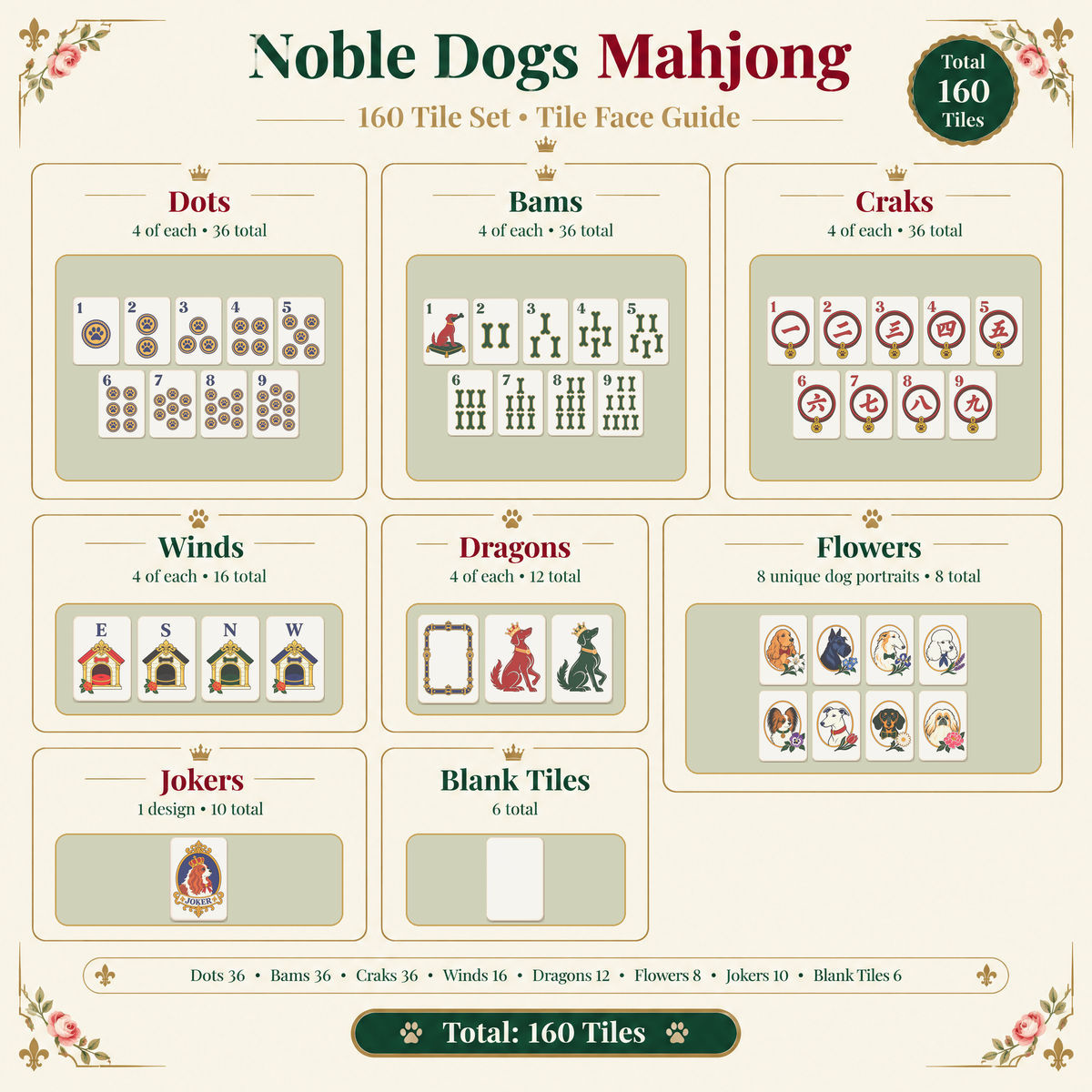
Birmingham tournaments that follow American mahjong require exactly 152 playing tiles plus 8 jokers—no more, no fewer. Your set must have Bams, Craks, and Dots in numbers 1–9 (four of each), 16 winds, 12 dragons (Red, Green, White), 8 flowers, and 8 jokers. Tiles must be legible and undamaged. Some tournaments allow acrylic or bamboo/bone sets interchangeably; a few prefer bamboo for feel and sound. Bring a mahjong mat to protect your tiles and the playing surface—most hosts provide felt mats, but bringing your own ensures consistency. If your set is newer or lacks the current year's National Mah Jongg League card, ask the tournament host whether you may borrow one or must supply it yourself.
How do you prepare your set for tournament play?
Check your tiles for chips or cracks 1–2 weeks before the event. Verify you have all 152 tiles by laying them out suit by suit: each suit should contain 36 tiles (nine denominations × four copies each). Count your 8 jokers, 16 winds (four each direction), 12 dragons, and 8 flowers separately. Clean tiles with a dry, soft cloth—never use water or solvents on bamboo or bone. If you own racks with pushers, practice organizing your hand quickly; tournament etiquette values speed and neatness. Carry your set in a padded mahjong bag or case on tournament day to prevent jostling. Bring a pen and paper for scoring, a small notebook to record hands you win (optional but helpful for improvement), and bottled water.
What mistakes do newcomers make in Birmingham tournaments?
New players often arrive without studying the current year's National Mah Jongg League card beforehand, which slows their play and frustrates table-mates. Others miscalculate how jokers work—remembering that jokers can substitute for any tile except in a single tile, a pair, or as a flower/wind/dragon you're holding as a single—and expose wrong tiles or claim illegal hands. A third mistake: not bringing their own set or assuming the host will supply everything. Many tournaments request you BYOS (bring your own set) or charge an extra fee for borrowers. Finally, newcomers sometimes don't know the Charleston tile-passing ritual, which wastes time at game start.
✨ Find your Mahstead set — free US shipping →
Preparation Task | Why It Matters | Timing |
Count all 152 tiles | Prevents disputes mid-tournament | 1–2 weeks before |
Study current year's card | Speeds hand recognition and calling | 2–3 weeks before |
Clean and inspect tiles | Ensures legibility and durability | 1 week before |
Practice the Charleston | Eliminates confusion at table start | 1 week before (drill with a friend) |
Pack in padded bag | Prevents damage en route | Night before |
Bring pen, paper, water | Supports focus and scoring accuracy | Day of |
Newcomers also hesitate to ask questions during play—don't. Tournament hosts and veteran players expect clarifications about hand legality, joker use, and scoring rules. Pause the game if you're unsure; calling an illegal hand or misplaying costs points or disqualifies a round.
What's the unwritten etiquette Birmingham players follow?
Announce your discard clearly and place it face-up in the center, not your own rack. Wait for other players to call before drawing. If someone calls your tile, pass it promptly; don't delay or grumble. Stay silent during play—no coaching or side conversations once the hand has begun. Keep your rack organized and tile-side down so opponents can't read your hand. If you win, announce it immediately and lay down your winning hand for verification. Don't rearrange tiles after you've claimed the hand. Thank the table and the host at the end of each round. Arrive 10 minutes early and set up your rack promptly; tournament hosts start on time.
🎁 See our most-loved mahjong sets & accessories →
How do you register and what should you know beforehand?
Contact the tournament host or venue 1–2 weeks in advance. Ask for the entry fee, date, start time, number of rounds, scoring format, and whether BYOS is required or optional. Confirm the host uses the current National Mah Jongg League card and whether you need to bring your own copy. Ask if the group welcomes beginners—most do. Request directions, parking info, and contact details for the day-of in case you're delayed. Some tournaments require advance registration on a form or website; others accept walk-ins on a first-come, first-served basis. Confirm the tournament is American mahjong, not Chinese or Hong Kong, unless you're experienced in multiple variants.
Before your first tournament, read the mahjong for beginners guide and how to play American mahjong to solidify the rules. Watch a tutorial video or attend a casual game night first if the tournament intimidates you. Most Birmingham clubs are welcoming; they value regular participation over winning streaks.
What to check before you buy tournament gear:
Set condition: Inspect for cracked or missing tiles; buy only 160-tile sets with full counts verified by the seller.
Mat quality: Test the mat surface for grip; a slick mat causes tiles to slide during the Charleston.
Bag durability: Ensure your travel bag or case has padded compartments and secure zippers.
Rack height: Confirm racks with pushers fit your hand size and keep tiles stable during play.

FAQ
Do Birmingham tournaments require membership in a club or the National Mah Jongg League?
Most casual and community tournaments do not. You may join a club or league for annual membership to access more events and discounts, but single-tournament entry is typically open to the public. Ask the host whether non-members can play for a higher entry fee.
Can I use a 160-tile set in a Birmingham tournament?
Yes. A 160-tile set contains 152 playing tiles plus 8 spare tiles, which is exactly what tournaments require. Only bring the 152 tiles into play; spare tiles remain in your bag.
What if I don't own a mahjong set yet?
Contact the tournament host to ask whether they provide loaner sets. Many clubs do. If not, consider purchasing a best-selling mahjong set with free US shipping so you're ready for future games and tournaments.
How much does it cost to enter a Birmingham mahjong tournament?
Entry fees vary by venue and format. Contact your local host directly; there is no standard rate. Some clubs offer free play for members or beginners and charge only for winners' prizes.
What if I make a mistake during a tournament hand?
Stop play immediately and call the tournament director. Describe what happened. The director will review the hand against the National Mah Jongg League rules and scoring card and issue a ruling. Most mistakes result in a penalty or disqualification of that hand, not expulsion from the tournament.
Can I use Chinese or Hong Kong mahjong rules in a Birmingham tournament?
Rarely. Most Birmingham tournaments explicitly follow American mahjong rules. If you're interested in other variants, ask hosts about side games or special sessions—some clubs accommodate them, but confirm in advance.


View More
View More
View More
