
Mahjong Tiles for Small Tables: Size & Setup Guide
Last updated: Nov 23, 2026
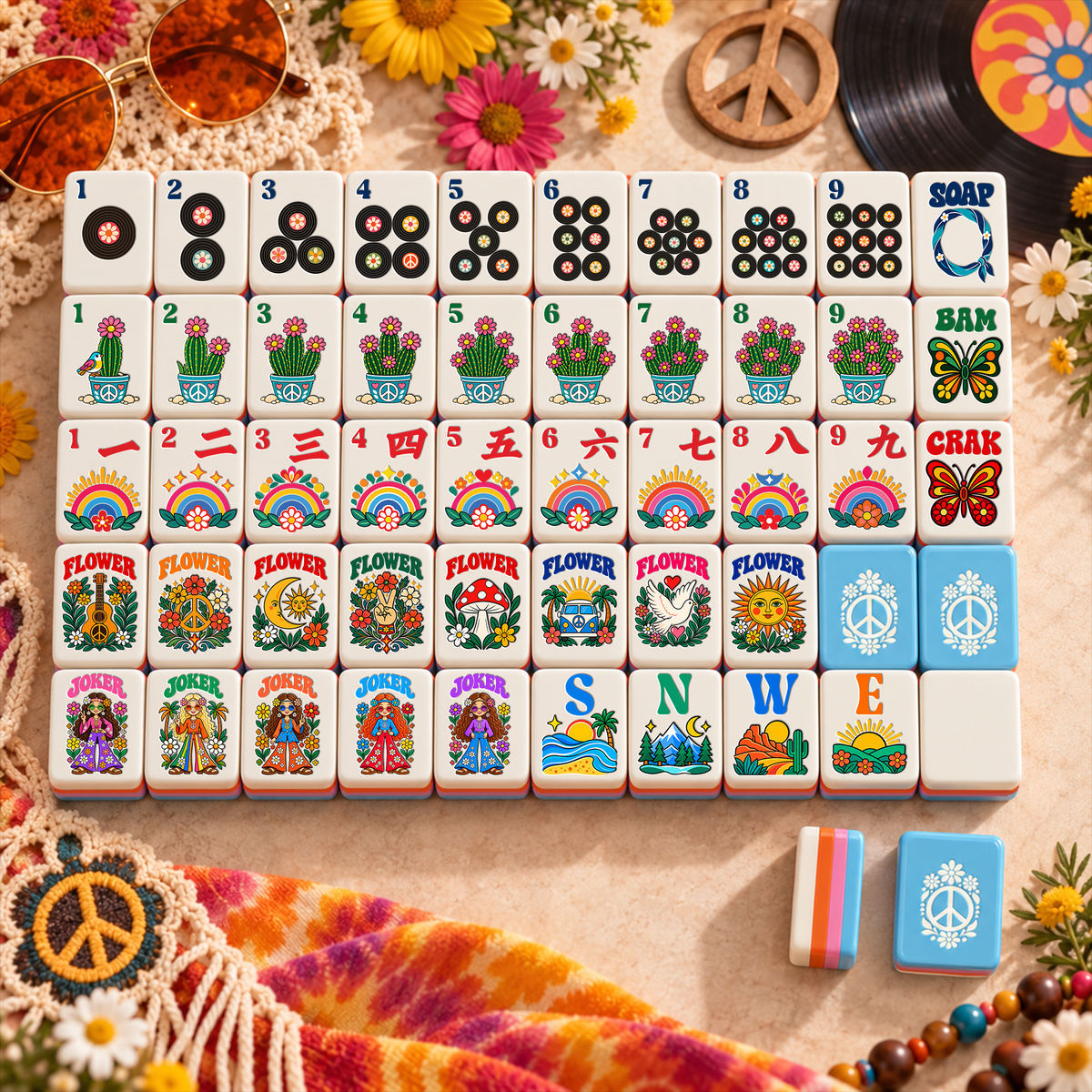
Small-table mahjong works best with standard American tiles (about 1¼ inches per tile face), a compact mat sized 36–42 inches square, and stacked racks with pushers to keep your hand vertical and save real estate. The standard 152-tile American set fits any table; what changes is your mat footprint, rack height, and player spacing. Most compact setups need a mat that doesn't overhang more than 2–3 inches per side, racks that stack at least 2–3 tiles high, and a play surface at least 36 inches across. Mahstead's compact engraved American mahjong sets pair with smaller mats and vertical racks to maximize usable arm room. Avoid oversized mats, wide-base racks, or tile sets with excessively thick tiles—these eat space fast and make small tables unplayable. Check your table depth, mat dimensions, and rack design before ordering.
When you're hosting mahjong on a dining table, card table, or apartment living-room setup, every inch counts. Small tables aren't a problem—they're a constraint that demands smarter gear choices. We've played hundreds of games on tables 36–42 inches square, and we know which tools work and which ones turn your game into an awkward squeeze.
What tile size works best for small tables?
Standard American mahjong tiles measure roughly 1¼ inches wide by 3/4 inch tall—a size that's been the American norm for decades. This size is readable at arm's length, comfortable to grip, and easy to shuffle during the Charleston. On a small table, you don't need to go smaller; you need to stack smarter. Smaller tiles (like 1 inch wide) do exist in other mahjong traditions, but they're harder to read and slower to play. The real savings come from vertical racks and a snug mat, not tiny tiles. Stick with standard American tile dimensions and adjust your layout instead.

How do you measure a mat for a small table?
Your mat is the footprint anchor. A standard full-size American mahjong mat runs 36–42 inches square—that's the playable center, not including overhang. For a small table (say, 36–42 inches across), you want a mat that fits flush or with only 1–2 inches of overhang per side. Why? Overhang makes the mat sag, tiles slide, and players lose arm space. Measure your table edge-to-edge first, then choose a mat that leaves at least 3–4 inches of clear table surface on every side for drink glasses, score sheets, and hand racks. The how to choose a mahjong mat guide walks you through this; in short, smaller tables need taut mats with minimal drape.
🀄 Shop best-selling mahjong sets →
Why do racks with pushers solve small-table crowding?
Racks with pushers are game-changers on tight tables. Instead of fanning tiles across the table edge (which eats 8–10 inches of width per player), you stack tiles vertically inside a rack—sometimes 3–4 tiles high—and use a pusher rod to slide them down as you draw. This cuts your hand footprint from 10 inches wide to 3–4 inches. On a four-player 36-inch table, this difference means everyone fits comfortably. Pushers also keep your tiles from sliding during shuffles and the Charleston. We run racks with pushers on nearly every small-table game we host. The racks with pushers guide explains sizing and styles; for small tables, choose racks that stand 2–3 inches tall when fully loaded.
What's the ideal small-table layout: distances and spacing?
Picture this: a 36-inch square table with four players, one per side. Each player needs about 9 inches of mat edge for their rack and exposed hand, 12 inches for the discard line (row of tiles played), and 6 inches of table edge buffer for drinks and score cards. That's roughly 27 inches per side—tight on a 36-inch table, but doable if your racks are vertical. The wall (draw pile) sits in the center, typically a 12–14-inch square zone. Players sit 3–4 feet apart, elbows comfortably bent. If your table is smaller than 36 inches, you'll need to reduce player spacing or rotate players mid-game (a common practice in casual home play). Test your setup before the first game: place mats, racks, and tiles, then sit and reach. Adjust forward or backward until nobody's crowding or reaching across anyone's tiles.
🎁 See our most-loved mahjong sets & accessories →
How do set materials affect small-table playability?
Tile weight, material, and thickness matter on a cramped table. Acrylic tiles (common in best-selling mahjong sets) are lighter, quieter during shuffles, and less prone to sliding than wood or heavy resin. They also stack neatly in pushers. On a small table, lightweight tiles reduce fatigue when drawing and reduce table vibration when you shuffle. Avoid excessively thick tiles or oversized bamboo racks that add bulk without function. We've found that acrylic sets paired with compact mats and vertical racks create the smoothest small-table experience. Thick bamboo sets shine on large, formal tables; for small spaces, acrylic is more forgiving.

Small-table gear: a comparison for your setup
Scenario | Mat Size | Rack Type | Best For | Key Trade-off |
36" table, 4 players | 36" square | Vertical, 3–4 high | Apartments, game nights | Tight player spacing |
42" table, 4 players | 40" square | Vertical, 2–3 high | Casual home play | Slight overhang needed |
30" small table | 30" square | Compact vertical | Two players, travel | Limited four-player comfort |
Card table, casual play | 36" mat | Pushers optional | Flexibility, portability | Less stability |
What to check before you buy:
Measure your table: Width, depth, and height from seat to top. Include any permanent fixtures (leaves, legs, decorative edges).
Count players: Four-player standard, but two and three also work with 2 and 3 player mahjong rules.
Choose mat size: Aim for 2–4 inches of overhang per side, no more.
Test rack height: Load your racks with tiles. Can all four players reach the discard zone without standing or leaning hard?
Plan storage: Small-table setups need compact bags and cases if you move the gear between rooms or homes.
Simulate a hand: Lay out a test row of tiles (tile count, spacing) at your table before game day. Sit and shuffle. You'll spot problems immediately.
Common small-table mistakes to avoid
Mistake 1: Buying an oversized mat. A 48-inch mat on a 36-inch table drapes 6 inches on each side, sags in the middle, and makes tiles slide during play. Stick to mat dimensions ≤ your table width.
Mistake 2: Using wide-base racks. Some racks have a 4–5-inch footprint. On a small table, they block sight lines and crowd arm space. Choose racks with a 2–3-inch base.
Mistake 3: Skipping pushers. If you're playing on a small table and your racks don't have pushers, you're using 10+ inches of table edge per hand. Pushers are not optional—they're essential.
Mistake 4: Forgetting about discard pile space. Each player needs a 12-inch zone for their discarded tiles (drawn in a line). On a cramped table, some players tuck discards vertically or in a tight row; this makes reading hands slow and increases errors.
Mistake 5: Crowding the center wall. The draw pile (wall) should sit in a clear 12–14-inch zone so players can rotate draw position without reaching over other tiles. If the wall bleeds into player zones, shuffles get messy.
✨ Find your Mahstead set — free US shipping →
Why Mahstead sets work on small tables
Our engraved American mahjong sets are designed for real play, not display. Each set includes 152 standard tiles and 8 jokers—the exact count for American play—in acrylic that's lightweight and quiet. The tile engravings are legible at a glance, so even in tight seating you won't squint or ask "what tile is that?" We offer sets with custom designs (including Christmas mahjong sets and other themes) so your small-table game feels personal, not cramped. Pair any Mahstead set with a compact mahjong mat and vertical racks with pushers, and you'll turn a 36-inch table into a smooth, enjoyable four-player game. Free US shipping on all orders means you can test our gear without shipping anxiety.
Final setup checklist for small-table success
[ ] Table dimensions confirmed (≥36" square minimum for four players).
[ ] Mat size selected (≤4" overhang per side).
[ ] Racks ordered with pushers (vertical, 2–3-inch base).
[ ] Tile set in hand (American standard, 152 tiles + 8 jokers).
[ ] Seat spacing tested (3–4 feet between players).
[ ] Discard zone marked or understood (12" per player, center-side).
[ ] Draw-pile position in center confirmed (12–14" square, clear of racks).
[ ] Test shuffle done (tiles don't slide or jam).
[ ] Drinks and score cards placed off-mat.
[ ] How to play American mahjong rules printed or bookmarked for reference.
Small tables aren't a limitation—they're a puzzle. Solve it with the right tile size (standard 1¼"), a snug mat, vertical racks, and compact storage, and you'll host games that feel as smooth as any formal setup. We've played on kitchen tables, apartment nooks, and campaign-style card tables; every one of them worked because we measured first and bought gear that fit. Your game will too.

FAQ
Can I use a standard 152-tile American set on a small table?
Yes. Every American mahjong set contains exactly 152 tiles—the game count never changes. Small tables affect mat size and rack design, not the tile set itself.
What's the smallest table that works for four-player mahjong?
A 36-inch square table is the practical minimum for four players with vertical racks and pushers. Smaller tables favor two or three players, or require players to rotate positions during play.
Do I need a mat on a small table, or can I play on bare wood?
A mat is highly recommended. It defines the play zone, prevents tiles from sliding, and protects your table surface. On a small table, a well-fitted mat actually saves space by organizing the layout.
How much overhang should my mat have on a small table?
Aim for 1–2 inches per side, maximum 4 inches. More overhang causes sagging and tile slippage. Measure your table first, then choose a mat size accordingly.
Are racks with pushers required for small-table play?
No, but they're essential if you want comfortable arm space. Racks with pushers cut your hand footprint by half compared to fanned tiles. On a small table, they make the difference between playable and cramped.
Can I play two-player mahjong on a smaller table than four-player?
Yes. Two-player mahjong uses the same 152-tile set and basic rules but has different wall-drawing and hand-reading conventions. A 30-inch table works fine for two players; see the 2 and 3 player mahjong rules guide for details.
Should I buy acrylic or bamboo tiles for a small table?
Acrylic is lighter, quieter, and stacks better in pushers—ideal for small spaces. Bamboo is heavier and slides more easily; it's better suited to large formal tables.


View More
View More
View More
