
Chinese Mahjong vs. Mahjong Solitaire: Key Differences
Last updated: Nov 23, 2026
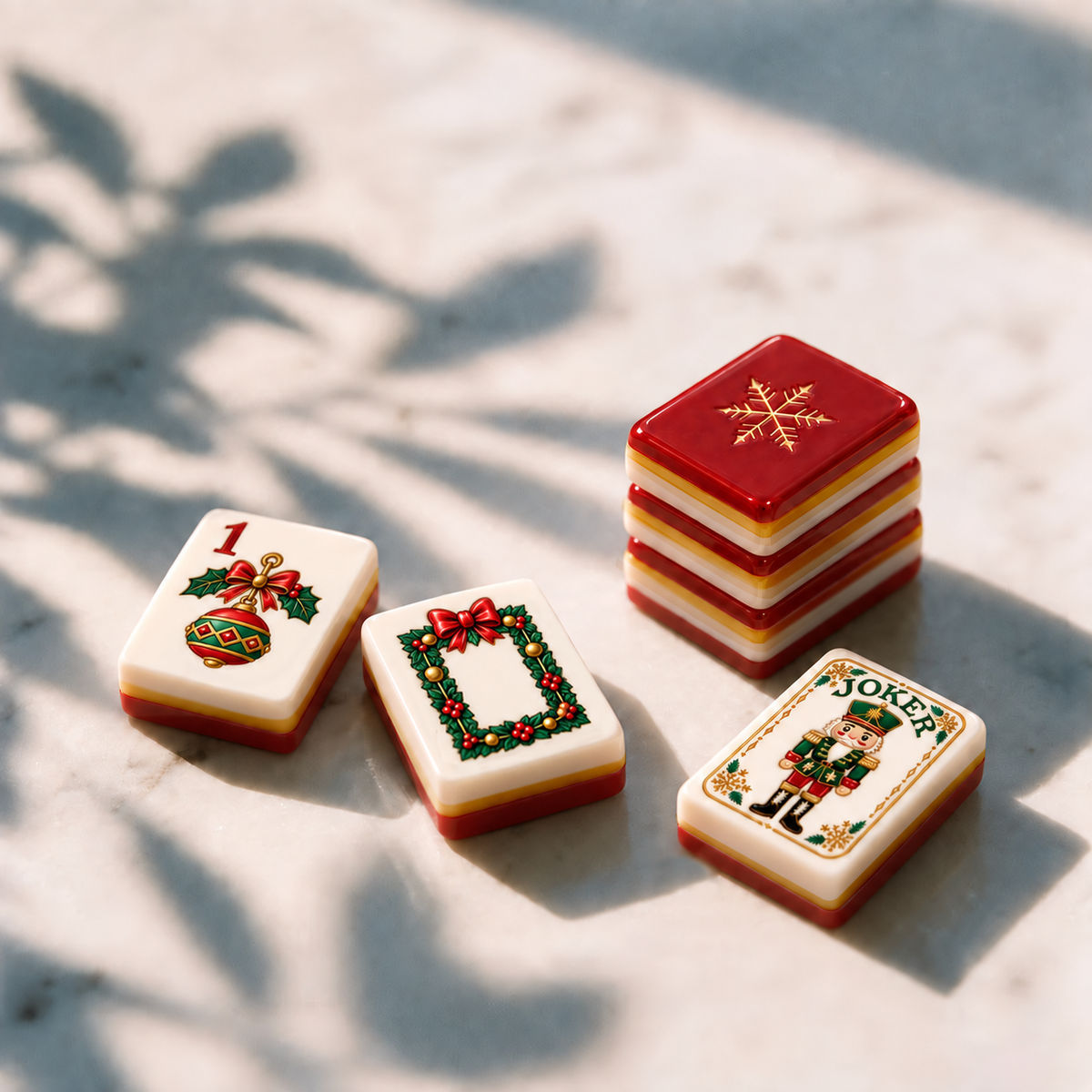
Chinese mahjong is a competitive four-player game (or three-player variant) where players draw, discard, and form melds to win a hand—gameplay typically lasts 15–30 minutes per round. Mahjong solitaire is a puzzle game played alone, where you remove matching pairs of tiles from a layout until the board clears or you lose. Chinese mahjong uses 144 tiles (or 152 in some regional variants), requires knowledge of hand patterns and honor/number sequences, and involves luck, strategy, and player interaction. Mahjong solitaire uses a single 52-tile deck arranged in layers and demands spatial memory and pattern recognition with no luck element. The two games share tile names and symbols but almost no rules; American mahjong, by contrast, is closer to Chinese mahjong's social structure but uses 152 tiles and a seasonal reference card.
How many players does each variant support?
Chinese mahjong is designed for exactly four players (or three, with house rules); every player takes a turn drawing and discarding simultaneously. Mahjong solitaire has only one player—you, alone, against the puzzle. American mahjong also plays four (or two/three with adapted rules). If you're hosting a regular group and want everyone involved at once, Chinese mahjong is your game; if you want to unwind solo during lunch or travel, solitaire is the fit.

What's the goal in each game?
In Chinese mahjong, the goal is to complete a winning hand (usually three melds plus a pair, following regional hand-value rules) before your opponents. You earn points based on the hand's rank and any bonuses (like all one suit or a sequence of honors). In mahjong solitaire, the goal is to clear the entire board by matching and removing identical tile pairs—no points, no ranking, just a win/loss outcome. Chinese mahjong rewards strategy and reading opponents; solitaire rewards observation and planning ahead.
How many tiles does each version use?
Chinese mahjong uses 144 tiles: four suits (Bamboo, Characters, Dots, Honors) with numbers 1–9 in each suit (108 tiles), plus 16 wind tiles (4 each of North, East, South, West) and 12 dragons (4 each of Red, Green, White)—no flowers or jokers. Mahjong solitaire typically uses 52 tiles (one standard deck per solitaire software or board), arranged in a pyramid, tower, or layered shape. American mahjong, for comparison, uses 152 tiles—the standard Chinese 144 plus 8 flowers and extra jokers. For a home group learning to play together, explore our best-selling mahjong sets, which feature American rules and tile counts.
🀄 Shop best-selling mahjong sets →
What gameplay mechanics differ most?
Chinese mahjong involves drawing (picking a tile from the wall), discarding (playing an unwanted tile face-up), and calling (claiming a discard to form a meld or win). All players act in turn; play is continuous and social. Melds include chows (three consecutive numbers: 1-2-3), pungs (three identical tiles), and kongs (four identical tiles). Mahjong solitaire involves only clicking or tapping to select and remove tile pairs—no turns, no opponents, no sequences. Chinese mahjong has a 30–60-second window per turn; solitaire has no time pressure. One encourages conversation and strategy; the other rewards quiet focus.
Which variant is best for learning?
American mahjong is often easier for Western players than Chinese mahjong because the National Mah Jongg League card guides legal hands, removing memorization of regional patterns. Learn how to play American mahjong step-by-step with a clear rulebook and standardized hand list. Chinese mahjong requires fluency in hand rankings, honor tiles, and regional scoring variations before you can play smoothly. Mahjong solitaire is the simplest entry point—no rules to learn, just match and remove. For a group starting from zero, American mahjong (with a reference card and our best-selling sets) bridges Chinese complexity and pure puzzle play.

How do scoring and winning differ?
In Chinese mahjong, winning earns points based on hand type—a pair of dragons plus three chows might be worth 1 point; all one suit or all honors might be worth 8 or more (rules vary by region and house). Payment flows from other players to the winner. Mahjong solitaire has no scoring—you either clear the board (win) or run out of matches (lose). American mahjong uses a seasonal card with fixed hand values, and winners typically score 1 point per hand; play continues until someone reaches 2000 points or a set number of rounds completes. If you prize competition and ranking, Chinese or American mahjong fits; solitaire is purely pass/fail.
Aspect | Chinese Mahjong | Mahjong Solitaire | American Mahjong |
Players | 4 (or 3) | 1 | 4 (or 2–3) |
Tiles per set | 144 (or 152) | 52 | 152 |
Game length | 15–30 min/round | 5–15 min | 20–60 min |
Winning rule | Complete a named hand pattern | Clear all tiles | Match seasonal card hand + draw winning tile |
Scoring | Points paid by opponents | Win/loss only | 1 point per hand to 2000 |
Luck factor | Moderate (tile draw) | None (pure logic) | High (draw-dependent) |
Best for | Social groups, strategy | Solo relaxation | Weekly game nights |
What tiles and symbols do they share—and where they differ?
All three variants use similar tile faces: Bamboo (Bam), Characters (Crak), Dots (Dot), Winds (N/E/W/S), and Dragons (Red, Green, White). Chinese mahjong has no flowers or jokers; American mahjong includes 8 flower tiles and 8 jokers (in a 160-tile set). Mahjong solitaire uses only the basic 52-tile core (often printed on a single-use card or digital board). The symbols look identical across games, but the rules for how they combine are completely different—a "pung" in Chinese mahjong (three identical tiles) is also valid in American mahjong, but solitaire uses only pairs with no melds at all.
🎁 See our most-loved mahjong sets & accessories →
Which version should you choose for home play?
If your group meets weekly, plays socially, and wants a skill-based game with clear wins, start with American mahjong—it's standardized, beginner-friendly thanks to the yearly League card, and requires no regional rule negotiation. If you want to learn the "classic" game with deeper strategy and cultural roots, invest time in Chinese mahjong and connect with a local club or teacher (often found at community centers, libraries, or cultural organizations). If you're alone and want a relaxing puzzle, download or buy a mahjong solitaire app or board—zero social pressure, instant play. For hosting, American mahjong is fastest to teach; explore our engraved American sets for a durable, custom-designed set that lasts years.
What to check before you buy
Player count: Are you hosting four people or going solo?
Space: American and Chinese mahjong both need a 36–48-inch table; solitaire needs 12 square inches.
Time commitment: Can you teach rules in 20 minutes (American) or do you want a time-investment learning curve (Chinese)?
Tile quality: If buying a physical set, check whether tiles are acrylic or bamboo, whether jokers are included (critical for American mahjong), and whether the case protects tiles during storage and travel.
Reference card: American sets should include the current National Mah Jongg League card; Chinese sets rely on house rules or a scorecard app.
For a group set that ships ready to play, our best-selling American mahjong collection includes full tile counts, jokers, and custom engraving options. If you prefer to carry your set to different venues, pair it with a sturdy mahjong bag or case—acrylic tiles in a cushioned bag survive car rides and friend meetups without cracking.
✨ Find your Mahstead set — free US shipping →

FAQ
Can I play Chinese mahjong with an American mahjong set?
Partially. An American set has 152 tiles (152 Chinese uses 144), includes flowers and jokers that Chinese mahjong doesn't use, and tile counts differ slightly. You'd need to remove flowers and jokers before playing, making setup awkward. Buy a dedicated Chinese set if you plan regular Chinese games.
Is mahjong solitaire the same as the tile-matching game on my phone?
Yes. Most phone mahjong games are solitaire variants—they remove pairs until the board clears. They share the name and tile symbols with Chinese and American mahjong but use completely different rules.
How long does a Chinese mahjong game take compared to American?
Chinese mahjong typically finishes one hand in 15–30 minutes; American mahjong plays 1–2 hands per hour (20–60 minutes total, depending on scoring). Solitaire puzzles solve in 5–15 minutes, with no turn delays.
Do I need to learn both Chinese and American mahjong, or just pick one?
Pick one based on your group's availability. American mahjong is easier for beginners because the League card standardizes hands; Chinese mahjong rewards deeper play and strategy but requires regional rule study. Many players enjoy both.
What's the fastest way to learn American mahjong if I've never played before?
Gather four players, get a standard 152-tile set with the current National Mah Jongg League card, watch a 10-minute intro video (or read a guide), and play 3–4 practice hands. Most players grasp the basics in one session.
Can I play Chinese mahjong with three players instead of four?
Yes. Three-player Chinese mahjong exists in many regions (Hong Kong, Taiwan), with modified rules for hand rankings and tile removal. Check a regional rulebook or ask an experienced player in your area for house rules before playing.


View More
View More
View More
