
Mahjong Solitaire Lessons Online: Learn Anytime, Solo Play Guide
Last updated: Nov 23, 2026
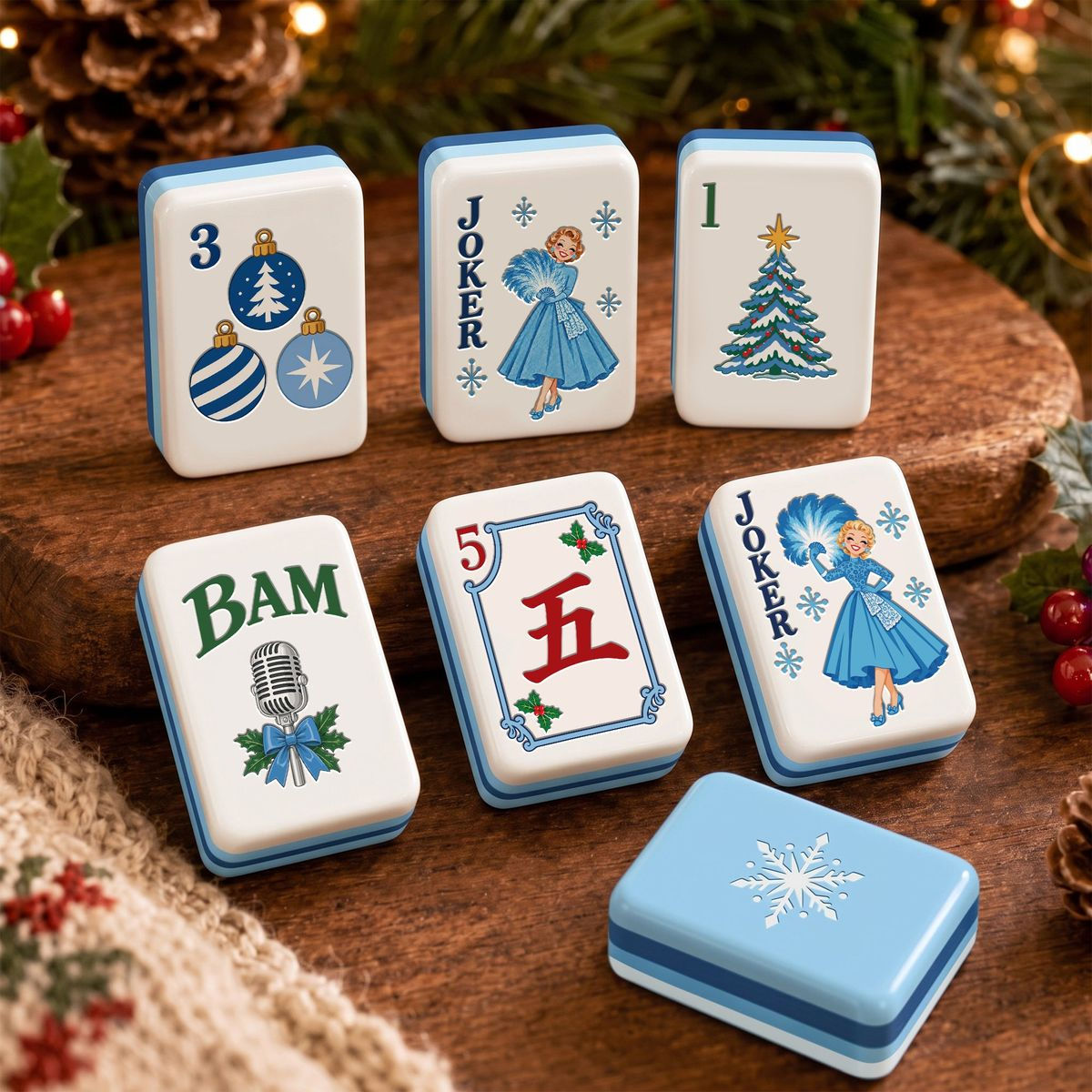
Mahjong solitaire lessons online teach hand-reading, tile strategy, and rule mastery via video, live Zoom sessions, or self-paced platforms. Most cover American mahjong (the 152-tile card-based game played with four players) or simplified solo variants. YouTube hosts free beginner tutorials; subscription platforms offer structured 4–12 week courses with live Q&A; some teachers also offer one-on-one coaching. Cost varies widely. Avoid lessons that skip the current-year National Mah Jongg League card or teach outdated hand patterns. Mahstead's free guides provide reference material to pair with any lesson.
What exactly is "mahjong solitaire" online?
Confusion here is universal. Most people searching "mahjong solitaire lessons" want to learn either the tile-matching computer game (where you clear pairs from a pyramid or 3D tower) or the table game played solo or with fewer players. Online lessons exist for both. The tile-matching game requires no strategy course—you learn by clicking. Table mahjong solitaire (where one player draws and discards against a timer or simple rules) does benefit from strategy coaching. American mahjong lessons focus on the four-player table version but often include two- or three-player rule variants.

Where do most people find online mahjong lessons?
YouTube offers hundreds of free tutorials: search "American mahjong for beginners" or "how to play American mahjong" for unfiltered results. Facebook groups dedicated to mahjong often share lesson links and recommend teachers. Specialized platforms (Skillshare, Udemy, or teacher-run Zoom series) charge per course or subscription. Local community centers, libraries, synagogues, and senior centers sometimes offer free or low-cost group lessons that include online components. Check Meetup boards in your city for groups hosting hybrid in-person + remote sessions. The National Mah Jongg League publishes no official lesson library but its website lists affiliated teachers by region.
How long does a typical online mahjong lesson take?
Self-paced courses usually span 4–12 weeks with 1–2 hours of video per week, plus practice homework. Live group Zoom classes often run 60–90 minutes per session, meeting weekly. One-on-one coaching sessions range from 30 to 60 minutes. A beginner can grasp hand-reading basics in one 90-minute session but needs 8–10 hours of practice over weeks to play confidently at a table. Intermediate players taking advanced strategy lessons (e.g., hand prioritization, discard psychology) may commit to a 6-week course. Most online platforms let you rewatch videos indefinitely, so pacing is flexible.
What should a good mahjong lesson curriculum include?
Topic | Why It Matters | Red Flag if Missing |
Current-year NMJL card reading | Hand patterns change annually; old lessons teach obsolete hands | Lesson uses example hands not on 2026 card |
Tile ranks & symbols (Bams, Craks, Dots, winds, dragons) | Foundation for all strategy | Skips suit names or uses non-standard spellings |
Charleston mechanics & tile-passing ritual | Critical to American mahjong; confuses beginners most | Treats Charleston as optional or vague |
Joker rules & limits | Jokers are highest-value tiles; misuse ruins hands | Claims jokers can fill any tile or pair |
Hand exposure rules (pungs, kongs, quints) | American mahjong allows only specific melds; differs radically from Chinese | Treats sequences (chows) as legal or allows single-tile joker use |
Discard strategy & table reading | Separates casual from competitive play | Focuses only on hand completion, ignores opponents' discards |
Scoring (if American) | Necessary for settling wins and ties | Provides vague "just count points" guidance |
A solid lesson defines each rule with worked examples, shows why each rule exists (e.g., "jokers can't be pairs because they're wildcards, not identity tiles"), and drills hand-spotting on the actual card. Avoid courses that say "it's complicated—just play and learn" or that mix American, Chinese, and Hong Kong rules without naming which is which.
How do online lessons differ from joining a live table group?
Online lessons teach theory: you learn rules, hand patterns, strategy, and tile psychology in isolation. Live table groups teach practice: you play actual games, feel social pressure, and discover mistakes through losing. Most players combine both—take a lesson course first, then join a local group to apply that learning. Some teachers also run "open play" sessions after lessons where students play against each other in real time on Zoom with the instructor observing. That hybrid model accelerates learning because you get corrected mid-game. Solo study of online lessons without table practice often leaves beginners confident but unprepared for the speed and psychology of a real game.
🀄 Shop best-selling mahjong sets →
What's the fastest way to prep for your first table game?
If you've never played, follow this order: (1) Watch a 20–30 minute video overview of American mahjong rules and hand types. (2) Spend 2–3 hours studying a physical or digital copy of the current National Mah Jongg League card—focus on the first few sections and one "like number" pattern. (3) Play solo or with one friend for 3–5 hours, referring to the card constantly and practicing tile-reading speed. (4) Attend your first group game with the card, a pen, and honesty about your level—most groups welcome beginners and will slow play if asked. Online lessons speed up step 1–2, but step 3 (solo practice with a real set) is mandatory. Skipping any step leads to frustration at the table.
🎁 See our most-loved mahjong sets & accessories →

Does the lesson topic change if you're learning a non-American variant?
Yes. Chinese mahjong teaches chows (runs like 1–2–3 of the same suit), which American mahjong forbids. Hong Kong mahjong uses a different point system and hand structure. Riichi (Japanese mahjong) has unique tile-melding rules and betting. Taiwanese mahjong mixes elements of all three. Online lessons for these variants exist on YouTube and Udemy, often taught by native speakers. If you're unsure which variant interests you, start with American mahjong—it's the most widely taught in North America and has the simplest rule set. Once you've mastered American, switching to a variant becomes easier because the core concept (matching sets and pairs) stays the same; only the legal combinations change. Lessons labeled "international mahjong" often blur these lines; clarify the specific variant before signing up.
✨ Find your Mahstead set — free US shipping →
How do you know if an online teacher is trustworthy?
Look for: (1) explicit mention of the current year's National Mah Jongg League card (not just "the mahjong card"), (2) examples using correct tile names and symbols (Bam, not "bamboo"; Crak, not "character"), (3) an acknowledgment that American mahjong differs from Chinese/Hong Kong/Riichi variants, (4) willingness to answer specific rule questions in Q&A sessions. Avoid teachers who claim "there's only one way to play mahjong," charge unusually high fees, or offer guarantees like "win at every table." Read reviews or join a Facebook group and ask for recommendations—players talk. Many established teachers post free intro videos; watch one to assess their teaching style before committing. The best teachers admit when they don't know a rule rather than guess. A beginner's guide from a trusted source (like Mahstead's free blog) can serve as a second opinion to validate what a lesson teaches.
How to choose between self-paced and live-session lessons?
Format | Best For | Time Commitment | Learning Curve |
Self-paced video (4–12 weeks) | Busy schedules, learners who rewatch, introverts | 1–2 hrs/week on your schedule | Slower (no immediate feedback) |
Live Zoom group (weekly, 60–90 min) | Social learners, fast absorbers, accountability seekers | Fixed weekly time slot | Faster (Q&A + peer energy) |
One-on-one coaching (30–60 min/session) | Personalized gaps, nervous beginners, advanced polish | Flexible, but fewer sessions affordable | Fastest (direct correction) |
Self-paced works if you're disciplined and willing to rewatch. Live group adds accountability and peer learning but requires schedule flexibility. One-on-one is fastest but most expensive. Many people do a hybrid: buy a self-paced course, then attend one live session per week to clarify confusion. Start with whichever fits your schedule; learning the rules takes the same effort regardless of delivery method.
What should you check before you buy an online lesson?
Ask yourself these questions:
Does the lesson specify "American" mahjong, or does it lump all variants together? If vague, ask the teacher before enrolling.
Is the current-year National Mah Jongg League card mentioned in the syllabus? If not, lessons may teach outdated hands.
Does the preview or first video show real tile images and correct names? If tiles are misspelled or misnamed, teaching quality is suspect.
Is there a refund or satisfaction guarantee? Legitimate platforms offer 14–30 day refunds.
Can you contact the teacher with a question before enrolling? Responsiveness signals professionalism.
Does the course include access to a practice card or hand-spotting drills? Self-paced learning without drills is harder.
Are live Q&A sessions recorded for those who can't attend? This flexibility is valuable.
If three or more answers are "no" or "unclear," keep searching.
What free resources pair well with online lessons?
Mahstead's blog on reading the mahjong card breaks down hand notation; the Charleston explained clarifies the pre-game tile-passing ritual that confuses most newcomers; and how jokers work addresses the rule that trips up intermediate players. YouTube channels run by experienced players often post strategy deep-dives on specific hand types. The official National Mah Jongg League publishes the annual card and a basic rules PDF. Facebook groups have pinned files with tips, common mistakes, and hand-spotting practice. Pairing free written guides with a paid video lesson accelerates understanding because you'll read, watch, practice, then refer back to written explanations when confusion arises.

FAQ
Can you really learn mahjong online without a physical set or practice group?
Yes—theory and hand-reading can be mastered solo with videos and the card. But table speed, discard psychology, and tile-handling finesse require group play. Most learners do both: online lesson first, then 3–5 casual table sessions to feel confident.
What's the difference between mahjong solitaire lessons and American mahjong lessons?
Mahjong solitaire is the computer tile-matching game (no lesson needed, just play). American mahjong lessons teach the four-player card-based table game with specific hand patterns, tile ranks, and rules updated yearly. Different games entirely.
Is it worth paying for an online lesson if free YouTube videos exist?
Free videos are unfiltered and scattered—you spend time vetting them. Paid courses offer a curated curriculum, structured pacing, and live feedback. If you're serious about playing at a table within weeks, paid courses save time. If you're casual, free videos suffice.
Do online lessons teach how to win, or just how to play?
Lessons teach rules and basic strategy (which hands to prioritize, when to discard safely). "Winning" at mahjong also involves table psychology, position advantage, and luck—no lesson guarantees wins. Expect to lose early games while learning.
Which online lesson platform is best—YouTube, Skillshare, Udemy, or a private teacher?
No single "best"—it depends on your learning style and schedule. YouTube = free, unfiltered. Skillshare/Udemy = affordable, structured, self-paced. Private teacher = personalized, fast, priciest. Ask in local mahjong groups for word-of-mouth recommendations in your area.
Do I need to buy a physical mahjong set before taking an online lesson?
Not immediately. You can learn theory with videos and the card alone. But practicing with a real set—feeling tile weight, reading symbols at speed, handling a rack—is crucial before your first group game. Our best-selling sets offer all the tiles and tools you'll need once you're ready to play.
What if I take a lesson and still feel lost at my first table?
Completely normal. Tell the group you're new and ask to sit out the first hand to observe. Most groups pause for questions. Play slowly, refer to the card constantly, and ask "Is this hand legal?" before declaring a win. Experienced players expect this and rarely rush beginners.
Can online lessons teach solo mahjong (one-player solitaire variants)?
Yes, but those lessons are rare. Solo mahjong variants exist (draw-and-discard against a timer, or puzzle-mode hand completion) but aren't taught as formally as four-player American mahjong. YouTube and blog tutorials cover solo rules casually. If solo play is your goal, free blog posts usually suffice.


View More
View More
View More
