
Mahjong Racks with Pushers for Small Tables: Shop Smart
Last updated: Nov 23, 2026
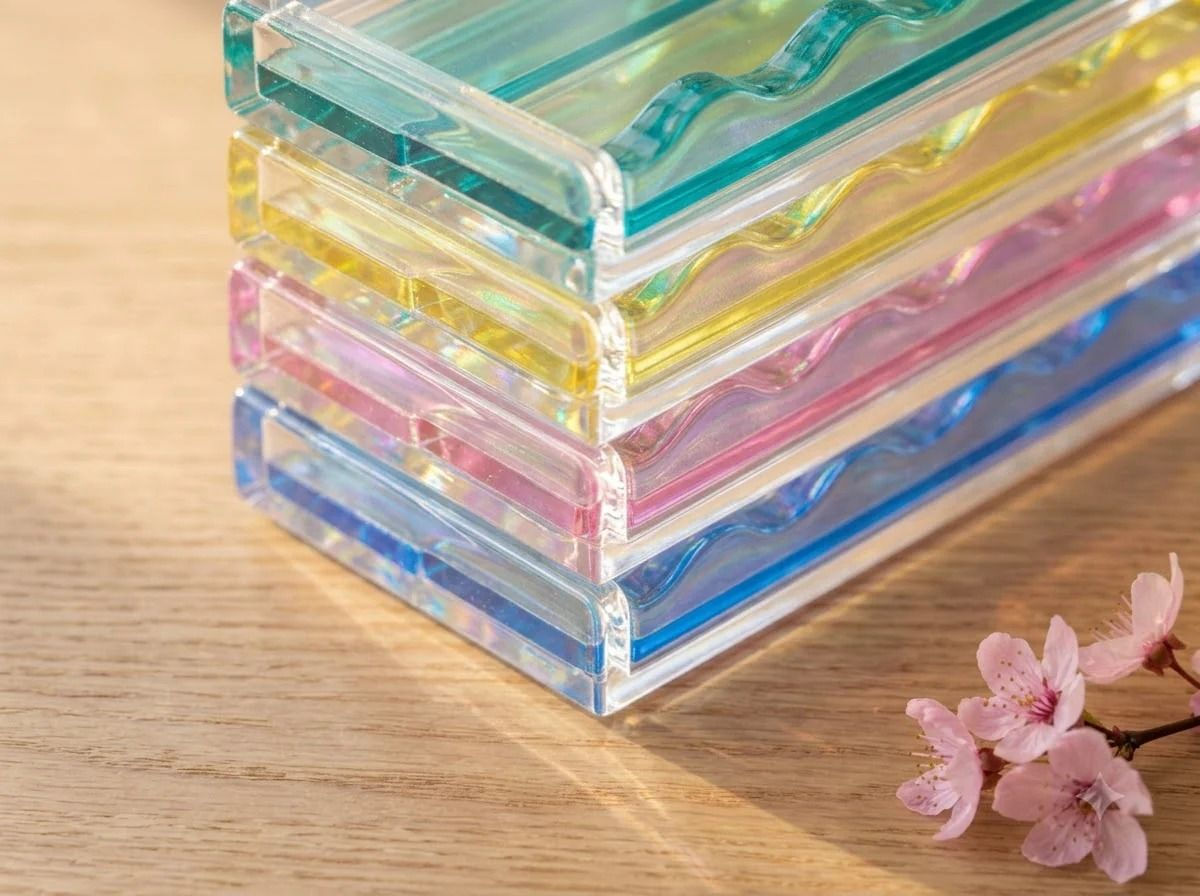
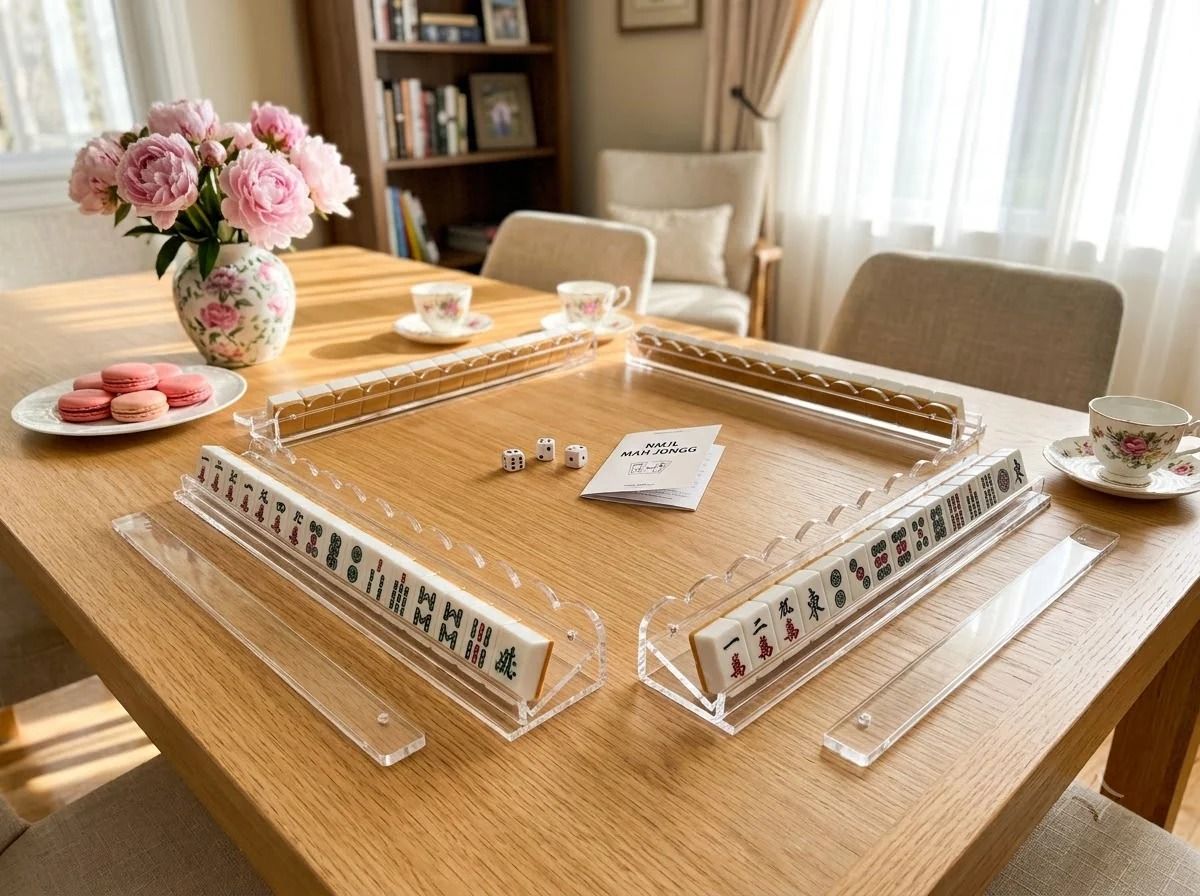
A mahjong rack with pushers is a wooden or acrylic holder that stands tiles upright and includes a pusher stick to nudge tiles smoothly without fumbling. For small tables, you want a compact rack that holds a full hand (typically 13–14 tiles) without extending beyond the table edge. American mahjong racks come in standard widths; the key is choosing one scaled to your space—usually 10–14 inches across. Mahstead offers acrylic and traditional wooden mahjong racks with pushers in multiple designs, from engraved titles to playful themes. Prices vary by material and detail; check the product page for current options. Avoid oversized racks meant for full tile storage; they waste table real estate. Pair your rack with our best-selling mahjong sets and a compact mat for a complete tight-space setup. 🀄 Shop mahjong racks with pushers →
What tile space do you actually need on a small table?
Before you measure, count: each player holds 13 tiles (14 on the player's turn), so your rack must accommodate a full hand comfortably. A small dining or side table—36 to 48 inches wide—leaves roughly 9–12 inches of space per player after accounting for the center discard area and the other players' tiles. A compact rack takes up 10–14 inches horizontally and 3–4 inches of depth; it should not overhang the table edge, or tiles topple when someone reaches for a discard. Test your table first: measure the longest unobstructed line available at your seat. If it's under 12 inches, look for a narrow-profile rack. Many small-table players also reduce tile visibility clutter by using mahjong mats with built-in seat zones—they anchor racks and save inches.
Should you buy a single rack or a set of four?
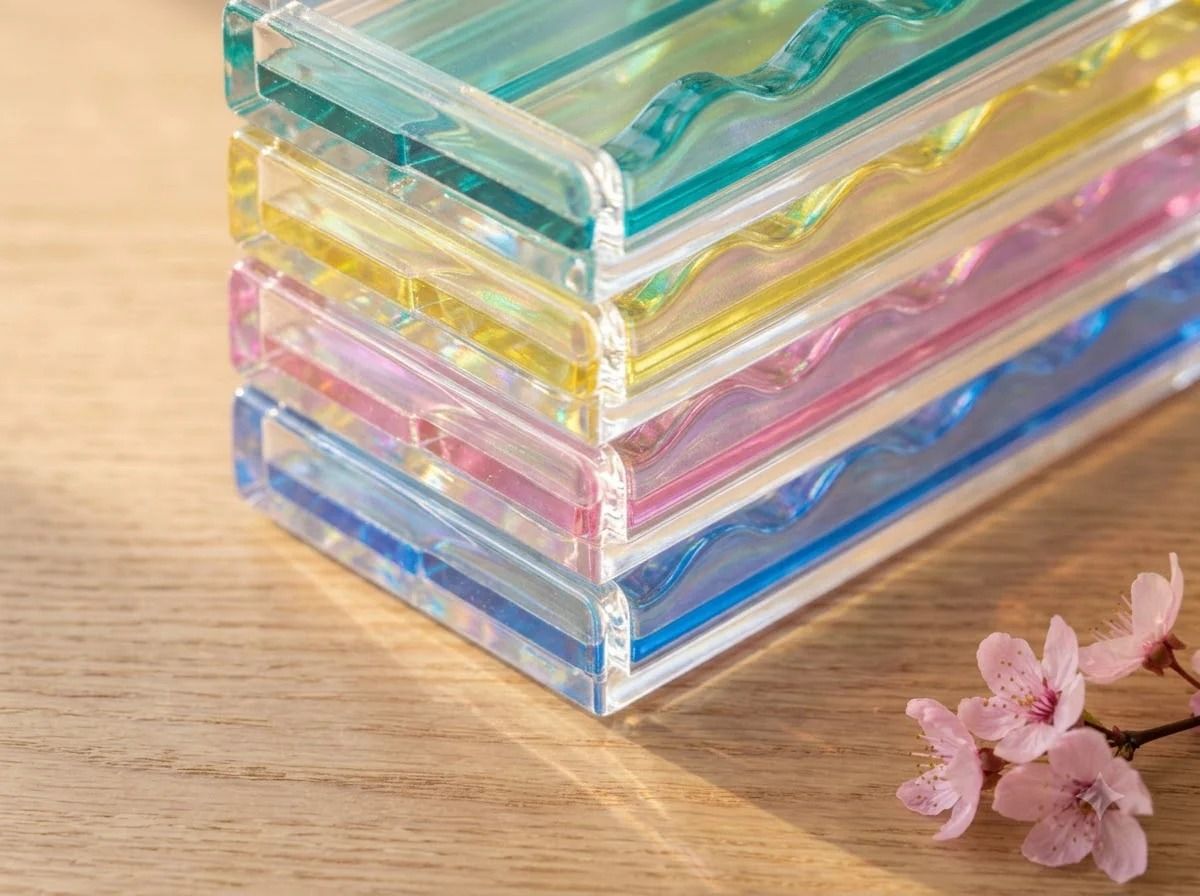
Players who host regular games usually buy four matching racks—one per seat—for consistency and speed of setup. If you rotate through players' homes or play at clubs, a single rack lets you travel light; you can stack spare racks in a mahjong bag or case without much bulk. Four racks cost more upfront but eliminate the "who brings the racks?" friction and look polished on a mat. One rack is ideal if you're the only serious player at your table or you switch between two or three regular venues. Check whether your order ships complete or if racks are sold individually; Mahstead packs them carefully for free US shipping, so no penalty for buying one or four.
Acrylic vs. wood: which works better in tight spaces?
Material | Best for small tables? | Durability | Weight | Visual style |
Acrylic (engraved) | Yes—thinner profile, less footprint | High; resists warping | Light; easy to move | Modern, colorful designs available |
Wood (traditional) | Yes—compact, can be very narrow | High; warps only in extreme humidity | Slightly heavier; stable | Classic; timeless look |
Both work; acrylic edges the win for tight spaces because it's thinner and lighter. Engraved acrylic racks let you personalize with titles (e.g., "Mah-Jongg Monday") or humorous phrases—a small upside on a small table. Wood racks feel premium and are ideal if you value a traditional aesthetic or play in formal settings. Either choice takes up the same floor footprint; the difference is visual impact and how long it lasts. Acrylic doesn't absorb coffee spills; wood requires occasional care but ages beautifully.
How does a pusher make small-table play easier?
A pusher is a 6–8 inch stick (wood or acrylic) you hold in one hand to nudge tiles in and out of your rack without fingers entering the hand. On a small table, this matters: fumbling with individual tiles in a cramped space leads to knocked-over racks or tiles sliding off the edge. The pusher keeps movement smooth and courteous—especially important in friendly home games where clumsiness risks tile damage or spilled drinks. When you draw a tile from the wall, use the pusher to slide a new blank into your rack's edge, then shift the others over. When you discard, push tiles from the bottom outward rather than plucking from the top, which can destabilize the whole hand. On a large table, a pusher is optional; on a small one, it's practical.
🎁 Browse our mahjong racks collection →
Which Mahstead designs fit a small-table aesthetic?
Mahstead's engraved mahjong sets and racks include witty titles and custom engravings—perfect for small tables in home settings where personality matters. A rack engraved with your players' names or a running joke ("Tile There Is" or "Mah-Jongg Moms") breaks ice and marks your gear instantly. Solid colors and minimalist designs suit formal or office games; playful themes work in casual home groups. If you're setting up a best-selling mahjong set for a tight space, choose racks in colors that complement your tiles—acrylic in jewel tones or wood in natural finish. Avoid oversized decorative racks with ornate handles; they add inches you don't have. Mahstead's compact designs prioritize function and fit within a 14-inch width standard, leaving enough table real estate for the wall, discard pile, and the center kong/pung area.
What to check before you buy
Measure your table. From the center line to the table edge at your seat, how much space is available? Racks are typically 10–14 inches; you want at least 2 inches of clearance on each side for comfort.
Count your regular players. Do you need one rack (travel or single player) or four (permanent home game setup)? Buying all four at once ensures matching style and frees you from hunting replacements later.
Check tile slot height. Tiles should stand upright without tipping; if your rack's slots are too shallow, tall tiles (like Dragons) may lean. Mahstead racks are designed for standard American 160-tile sets; verify your set matches.
Consider weight and travel. Acrylic racks are lighter and pack into travel cases more efficiently; wood racks are stable but heavier if you move them often between venues.
Test with your mat. If you use a mahjong mat, ensure the rack sits flat and doesn't slide. Some mats have anchor points or seat zones that hold racks in place.
✨ Shop mahjong racks with pushers — free shipping →
How to set up racks on a small table: a step-by-step checklist
Place the mat (if using one). Center it and smooth out wrinkles so racks won't slide during play.
Position the wall. Stack the 152 tiles in two rows of 19, then one row of 19 on top—19 tiles per player. Leave space between the wall and the far edge of the table for the discard area (typically a 12-inch square).
Set each rack in place. Place one rack at each player's seat, 3–4 inches from the table edge, aligned with the edge of the mat (if using one). Tiles should face inward toward the player.
Load the tiles carefully. Keep the pusher within reach. Slide tiles into the rack slots one at a time; don't drop them, which can crack acrylic or loosen wood joints.
Keep pushers accessible. Lay pushers flat in the center of the table or on each player's seat. During the Charleston (the tile-passing ritual before play), set pushers aside.
Check sightlines. Each player should see their own hand without leaning; if a rack is too far back, you'll squint or stretch. Adjust forward by ½ inch if needed.
Test a draw. Have each player draw a tile using the pusher to ensure smooth motion. No jamming, no tiles falling.
FAQ
Can I use a mahjong rack designed for a full 152-tile set as a hand rack on a small table?
No. Full-set storage racks (tiered, carousel, or wall-mounted) hold all 152 tiles and occupy 20+ inches horizontally. Hand racks are compact holders for 13–14 tiles and fit small table seats. Buy a dedicated hand rack; full-set storage goes in a closet or shelf.
How do I know if my small table is actually small enough to need a special rack?
If your table is under 48 inches in diameter (round) or under 36 inches wide (rectangular), and you seat four players, space is tight. A standard hand rack (10–14 inches) will occupy a significant portion of your seat's tile area. Measure from your seat to the table center; if it's under 15 inches, compact racks matter. Full-size tables (60+ inches) don't require special consideration.
Do pushers come with hand racks from Mahstead, or do I buy them separately?
Mahstead's mahjong racks with pushers include one pusher per rack. If you buy a single rack or need extra pushers, check the product page for add-on availability. Pushers are inexpensive and worth buying spares in case one cracks or is misplaced.
What's the difference between a pusher and a tile carousel or lazy Susan for a small table?
A pusher is a stick that nudges tiles; a carousel or lazy Susan is a rotating tray that holds tiles and spins toward each player. For true small tables (under 48 inches), carousels add bulk and are harder to reach across. Pushers keep tiles stationary in racks, which is faster and more traditional in American mahjong.
If my table is really tiny—like a coffee table—can I still play mahjong with racks?
Not comfortably. Mahjong requires a minimum 48-inch surface to accommodate the wall (19 tiles per player), the discard area, and each player's rack. Coffee tables (typically 36–42 inches) are too small for four players. If you're determined, try 2–3 player mahjong rules, which use fewer tiles and are designed for tighter spaces.
Will an acrylic rack be slippery on a tile mat?
Most acrylic racks have a flat base and won't slide on a quality mat with good grip. Test before play. If slipping occurs, place a thin rubber pad under each rack corner (like furniture pads). Mahstead's mahjong mats are designed to anchor racks; they include textured undersides and anchor zones.
Can I use the same rack for both American and Chinese mahjong?
American mahjong uses 152 tiles with 8 jokers; Chinese and other variants use different tile counts and sizes. A standard American hand rack is designed for standard American tiles and won't accommodate oversized Chinese tiles reliably. If you play both, buy racks matched to each variant's tile size.


View More
View More
View More
