
Mahjong Party Ideas in Knoxville: Host Your First Game Night
Last updated: Nov 23, 2026
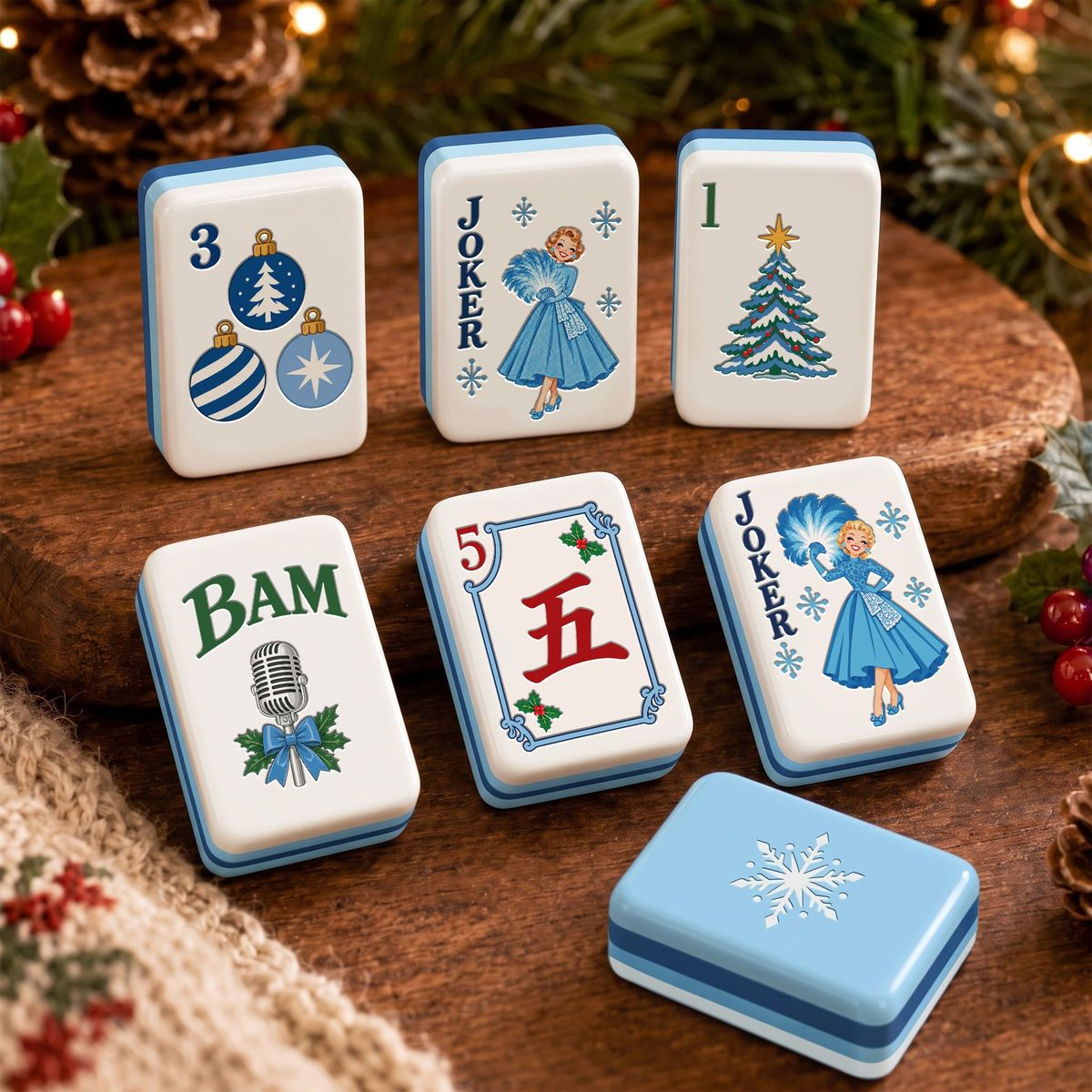
Knoxville mahjong parties start with finding 3 other players (or adapt for 2–3 if needed), securing a sturdy table, and investing in one quality 160-tile acrylic American mahjong set. You'll need the current year's National Mah Jongg League card (free download from the league), a mat to protect your table, and racks to hold tiles. American mahjong plays in rounds lasting 15–45 minutes depending on player speed; plan 2–4 hours for a full session. Before guests arrive, learn how to play American mahjong so you can teach the Charleston (tile-passing ritual) and basic hand recognition. Mahstead's acrylic sets arrive ready to play with no setup needed—just shuffle, deal, and teach. Most new hosts stumble by rushing the Charleston or mixing up exposure rules; practice once alone first. The game itself costs nothing after you own a set; focus your budget on a durable mat and racks that won't wear out after one season.
🀄 Shop best-selling mahjong sets →
How do I find mahjong players in Knoxville to invite?
Knoxville community centers, libraries, and synagogues often host open mahjong nights or can refer you to local clubs. Check meetup boards, Facebook groups for East Tennessee card games, and country club activities—many women's groups play weekly. University extension programs and senior centers frequently offer beginner classes in winter and spring. If you can't find an existing group, start small: invite three friends willing to learn, commit to weekly play, and they'll bring others. Once you've hosted one party, word spreads fast in close-knit play communities.

What size table and mat do I need to host four players comfortably?
American mahjong needs a table at least 48 inches square—ideally 54–60 inches to give each player elbow room and prevent tile collisions. A mahjong mat sized 36×36 inches or larger fits the center workspace and protects your table from scratches and spills. The mat also marks the discard area clearly, which helps beginners stay organized. If you don't have a dedicated mahjong table, any dining or card table works; just place the mat on top. A rubber-backed mat won't slide during play, especially important when players reach across to draw tiles. Measure your table width before ordering—an undersized mat cramps the game and frustrates players.
What equipment checklist should I use before hosting my first game?
Item | Purpose | Check Before Play |
160-tile acrylic set | Four copies of each number tile, winds, dragons, flowers, jokers | Count jokers (should be 8); verify all tiles are present and readable |
Current year NMJL card | Hand patterns and rules for the season | Download free from National Mah Jongg League website; print or use phone/tablet |
Mahjong mat (36×36" min) | Table protection and play area boundary | Lies flat; rubber backing grips table |
Four racks with pushers | Holds 13 tiles per player; pushers move tiles during discard | Smooth pushers slide; no cracked rack ledges |
Dice (two standard 6-sided) | Determines seating and break (Charleston) | Numbers visible; kept nearby |
Score sheet or app | Tracks points each round | Pen nearby; participants know scoring rules or keep reference card |
Check that all acrylic tiles move smoothly (no sticking) and that jokers aren't missing—a full set is essential for legal hands.
How do I teach American mahjong to complete beginners in one evening?
Start 30 minutes early with newcomers. Show them what's in an American mahjong set (three suits: Bams, Craks, Dots; four winds; three dragons; flowers). Explain the goal: match your 13 tiles plus one drawn tile to a hand pattern on the current card. Walk through one full Charleston—the ritual tile trade before play—with actual tiles so they see the rhythm. Let them handle tiles during setup; muscle memory matters more than memorized rules at first.
Play the first round slowly, narrating each step aloud: "I draw one, discard one. East player, your turn." Point to the card constantly. Emphasize that jokers are wild cards and can stand in for any tile except in a pair or a single tile. Many beginners confuse jokers with Soap (the White dragon), so clarify: "Soap is a real tile; jokers are bonus wildcards." After one full round, confidence usually rises. Round two feels familiar. Don't overload them with scoring on night one—keep it fun, not a lecture.

What are the most common hosting mistakes and how do I avoid them?
Mistake: Not reading the current year's card before the party. The card rules change every spring. A hand legal one year may be illegal the next. Download it early, print one copy per player, and scan for "F" (flower), "O" (consecutive odd), and other notation symbols so you're ready to explain them. This prevents mid-game disputes.
Mistake: Mixing American and Chinese mahjong rules in one session. If players have different backgrounds, announce upfront: "Tonight we play American rules only—that means no chows (sequences), and the National Card governs all hands." This prevents arguments.
Mistake: Cramming five or six players around a table meant for four. American mahjong is a four-player game. If you have fewer, play 2 and 3 player mahjong with modified rules. If more than four want to play, set up a rotation: two tables or one table with 30-minute shifts. This keeps everyone engaged and prevents irritation.
Mistake: Forgetting that exposure rules are strict in American mahjong. You can only expose pungs (three identical tiles), kongs (four identical), quints (five), and sextets (six). You cannot expose sequences (1-2-3). Players new to the game often try to expose "1-2-3 of Bams" and get corrected harshly. Explain this upfront and use the first hand as a teaching moment, not a penalty.
Mistake: Not setting a score-keeping system ahead of time. Decide: Will you track cumulative points across all rounds, or reset after each round? Will you use an app or pen and paper? Ambiguity breeds frustration. We recommend a simple paper sheet: one row per round, one column per player (North, East, South, West), tally points in each cell. After 4–6 rounds, highest score wins.
What to check before you buy: — Verify your table is at least 48 inches square. — Confirm the mat is non-slip rubber-backed. — Test one set's tiles for smooth movement before a party (no sticky acrylic). — Print or bookmark the current NMJL card—don't rely on memory. — Have racks ready at least one week ahead so you're comfortable holding a proper hand. — Set a clear start and end time to respect everyone's schedules.
🎁 See our most-loved mahjong sets & accessories →
How should I structure a three-hour mahjong party in Knoxville?
Time | Activity | Notes |
6:00–6:30 pm | Arrivals, snacks, rules review | Explain Charleston and basic hand types; answer questions |
6:30–6:45 pm | First Charleston and hand deal | Play the first round slowly; it's learning time, not fast play |
6:45–7:30 pm | Rounds 2–3 (30–45 min per round) | Players gain confidence; enforce rules fairly but gently |
7:30–7:45 pm | Break: refreshments, score review | Let players stretch; discuss which hands they almost won |
7:45–8:30 pm | Rounds 4–5 | Pace quickens; by now, most are comfortable |
8:30–9:00 pm | Final round and score tally | Congratulate winner; hint at next week's session |
Adjust round count to fit your group's pace. Some play 2 rounds in 90 minutes; others need 4 hours for 6 rounds.
What hosting gifts should I give to players who become regulars?
Once you've hosted three or four sessions and a core group emerges, consider small tokens of appreciation: engraved dice or a set of tile cleaning cloths (practical and thoughtful). If your group loves one-liners and in-jokes, browse engraved mahjong sets with titles that match your players' personalities—"Tile Sharks," "Discard Legends," or group-specific phrases turn a set into a memory of your parties. A shared travel bag for rotating whose house hosts next week signals commitment to the game. These gifts aren't required, but they cement friendships and encourage players to show up week after week.
✨ Find your Mahstead set — free US shipping →

FAQ
Can I play mahjong with fewer than four people in Knoxville?
Yes. American mahjong has modified rules for two or three players, though the standard game is designed for four. If you're short one or two players, look up the 2–3 player variant, which adjusts tile count and drawing mechanics. Some Knoxville players host two separate tables instead of trying to squeeze extras into one game.
Where do I get the National Mah Jongg League card for 2026?
The card is free to download from the National Mah Jongg League website each spring. Print one copy per player and leave it on the table during play. Many players also photograph it on their phone for quick reference. Never mix cards from different years—hands change annually and mixing causes rule conflicts.
How much does a mahjong set cost to start hosting?
Prices vary by design and material. A quality acrylic 160-tile set is the foundation of any game; see current price on the product page. Add a mat, racks, and dice, and your total investment for hosting goes further. Buying once and playing weekly for years keeps the per-game cost very low compared to other hobbies.
Do I need to know how to play before hosting, or can I learn together with guests?
You don't need to be expert, but spend one solo session learning the Charleston and reading one hand from the card so you can guide others with confidence. New hosts who learn alongside guests lose authority when disputes arise. Spend 30 minutes alone with the tiles and card; it pays off immediately.
What's the difference between the tiles in a 160-tile set versus a 152-tile set?
A standard American game uses exactly 152 tiles and 8 jokers. A 160-tile set includes extra tiles beyond those—spares to replace worn jokers or blanks over time. You always play with the same 152 tiles and 8 jokers; extras are never added to the table. This keeps the game consistent no matter how many years you host.
Should I host mahjong in my home or look for a public venue in Knoxville?
Home hosting is intimate and builds friendship fast—you control snacks, music, and rules. Public venues (community centers, libraries) work for larger drop-in groups but feel less personal. If you're starting a weekly group, begin at home with a core four. As the group grows, you might rotate homes or book a room at a library or senior center to accommodate more tables.


View More
View More
View More
