
Mahjong Party Ideas in Denver: How to Host
Last updated: Nov 23, 2026
A mahjong party in Denver starts with four players, one 160-tile American mahjong set, the current year's National Mah Jongg League card, and a flat playing surface. Games run 1–3 hours depending on skill and how many rounds you play; most home groups play 2–4 rounds per session. You'll need seating around a table, a rack system for each player to organize tiles, and a mat to protect surfaces and muffle shuffling noise. Denver players find groups through community centers (check with Parks & Recreation), libraries offering game nights, synagogues with standing mahjong programs, and casual Meetup boards. A hand costs nothing to play but learning the card and Charleston tile-passing ritual takes one or two practice rounds. Avoid common first-timer mistakes: don't expose sequences (American mahjong has no chows—only pungs of three identical tiles or kongs of four), never use jokers in a single tile or pair, and always verify your winning hand matches the current League card before declaring. 🀄 Shop best-selling mahjong sets →
Where Do Denver Players Actually Meet?
Denver's mahjong scene lives in three main places: public game nights at community centers (Parks & Recreation departments often sponsor Tuesday or Thursday sessions), library programs during daytime hours, and private home games hosted by regular players. Many synagogues and country clubs run standing weekly groups—ask directly or check bulletin boards. Meetup.com and local Facebook groups focused on tabletop games occasionally list open games; search "Denver mahjong" to find current listings. Starting a home game requires no membership or venue rental, only four committed players and a flat table.

What Equipment Makes a First Party Run Smoothly?
A real mahjong party needs: one 160-tile American set (includes tiles, jokers, and spares); a mat to quiet shuffling and define the playing surface; four racks with pushers so players can organize and protect their hands; the current-year National Mah Jongg League card (issued every spring); and two standard six-sided dice for determining dealer order. Paper and pencil for scoring are optional but help newer players track who won each round. Quality matters here—a slippery mat causes mis-shuffles and delays, while racks without pushers make tiles topple during the game. Our best-selling mahjong sets come with everything except the card (buy that separately from the League) and pack flat for easy transport between homes.
🎁 See our most-loved mahjong sets & accessories →
How Do You Handle a Mixed-Skill Table?
Pair one experienced player with each beginner so everyone sits opposite an expert. Experienced players can quietly guide newer players through tile recognition and hand patterns without slowing the game. Run the first 1–2 rounds as "practice" where you explain calls (pung, kong, win) before they happen, then move to serious scoring after everyone understands tile order and the Charleston passing ritual. Never rush a new player to pick a tile—they need time to read the card and see what fits their hand. Learn how the Charleston actually works before your party so you can teach it clearly and execute the tile swap in under two minutes.
What's the Right Group Size and Timing?
American mahjong is designed for exactly four players, so one group of four is ideal. If you have more guests, run a rotating tournament where two foursomes play simultaneously and winners rotate tables each round. Plan 90 minutes for four rounds with setup and scoring. Newcomers often need 30 minutes of instruction and one slow practice hand, so add 45 minutes to the first session. Experienced players can finish four rounds in 60 minutes. Denver's dry climate is actually perfect—tile shuffling stays crisp and racks don't warp—but keep drinks away from the playing surface and use coasters for cups set on side tables.

How Do You Deal with Rules Questions During Play?
Print the current National Mah Jongg League card or display it on a tablet so any player can verify a winning hand claim before points are awarded. Appoint one player as the "rules keeper" for the session (usually the most experienced or the host). If a call or win is disputed, stop play, check the card together, and rule based on what's printed. Document any house rule changes (e.g., who pays for ties) at the start so everyone agrees. Denver groups that meet regularly often adopt one or two local tweaks after the first few sessions—that's normal, just keep them consistent. Our guide to reading the mahjong card walks through card sections step-by-step so your table can resolve questions fast.
Quick Hosting Checklist
[ ] Invite exactly four players (or set up rotation groups)
[ ] Secure a flat table 36" × 36" minimum
[ ] Obtain current-year National Mah Jongg League card
[ ] Set up racks and mat before guests arrive
[ ] Run the Charleston tile pass (3 minutes)
[ ] Play one slow practice hand with rule reminders
[ ] Keep a notepad for scoring and disputes
[ ] Schedule 90 minutes to 2 hours for the first session
[ ] Keep printed or digital card handy for hand verification
What to Check Before You Buy
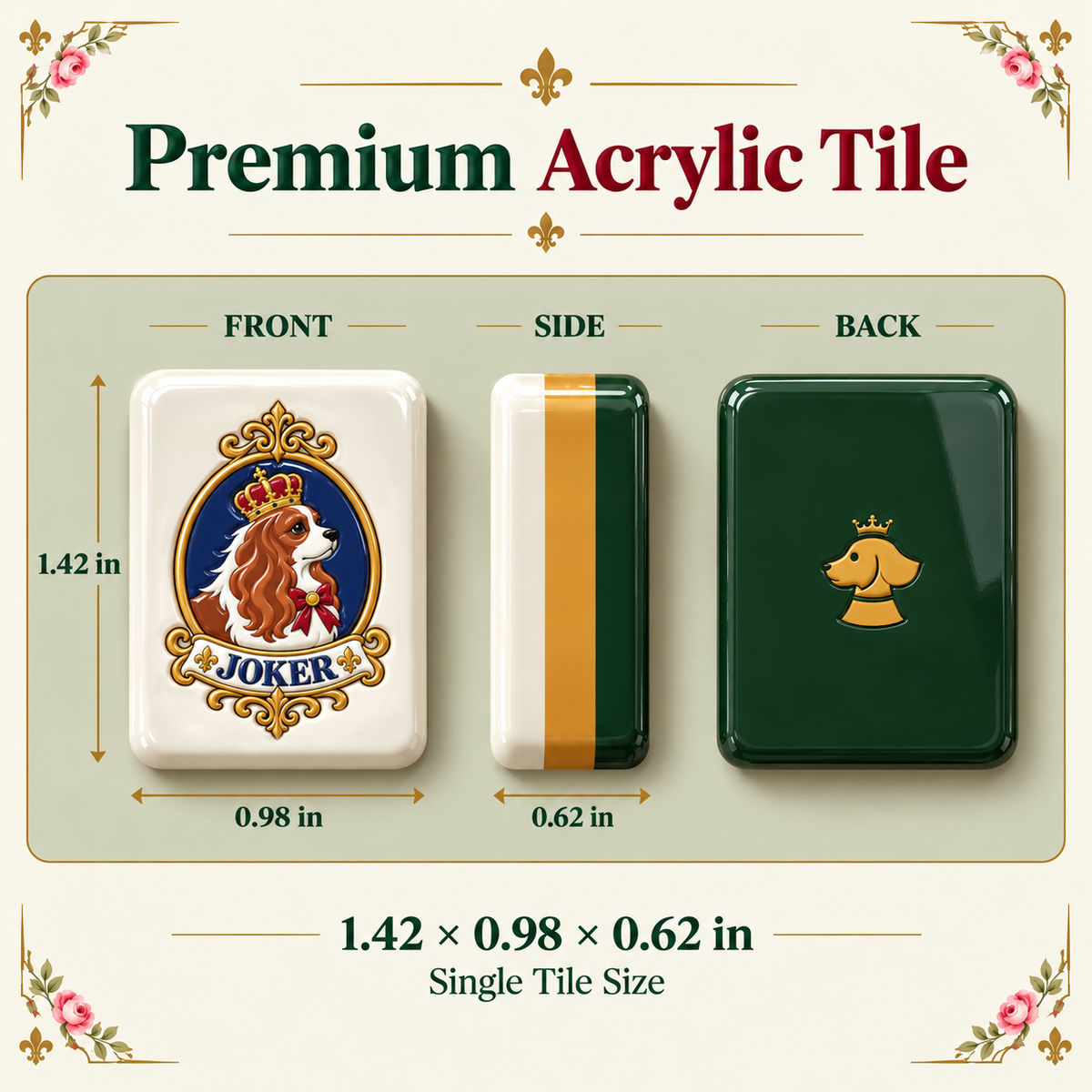
Tile size and grip: American tiles range 1¼" to 1⅜" wide. Smaller tiles suit cramped spaces and players with limited hand strength; larger tiles work better for older players and those with vision concerns. Test by holding one before ordering if possible.
Mat surface and thickness: A thin mat (1/8") slides easily and suits light shufflers; thicker mats (¼"–½") muffle noise and protect furniture from scratches. Mats with textured surfaces grip tiles better than smooth finishes.
Rack design: Push-style racks use pegs to hold tiles vertically so you can't see opponents' hands—essential for fair play. Open racks without pushers let players lean and peek.
Set completeness: Always verify you're buying a 160-tile set (152 playing tiles plus 8 spare jokers or joker+blank combinations), not a travel set or incomplete collection.
Case durability: If you plan to move the set between homes, choose a lockable hard case over soft drawstring bags; hard cases prevent tile breakage during transport.
What | Who It's For | Why It Works |
New hosts, mixed groups | Complete, tested, price-friendly | |
Hosts who want personality | Commemorates your regular group | |
Serious players, frequent hosts | Protects table, quiets shuffling | |
Players who dislike leaning | Fair play, easier hand management | |
Rotating host groups | Safe transport between homes |
✨ Find your Mahstead set — free US shipping →
Next Steps: Hosting Your First Game
Choose your date and send invitations at least two weeks out. Confirm all four players can commit—one no-show breaks the game. Request that everyone arrive 15 minutes early so you have time to explain the Charleston and answer basic questions about American mahjong rules. If your group has never played before, start here with a full how-to guide to feel confident teaching. Lay out your tiles, organize racks, and run through the tile shuffle once solo so you can walk players through it smoothly. After your first session, most groups settle into a rhythm and play becomes faster and more intuitive. Denver's steady game-night culture means you'll likely find regulars who want to come back—that's when hosting becomes easy and fun.

FAQ
Do I need a special Denver venue to host mahjong?
No. Any flat table, four chairs, and a quiet room work fine. Home game nights are the most common setup in Denver.
Can three people play American mahjong?
Not standard American mahjong—the game is built for exactly four players. Some regions play three-player variants, but they use different rules and tile counts.
Where do I buy the National Mah Jongg League card?
The card is sold annually (issued each spring) through the National Mah Jongg League website and many game shops. Buy a fresh copy each year.
How much does it cost to host a mahjong party?
Only the upfront cost of a set and mat. Once you own gear, there's no per-game fee. Players don't typically bet money in home games; scoring is just for fun and pride.
What's the fastest way to learn enough to host?
Spend one evening reading the current League card, learn the Charleston tile-passing ritual, and play one full practice hand. That's enough to host with confidence.
Are acrylic tiles better than bamboo or bone for home games?
Acrylic tiles are lightweight, loud enough to hear the shuffle, durable for frequent play, and easy to clean. Bamboo and bone are heavier and noisier but wear differently over decades of play.


View More
View More
View More
