
Mahjong Party Ideas in Columbus: Hosting Tips & What to Bring
Last updated: Nov 23, 2026
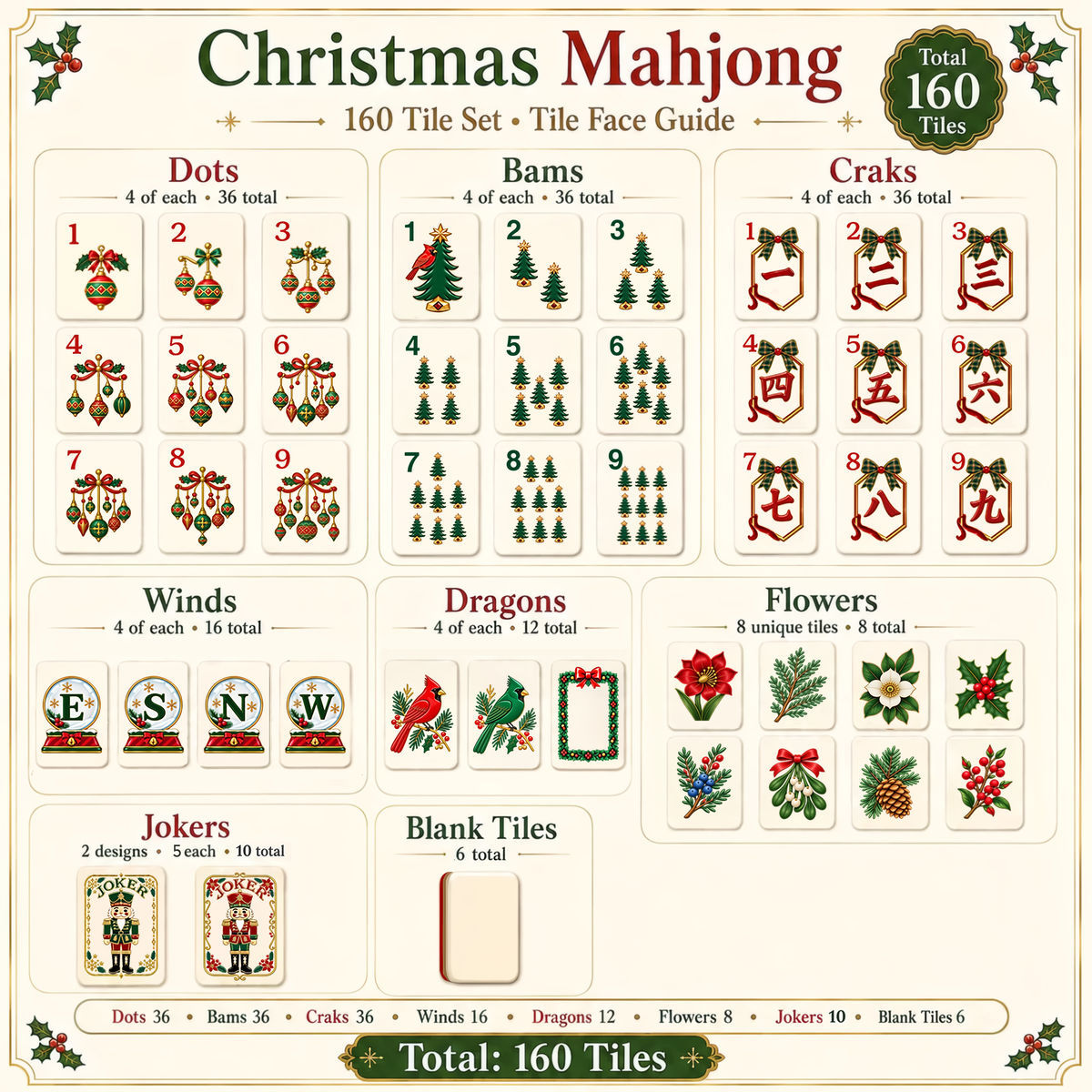
Columbus players host mahjong nights in home game rooms, community centers, libraries, and country clubs—ask at your local rec center or check meetup boards for existing groups to join first. A typical four-player American mahjong night runs 2–4 hours and needs a set of 152 tiles with 8 jokers, a mat, four racks with pushers, and a device to track score. Most casual hosts skip money; competitive groups use penny-per-point scoring. Mahstead 160-tile sets arrive ready to play with spare tiles included. Avoid cramped folding card tables—use a 36"–40" dining surface so each player has arm room. Have snacks, tea, and the current year's National Mah Jongg League card printed or on a phone. Start with a brief Charleston refresher if anyone's rusty.
Columbus hosts mahjong nights in homes, community centers, libraries, and country clubs—ask at your local rec center or check meetup boards for existing groups to join first. A typical four-player American mahjong night runs 2–4 hours and needs a set of 152 tiles with 8 jokers, a mat, four racks with pushers, and a device to track score. Most casual hosts skip money; competitive groups use penny-per-point scoring. Mahstead 160-tile sets arrive ready to play with spare tiles included. Avoid cramped folding card tables—use a 36"–40" dining surface so each player has arm room. Have snacks, tea, and the current year's National Mah Jongg League card printed or on a phone. Start with a brief Charleston refresher if anyone's rusty.
How do I find mahjong players in Columbus?
Check community centers, public libraries, synagogues, and country clubs in your area—many host open mahjong groups or bulletin boards. Meetup.com and local Facebook community pages often list Columbus game nights. Call ahead; many groups welcome new players at weekly standing games.

What size table do I actually need?
A 36"–40" square dining table seats four comfortably with room for tiles, racks, and drinks. Round tables under 36" force players into the center; card tables (32"–34") feel cramped. A console or bar table works if at least 14" deep per player. Avoid glass—tiles slide, and you'll chase them. A mahjong mat holds four racks and a discard pile without sliding.
What equipment do I need for a first-time host?
You need one American mahjong set (152 tiles + 8 jokers), four racks with pushers, a mat to hold everything in place, the current year's National Mah Jongg League card, pen and paper for scoring, a wind indicator to track rotations, and one die. Mahstead 160-tile sets include all tiles you need; racks and mats are sold separately so you choose what fits your table size and aesthetic.
🀄 Shop best-selling mahjong sets →
Should I host for beginners or experienced players—or both?
Beginners need 45–60 minutes to learn the card, the Charleston, and the tile naming. Play moves slower but builds friendship. Experienced players finish hands faster and call more pungs and kongs. Mixed groups work if one player mentors. For a true beginner night, print the card in large type, place it face-up in the center, and allow lookups without penalty. For experienced players, enforce a 2-minute hand-play timer per person to keep pace.
Group Type | Setup Time | Hand Duration | Card References | Table Vibe |
All beginners | 20 min | 15–20 min | Card on table, no time limit | Slower, collaborative |
Mixed (2–3 new) | 15 min | 12–15 min | Card on table, one mentor | Teaching + play |
Experienced | 10 min | 8–10 min | Individual cards only | Fast, competitive |
What should I serve and how do I keep the game flowing?
Set out snacks (nuts, crackers, fruit) and tea or water before the first hand starts—avoid greasy fingers on tiles. Clear the table except for racks, mat, and dice. Keep the card, pad, pen, wind tile, and one die within arm's reach of one person (often the scorekeeper). Appoint one player to track winds and rounds so the group doesn't lose track. A one-hand break every 90 minutes lets players stand and reset; use that time to refill drinks and snacks.
🎁 See our most-loved mahjong sets & accessories →

How do I explain the rules if someone hasn't played before?
Start 15 minutes early. Hand out the National Mah Jongg League card and walk through the suit names (Bams, Craks, Dots), the winds, and the dragons. Show how to read one simple hand pattern on the card—e.g., a pung (three identical tiles) or a quint (five of the same). Explain the Charleston as a tile-passing round before play starts. Play one practice hand for free—no scoring—so everyone handles tiles and sees a discard pile form. By hand two, people understand the rhythm.
What's the best way to handle scoring?
Casual home games often skip money entirely—players just track high score for bragging rights. Penny-per-point games pay out based on hand value; keep a running tally on paper. Award one player as "banker" to settle at the end of the night. For first-time players, skip scoring in hand one and explain it after they've seen two hands played. Most Columbus groups use simple score sheets with columns for each player and rounds marked down the side. A pen and notebook beat apps—fewer distractions at the table.
✨ Find your Mahstead set — free US shipping →
What if someone can't make four players?
American mahjong is designed for four. Two and three-player variants exist but use modified tile draws and rules that feel different. If a player cancels last minute, call a friend or play solitaire mahjong instead—set a 15-minute tile puzzle to warm up the table. Many Columbus groups keep a waitlist of people happy to fill in.
What common hosting mistakes should I avoid?
Don't cram four racks onto a card table—it feels chaotic and someone bumps the discard pile. Don't use unmarked tiles or broken jokers; grab a fresh set if tiles don't stack evenly. Don't skip the Charleston even if everyone knows how—it's ritual and fair dealing. Don't let one player dominate the card lookup; enforce "hand played, then ask." Don't serve messy foods (chocolate, butter) near the tiles. Don't play more than four hours in one sitting—hands blur and mistakes spike.
What hosting gear should I buy vs. borrow?
Buy your own set and mat if you plan to host monthly or more. Borrow racks and pushers from other players to start; they're inexpensive but only needed if you host regularly. A wind indicator and die are nice-to-have but pen-and-paper tracking works fine. Mahstead engraved sets make great centerpieces for regular groups and last years. If you host once a year, borrowing is fine. If hosting becomes your hobby, invest in a set you love.
What to check before you buy
Set completeness: Confirm your set has 152 tiles plus 8 jokers (Mahstead 160-tile sets include spares).
Rack count: Buy four racks if you host regularly; verify they fit your table size.
Mat fit: Measure your table width; choose a mat that leaves 6" border on each side so players can reach across.
Card year: Print or laminate the current year's National Mah Jongg League card; the card changes every spring.
Tile durability: Acrylic tiles hold up better than plastic in humid Columbus basements; check the tile material before buying budget sets.
For a first Columbus mahjong party, start with a best-selling Mahstead set, a mat sized to your table, and four racks—all ship free across the US. Host in a quiet space with good light, keep the card on the table, and give beginners permission to ask questions. One successful night usually leads to monthly standing games; many Columbus players started exactly this way.

FAQ
Can I host mahjong outdoors in Columbus during summer?
Yes, on a covered porch or gazebo away from direct sun. Sunlight bleaches tile colors and makes acrylic tiles too hot to handle. Wind scatters tiles—use a mat with raised edges and clip the card to a clipboard.
What's the difference between a mahjong mat and a tablecloth?
A mat has a felt playing surface, raised edges, and racks built into the perimeter; a tablecloth is just fabric. Mats cost more but keep tiles in place and look professional. See mat vs. table cover for details.
Do I need to teach the Charleston to beginners, or can I skip it?
Never skip it. The Charleston is the tile-passing ritual before every hand—it's core to fair play. Teach it as part of rule setup. After one practice round, most players feel comfortable.
How many hands should a first-time party include?
Plan for 4–6 hands per 90 minutes. A full "round" consists of hands where each player sits in East, South, West, and North positions (four hands = one round). Casual parties play 2–3 rounds (8–12 hands); competitive groups play 4–8 rounds. Beginners may take longer; budget extra time.
What if someone doesn't know how to read the National Mah Jongg League card?
Print a large copy, place it face-up in the center, and allow any player to reference it during their hand without penalty in your first game. After two hands, most players memorize one or two patterns. See how to read the card for a full walkthrough.
Should I buy the most expensive mahjong set or a budget set for beginners?
Buy a mid-range best-selling set that feels good in hand and lasts years. Cheap sets have uneven tiles or chipped edges; premium sets are beautiful but not necessary for learning. Mahstead acrylic sets balance quality and value, and free US shipping makes them accessible.


View More
View More
View More
