
Mahjong Open Play in Westchester: Where to Join and How to Start
Last updated: Nov 23, 2026
Mahjong open play in Westchester happens year-round at community centers, public libraries, synagogues, and country clubs—typically one or two afternoons per week. Most groups welcome beginners and run games in American mahjong (using the National Mah Jongg League card updated each spring). Games usually last 2–4 hours and rotate players so everyone gets a seat at a table of four. To find a group, call your local library or community center and ask the program coordinator; check bulletin boards at synagogues and senior centers; or search online community boards and neighborhood groups for "mahjong" plus your town name. Most open-play groups charge no fee or a small donation per session. Bring a notebook for scoring, your current year's card, and a willingness to ask questions—players are typically generous with beginners.
Westchester's mahjong community is alive and welcoming. Unlike online games, open play lets you sit across from real opponents, handle tiles, and learn faster. If you're new to American mahjong, open play is where the game becomes clear—and fun.
How do I find an open-play group near me?
Start with your town library or community center. Call the program desk and ask if they host mahjong or know of groups. Many libraries post flyers or keep contact lists for regular players. Next, check synagogues and interfaith centers—mahjong has deep cultural roots in Jewish communities, and many temples run weekly sessions. Country clubs, senior centers, and Rotary clubs sometimes host games too. Search your town name plus "mahjong" on Nextdoor, Facebook community groups, or Meetup. Ask the first person you meet at a game for the group's WhatsApp or email chain so you get notice of schedule changes or special tournaments.

What happens at your first open-play night?
When you arrive, introduce yourself and say you're new. The host or an experienced player will explain house rules—house rules vary by group, so ask: Do we play with standard American rules? Do we use the current year's National Mah Jongg League card? What scoring do we use—traditional or simplified? You'll sit at a table with three other players. Before the first hand, you and three others exchange tiles in a ritual called the Charleston—learn this once and it becomes automatic. Then the dealer (East wind, marked by a wind tile) draws a tile and discards one. Players take turns drawing from the wall and discarding; if your discard completes another player's hand, they call it and win that round. You settle points, rotate seats, and start again. Bring a pen and paper for scoring, or use your phone's notes app. Most games run 1–2 hours before a break.
What do I need to bring—and what stays home?
Bring your current year's National Mah Jongg League card (issued each spring, free to order online or borrow from the host). Bring a pen for scoring. Bring a small notebook or phone for tracking scores across rounds. Leave at home: your own mahjong set (the host provides), your phone on vibrate only, and the assumption that you'll win money or place bets—open play is social and skill-based, not gambling. If you plan to host your own game, you'll want a premium set from our best-selling collection with clear tile markings and a durable mat so everyone plays comfortably.
🎁 See our most-loved mahjong sets & accessories →
What are the differences between open-play and tournament mahjong?
Aspect | Open Play | Tournament |
Scheduling | Weekly or monthly drop-in | Fixed dates, entry deadline |
Players | 4 people per table, fixed seat rotation | 4 per table, assigned opponents each round |
Card | Current year's NMJL card only | Same card, but enforced strictly |
Scoring | Group decides: points or simplified | Standardized by event rules |
Jokers & House Rules | Host explains at start | Published in event guidelines |
Cost | Free or small donation | Entry fee, see event page |
Skill Level | All welcome | Beginner, intermediate, advanced brackets |
Open play teaches you strategy and tile-reading at your own pace. Tournaments test your knowledge against ranked players and expose gaps in rule knowledge. Start with open play, play 5–10 games, then try a tournament if you want the challenge.

What mistakes do newcomers make—and how to avoid them?
Mistake 1: Not knowing the current year's card. Each spring, the National Mah Jongg League releases a new card with different hand patterns. Using last year's card means your hands won't match. Solution: Ask the host if they have spares, or order the current card online before your first game.
Mistake 2: Misunderstanding how jokers work. Jokers are wildcards, but they can't be used as single tiles or pairs—only in exposed melds (pungs, kongs, quints, sextets). A beginner often tries to use a joker as a single tile to complete a pair and gets corrected mid-round. Solution: Before you play, ask someone to explain joker rules with an example hand.
Mistake 3: Exposing tiles when you shouldn't. In American mahjong, you can only expose pungs (3 identical tiles), kongs (4), quints (5), and sextets (6)—never a sequence like 1-2-3. Many new players try to expose a run and get stopped. Solution: Read the card carefully—every valid hand shows which tiles are exposed and which stay hidden.
Mistake 4: Not keeping score correctly. Each hand awards points; scores accumulate over the session. If you lose track, you can't pay out fairly at the end. Solution: Bring a notebook and write down the hand pattern, who won, and the point value before the dealer collects tiles.
Mistake 5: Slowing down the game by asking questions mid-round. Ask about rules before the hand starts or after it ends, not while tiles are being played. Solution: Arrive early, tell the host you're new, and ask them to walk you through one hand before play begins.
What equipment should a beginner own if I want to host games at home?
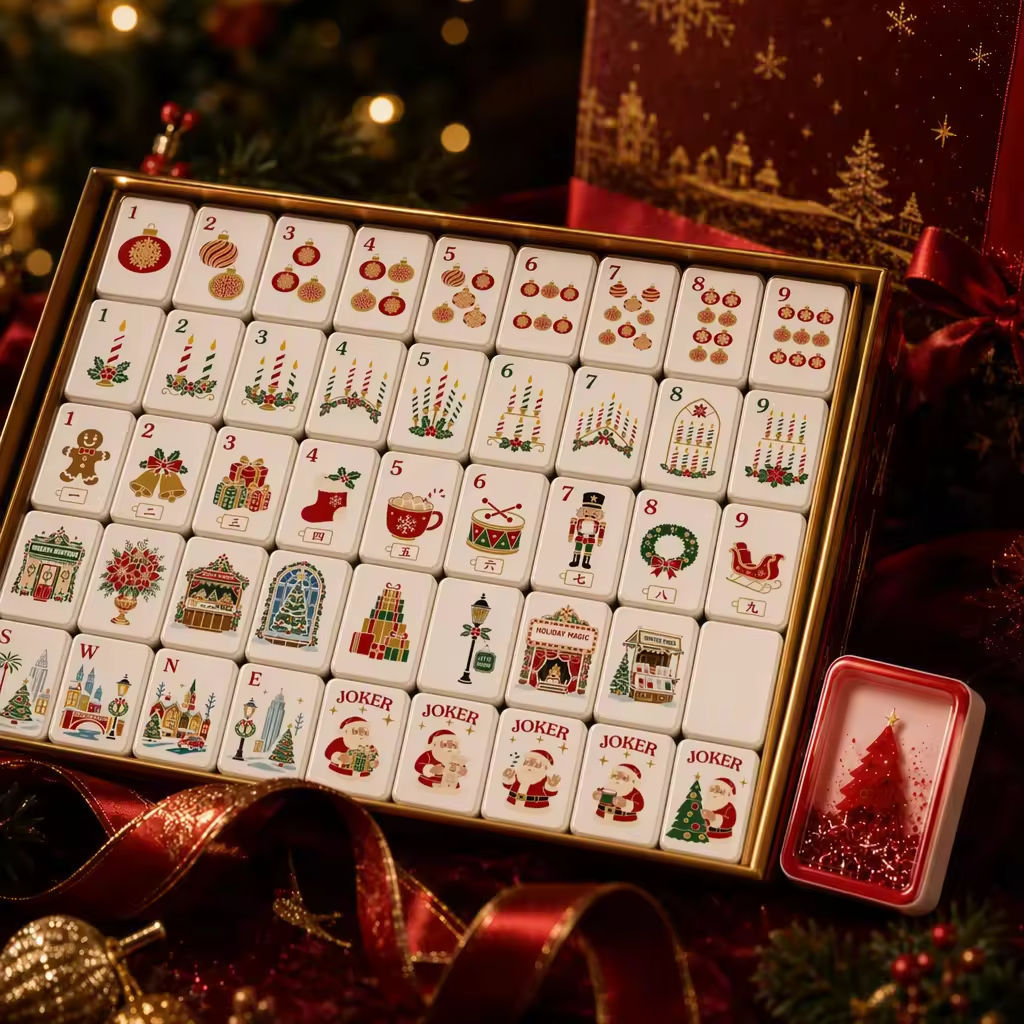
You don't need to own a set to join open play—the host always provides. But if you want to invite friends over, you'll want the right gear. A full American mahjong set includes 152 playing tiles (Bams, Craks, Dots, winds, dragons, flowers, jokers) plus a rack system so players can organize and hide their tiles. A durable mat protects your table, keeps tiles from sliding, and marks the zones where discards go. Racks with pushers let each player slide tiles forward as they draw, keeping the hand organized without showing cards to other players. If you entertain regularly or want a set that doubles as decor, consider an engraved or themed design—many Westchester hosts keep a beautiful set on display and pull it out for game nights.
🀄 Shop best-selling mahjong sets →
When do Westchester groups play, and how do I stay in the loop?
Most groups meet on weekday afternoons (Tuesday–Friday, 1–4 pm or 7–10 pm) or weekend mornings. A few run all-day Saturday sessions. Schedules vary by venue and season—summer can see fewer games due to vacations. Once you join a group, ask for their contact info (phone number, email, or group chat). Many groups post updates about cancellations, venue changes, or special events. If you're serious about regular play, attend the same day and time each week so you build familiarity and improve faster.
✨ Find your Mahstead set — free US shipping →
What to check before you join your first game
[ ] Find a venue (library, community center, synagogue, country club) via phone or online search
[ ] Confirm they play American mahjong (not Chinese, Hong Kong, or Riichi variants)
[ ] Ask: Do you use the current year's National Mah Jongg League card?
[ ] Confirm the day, time, and whether walk-ins are welcome
[ ] Get the host's phone number or email for schedule updates
[ ] Order or borrow the current NMJL card before you go
[ ] Bring a pen, notebook, and an open mind
[ ] Arrive 15 minutes early to meet players and ask one practice question
If you eventually host your own game, a premium set with clear tile markings and a good mat makes the experience better for everyone—tiles don't slide, suits are easy to read, and players feel cared for. Return to the mahjong for beginners guide anytime you need a refresher on rules or strategy.

FAQ
Can I play mahjong open play if I've never played before?
Yes. All Westchester open-play groups welcome beginners. Tell the host you're new when you arrive; experienced players will slow down and explain each hand until you're confident.
Do I need my own mahjong set to join open play?
No. The host always provides a set. You only need a pen, notebook, and the current year's National Mah Jongg League card.
What's the difference between American mahjong and other types?
American mahjong uses a hand card from the National Mah Jongg League (updated each spring), has no sequences, and includes jokers as wildcards. Chinese, Hong Kong, and Riichi mahjong use different tiles, rules, and hand-building logic. Ask your host which variant they play.
How much does it cost to play in a Westchester open-play group?
Most groups charge nothing or ask for a small donation (a few dollars per session) to cover venue rental or utilities. Some groups play for points only, with no money exchanged.
How long is a typical game?
A single hand lasts 5–15 minutes depending on how fast players draw and discard. A session usually runs 2–4 hours, with breaks between hands for scoring and stretching. You can leave early anytime.
What if I don't know how to do the Charleston (tile-passing ritual)?
Watch the first time—it takes one round to grasp. An experienced player will usually coach you through it. After one session, it becomes muscle memory.


View More
View More
View More
