
Mahjong Open Play in Cincinnati: Where to Play & What to Bring
Last updated: Nov 23, 2026
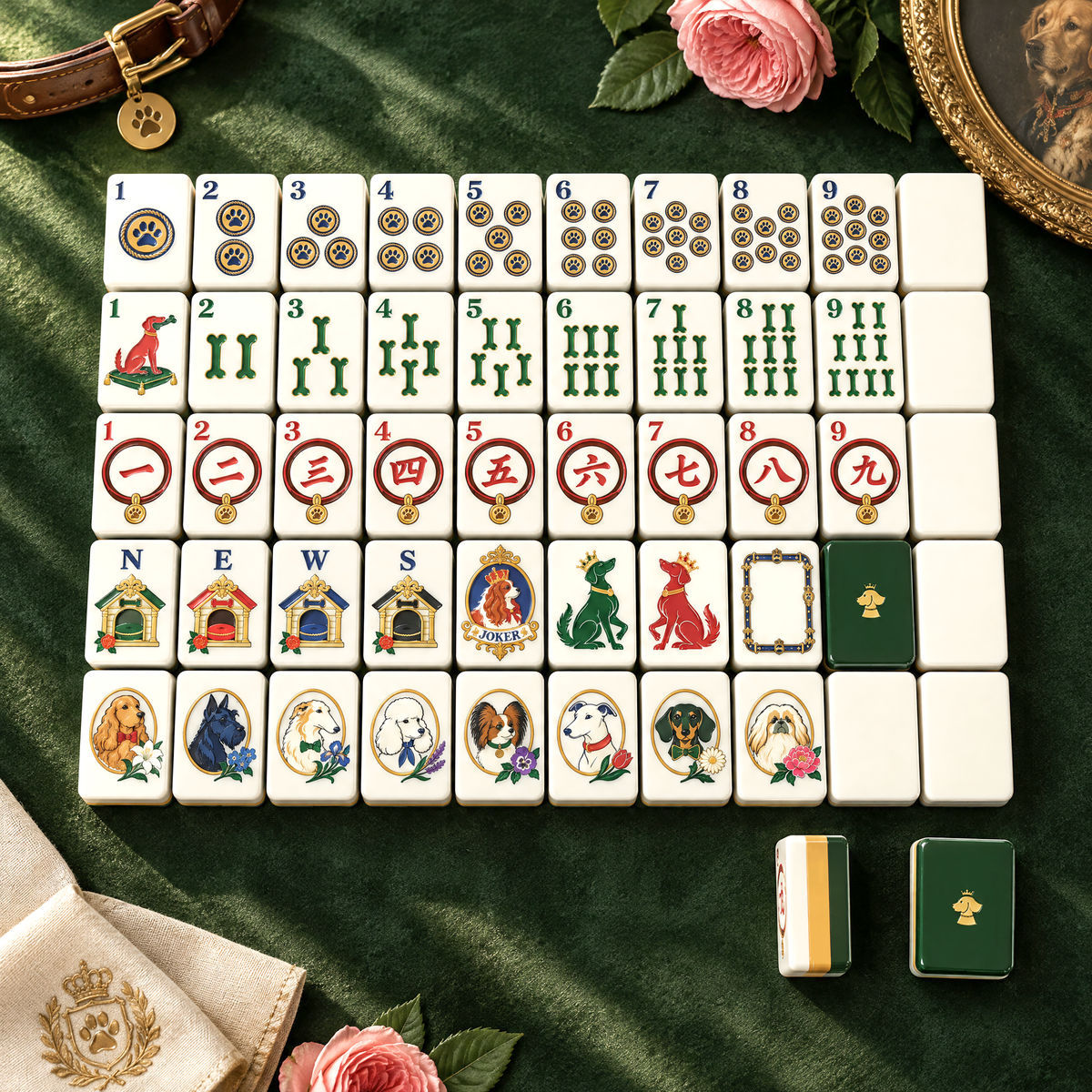
Cincinnati's open-play mahjong scene thrives in spaces where players gather informally each week—community centers in popular neighborhoods, public library meeting rooms, country clubs with game programs, and private homes. You can find games by checking community center bulletin boards, asking at local synagogues (many host mahjong groups), searching Meetup for "mahjong Cincinnati," or phoning recreation departments directly. Games typically run 2–3 hours, cost nothing to join or involve a small pot (usually a few dollars). You'll need a 152-tile American mahjong set, a mat to protect the table, racks to organize your hand, and the current-year National Mah Jongg League card—all staples for serious play. Mahstead sets are designed for durability during weekly games and ship free across the US.
Cincinnati players meet regularly for American mahjong in spaces where the community already gathers—community centers, libraries, synagogues, and private clubs. Games are typically open to newcomers and cost nothing to join. You'll need the right gear: a full 152-tile set, a mat, racks with pushers, and the annual National Mah Jongg League card. Below, we cover where to find games, what to bring, how to prepare, and what mistakes to avoid.
Where do Cincinnati mahjong players actually meet?
The most reliable open-play venues in Cincinnati are public community recreation centers (check your neighborhood center's calendar for weekly game hours), public library meeting rooms (call ahead to ask staff about ongoing groups), and country clubs with game programs listed on their membership websites. Synagogues in the greater Cincinnati area often host mahjong nights on weekdays or weekends—call the temple office to ask. Private homes hosted by local players are harder to find initially but become accessible once you meet someone at a public venue. Start by calling your nearest community center or library and asking the front desk directly: "Do you host a mahjong group?" If they don't, ask if they have a bulletin board where community games are posted. You can also search Meetup for "mahjong Cincinnati" to find organized groups that meet regularly in public spaces—though some groups are intermediate or advanced, making beginner-friendly sessions the best entry point.
🀄 Shop best-selling mahjong sets →

What's the typical format and cost of Cincinnati open-play sessions?
Open-play games in Cincinnati typically run two to three hours per session, meet weekly on a fixed day and time, and follow American mahjong rules using the current year's National Mah Jongg League card. Many groups charge nothing to join; others operate a small pot system where each player contributes a few dollars at the start, and the winner takes the pot at the end of the session. Some groups require you to bring your own set; others maintain a shared set for beginners. Before you show up, text or call ahead to confirm whether the group welcomes new players, whether you need your own set, what the parking situation is, and whether they play for money (however small). Most Cincinnati groups are beginner-friendly and happy to teach, but a few advanced groups may have a minimum skill level—ask directly to save yourself a wasted trip.
How do I prepare before joining a game?
First, learn the basics of American mahjong if you're brand new—understand how pungs, kongs, and jokers work, and what the annual card shows you. Second, get a complete 152-tile American mahjong set with all four winds, three dragons, eight flowers, and eight jokers. Third, practice the Charleston—the tile-passing ritual before each hand—by watching videos or asking a friend to walk you through it slowly. Fourth, bring a mahjong mat to protect the table and keep tiles organized; venues often provide one, but bringing your own shows respect for the host and ensures you're comfortable. Fifth, invest in racks with pushers—they keep your hand visible and tidy, and new players often slow the game by fumbling loose tiles. Finally, grab the current year's National Mah Jongg League card (available online or at game venues) and study it briefly to recognize hand patterns—you don't need to memorize all of them, just understand the layout.
Item | Why it matters | When to buy |
152-tile set | Plays a complete game; missing tiles stop play | Before your first session |
Mat | Protects table; keeps tiles from sliding | Before your first session or borrow one |
Racks with pushers | Speeds play; prevents fumbling | After your first game, once you know you'll return |
Current-year League card | Only official hands recognized; card changes yearly | Before your first session—usually free at venues |
Dice | Some Cincinnati groups use dice for seat order; others don't | Ask the host; you may not need one initially |

What mistakes should Cincinnati newcomers avoid?
Mistake 1: Showing up without understanding the Charleston. The Charleston is the three-pass tile exchange before the hand begins. If you don't know it, the game starts late, and players get frustrated. Watch a 2-minute video or ask the host to demo it one-handed with you before the group starts.
Mistake 2: Bringing a broken or incomplete set. If you have a set at home and haven't played in years, count the tiles before you arrive—missing jokers or a dragon can ruin the game. A new best-selling set from Mahstead ships complete and ready to play.
Mistake 3: Not bringing the current year's card. The League card is updated every spring. Playing from last year's card means your hands won't match anyone else's—games grind to a halt arguing over whether a hand is valid. Always confirm the year before you go.
Mistake 4: Sitting down without knowing the table etiquette. Each player sits at a compass direction (North, East, South, West), and the winds rotate after each hand. Ask the host to assign your seat and explain who pays whom if you're not sure.
Mistake 5: Fumbling loose tiles or handling the mat incorrectly. Tiles should stay in racks with pushers so you can draw and discard cleanly without slowing the game. If you don't have racks yet, ask to borrow from the host, and buy your own after a few sessions once you know you'll keep playing.
🎁 See our most-loved mahjong sets & accessories →
How do I host my own Cincinnati mahjong group?
If you can't find a regular group or want to start one, hosting at home is straightforward. You need a table large enough for four players to sit comfortably (a card table works, but a dining table is better), four mahjong racks with pushers, one or two complete 152-tile American sets, a mat to protect the surface, the current year's League card printed for each player, and (optionally) a bag or case to store everything. Set a regular time—say, Thursday evenings 7–10 pm—and invite friends or post on Meetup. Before the first game, walk everyone through how to play American mahjong using a tutorial video, and do a practice Charleston so everyone knows the rhythm. Most beginners need 15–20 minutes to adjust; by game two or three, play flows smoothly.
✨ Find your Mahstead set — free US shipping →
What to check before you buy your own set
Tile size and material: Acrylic tiles are durable for weekly play; plastic is lighter but less satisfying to handle. Larger tiles (roughly 1 inch) are easier to read; compact sets fit in smaller spaces.
Joker and dragon count: Confirm you have eight jokers and four each of Red, Green, and White dragons—these are non-negotiable for American mahjong.
Racks and mat included: Many sets include racks; some don't. Check the product description. Mats are usually sold separately and are worth the investment if you play weekly.
Storage bag: Sets shipped in a bag protect tiles during transport and make hosting easier. Check whether the bag is padded or canvas.
Spare tiles: A 160-tile set includes a few spare jokers for games where one gets lost—helpful for long-term play.

FAQ
Can I play American mahjong with fewer than four players in Cincinnati?
Yes. Cincinnati groups occasionally run 2- or 3-player games, but they follow different rules and use a modified card. Most open-play venues stick to 4-player American mahjong because it's the standard. Ask the host if 2- or 3-player games are available; if not, gather three friends and try the official 2- and 3-player rules.
Do I have to pay money to play mahjong in Cincinnati?
No. Many Cincinnati venues run games with no money involved—just for fun and competition. Some groups play for a small pot (a few dollars per hand or per session). Always ask the host before you arrive so you know what to expect and can decide if it fits your comfort level.
What if I lose or break a tile during a game?
If a tile breaks, the game stops and you use the spare from the set or borrow from another complete set if available. If a tile goes missing, many groups keep old sets on hand for replacements. On your second or third visit, buy a new set with spare tiles so you can replace it immediately and keep the game moving.
How often do Cincinnati groups play?
Most open-play groups meet once per week on a fixed day—typically Monday to Friday evenings or Saturday afternoons. Some venues offer multiple sessions per week. Call ahead to confirm the schedule; groups sometimes take breaks for holidays.
Do I need to own a set to join a Cincinnati game?
Not always. Many community venues and groups maintain a shared set for beginners. However, once you play a few times and decide to continue, buying your own 152-tile set and racks lets you host games at home and play more confidently—you'll know exactly where every tile is.
Is the Charleston the same in every American mahjong group in Cincinnati?
Yes. The Charleston is standardized: each player passes three tiles right, then three left, then three across, then passes two tiles right and one left. Clarify with your group's host if there's any variation, but the core sequence is always the same.


View More
View More
View More
