
Mahjong Open Play in Charleston: How to Join & What to Bring
Last updated: Nov 23, 2026
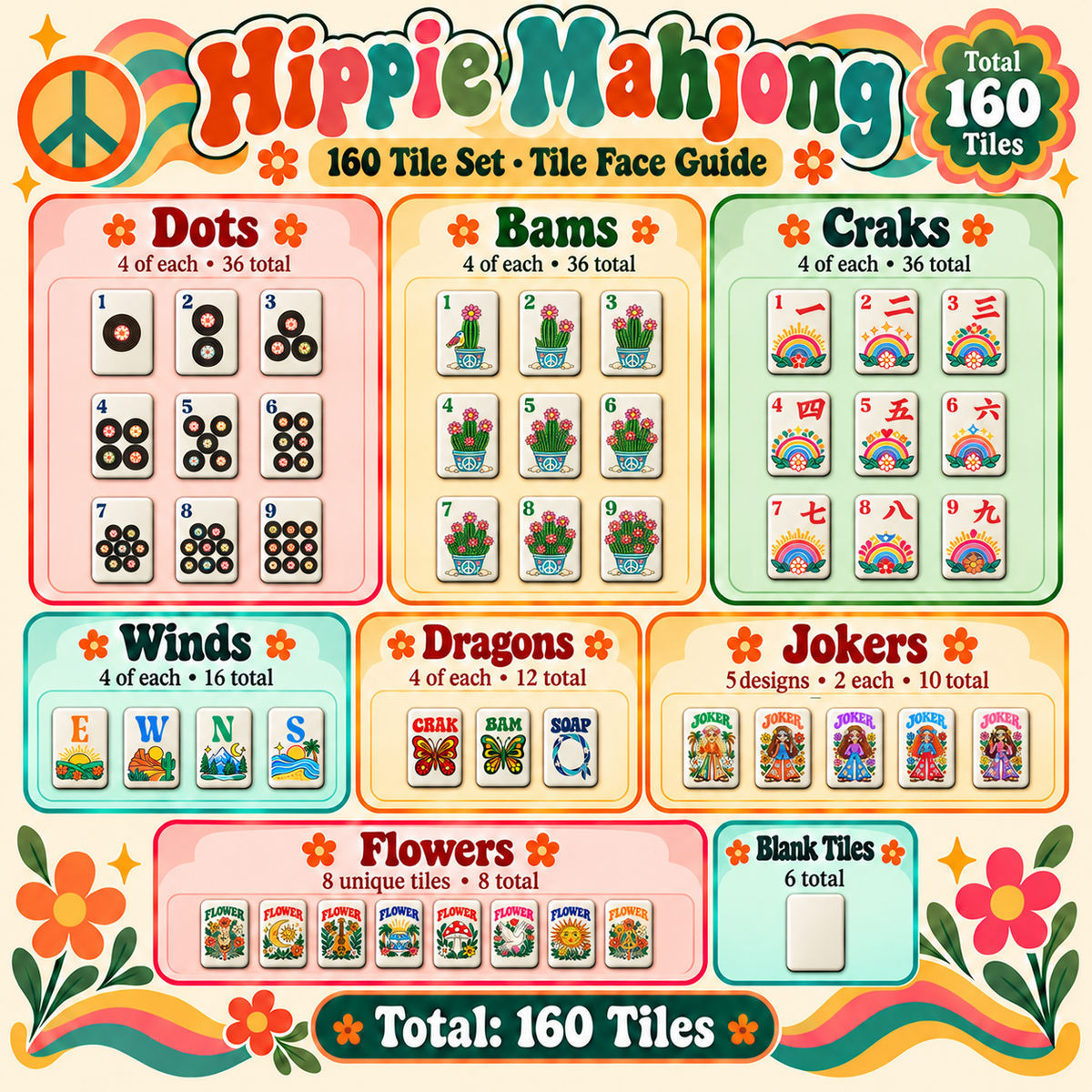
Open mahjong play in Charleston happens at community centers, libraries, synagogues, country clubs, and casual meetup groups throughout the Lowcountry. Sessions typically run 2–4 hours, feature American mahjong rules (152 tiles plus 8 jokers, played from the current National Mah Jongg League card), and welcome players of all levels. Most groups charge no fee or ask for a small contribution toward snacks or table rental; you bring your own set unless hosts provide shared tiles. Before attending, confirm the variant (American is standard locally), learn how to play American mahjong, and bring a quality set with a readable card holder and mat if you own one—hosts often welcome well-maintained acrylic sets.
Where do Charleston open mahjong groups actually meet?
Open play isn't held in one fixed venue; instead, groups rotate among several gathering spots. Community centers across Charleston's neighborhoods host weekly drop-in sessions during off-peak hours. Public libraries often sponsor mahjong meetups in their community rooms—call ahead to confirm the current schedule. Synagogues and Jewish community centers historically anchor social play and remain welcoming to players of all faiths. Country clubs and private dining venues occasionally host ladies' groups or informal tournaments. Meetup boards, community Facebook groups, and word-of-mouth among existing players are your best source for current schedules and meeting points. Expect variability: a group meeting one month may shift venues or pause seasonally. Reach out to 2–3 potential hosts before your first visit so you're not caught on a closed day.

What's the typical structure and time commitment?
Most open play sessions begin with players arriving 15 minutes early to set up and socialize. Four players sit at a table; each hand takes 10–25 minutes depending on experience level and strictness of rule-checking. A typical evening runs 2–4 hours of continuous play, with breaks for drinks and snacks. Scoring resets between hands, and players rotate positions (winds: East, South, West, North) to ensure fairness. No signup or advance commitment is required; you can drop in once or attend weekly. Some groups play for nominal points (often tracked on paper, not money) or simply for fun and bragging rights. Ask your host group whether play is recreational or points-based so you know the tone.
How do you prepare before your first open play session?
Learn the American mahjong ruleset thoroughly before attending. Understand that the Charleston—the tile-passing ritual before each hand begins—is non-negotiable and takes 1–2 minutes per hand. Memorize the current year's National Mah Jongg League card or bring a printed copy; hosts sometimes provide laminated cards, but don't assume. Practice recognizing tiles quickly so you don't slow the table. Know that jokers work only in exposed sets (pungs, kongs, quints, sextets), never in pairs or singles. Bring a notebook or phone to track your score if the group doesn't provide sheets. Eat a light meal beforehand; sessions can run long, and you'll focus better. Arrive 15 minutes early to ask clarifying questions and watch a hand before playing.
Prep Task | Why It Matters | Typical Time |
Learn American ruleset | Avoids embarrassing rule breaks; speeds play | 2–4 hours study |
Memorize current League card | Hosts won't pause to explain hand validity | 30–60 min review |
Practice tile recognition | Keeps the table moving; reduces confusion | 20 min drills |
Understand joker rules | Jokers are misused constantly by new players | 10 min focus |
Bring notepad or phone | Tracking scores manually shows respect & engagement | 5 min prep |
🀄 Shop best-selling mahjong sets →
What should you bring to an open play session?
Bring your own quality American mahjong set if you own one—hosts notice the difference between acrylic sets with clear numbering and worn or unclear tiles. Include a readable mahjong mat if you have one; it keeps tiles organized and prevents them from sliding during play. A laminated current-year card or printed copy is essential. Bring a pen, small notebook, and water bottle. If your set lacks a card holder, a small stand or clip helps you read the card without looking down constantly—many players in active groups keep a portable rack with pushers at the table. Don't bring your phone into active play; set it face-down and silent. If you don't own a set yet, many hosts provide shared tiles, so attend once or twice before investing. Once you're hooked, explore our best-selling collection for a durable set you'll use for years.
What are the unwritten rules that make you welcome back?
Arrive on time or a few minutes early—latecomers disrupt hand timing and annoy experienced players. Don't talk during active play unless you're offering a rule clarification or correcting a scoring error. Keep your tile racks neat and tiles face-down when it's not your turn; messy play slows the game and signals carelessness. Ask before touching another player's tiles or mat. Accept scoring corrections gracefully; open play groups are relaxed, not combative, but they do enforce accuracy. Don't hog the conversation or dominate rule discussion—ask questions, listen, and learn. Thank your host before leaving, and offer to contribute snacks or a small amount toward supplies on your next visit. Never photograph hands or post about specific sessions on social media without permission. These courtesies transform you from a newcomer into a regular.

How does scoring work, and is money involved?
American mahjong scoring depends on the hand pattern from the National Mah Jongg League card and the winning player's position (East wins more; South/West/North scale down). Most casual open play groups track points on paper or a simple spreadsheet and settle up at the end of the session—typically no money changes hands, or players contribute a few dollars to a kitty for refreshments or the host. Some groups play purely for fun with no scoring at all. Ask your host group explicitly about money before your first hand; if you're uncomfortable, say so—good groups accommodate preference-based play. Keep written score tallies visible so disputes stay minimal. Learn American mahjong scoring in detail before your first session so you understand what counts as a valid win.
🎁 See our most-loved mahjong sets & accessories →
What common mistakes do new players make at open play?
Not learning the card: Newcomers waste time asking "Is this hand valid?" when the answer is on the card. Study it before you arrive.
Misusing jokers: Jokers cannot sit alone, fill a pair, or appear in sequences (American mahjong has no chows anyway). This error causes the most table friction.
Slow tile recognition: If you pause over every tile, the table stalls. Spend 20 minutes drilling tile names before your first session.
Ignoring the Charleston: Some players skip or rush this tile-passing ritual. It's not optional; every hand starts with a Charleston, and skipping it invalidates the draw.
Breaking set etiquette: Talking during play, rearranging tiles carelessly, or touching other players' racks marks you as disruptive.
Not tracking score: If you rely on the host to track all four players' scores, you slow down settlement and annoy everyone. Bring a notepad.
What to check before you buy a set for open play
If you don't own a mahjong set and plan to attend open play regularly, invest in one. Look for acrylic tiles (clearer numbers than resin or bamboo), a 160-tile set with spare tiles, and tiles sized 0.8–0.9 inches (standard American). Test the weight—tiles should feel substantial but not exhausting to shuffle. Check that number/character markings are engraved or printed clearly so they don't wear off in 6 months of heavy use. Confirm the set includes 152 playable tiles plus 8 jokers, plus spares. Buy a matching mat to protect your tiles and table surface; this shows respect to hosts and other players. A durable set + mat combo will last 5+ years of weekly play.
✨ Find your Mahstead set — free US shipping →
Finding open play groups in Charleston: a step-by-step guide
Step 1: Search online for "mahjong meetup Charleston SC" and "mahjong groups near me" on Meetup.com, Facebook community boards, and Nextdoor.
Step 2: Call your nearest public library and ask if they host or know of open mahjong play; librarians are often connectors.
Step 3: Contact synagogues and Jewish community centers in your area; ask if they run mahjong groups or can refer you to hosts.
Step 4: Reach out to country clubs or senior centers if you're a member; ask about ladies' groups or informal play.
Step 5: Ask friends or acquaintances if they know players; word-of-mouth is the oldest recruiting method and often the most reliable.
Step 6: Once you find a contact, call or email to confirm meeting days, times, skill level, and whether you need to bring a set.
Step 7: Attend one session as an observer if allowed; watch a full hand to understand the pace and culture before committing.

FAQ
Do I need to bring my own tiles to open play in Charleston?
Most groups provide shared tiles, so your first visit requires no set. If you attend weekly, bring your own acrylic set within 2–3 visits to show commitment and let experienced players use better tiles.
Is American mahjong the only variant played at Charleston open groups?
American mahjong is the standard in Charleston and across the US South. If a group plays a variant (Chinese, Hong Kong, Riichi), the host will state this upfront. Confirm before attending.
What if I make a scoring mistake during a hand?
Stop and raise your hand immediately. Open play groups pause, review the card and rules, and correct errors before moving on. Honesty is always appreciated; accidental mistakes happen weekly at every table.
Can I attend open play if I've never played mahjong before?
Yes, but prepare first. Learn how to play American mahjong thoroughly and practice recognizing tiles for 1–2 hours. Arrive early at your first session to ask the host questions and watch a hand. Most groups welcome curious newcomers.
Do Charleston open play groups require membership or a signup fee?
Almost never. Most sessions are drop-in and free or ask for a small contribution (usually under cost of snacks or a few dollars for the host's supplies). Ask when you call to confirm.
What if the group I find is no longer meeting or has moved?
Groups shift seasonally or pause for holidays. Try 2–3 different hosts or search again in 1–2 months. Charleston has multiple active groups; persistence pays off.
Should I bring money to open play, or is it strictly recreational?
Ask the host explicitly before your first hand. Most casual open play groups don't involve money—they track points on paper for bragging rights. If money does change hands, it's usually a kitty of a few dollars split among winners. If you prefer no-money play, say so; hosts accommodate this.


View More
View More
View More
