
What Does the 5 Dot Tile Look Like in Mahjong?
Last updated: Nov 23, 2026
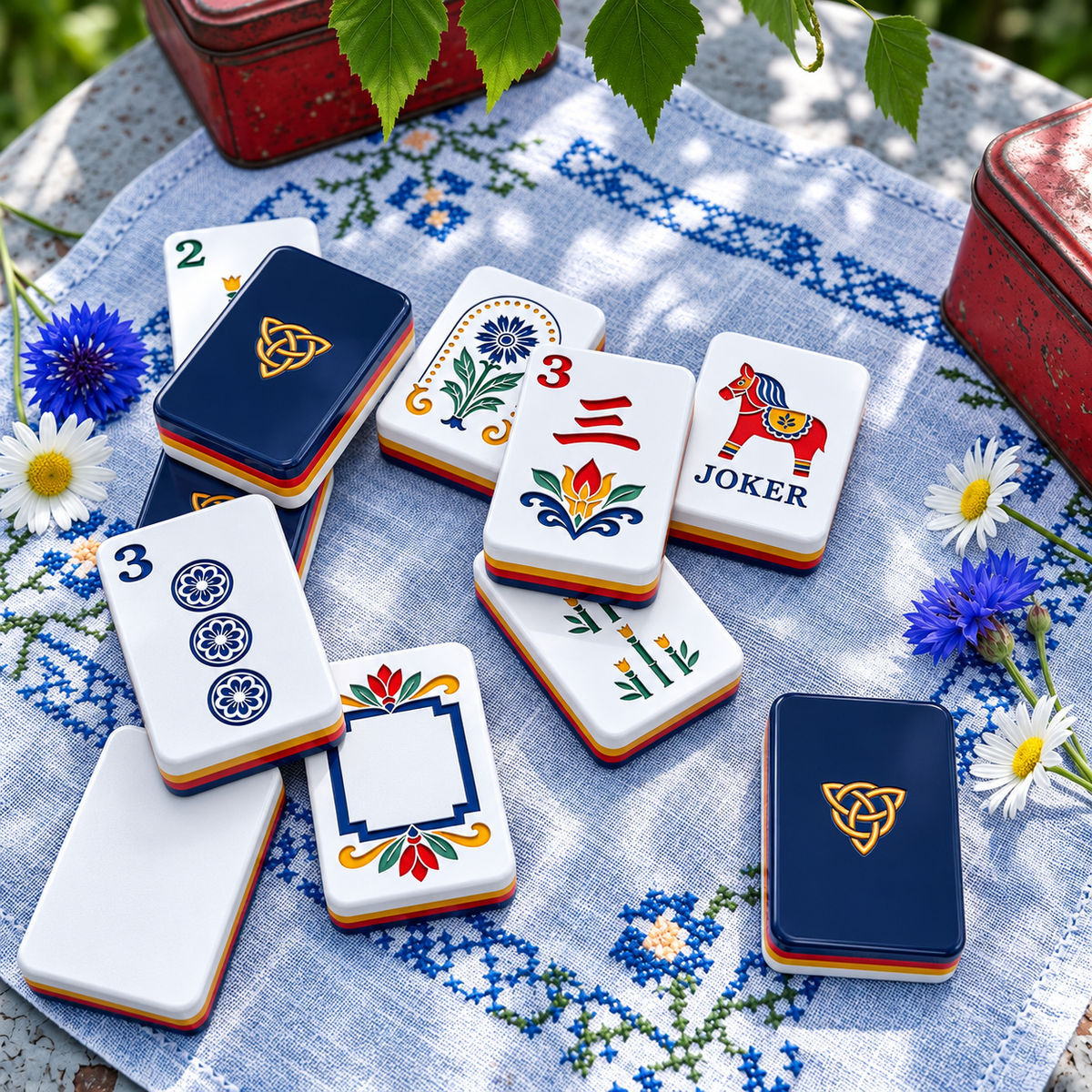
In American mahjong, the 5 Dot tile displays five small circles (called pips) arranged in an X formation—four corners plus one center dot. Unlike the 1 Dot (one pip), 2 Dot (two pips in diagonal), or 3 Dot (three pips in diagonal), the 5 Dot's symmetric layout makes it instantly recognizable. Each American set contains four copies of the 5 Dot tile (one for each player's hand). The tile is part of the 36-tile Dot suit, which pairs the dragon color White with bamboo-themed imagery on many traditional designs. Mahstead's acrylic sets render the 5 Dot in clear, durable plastic with engraved or printed pip markings, making the pattern unmistakable under table light—a practical advantage when reading tiles quickly during play.
The 5 Dot is one of the simplest tiles to identify once you know its signature feature: that five-pip X pattern. Whether you're learning the game or upgrading your set, spotting it correctly matters more than you'd think. A misread 5 Dot can lead to a miscalled hand or a fumbled meld, so let's break down exactly what you're looking for, how it fits into the larger tile family, and how to make sure your set displays it clearly.
How is the 5 Dot arranged on the tile?
The five pips on a Dot tile sit in a fixed pattern: one in each corner (top-left, top-right, bottom-left, bottom-right) and one dead center. This X-with-center layout is universal across all mahjong variants—American, Chinese, Hong Kong, and others. The pips are small circles, never filled shapes or symbols; their size is scaled so the entire pattern fits comfortably within the tile face. On acrylic tiles, the pips are typically engraved or screen-printed so they catch light and remain sharp after years of shuffling. The 5 Dot's symmetry makes it one of the easiest tiles to read at a glance, even from across the table. Compared to the 7 Dot (seven pips in three rows) or 9 Dot (nine pips in a 3×3 grid), the 5 Dot's sparse arrangement eliminates confusion.

Why is the 5 Dot called a "Dot" and not something else?
The Dot suit is one of three number suits in American mahjong—Bams, Craks, and Dots—each containing tiles numbered 1 through 9. The Dots are marked with small circles (pips) for a reason: historically, early tile makers used dots to represent currency or counters on Chinese tiles, and the name stuck. The 5 Dot, 6 Dot, and 7 Dot are all part of the same visual family, sharing the same pip-based numbering system. You'll never see the 5 Dot written as "5 Circle" in American rules, though some Chinese variants use interchangeable terminology. The term "Dot" is baked into the National Mah Jongg League's official card and every hand chart. Understanding this naming convention helps you follow the NMJL card more confidently when you're matching your hand to the listed combinations.
🀄 Shop best-selling mahjong sets →
How does the 5 Dot differ from other number tiles visually?
The key distinction is pip count and layout. The 1 Dot shows a single center pip. The 2 Dot displays two pips in opposite corners (top-left and bottom-right, or vice versa). The 3 Dot arranges three pips in a diagonal line. The 4 Dot places four pips in the corners. The 5 Dot adds a center pip to that corner-four pattern—making it the first tile where you'll see that unmistakable X-with-center look. The 6 Dot arranges six pips in two columns of three. The higher numbers (7, 8, 9) spread their pips more densely across the tile. When you're learning, studying a spread of 1-through-9 Dot tiles side by side cements the visual hierarchy. Many new players confuse the 5 Dot with the 4 Dot at first glance because both have corner pips; the center dot is your confirmation. This is why tile quality matters—a blurry or faded center pip on a cheap set can cost you during fast play. Mahstead's acrylic sets keep the center pip crisp and unmissable.

What role does the 5 Dot play in common hands?
The 5 Dot appears in a wide range of hands on the current National Mah Jongg League card, from simple pungs (three 5 Dots) to complex mixed melds. Because it's a middle number, it fits into many straight-line patterns and number-based hands that rely on mid-range tiles. You might build a pung (three matching 5 Dots), a kong (four 5 Dots), or use it as part of a larger multi-suit combination. The NMJL card is refreshed every spring, so the specific hands containing a 5 Dot shift annually—but the tile itself remains consistent. Learning to spot the 5 Dot fast means you can scan your rack and the table quicker, giving you an edge when you're deciding which tiles to keep or discard. Speed and accuracy compound over dozens of hands in a weekly game.
How do I pick a mahjong set where the 5 Dot is easy to read?
Three factors matter: tile material, engraving depth, and lighting. Acrylic tiles (like those in Mahstead's best-selling collection) are durable and hold crisp engravings; the pips stay legible even after hundreds of shuffles. Bone or bamboo tiles can warp or discolor over time, making the center pip harder to spot. Engraved tiles are more durable than printed ones—the marks are cut into the surface rather than sitting on top. When comparing sets, hold a 5 Dot under table lighting (ideally the kind you'd use during actual play) and ask: Can I see all five pips without tilting? Is the center pip as obvious as the corners? A well-designed acrylic tile should pass both tests instantly. If you're shopping for a gift or upgrading your weekly game set, prioritize clarity over novelty tiles; a 5 Dot you can't read fast becomes a liability.
Tile Material | Durability | Pip Clarity | Best For | Notes |
Acrylic (Mahstead) | High; resists warping | Excellent; engraved | Weekly play, long-term use | Bright under lights; stays sharp |
Bone/bamboo | Medium; ages unpredictably | Fair; can fade | Collectors, occasional play | Beautiful but requires care |
Plastic (budget) | Low; cracks, discolors | Poor; thin printing | Beginners on a budget | Pips wear off quickly |
Resin composite | Medium-high | Good; engraved | Casual home games | Harder to find; moderate cost |
What to check before you buy
Before ordering a set, verify: (1) Are the pips engraved or printed? Engraved = longer life. (2) Can you see sample photos under actual table light? (3) Does the seller offer acrylic sets with pushers and a mat? A complete setup means the 5 Dot tile will be read accurately every time because you've got proper lighting and ergonomics. (4) Check the set size—American mahjong always uses 152 playing tiles plus 8 jokers, so your 5 Dot arrives as one of four copies, guaranteed.
🎁 See our most-loved mahjong sets & accessories →
How do beginners practice spotting the 5 Dot quickly?
Run a simple drill: shuffle a single suit (Dots 1–9) and lay them face-up in random order. Point to each and name it aloud. Repeat for 2–3 minutes daily for a week. By day three, your eye stops counting pips consciously and begins pattern-matching—the 5 Dot's X-with-center becomes a shape, not a math problem. Speed reading the 5 Dot is the same skill as reading any tile; it compounds once you've internalized the visual map. Many of us learned on older, worn sets where the pips were faint; switching to a crisp acrylic set shocked us by how much faster we could play. If you're teaching a new player, let them handle your set for 10 minutes before the first game—familiarity with the 5 Dot and other tiles removes cognitive load during actual play. Mahstead's sets are bright enough that this learning curve compresses noticeably.
✨ Find your Mahstead set — free US shipping →

FAQ
What does the 5 Dot tile look like compared to a 5 Bam or 5 Crak?
The 5 Dot displays five pips in an X-with-center pattern. The 5 Bam shows five bamboo stalks, and the 5 Crak shows five cracks (horizontal lines). Each suit has its own symbol system; only Dots use pips. All three are distinct at a glance once you've learned the suits.
Why do some sets show the 5 Dot differently than others?
Vintage or hand-carved sets may have artistic variations in pip spacing or tile shape. Modern acrylic sets from manufacturers like Mahstead standardize the 5 Dot's layout for consistency and readability. Material quality also affects clarity—engraved acrylic is crisper than printed plastic.
Can I mix 5 Dots from different mahjong sets?
In theory yes, but we don't recommend it for weekly play. If tile backs, colors, or sizes don't match, sorting during shuffles becomes harder and play stalls. Always use one complete set of 152 tiles plus 8 jokers—never splice tiles from two sets.
How many 5 Dot tiles are in an American mahjong set?
Exactly four. American mahjong uses three suits (Bams, Craks, Dots), each numbered 1–9, with four copies of each tile. So you'll have four 5 Dots, four 5 Bams, and four 5 Craks in every standard set.
What if my 5 Dot tile is cracked or faded—can I replace it?
You can order a replacement tile from set retailers, though single-tile replacements are less common than full set purchases. If you've invested in a Mahstead acrylic set, the durability means this is rarely necessary over years of play. For a damaged set, replacing the whole set is often more practical.
Do Chinese or Hong Kong mahjong use the 5 Dot differently than American mahjong?
The 5 Dot tile looks identical across all variants—same X-with-center pip pattern. The rule differences (like which melds are allowed or how jokers work) vary by region, but the tile itself is universal. If you're learning multiple variants, the 5 Dot's appearance never changes.


View More
View More
View More
