
How Many Tiles in Korean Mahjong? Complete Tile Count Guide
Last updated: Nov 23, 2026
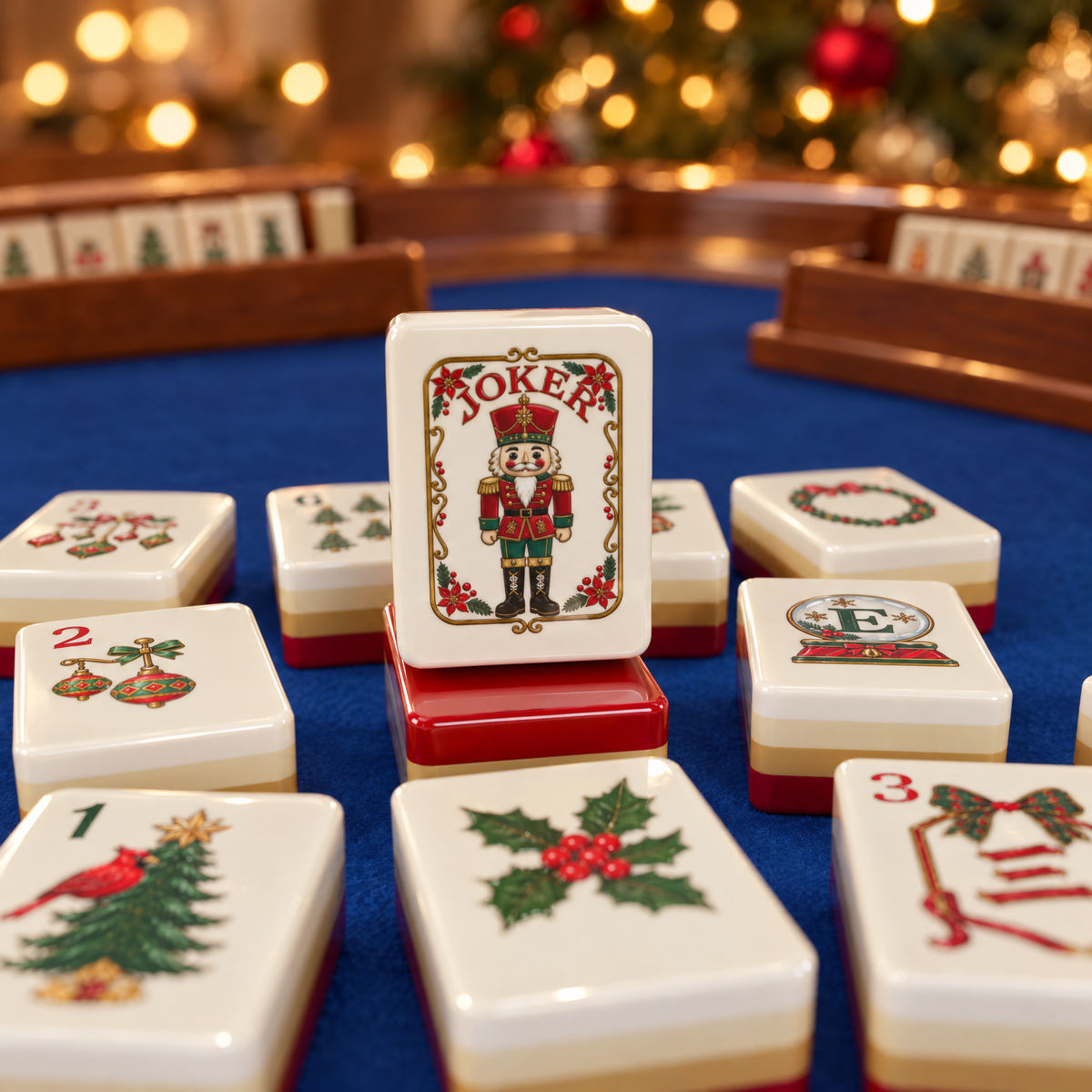
Korean mahjong uses exactly 108 tiles: three suits (Bams, Craks, Dots) numbered 1–9, with four copies of each tile (36 per suit, 108 total). That's all—no winds, no dragons, no flowers, no jokers. This lean design makes the game simpler and quicker than American mahjong, which plays with 152 tiles including honors and flowers. Korean rules also differ in hand structure and scoring. If you're hosting Korean mahjong at home, a standard American set with 160 tiles will work (you'll just set 52 tiles aside), though dedicated Korean sets exist and are harder to find outside Korea. The smaller tile count means faster rounds and less memory load, which is why many beginners prefer it.
Why Korean mahjong has only 108 tiles, while American uses 152
American mahjong adds complexity—four winds, three dragons, flowers, and eight jokers—to create richer hand combinations from a single year's official card. Korean mahjong strips these away deliberately. Players work from pre-set hand patterns that cycle through the simpler tile pool, letting the game move faster and keeping focus on speed and tile prediction rather than rule memorization. A round finishes quicker, which suits casual players and short evening sessions.
How does the 108-tile count break down by suit?
Each of the three suits (Bams, Craks, Dots) contains numbers 1 through 9. You have four identical copies of each number—so four 1 Bams, four 2 Craks, four 5 Dots, and so on. That gives you 9 ranks × 3 suits × 4 copies = 108 tiles. No honors (winds or dragons) sit in the mix. No blanks, no flowers, no jokers take up a slot. This means every tile in play belongs to a single suit and number. It's the tightest tile economy in any mahjong variant, which is why draws, discards, and melds happen in tight sequence.

Can you use an American mahjong set to play Korean mahjong?
Yes. An American set with our best-selling mahjong sets contains 152 playing tiles plus spare jokers and blanks. To play Korean, simply set aside the 44 non-suit tiles (all winds, dragons, flowers, jokers, blanks) and use only the 108 suit tiles. You'll have a working game. The tiles are the same size and weight; the faces are clear. The only drawback is that you're carrying extra baggage. If you play Korean regularly, a dedicated 108-tile set saves space and weight—useful if you travel to games or host in tight quarters—but they're uncommon in North America and often harder to source quickly.
What's the practical difference in gameplay between 108 and 152 tiles?
With 108 tiles and four players, each player draws 27 tiles, leaving 0 in the wall and no dead wall—the entire deck enters play. This means the game is mathematically designed to finish; there's no "wall exhaustion" ending. Hands resolve faster, typically in 10–15 minutes per round instead of 20–30. The smaller tile set also makes it easier for experienced players to track which tiles remain in the wall or in opponents' melds; probability and memory become more central to strategy. American players used to jokers, chows, and multi-tile melds find Korean play more rigid—but that's the appeal for players who want decisive, quick rounds without rulebook lookups.
Which other mahjong variants use different tile counts?
Variant | Tile Count | Key Difference | Why It Matters |
American | 152 | Includes winds, dragons, flowers, jokers | Richer hand patterns; slower rounds |
Chinese (Cantonese) | 144 | No jokers; winds and dragons present | Classic; no wildcards in play |
Hong Kong | 144 | Same as Cantonese | Regional play style; slightly different scoring |
Korean | 108 | No honors or jokers; suits only | Fastest rounds; simplest tile economy |
Riichi (Japanese) | 136 | 4 suits (added Honors as a suit) | Different hand hierarchy and concealment rules |
Korean's 108-tile count is the global minimum; Riichi's 136 is a middle ground; American's 152 is the maximum among common home-game variants. Choose based on how much time you have and how much rule complexity you enjoy.
🀄 Shop best-selling mahjong sets →

What tiles should you actually exclude if you're using an American set for Korean play?
Remove all 16 winds (North, East, South, West—four of each), all 12 dragons (Red, Green, White—four of each), all 8 flowers (four Seasons, four Flowers), and all spare jokers and blanks. That's 36 tiles gone. Leave only the three full suits: 108 tiles of Bams, Craks, and Dots, numbered 1–9, four copies each. Stack the removed tiles in a separate bag or drawer so they don't slip back into the game mid-round—a common mistake when hosting casual sessions. If players touch them by accident during wall building, reset and restart the draw.
What should you check before buying a set for Korean mahjong?
Set composition matters most. Confirm the listing specifies suit tiles only or exactly 108 playing tiles (not 144, 152, or 160). American and Chinese sets bundled with English or Spanish card holders won't have a Korean hand chart; you'll need to print one or know the patterns by heart. Tile clarity. Make sure the suit symbols (Bam bird, Crak character, Dot circle) are deeply engraved or printed, not faint—Korean play involves fast tile scanning, and dull marks slow the game. Size and weight. Smaller hands mean tiles are drawn and grouped tightly; slightly larger tiles (standard 25 mm × 20 mm face) reduce fumbling. Bag or case. Since a 108-tile set is compact, a small drawstring or cloth bag is practical; you won't need a large rolling case. Check our mahjong bags and cases collection to see options that fit smaller sets, though many Korean players simply use a pouch.
One honest caution: Korean mahjong sets are rare in the US market. Most online retailers stock American (152) or Chinese (144) variants. If you can't find a Korean set locally, buying an American set and removing non-suit tiles is the fastest, most reliable path—and you keep a full American set in reserve for guests who prefer that game.
🎁 See our most-loved mahjong sets & accessories →
Why do some Korean players add jokers despite the classic 108-tile rules?
Modern casual Korean mahjong—especially in younger social groups—sometimes introduces jokers like American play does. This stretches rounds longer and adds wild-card strategy. It's a house-rule variation, not standard, and shifts the game closer to American feel. If you're joining an established Korean group, always ask whether they play with or without jokers before the first game. The distinction changes tile probability and hand completion odds noticeably. Playing the strict 108-tile version first gives you the authentic rhythm; adding jokers later is a conscious choice, not a default.
✨ Find your Mahstead set — free US shipping →

FAQ
Is Korean mahjong the same as Chinese mahjong?
No. Chinese (Cantonese or Hong Kong) uses 144 tiles and includes winds, dragons, and flower tiles. Korean uses 108 tiles—suits only, no honors. Korean rounds are faster and simpler. Both are distinct from American, which uses 152 tiles with jokers.
Can I play Korean mahjong with a 144-tile Chinese set?
Technically, yes, but it's wasteful. You'd remove 36 honor and flower tiles, leaving 108 suits. It's easier and cheaper to buy a dedicated 108-tile set if you play Korean regularly, or use a full American set if you host mixed games.
How long does a Korean mahjong round last compared to American?
Korean rounds typically finish in 10–15 minutes; American rounds average 20–30 minutes. The smaller tile pool and absence of jokers mean fewer hand combinations and faster decisions. Scoring is also quicker in most Korean rulesets.
Do I need a special mat or rack for a 108-tile Korean set?
No. Standard mahjong racks and mahjong mats work fine; they're sized for any tile set. A mat designed for American play (slightly larger) works just as well for Korean tiles, which are the same size.
Where can I find Korean mahjong hand patterns or rules online?
Korean mahjong rules and hand charts are less widely documented in English than American or Chinese variants. Check Korean gaming forums, YouTube channels by Korean mahjong instructors, or contact Korean community centers or cultural associations in your area. Some regional clubs have printable hand lists in English.
What's the "dead wall" and why doesn't Korean mahjong have one?
In American and Chinese mahjong, 14 tiles are set aside (the "dead wall" or kong pile) and never enter play. With 108 tiles and four players drawing 27 each, all 108 tiles enter the game, so there's no dead wall. The round is guaranteed to resolve.


View More
View More
View More
