
Mahjong Open Play in Baltimore: Where to Join and How to Start
Last updated: Nov 23, 2026
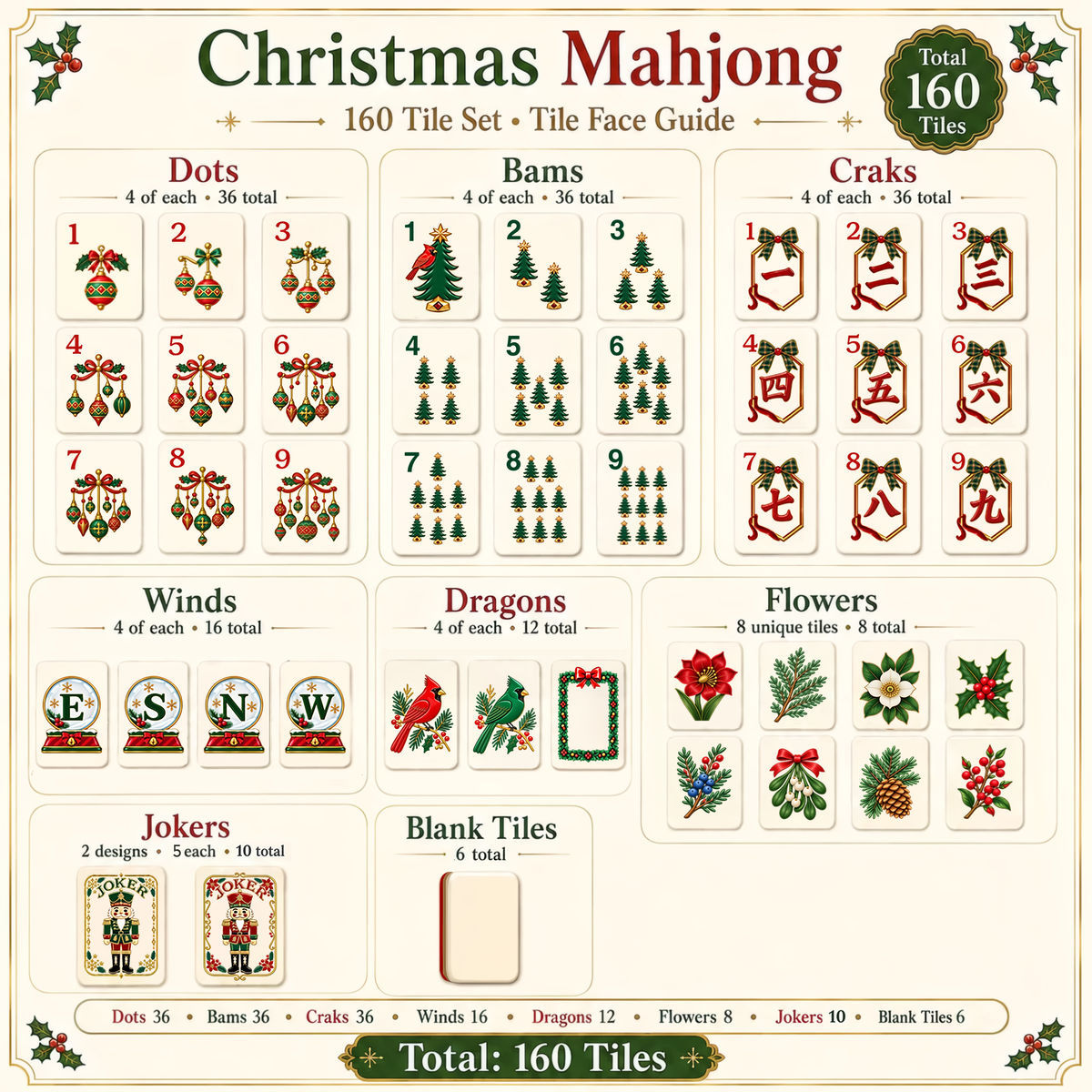
Open play in Baltimore happens primarily at community centers, libraries, synagogues, country clubs, and casual meetup groups—search online community boards, Meetup.com, and ask at local senior centers or Jewish cultural organizations for current gatherings. Most games follow American mahjong rules using the current National Mah Jongg League card (updated each spring), play with a standard 152-tile set plus 8 jokers, and cost little or nothing to join; sessions typically run 2–4 hours and range from beginner-friendly to competitive. Before attending, learn basic hand-reading from the mahjong for beginners guide, practice how the Charleston tile-passing ritual works, and understand how jokers function in American mahjong. Bring a scorecard, pen, and familiarity with how to read the current year's mahjong card—many groups loan sets, but owning your own 160-tile set from our best-selling collection ensures you're never without. 🀄 Shop best-selling mahjong sets →
Where do Baltimore mahjong groups actually meet?
Community centers, public libraries, and neighborhood recreation centers often host mahjong—call ahead to ask for open-play nights or beginner sessions. Senior centers and adult day programs frequently run games, especially in neighborhoods with established Jewish or Asian communities; staff can connect you to regular players. Synagogues and Jewish community centers sometimes sponsor games or can refer you to local groups. Country clubs and private recreational venues may welcome new members. Start by searching Meetup.com for "mahjong" + your neighborhood, checking library bulletin boards, calling parks and recreation departments, or asking at a local Chinese restaurant or Asian grocery store—word-of-mouth is how most new players find their first table.

What's the cost and time commitment for open play?
Most casual open-play groups are free or charge a nominal fee (a dollar or two per player per session) for supplies and venue rental, with no membership requirement. Games typically last 2–4 hours; you can drop in for one session or return weekly. Competitive leagues or clubs may charge session fees or annual dues, which you can ask about when you make contact. There's no minimum skill level—beginners are welcome at most open-play venues, though you'll want to spend a week or two learning the hand patterns and tile names before you go, so you can follow play without slowing the table down.
How do I prepare for my first Baltimore open-play session?
Start by learning the three suits—Bams, Craks, Dots (numbered 1–9)—plus winds, dragons, and flowers; recognize tile names instantly so you're not holding up play. Study how to read the mahjong card, which shows all legal winning hands for that season. Practice the Charleston, the tile-passing exchange before play begins—it's quick but confusing if you've never done it. Watch a 10-minute video tutorial or ask the group for a walkthrough on your first night; most players are patient with newcomers. Bring a pen, small notebook (to track scoring), and your phone to text the organizer with questions before you arrive. If you own tiles, bring them; if not, most groups have extras, but owning your own 160-tile set means you're never dependent on others and you get familiar with your tiles' feel and weight.
🎁 See our most-loved mahjong sets & accessories →
What American mahjong rules should I know before playing?
American mahjong uses only the hands printed on the current year's card (issued every spring by the National Mah Jongg League); you cannot invent hands or use hands from previous years. You can expose only certain combinations: pungs (three identical tiles), kongs (four identical), quints (five), and sextets (six). Jokers are wild and can stand in for any tile in an exposed meld, but never for a single tile or a pair. You must win by drawing from the wall and declaring "mahjong" when you complete a legal hand—no draws mid-game. When someone calls a tile you discard, that tile moves to the caller's area and becomes exposed; afterward you skip that turn. Learn how jokers work in detail and American mahjong scoring before your first game so you're not surprised by tie-breaking or bonus point rules.
What should I bring to open play, and what can I skip?
Item | Why | Must-bring | Notes |
Pen & scorecard | Track points, avoid disputes | ✓ | Groups often provide cards |
Phone/card photo | Reference current hand list | ✓ | Many players screenshot the card each spring |
Small notebook | Jot down learned hands | Optional | Helps you memorize faster for next session |
Your own tile set | Comfort, speed, confidence | Optional | Most groups loan sets; owning your own from our best-selling collection speeds learning |
Mahjong mat | Protects tiles & table | Optional | Useful if you host; groups rarely require it for open play |
Racks & pushers | Organizes your hand visibly | Optional | Many players bring their own; improves hand management |
Comfortable seat cushion | Long sessions can strain you | Optional | Groups meet at venues with their own seating |
✨ Find your Mahstead set — free US shipping →

How do I avoid common beginner mistakes at the table?
Mixing up tile names: Don't confuse Bams (sticks) with Dots (circles) or Craks (characters). Glance at each discard twice before you play it—calling the wrong tile pauses the game and embarrasses you. Calling when you shouldn't: You can only call a discarded tile if it completes one of your exposed melds on the current year's card. If you call by mistake, you're stuck with the tile and may be forced to win on that call, which can cost you points. Joker overuse: Jokers are wild, but using them carelessly wastes them; save them for hard-to-complete tiles. Not learning the Charleston: Fumble the pre-game tile exchange and the table loses patience. Spend 10 minutes on this ritual with a friend before you play. Holding your tiles too close: Show your hand clearly so others can verify you're playing legally; it also prevents accusations of hidden melds.
What's the difference between Baltimore open play and league or tournament play?
Open play is casual, no-stakes or low-stakes social gaming with flexible drop-in attendance; you meet at community spaces, chat between rounds, and focus on learning. League or tournament play, if available in your area, follows stricter rules, official scoring sheets, competing for rankings or prizes, and often requires membership or season entry. Most people start with open play to build confidence, then graduate to league play if they wish. Ask your open-play organizer if they know of leagues or tournaments in the Baltimore area; they'll likely have names of groups or websites to check.
What to check before you buy your first set
If you decide to own a tile set for open play or home games, know these checkpoints:
Set size: American mahjong always uses exactly 152 tiles plus 8 jokers in play; any set sold today has extra spare tiles included for durability (sold as 160-tile sets).
Tile material: Acrylic tiles are durable, easy to clean, and quieter than traditional bamboo; they're ideal for frequent casual play.
Tile weight and feel: Visit an open-play session and feel the table's tiles before buying, or order from a trusted maker (like Mahstead) with a clear return policy.
Face vs. back design: Check photos to confirm you like the tile face (some are ornate, others minimal) and back pattern; you'll see the backs constantly.
Engraving or custom text: If you want personalized tiles, engraved sets are popular gifts and conversation starters; confirm the engraving fits your design taste.
Carrying case or bag: If you plan to carry your set to open play weekly, choose a set with a sturdy travel bag or case to protect tiles and push them safely in your car.
How to find your Baltimore mahjong community step-by-step
Search online: Visit Meetup.com, Facebook Groups, and Eventbrite, searching "mahjong Baltimore" or "mahjong [your neighborhood]." Note organizer names and contact info.
Call local institutions: Ring community centers, libraries, parks & recreation offices, and synagogues. Ask for mahjong contacts or open-play nights.
Visit in person: Show up at a library or community center during posted mahjong hours (if listed). Introduce yourself to players and ask about regular sessions.
Learn the basics first: Before you show up, spend a week on how to play American mahjong so you're not a complete novice at the table.
Bring curiosity, not excuses: Admit you're new, ask questions between games, and volunteer to keep score—players love teaching eager learners.
Return the next week: Consistency builds friendships and lets you practice what you learned.

FAQ
Do I need to own my own mahjong set to join Baltimore open-play groups?
No. Most groups have spare sets available for borrowers. However, owning your own 160-tile set lets you practice at home, learn tile layouts faster, and never be without equipment. Many players find their first set within a month of regular play.
What's the best age to start mahjong in Baltimore?
Mahjong has no age minimum. Children can learn as young as eight; most open-play groups include players ages 18–85+. Ask the organizer about beginner-friendly sessions if you're bringing younger players.
How long does it take to learn enough to play in an open-play group?
One to two weeks of casual study—learning tile names, reading the hand card, and understanding the Charleston—is usually enough. You'll refine strategy and speed over months, but you can hold your own at a beginner table after a week of prep.
Can I play American mahjong if I already know Chinese or Hong Kong mahjong?
Yes, but it's almost a different game. American mahjong has no sequences (chows), requires hands from a printed card each season, and uses jokers freely in melds. Chinese and Hong Kong mahjong have melds of consecutive numbers and no card. Allow a few sessions to adjust, even if you're an expert in another variant.
What should I do if I don't understand a rule during play?
Stop the game and ask. Experienced players expect newcomers to ask; clarifying a rule mid-hand is always okay. Write down the ruling so you remember it next time. Never pretend to understand and play wrong—it wastes everyone's time.


View More
View More
View More
