
Mahjong Lessons in San Diego: Where to Learn & What to Expect
Last updated: Nov 23, 2026
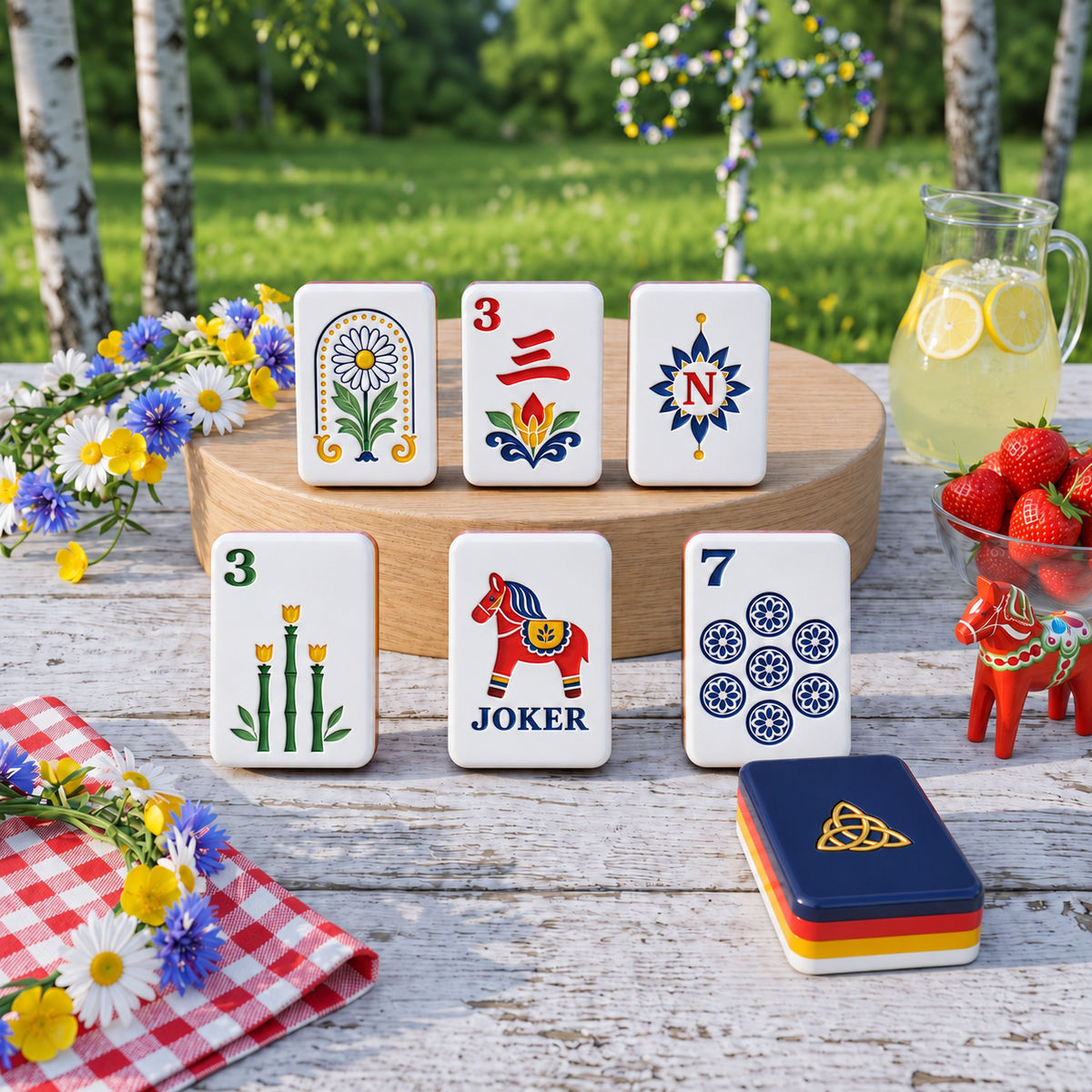
San Diego beginners can find mahjong lessons through community centers (check the Parks & Recreation department website), libraries, synagogues, and country clubs—many offer drop-in or structured classes spring through fall. Online instruction is available year-round via Zoom-based instructors and YouTube tutorials. Lessons typically run 2–4 hours and cost varies by venue; expect to learn tile names, the Charleston (tile-passing ritual), how to read the current-year National Mah Jongg League card, and basic hand patterns. American mahjong is the standard in San Diego. Most beginner programs provide shared sets, but players building a home game need a 160-tile set with jokers, a mat, and racks. We recommend starting with best-selling American mahjong sets that include clear tile markings—easier for new eyes to track during play. 🀄 Shop best-selling mahjong sets →
Where do San Diego mahjong lessons happen?
Community centers, public libraries, and membership clubs across San Diego County host regular lessons. Check your local Parks & Recreation website for spring and fall session schedules—many offer beginner classes at affordable rates. Synagogues and Jewish community centers often host weekly open games and beginner clinics. Country clubs in La Jolla, Rancho Santa Fe, and central San Diego sometimes offer members-only instruction. Meetup boards and Facebook groups dedicated to San Diego gaming list current drop-in sessions. Some instructors offer private lessons at your home or theirs; ask at community venues for referrals. The best approach: call your nearest library or community center in your ZIP code and ask if they host mahjong groups—you'll get current schedules and instructor contact details.

How long does a typical mahjong lesson take?
A first lesson usually lasts 2–3 hours: 30 minutes on tile names and hand structure, 30 minutes on the Charleston shuffle, 60–90 minutes of guided play, and 15 minutes on scoring basics. Follow-up beginner lessons run 2–2.5 hours as students practice recognizing patterns on the card and managing their rack. Advanced clinics (for players already comfortable with basic rules) often run 90 minutes and focus on strategy, defensive play, or specific hand types. Most community classes meet weekly; private lessons can be scheduled to fit your calendar. By the fourth or fifth session, most players feel confident enough to join a casual home game with other beginners.
What does a beginner lesson actually cover step-by-step?
A good instructor walks through these five phases: Phase 1—Tile names & suit basics (the three suits Bam, Crak, Dot; winds and dragons; how to hold and read tiles on a rack). Phase 2—The Charleston (the three-pass tile exchange that starts every hand). Phase 3—The card & hand patterns (how to read the current National Mah Jongg League card and spot matching patterns in your own hand). Phase 4—Calling and exposure rules (when and how to claim a discard; how pungs, kongs, and jokers work). Phase 5—Play & scoring intro (how hands go down, how to count points, when a hand wins). Most instructors then sit with players during a guided game, stopping to explain decisions in real time. Our beginner guide covers these topics in detail for home study before or after your class.
🎁 See our most-loved mahjong sets & accessories →
What's the difference between online and in-person lessons?
In-person lessons let you handle real tiles, watch an instructor's hands during the Charleston, and ask immediate questions in a room with other learners—crucial for absolute beginners. You'll practice shuffling, dealing, and reading tiles at table speed. Online lessons (Zoom-based or video tutorial) work well for refreshing rules, learning advanced strategy, or practicing with players in other regions. However, you can't physically handle unfamiliar tiles or get real-time posture feedback on rack management. San Diego's climate makes year-round in-person play easy; we recommend starting with at least one 2–3 hour in-person session before trying online-only instruction. If you're already comfortable with rules and mainly want tactical coaching, online lessons are efficient and cheaper. Many experienced players use both: an in-person lesson to start, then online clinics to level up.

What equipment do you need to bring (or buy) for lessons?
Most community classes provide shared sets and mats—bring only yourself, a notebook, and a pen. If you want to host games at home afterward, you'll need your own set, a mat, and racks. Our best-selling collection includes complete starter packages: a 160-tile acrylic set (durable and easy to shuffle), a non-slip mat, four racks with pushers, a carrying bag, and joker cards. The mahjong mat buying guide walks you through size and surface choices. For a first home game, invest in clear acrylic tiles—harder to misread than painted tiles when you're new. A padded mat prevents tiles from sliding and marks suit zones, speeding up your play. Most lessons assume you'll use American mahjong rules (no sequences/chows, jokers as wild tiles, hands from the current-year League card). Verify the lesson uses American rules before enrolling—some regions teach Chinese or Hong Kong mahjong, which have different tile sets and rule structures.
Finding your first regular San Diego game
Once you've finished lessons, the next step is finding a weekly or monthly group. Ask your instructor if players meet outside class—many do. Post on local Meetup boards or San Diego-specific Facebook groups asking for beginner-friendly home games. Libraries and community centers often have bulletin boards listing ongoing games. Expect to rotate between 3–4 players, use a mat with clear suit zones, and keep score using pencil and paper or a simple app. Most beginner games play for fun or small stakes (coin cups); clarify the format when you're invited. A home set from Mahstead's best-selling range is built for regular weekly play—acrylic tiles hold up to frequent shuffling, and the included racks with pushers let players manage tiles hands-free, reducing accidental reveals. Once you're comfortable, you can also explore advanced tactics through strategy guides on reading the card and managing jokers.
Finding Mahjong in San Diego | Where to Look | Best For | What to Expect |
Community centers & Parks & Rec | City website, call directly | Structured learning, affordable | Classes 6–10 weeks, beginner-focused |
Public libraries | San Diego County Library website, local branch | Free or low-cost drop-in | Weekly open games, mixed skill levels |
Synagogues & JCCs | Local Jewish community center | Community + gameplay | Weekly game nights, social atmosphere |
Country clubs & golf clubs | Membership-based inquiry | Mid-level to advanced | Regular members-only game groups |
Meetup & Facebook groups | "mahjong San Diego" search | Social + flexible scheduling | Rotating home games, beginner-friendly |
Private instructors | Library bulletin board, referral | One-on-one or small group | Tailored pace, higher cost |
Online lessons & Zoom groups | YouTube, Zoom instructor booking | Self-paced, national reach | Flexible hours, good for refreshing rules |
What to check before you buy a home set
Once you're committed to regular play, a quality set matters. Here's a checklist: 1) Tile size and readability — acrylic tiles should be 1 inch square (readable from arm's length); painted designs should have high contrast. 2) Joker count — you need exactly 8 jokers for American mahjong; a 160-tile set includes spares for long-term replacement. 3) Mat surface — non-slip rubber backing prevents sliding; fabric top keeps tile noise down. 4) Rack design — pushers should be smooth and not pinch fingers; racks should hold 13–14 tiles comfortably. 5) Carrying bag — essential if you rotate games between homes. Mahstead's best-selling sets tick all five boxes and ship free across the US. If you want a personalized set, browse engraved mahjong titles (great gifts for steady game hosts). All Mahstead sets are acrylic, come with mats and racks, and are tested through real weekly play in Dallas before we recommend them.
✨ Find your Mahstead set — free US shipping →
FAQ
Do I need to know any Chinese or background about mahjong before a San Diego lesson?
No. American mahjong lessons assume zero prior knowledge and teach all rules from scratch. No Chinese language or cultural background is necessary; the game focuses entirely on tile matching and pattern recognition using the National Mah Jongg League card.
Can I learn mahjong from online videos alone without a class?
Yes, but it's harder. Videos teach rules well, but you'll miss hands-on feedback on tile handling, shuffling speed, and real-time card reading. Most players learn faster with 1–2 in-person sessions, then use videos to reinforce and advance.
What's the difference between the mahjong played in San Diego and in other U.S. cities?
American mahjong is standardized nationwide—same 152-tile set, same Charleston, same National Mah Jongg League card. San Diego follows standard American rules. Chinese, Hong Kong, and Riichi mahjong are played elsewhere and use different tile sets and hand structures; clarify which variant your lesson teaches.
If I join a lesson and don't like it, can I find games for just 2 or 3 players?
Yes. American mahjong works with 2, 3, or 4 players using adapted rules (fewer wall tiles, modified hand patterns). Search for "2-player mahjong" or "3-player mahjong" groups on Meetup. Many instructors also teach these variants if traditional 4-player games don't fit your schedule.
How much does a mahjong set cost to start a home game?
Pricing varies by design and materials. Check the product page for current pricing on best-selling sets. Complete starter packages include the set, mat, racks, and bag—everything you need for regular weekly play with friends.
Should I bring my own set to a lesson or use the venue's?
Use the venue's set if provided. It lets you focus on learning without worrying about your tiles. Once you decide to play regularly at home, that's the time to buy—our buying guide walks you through choosing the right set for your group.


View More
View More
View More
