
Mahjong Lessons in New York: Where to Learn & What to Expect
Last updated: Nov 23, 2026
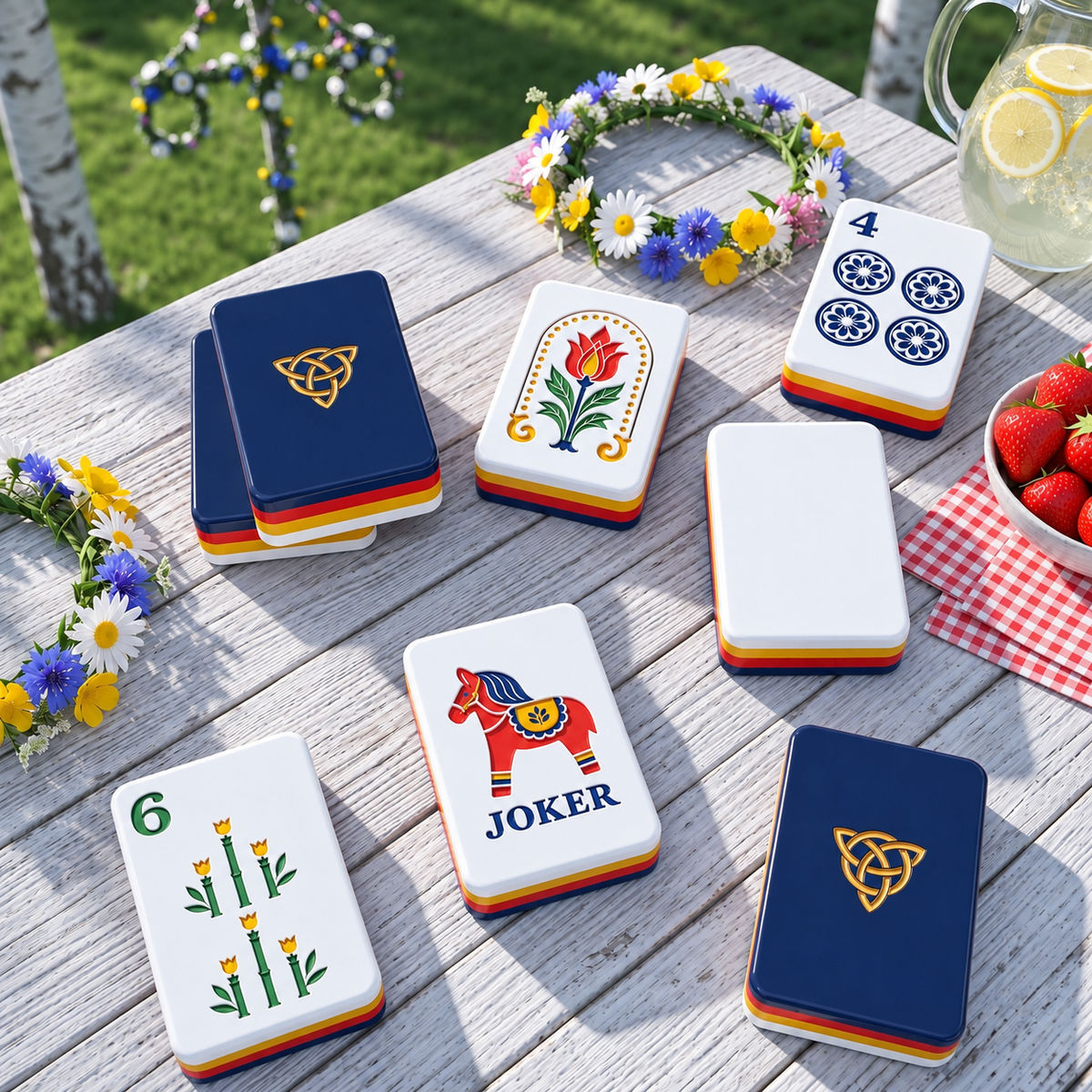
Mahjong lessons in New York are available through community centers (check your borough's recreation department), libraries (many host free or low-cost intro sessions), synagogues and senior centers, private instructors (found via Meetup, Facebook groups, and word-of-mouth), and established game clubs in Manhattan and Queens. Most intro lessons run 1–2 hours and cover the National Mah Jongg League standard—American mahjong uses 152 tiles across three suits, four winds, dragons, flowers, and jokers. Lessons typically cost nothing to under a hundred dollars per session depending on group size and instructor; many clubs charge a small table fee per game rather than a lesson fee. Before signing up, ask whether instruction focuses on American (most common in NYC) or Chinese variants, what the Charleston tile-passing ritual involves, and whether you need to own a best-selling mahjong set or the club provides equipment. New York's strong Asian communities and large retiree population mean you'll find both casual social games and serious League-sanctioned play.
Where can I find mahjong lessons near me in New York?
Start with your local Parks & Recreation department—most NYC boroughs offer community center classes in fall and winter. Libraries in Manhattan, Brooklyn, and Queens frequently host intro sessions; call ahead or check their website for scheduling. Search Meetup.com for "mahjong New York" to find regular game groups that welcome learners. Facebook groups like "Mahjong Players NYC" and neighborhood-specific community pages often list teachers and weekly games. For more formal instruction, check with cultural centers, Jewish community centers, and senior centers in your area; these typically have bulletin boards and staff who can recommend local instructors. Ask friends who play—the mahjong community is tight, and personal referrals often lead to the best game groups.

What's the difference between American mahjong and other versions taught in New York?
American mahjong uses the National Mah Jongg League card to define legal hands—only exposable combinations are pungs (three identical tiles), kongs (four), quints (five), and sextets (six). You can never call a chow (sequence like 1-2-3), which Chinese and Hong Kong variants allow; this makes American mahjong feel less like poker and more like a puzzle. Chinese mahjong tends to be simpler at first, with different scoring and more flexible hand patterns. Hong Kong mahjong is faster-paced with more scoring options. Most NYC lessons focus on American, especially in areas with strong Jewish communities and older player bases, though you'll find Chinese instruction in Flushing, Sunset Park (Brooklyn), and Chinatown. Ask your instructor which variant they teach before you enroll, since the rules diverge significantly and skills don't transfer directly.
How long does it usually take to learn mahjong?
You can learn basic American mahjong tiles, the Charleston, and one simple hand pattern in a single 2-hour lesson—enough to play a casual game with guidance. Becoming comfortable reading the League card, recognizing 10–15 common hand patterns, and calling tiles confidently takes 4–6 weeks of weekly play. Real fluency (spotting patterns fast, managing your rack, remembering discards, and adjusting strategy) develops over 3–6 months of steady play. The breakthrough moment often comes around week 3–4, when your brain stops treating tiles as abstract symbols and starts seeing combinations. Many players say the hardest part isn't the rules but the speed and memory work—you're tracking what others discarded, which tiles are still in the wall, and what you're hunting for simultaneously. Start with a patient, beginner-friendly group rather than jumping into a competitive table; the social learners tend to stick with it longer.
What do I need to bring to my first lesson?
Bring a notebook and pen to jot down hand patterns and any house rules the group uses. Wear comfortable clothes—mahjong games can run 1–3 hours and you'll be seated. Some instructors ask you to bring a best-selling mahjong set if you own one; ask in advance. Most clubs and classes provide tiles, and you absolutely don't need your own to start learning. If you're attending a game club, bring cash for table fees (typically a few dollars per session) or ask what payment method they accept. Don't bring phones or expect to multitask—the game demands focus, and it's disrespectful to the table. Bring water and a snack if the session is longer than two hours. Most importantly, arrive 10–15 minutes early to meet the instructor or group organizer and ask any beginner questions before tiles are shuffled.
How much do mahjong lessons cost in New York?
Many community-center intro sessions are free or cost a few dollars per class. Some synagogues and senior centers charge under fifty dollars for a four-week beginner series. Private instructors typically charge per-hour rates; ask what they charge before booking. Game clubs usually work on a table-fee model rather than lesson fees—you pay a small amount per game (often around five dollars) to cover table wear and supplies. League-sanctioned clubs in Manhattan sometimes charge membership fees plus per-game fees, but casual drop-in games are almost always cheaper. Some groups operate on a voluntary donation basis. The barrier to entry is intentionally low because the community wants new players. Once you have your own equipment—a tile set, a mahjong mat to protect your playing surface, and perhaps racks with pushers to organize your tiles—your only cost is the table fee, which keeps play affordable for regular players.
What should I look for in a good instructor or game group?
A good instructor or group welcomes beginners, explains the Charleston before every game, and pauses to answer questions without making you feel rushed. They use the current-year National Mah Jongg League card (updated every spring) and stay consistent with hand definitions—don't join a group that mixes variants or uses outdated cards. They keep the table friendly and fun rather than cutthroat; ego-free play is a sign of mature players who remember being new. Check whether the group plays American mahjong exclusively or mixes in Chinese or Hong Kong variants, so you know what you're learning. Ask how long people typically stay (some games run 1 hour, others 3+) and whether beginners play at separate tables or mixed with experienced players. A good environment is one where people talk through their discards aloud, explain why they're passing certain tiles in the Charleston, and don't rush you. Visit twice before committing; bad chemistry or intimidating play styles become clear fast.
🀄 Shop best-selling mahjong sets →

What are the core rules I should know before my first lesson?
American mahjong uses 152 tiles: three suits (Bams, Craks, Dots numbered 1–9), winds (North, East, West, South), dragons (Red, Green, White), flowers, and jokers. A complete game always uses exactly 152 tiles with 8 jokers in play. Your goal is to build a hand that matches one of the patterns printed on the League card—you win by calling "Mahjong!" when you hold a legal hand. Before each game, you pass tiles to other players in a ritual called the Charleston; this randomizes the tiles and is part of the fun. You can only expose (lay faceup) pungs, kongs, quints, and sextets—never a chow (sequence), which is forbidden in American play. Jokers can be used as wildcards in exposed combinations but never as a single tile or a pair. The person who draws the winning tile gets points based on the hand type (more complex hands score higher). On your first night, your instructor will walk you through these steps, and you'll feel lost for about 30 minutes, then it clicks.
For a deeper dive into the rules before you arrive, read our guide to how to play American mahjong.
How do I prepare my home game if I decide to host friends?
Start with a solid tile set—the best-selling collection includes options with clear tile markings that make learning easier for a mixed group. A mahjong mat is essential if you're playing on a dining table; it protects your furniture and keeps tiles from sliding. Racks with pushers organize tiles in front of each player and make it easier to spot patterns and manage your hand. Buy enough so all four players have one. A scorepad, the current year's National Mah Jongg League card (you'll need four copies if players share the same cards, or one large print for the center), and a dice set complete your setup. Keep snacks and water on hand and clear the table of clutter—mahjong demands focus and elbow room. Start with only experienced or actively learning players; mixing total beginners with competitive players creates friction. Host a no-stakes or low-stakes game (play for fun or pennies, never real money) to keep the vibe social. If you're ordering tiles online, factor in shipping time and test your set with friends before inviting a larger group.
🎁 See our most-loved mahjong sets & accessories →
What's the cultural context of mahjong in New York?
Mahjong has deep roots in New York's Chinese, Jewish, and broader Asian communities. Post–World War II, Jewish women adopted the game as a social ritual in the 1950s–70s, and it remains embedded in many Manhattan and Brooklyn neighborhoods. Chinese immigrants brought their own variants, creating parallel game cultures that don't always overlap. The National Mah Jongg League, founded in 1937, standardized American mahjong and remains headquartered in New York; the League's card is the official reference for competitive play and most casual games. Today, New York's mahjong scene spans retirees, young professionals rediscovering the game as a digital-detox hobby, and serious tournament players chasing ratings. You'll find games in synagogues, community centers, game clubs, and private homes across all five boroughs. The generational transfer is real—grandmothers teaching grandchildren, longtime players welcoming curious newcomers—which means the community is welcoming if you approach with humility and genuine interest.
Setting | Best for | Typical cost | Why it works |
Community center class | Absolute beginners, structured learning | Free–low fee per session | Instructor, same classmates weekly, no pressure |
Game club (drop-in) | Casual players, weekly habit-building | Small table fee per game | Low commitment, consistent players, social |
Synagogue/senior center | Community feeling, intergenerational play | Small fee or donation | Welcoming, patient group, refreshments often included |
Private instructor | Fast learning, customized pacing | Higher per-hour rate | One-on-one feedback, flexible schedule, accelerated progress |
Home game with friends | Intimate, no-pressure fun | Free or potluck snacks | Relaxed, learn at your own pace, full control of atmosphere |
What common mistakes should I avoid as a beginner?
Joker confusion. New players often try to use jokers as a fifth tile in a pair or as a single tile. Jokers only substitute for tiles inside exposed pungs, kongs, quints, and sextets—never alone or in a pair. If you hold a joker in your hand with no exposed set to place it in, it takes up a tile slot but has no value.
Not paying attention to the Charleston. Beginners pass tiles randomly during the Charleston without strategy. Experienced players pass aggressively to block opponents and test what comes back. You don't need to be cutthroat early on, but do pay attention—if someone keeps passing back the same tile, they don't want it.
Ignoring the League card. Beginners sometimes memorize 3–4 hand patterns and get stuck. The card changes yearly and offers hundreds of valid patterns. Spend five minutes before your game flipping through the card and recognizing the major sections (like "2468" or "like numbers" patterns). It builds pattern recognition fast.
Discarding too predictably. If you always discard from the same end of your rack or discard high tiles first, observant players will read your hand. Mix it up and discard from different parts of your rack to throw people off.
Playing too fast. Slow down. Announce your tiles aloud as you discard ("3 Bam"). Pause and look at what others have exposed before you pick. Speed comes with practice; rushing leads to rule mistakes and frustration.
Mixing American and Chinese rules. If your group plays American but you learned Chinese elsewhere, explicitly ask for clarification before joining. The chow rule alone creates massive confusion.
✨ Find your Mahstead set — free US shipping →
What to check before you buy or join
Before you invest in your own tile set, attend 2–3 lessons with a club or instructor so you know you love the game and the group dynamic. Ask whether the group prefers a specific tile size or color—if everyone uses jumbo tiles and you show up with mini tiles, you'll feel out of place. Check whether the group owns travel bags or cases for sharing, or whether you should bring your own. Confirm that the current-year League card is in use (never an old card). If you're ordering online, test shipping times—you want tiles to arrive before your first game hosting a friend. Read reviews or ask players what's worked for them. Ask the instructor directly: "What tile set would you recommend for a beginner?" Most will point you toward durable, easy-to-read options.

FAQ
Can I learn mahjong entirely online instead of in person?
Online tutorials teach you the rules, but mahjong is fundamentally a table game involving four players, live tile-reading, and fast decision-making. Video lessons are a great supplement, but you'll need in-person practice to build speed, memory, and social comfort. Most online courses also cost more than a single community center lesson.
Do I need to speak Chinese to play mahjong?
No. American mahjong uses English-language cards and is played in English. Chinese variants use traditional names and terminology, but you can learn the English equivalents. Many NYC instructors code-switch between Chinese names and English translations anyway.
What if I'm the only beginner at a table?
Ask the group to play a practice round with you first, or sit out the first game and watch. Most experienced players are patient with genuine learners and will pause to explain calls and passes. If they're dismissive or rude, find another group—there are plenty.
Is there a mahjong league I can join to play competitively?
Yes. The National Mah Jongg League (NMJL) is the national governing body for American mahjong. They sanction tournaments and rate players. You can attend rated games at clubs affiliated with the League, then pursue competitive play if you wish. Start with casual games first.
How do I know if a tile set is good quality for lessons?
Look for tiles with clear, easy-to-read markings (suits and numbers should pop visually), smooth edges that don't snag, and consistent thickness. Tiles should feel substantial, not flimsy. Most beginner-friendly sets from established makers in our best-selling collection meet these standards.
Can kids learn mahjong?
Yes. Kids as young as 8–10 can learn American mahjong if they have patience and focus. The game builds memory, pattern recognition, and strategic thinking. Some community centers offer kid-specific classes in summer. Start with a patient instructor who can break rules into simple steps.
What's the difference between a mahjong mat and a tablecloth?
A mat is a padded or rubberized surface that stays in place during play and protects your table. A tablecloth is decorative fabric. A mat is better for serious play because tiles don't slide and the game feels more professional. Read our guide on mat vs. table cover for detailed comparison.


View More
View More
View More
