
Marvelous Mah Jongg Card in Mahjong: Examples & How to Read It
Last updated: Nov 23, 2026
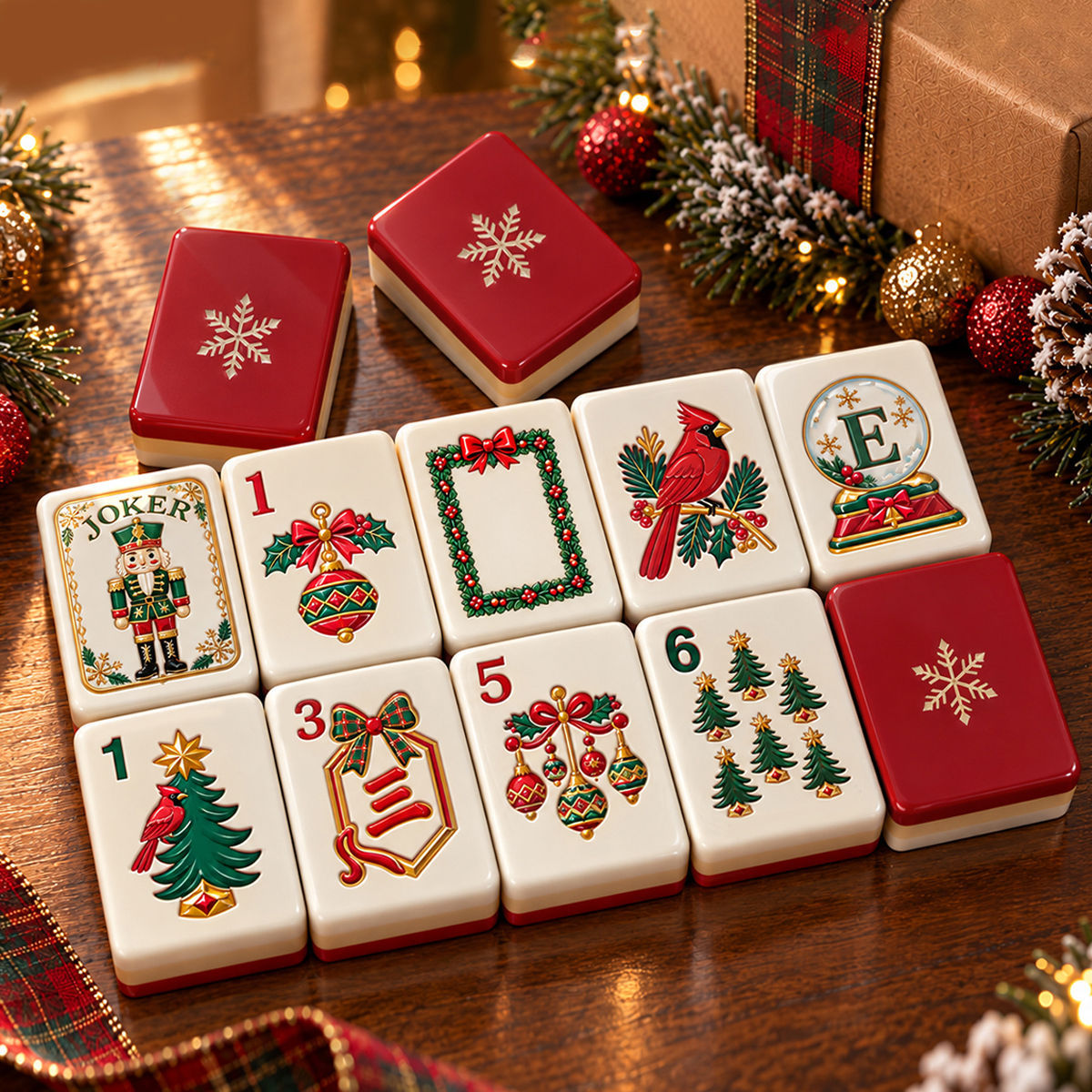
The marvelous mah jongg card (officially the National Mah Jongg League card, issued each spring) is a printed reference showing every legal winning hand pattern for that year's American mahjong season. It lists hands organized by section—like all pungs, mixed sequences, or hands with dragons—using symbols for suits (Bam, Crak, Dot), numbers, winds, dragons, and jokers. Each row represents one playable hand; you find your tiles, match them to a card row, and announce "mah jongg" when you're complete. Players consult the card constantly during play; a valid hand must match the card exactly or it's not a win. Mahstead customers often pair their engraved acrylic sets with a protective sleeve or mat to keep their card safe during weekly games.
The National Mah Jongg League card is your bible at the table. Without it, there is no American mahjong—no other variant uses this rule system. Unlike Chinese or Riichi mahjong, where winning patterns are fixed by rule, American mahjong's legal hands change every spring. The card is not copyrighted material you own; it's a seasonal license you buy or print. Understanding what the card shows, and how to read it quickly, separates casual players from those who run smooth, confident games.
What does a marvelous mah jongg card actually contain?
The card displays all winning hands for one calendar year, printed as rows of symbols and numbers. Each section groups similar hands—for example, "All Pungs" or "Like Numbers" or "Mixed Hands"—so you can scan by hand type rather than memorizing hundreds of patterns. The card uses shorthand: numbers 1–9 for each suit, letters like N, E, W, S for winds, symbols for dragons (R for Red, G for Green, W for White), and J for jokers. A single row might read "1 2 3 Bam 1 2 3 Crak 1 2 3 Dot Dragon Dragon Dragon," meaning three pungs of consecutive numbers plus a dragon pung wins. The card also notes which hands are worth bonus points in scoring.

How do you physically read the card during a game?
Place the card flat on the mat or a stand where all four players can see it—many of us tape or clip it to avoid spills. When you think you're close to a win, scan the card from top to bottom, looking for a row that matches your hand. Read left to right: does your hand have the exact tiles shown? If you have a pair of Winds plus four pungs, skip to that section. If your hand has one joker, find rows marked with one J. Move across each qualifying row methodically; one mismatch means that row is not your hand. Once you find a match, announce "mah jongg," reveal your hand, and the other players verify against the card.
What are common mistakes when reading the card?
New players often assume any three matching tiles wins—no, only the exact pattern on the card counts. We've seen players claim a hand that has three 2 Bams, three 3 Craks, and three 4 Dots doesn't match because they think "consecutive numbers" means a sequence, but American mahjong has no sequences (chows); you need three identical tiles for a pung, every time. Another trap: forgetting that jokers can replace any tile but cannot form a pair, and cannot stand alone. If the card shows a pair of Winds and you have one Wind and one joker, that's not valid—jokers cannot be used for a pair. Also, many players misread the card's shorthand at speed and miss their hand. Slow down, use your finger, point at each tile as you check.
Mistake | Why it costs you | How to avoid it |
Assuming three different numbers (1-2-3) form a valid group | American mahjong has no sequences; you need three identical tiles | Pungs only: three of the exact same tile, or use the card to verify |
Using a joker for a pair | Card rules: jokers never pair | Pairs must be two identical real tiles (not jokers) |
Misreading the card's symbols at speed | You skip your winning hand | Point at each symbol; say it aloud; ask another player to verify |
Thinking "consecutive" numbers = a group | Misreading card shorthand | Read the card example, not your memory of the pattern |
How do card patterns differ across American mahjong variants?
Standard American mahjong (the four-player version) uses one card per season. If you play two-player or three-player American mahjong, most groups use a modified card or subset of standard hands, since the dynamics change with fewer tiles in circulation. Hong Kong and Chinese mahjong use entirely different hand patterns—no card reference at all; hands are defined by rule (pairs, chows, pungs). Riichi mahjong also has no card; hands are scored by yaku (winning conditions) and point value. If you travel or play in a mixed group, always clarify which variant and which card (or rules) you're using before the Charleston begins.

Why does the card change every year?
The National Mah Jongg League revises the card each spring to keep the game fresh and to balance winning odds across the four player positions. Some hands expire; new patterns debut. A hand that was worth a bonus might shift to standard scoring. Players who've won on last year's card must learn new patterns or risk missing a winning hand at the table. This annual reset is part of American mahjong's culture—it unites all serious players under the same seasonal rules, and it gives experienced players and newcomers equal footing in spring.
🀄 Shop best-selling mahjong sets →
Reading the card without slowing down: practical tips from our table
We keep our card clean and flat using a protective mat or clear sleeve; a creased or stained card is harder to scan fast. Scan by hand type first, not by individual tiles: if you have four pungs and a pair, find the "Four Pungs + Pair" section and skip "All Sequences." Use your finger as a bookmark; let other players handle their own card lookups so you're not bottleneck. If you're unsure whether a hand matches, ask: "Can someone verify this row against my tiles?" Checking together at the table is faster and builds trust. After a few seasons, strong players recognize patterns and need the card less—but no one stops using it, because missing a win by misreading is embarrassing.
Learn how to read a mahjong card for more step-by-step visual walkthroughs. If you're new to the game, how to play American mahjong covers the Charleston, exposing tiles, and when the card matters most.
What to check before you buy a card
Order the current year's card from the National Mah Jongg League directly or through a mahjong retailer—verify the year printed on it matches your season. Laminate or sleeve it if you play weekly; a worn, smudged card is a liability. Get a second copy for your set case so you always have a reference on hand. Ask your game host which card variant your group uses (some clubs modify hands or run side rules). If you host games, order cards for each player; don't assume everyone brings one.
🎁 See our most-loved mahjong sets & accessories →
Why does your mahjong set matter if you have the card?
The card tells you what hands win; your tiles and layout let you build them. A set with clear, large symbols (like engraved acrylic sets) makes reading your own hand faster, which means you'll spot your match on the card sooner. A mat with tile racks keeps your tiles organized by suit and number, so your hand is scannable instead of scattered. Good equipment doesn't change the rules, but it shaves seconds off your card lookups and lets you focus on the game strategy rather than hunting for that 5 Crak.
✨ Find your Mahstead set — free US shipping →

FAQ
Can I win a hand that's not on the card?
No. American mahjong only recognizes winning hands listed on that season's National Mah Jongg League card. Any other pattern is not mah jongg, even if it looks logical.
Do I need to memorize the card?
No. Strong players recognize patterns over time, but every player consults the card during play. Consulting it is normal and expected.
What if I find a row on the card that matches my hand, but another player disagrees?
Place your hand next to the card row and compare tile by tile. Ask a third player or your game host to verify. If you truly match, you win; if not, the hand continues.
Does the card show scoring points for each hand?
Yes, most rows include a point value or bonus marker. After you call mah jongg and the table verifies your hand, you refer to the card for scoring.
If I'm playing in a city where I've never played before, how do I know which card to use?
Ask the host which year's card the group is using—it's always the current year in standard American mahjong. If they use a modified card or variant rules, they'll tell you before the game starts; ask specifically, because assuming wrong is costly.


View More
View More
View More
