
Mahjong Lessons in Miami: Where to Learn & What to Start With
Last updated: Nov 23, 2026
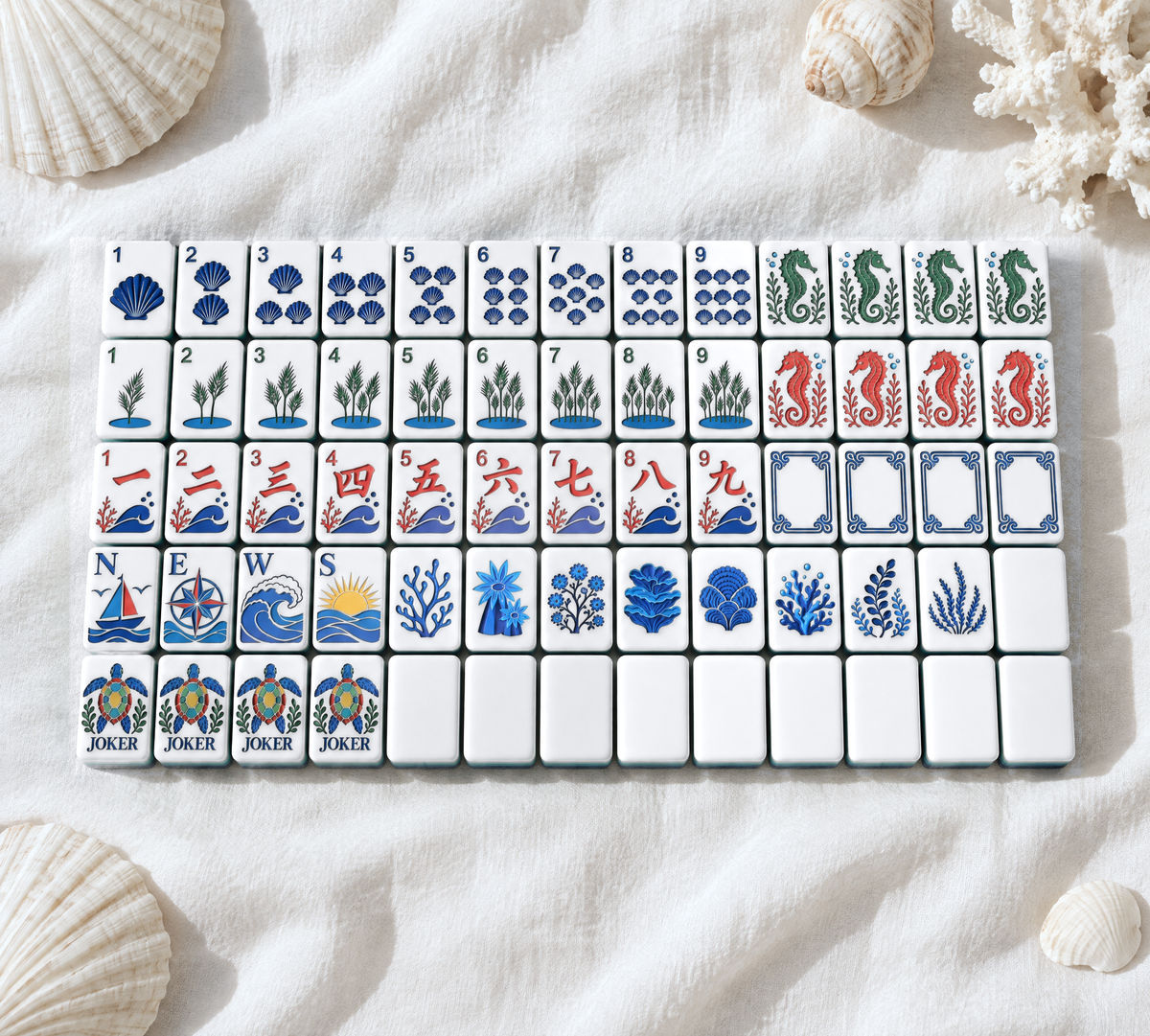
Mahjong lessons in Miami are offered through community centers, libraries, senior centers, and private instructors—search your local recreation department website, public library events calendar, or Meetup for "mahjong Miami" to find current classes. Most lessons run 4–8 weeks and cost modest per-session fees; instructors teach the National Mah Jongg League rules (American variant), the Charleston tile-pass ritual, hand recognition from the annual League card, and scoring basics. Expect to learn with a standard 160-tile acrylic set, and most classes provide equipment or ask you to bring your own. Between lessons, practice at home with a quality set, a printed League card for reference, and a mat to protect your playing surface.
Where exactly do Miami players find lessons?
Miami's parks and recreation departments often advertise mahjong classes on their websites under "Senior Programs" or "Games & Recreation." Public libraries—especially those in neighborhoods with older populations—frequently host beginner circles on weekday mornings or Tuesday afternoons. Private instructors advertise through Meetup.com, Facebook community groups, and synagogue bulletin boards (mahjong has deep Jewish-American roots, and many synagogues host weekly games and beginner nights). Country clubs and retirement communities typically run in-house instruction. Start by calling or emailing your nearest library or recreation center directly; staff can tell you when the next beginner session starts and whether you need to bring a set.
🀄 Shop best-selling mahjong sets →

What does a typical Miami mahjong lesson cover week by week?
Weeks 1–2 focus on tile names (Bams, Craks, Dots, winds, dragons, flowers) and set setup—how to shuffle, build the wall, and draw the opening hand. You'll handle tiles often so you learn their weight and balance. Week 3 introduces the Charleston, the three-tile passes that happen before each game, and the etiquette of passing ritual. Weeks 4–5 teach the current year's National Mah Jongg League card: how to read its printed patterns, spot winning hand types (like "all pungs" or "pairs and sequences"), and call "mah jongg" correctly. Weeks 6–8 add live play, scoring, and common mistakes—when not to claim a discard, how to track other players' discards, and the rhythm of turn-taking. Instructors usually play full demo games so students see real-time decision-making. Most lessons include homework: studying the League card at home and reviewing tile names.
How is American mahjong different from what you might learn elsewhere?
American mahjong is unique: it uses exactly 152 playing tiles (no sequences or "chows" that you can expose to other players, only pungs and kongs of identical tiles), plays exclusively with hands from the current-year League card, and requires the Charleston pass before each round. Chinese mahjong allows exposed sequences, uses different tile sets, and has hands not tied to a printed card—it's an entirely different game. Hong Kong mahjong is faster-paced, with smaller hands and no passes. Riichi mahjong (Japanese) uses only 136 tiles and hidden melds. When Miami lessons say "mahjong," they almost always mean American mahjong, which is what you'll learn from the National Mah Jongg League rules. If your instructor calls themselves a "League-certified teacher," they teach American rules—ask directly if you're unsure.
What equipment should you buy before or after your first lesson?
After your first class, invest in your own set so you can practice between lessons. A 160-tile acrylic set with clear tiles is standard for American mahjong—the tiles are durable, easy to shuffle on a mat, and visible under any lighting. If you enjoy the game after a month, add a mahjong mat to protect your table and reduce tile noise. Consider mahjong racks with pushers once you're comfortable; they hold your tiles vertically and are optional but prevent neck strain during long games. A durable bag or case is useful only if you're traveling to other homes for games—casual players keep sets at home. Many Mahstead sets come with engraved titles or designs that make them conversation starters at the table.
Here's how equipment choices stack up for a Miami home player:
Equipment | When to buy | Why it matters | Nice to have? |
160-tile acrylic set | Before lesson 1 | Required for practice; tiles must match League specs | Yes, immediately |
Printed League card (current year) | Week 1 | You cannot play without it; reference for every hand | Yes, always |
Felt or cloth mat | After lesson 4 | Protects table, dampens noise, improves tile control | Yes, before first game |
Racks with pushers | After lesson 8 | Holds tiles, reduces wrist/neck pain, speeds play | No, optional |
Travel bag or case | If visiting other games | Protects set during transport; unnecessary otherwise | No, only if traveling |
🎁 See our most-loved mahjong sets & accessories →

What mistakes do Miami beginners make, and how do you avoid them?
The most common error is misreading the League card and playing hands that don't match the current year's printed patterns. The card changes every March; using last year's card causes confusion and invalid wins. Solution: ask your instructor for the current League card before class, and always check the date on the front. Second mistake: playing exposed sequences ("chows") as if they count in American mahjong—they don't. Only identical pungs (three matching tiles) and kongs (four matching) are exposed. Practice with your lesson group to internalize this rule. Third error: misusing jokers—they can never form a single tile or a pair, only fill gaps in exposed melds. Fourth: not tracking discards. In American mahjong, you can call someone else's discard (unlike Chinese), so other players watch what you discard and whether you're building toward a known hand. Keep your discards neat in front of you, and mentally note what others throw away. Fifth: rushing the Charleston. The passes must complete in order (three passes right, three passes left, one pass across); count your tiles before and after. Slow down, confirm each player is ready, and ask your instructor to demo it again if confused.
✨ Find your Mahstead set — free US shipping →
How do you practice between lessons?
After each class, shuffle your tiles and lay them face-down in 14 stacks of 11 tiles (the opening wall for a four-player game). Practice the Charleston with an online video or your lesson notes. Spend 10 minutes a day reading the League card aloud: point at a hand pattern, say the tiles out loud, and find that exact hand on a printed card or in a photo. If you have a practice partner, play a round together each week using the lesson instructor's advice. Many players join Facebook groups for their city where they post photos of tricky hands and ask for scoring help. Most importantly, attend the next lesson; consistent weekly practice beats sporadic at-home study. Consider our mahjong guides on reading the card and understanding jokers—they're written by players for exactly this stage.
What to check before you buy a starter set
Tile clarity: tiles should be fully printed (not blank on reverse) and easy to read at arm's length.
Tile weight and balance: acrylic tiles feel smooth and stack evenly; cheap plastic tiles stick together or slide on a mat.
Completeness: confirm the set includes all 152 playing tiles (or 160 for spare tiles), plus the League card reference if bundled. American mahjong uses exactly 152 tiles in play; sets listed as 160-tile sets from Mahstead include spare jokers or blanks.
Acrylic vs. bamboo vs. bone: acrylic is the modern standard, most durable, and best for beginners; bamboo and bone are heirloom choices and harder to clean.
Engraved or plain: engraved sets (with names, dates, or witty titles) are identical in play but become treasured table pieces if your group loves the game.
Size and shape: standard 160-tile sets fit any home table; confirm your table is at least 36 inches square to play comfortably (four players need roughly 9 inches per side for their hand racks).

FAQ
Can I learn mahjong online from Miami, or do I need in-person lessons?
In-person lessons are best for beginners because instructors correct your hand-reading live and demo the Charleston ritual—hard to learn from video. However, after your first in-person course, online videos and guides can reinforce skills. Start in-person, then supplement at home.
What's the cost range for mahjong lessons in Miami?
Public library and recreation department classes typically charge per-session fees or a small materials fee per student. Private instructors vary widely. Ask the venue directly; most beginner programs are affordable and scaled for seniors on fixed incomes.
Do I need to own a mahjong set to take lessons in Miami?
Most classes provide sets or allow students to share one set per table during the first few weeks. By week 4–5, instructors expect you to bring your own so you can practice at home. A quality 160-tile acrylic set is the standard.
How long does it take to play a full game fluently?
After 6–8 weeks of lessons, you can complete a game start-to-finish with a group and follow the rules. Becoming fast and strategic takes months of regular play. Most home players are comfortable after 2–3 months of weekly games.
Is American mahjong very different from what my grandmother played?
Possibly. If your grandmother played Chinese mahjong or learned before the 1930s in the US, the hand patterns and rules were different. Modern American mahjong (since the 1990s) centers entirely on the printed League card and American-specific rules. Ask your Miami instructor which variant is being taught.
Can I play mahjong with only three people instead of four?
Yes, but the rules and scoring change significantly. Most Miami lessons teach four-player mahjong because it's the standard. Read our guide on 2 and 3 player rules if you're interested in variants, but start by learning four-player in your class.
What do I do if I make a mistake during a game at a lesson?
Stop, call out your error ("I miscounted my hand" or "I drew the wrong tile"), and ask the instructor to reset that round. Lessons are judgment-free learning spaces. The instructor will explain what you missed and move forward. Never worry—everyone makes errors while learning.


View More
View More
View More
