
Mahjong Lessons in Los Angeles: Find a Teacher & Start Playing
Last updated: Nov 23, 2026
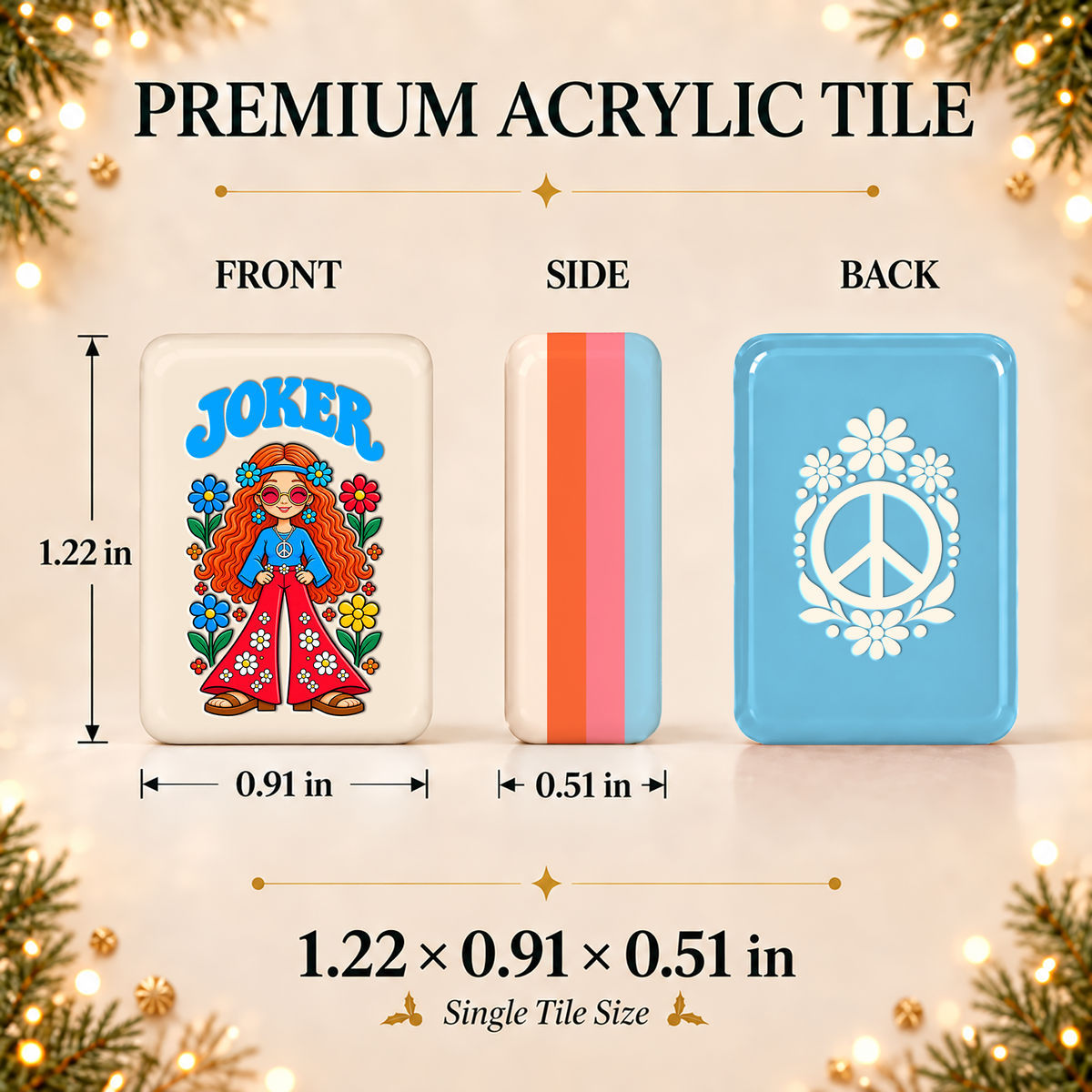
Los Angeles has abundant mahjong instruction through community centers (check parks departments in Koreatown, Westwood, and San Gabriel Valley), libraries offering free or low-cost drop-in groups, Jewish community centers that host weekly open circles, and independent teachers offering private or small-group coaching. Most beginner classes teach American mahjong (the standard in North America) using the current year's National Mah Jongg League card; expect to learn tile names, hand patterns, the Charleston (tile-passing ritual), and basic scoring over four to eight weeks. Costs vary widely—community programs often charge per session or are free, while private instructors typically work by hourly arrangement. Before enrolling, verify the variant taught (American, Chinese, Hong Kong, or other), confirm they provide tiles and mats or require you to bring your own, and ask whether the group plays competitively or recreationally. Mahstead's best-selling acrylic sets include everything a beginner needs if you decide to build a home game.
Where exactly do I find mahjong classes in the LA area?
Los Angeles has three reliable pathways: public recreation departments (parks.lacounty.gov and local city sites list community classes by neighborhood), public libraries (many branches in LA County host free beginner circles or can refer you to teachers), and membership organizations like Jewish Community Centers. Search "[your neighborhood] + mahjong class" or call your local library directly—librarians often know the strongest active groups. Private instructors advertise through Nextdoor, Facebook groups, and Meetup. Begin your search at whichever resource is nearest your home or workplace; consistency matters more than instructor prestige for a beginner.

What's the difference between a beginner class and an open play group?
Beginner classes have a structured curriculum: weeks one and two cover tile identification and hand patterns, weeks three and four introduce the Charleston and calling conventions, weeks five through eight drill scoring and strategy using the National Mah Jongg League card. Open play groups assume you know the rules and focus on game speed and social play. If you're brand new, start with a beginner class—trying to learn alongside fast players is frustrating and slows the group. Once you can recognize a hand pattern and follow the Charleston without hesitation, you're ready for open play.
What variant do LA teachers typically teach—American, Chinese, or other?
North American instruction is almost always American mahjong, which uses 152 tiles, no sequences (chows), and hands drawn from the current League card—this is the regional standard. Some Chinese-speaking communities offer Cantonese-style mahjong (144 tiles, different hand types, live wall drawing). Ask your instructor explicitly: "Which variant do we play?" American is simpler for beginners and lets you join the broadest range of games. If you commit to learning one variant well, switching later is genuinely difficult.
Do I need to buy my own set before taking lessons?
No. Most community classes and open play groups provide tiles and mats. If you're considering hosting home games later, a quality engraved set with a mat gives you everything—but don't buy before your second or third lesson. Many newcomers discover mahjong isn't their game after a trial. Wait until you know you're committed.
What should I prepare or ask before signing up for my first class?
Use this checklist before you call or email:
Variant: Ask if the class teaches American mahjong.
Level: Confirm it's explicitly for beginners (not intermediate or drop-in).
Materials: Do they provide tiles, mat, and card, or should you bring your own?
Duration: How many weeks, how many hours per week, what's the commitment?
Cost basis: Per session, per class series, or donation-based?
Class size: How many players? (3–4 is ideal for learning; 6+ is crowded.)
Schedule: Is attendance flexible or fixed?
Next steps: What happens after the beginner course?
Write these down and compare two or three options before committing.
Setting | Cost model | Pace | Best for |
Community center | Per session or free | Relaxed, 8–12 weeks | Newcomers, consistent learners |
Library group | Free drop-in | Varies; ad-hoc | Casual interest, flexible schedule |
Jewish community center | Per session or membership | Structured, 6–8 weeks | Social learners, community feel |
Private instructor | Hourly or package | Custom, 1-on-1 or small group | Accelerated learning, fixed goal date |
🀄 Shop best-selling mahjong sets →

How long does it really take to go from zero to playing a full game?
Most people can play a recognizable four-player game in six to eight weeks of weekly two-hour lessons. After four weeks you can name tiles and spot basic hand patterns. After eight weeks you can call a hand, follow scoring, and join an open group without slowing play. To become comfortable (mixing hands fluently, spotting strategies, playing at social speed) typically takes four to six months of regular weekly play—not lessons, but actual games. Expect the learning curve to feel steep at week two and three, then smooth out noticeably at week six.
What mistakes do beginners make that a good teacher prevents?
The most common: trying to memorize all 88 hand patterns instead of learning to read a pattern by shape (e.g., three identical tiles, or two pairs and a pung). A good teacher emphasizes shape recognition and the Charleston passing sequence rather than rote patterns. Second mistake: misunderstanding how jokers work—beginners often think jokers are wildcards (they're not in American mahjong; they're substitutes for specific tiles in a hand). Third: not tracking the discard pile, which is essential for strategic play. A structured class inoculates you against all three.
🎁 See our most-loved mahjong sets & accessories →
Should I buy a personal mat and rack before or after my first class?
After. During lessons you'll use the instructor's equipment. Once you start playing weekly at home or in an open group, a personal mat and rack with pushers makes a real difference—you won't lose tiles, your hand stays organized, and you look professional. This usually happens around week six to eight. Your instructor can advise you on the specific style your group prefers (American-size mat, bamboo racks, etc.).
What if I already know another mahjong variant—does that help or confuse me?
It helps more than it confuses. If you know Chinese or Hong Kong mahjong, you understand hand composition, discarding strategy, and the social rhythm. The shift to American rules is administrative: different hand list, no sequences, stricter joker rules, the Charleston instead of live wall. A student with prior mahjong experience usually grasps American in three weeks instead of six. Tell your instructor on day one—they'll accelerate the rules section.
✨ Find your Mahstead set — free US shipping →
What to Check Before You Buy a Set
If you enroll in a class and fall in love with mahjong, you'll want a set for home play within a few weeks. Before purchasing:
Confirm your group's tile style preference. Some groups prefer acrylic (lighter, louder clacking), others bamboo or bone (heavier, quieter). Ask your instructor.
Check if you need a mat. A padded mat saves tiles and concentrates play. Most groups use one.
Verify the rack style. Some players prefer racks with pushers for organization; others play without.
Ensure 152 tiles, not fewer. American mahjong plays with exactly 152 tiles plus jokers; a genuine set must have this count.
Mahstead's best-selling acrylic American mahjong sets come with everything—tiles, mats, racks, and bags—so you're not buying piecemeal. Free US shipping means you're building a complete home setup affordably.

FAQ
I've never played any mahjong—where do I realistically start in LA?
Call your nearest public library or city parks department and ask, "Do you host mahjong lessons or beginner groups?" Most LA neighborhoods have something free or low-cost within 5 miles. If not, search "mahjong teacher near [your zip code]" on Nextdoor or Facebook groups—LA has active private instructors. Expect to pay nothing to attend a beginner class within two weeks.
How do I know if a teacher is actually good or just charging money?
A good beginner teacher spends week one on tile names (Bams, Craks, Dots, Winds, Dragons, Flowers—not numeric shortcuts), week two on basic hand patterns, and doesn't rush the Charleston. They answer the same question three times without sighing. They explain jokers as substitutes for specific tiles, not wildcards. If your first class leaves you confused about what tiles are called, find a different teacher.
Can I learn mahjong from YouTube videos instead of a class?
You can learn the rules, but not the game. Videos teach mechanics; classes teach you to think like a player (tracking discards, reading intent, spotting hands mid-game). Most people who try YouTube alone quit by week three because they hit the "I don't understand what's happening" wall. A live teacher and other learners bypass that. Take even one beginner class; then supplement with videos on specific topics like scoring.
What if my LA group plays Chinese mahjong and I want to switch to American?
The core skills transfer—tile recognition, discard strategy, probability sense. But American rules are strict: no chows (sequences), specific joker use, hands from the current League card only. Plan on four weeks of confusion, then clarity. Ask your American instructor to highlight the rule differences (especially around sequences and jokers) at the start—that cuts learning time significantly.
How much should I expect to spend to join a weekly game after lessons end?
In LA, most open play groups are free or charge $3–10 per session to cover venue rental or supplies. Some private clubs have membership fees; ask upfront. You'll want your own set and mat within a month, which is a one-time investment. No weekly recurring costs beyond the game itself.


View More
View More
View More
