
What Is Little Three Dragons in Mahjong?
Last updated: Nov 23, 2026
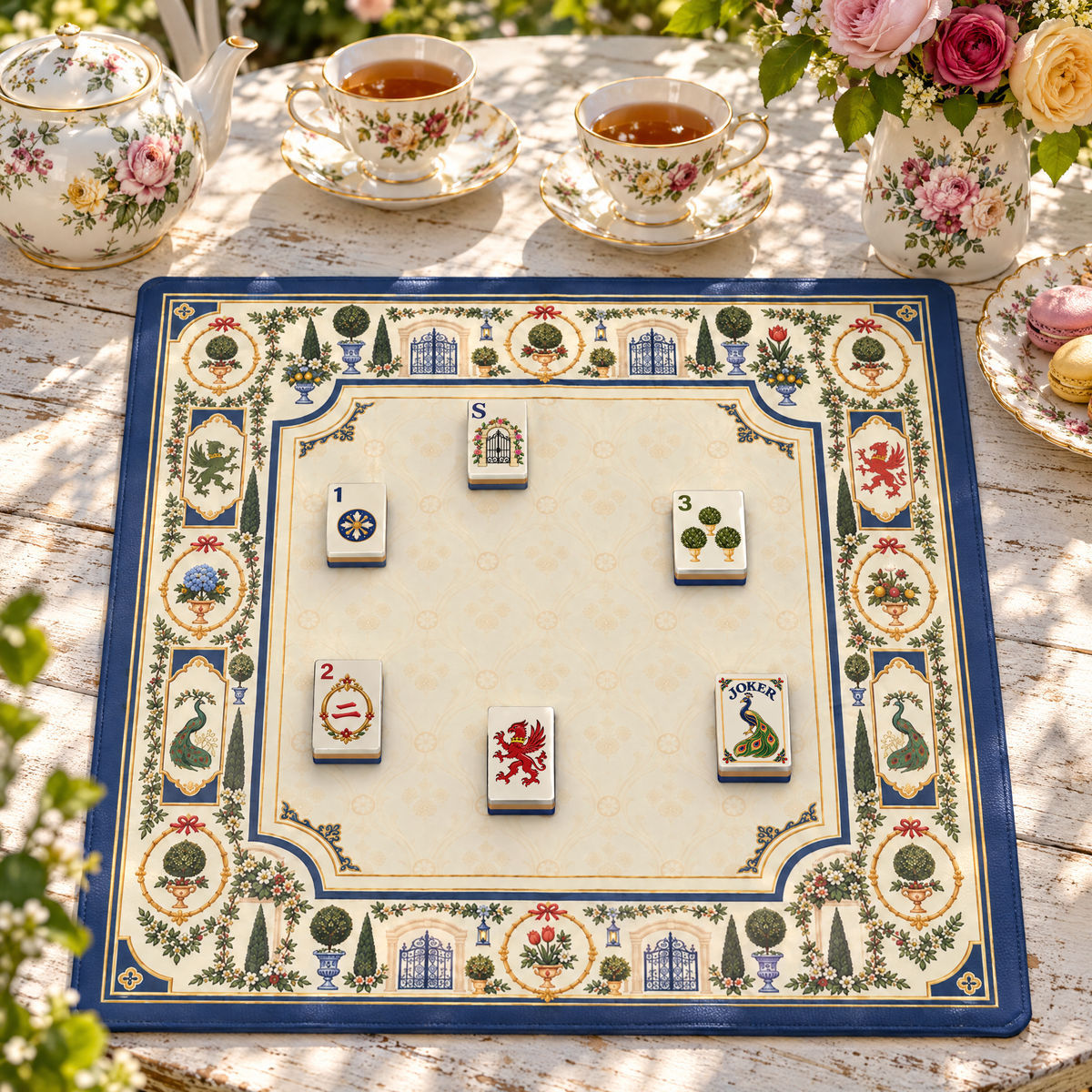
Little Three Dragons (also called Small Three Dragons) is a combination hand in American mahjong where you expose three dragon melds: one is a pair (two identical tiles) and the other two are pungs (three identical tiles) or kongs (four identical tiles). The three dragon types are Red (paired with Craks), Green (paired with Bams), and White/Soap (paired with Dots and blank tiles). You must use all three dragon types—you cannot build the hand with only two dragons. Little Three Dragons typically scores higher than simple dragon combinations because it requires both defensive structure (the pair) and offensive exposed melds. It appears on the current National Mah Jongg League card and is played year-round in American game groups. Our best-selling American mahjong sets come with all tiles needed to form this hand.
Little Three Dragons is a pung or kong of one dragon type paired with pungs or kongs of the other two dragons—one of the most recognizable bonus hands in American mahjong.
Why is it called "Little" Three Dragons?
The name distinguishes it from Big Three Dragons, which requires all three dragon types to be kongs (four tiles each). Little Three Dragons is "little" because one dragon meld is only a pair (two tiles), making it easier to build than Big Three Dragons—which demands four of each dragon type. In American mahjong, scoring rewards both hands generously because dragons appear only four times in the deck, so collecting three full sets of them is genuinely difficult. The pair requirement also gives you strategic flexibility: you can hold onto one dragon pair longer while pursuing the other two as exposed melds.

Where do you find Little Three Dragons on the mahjong card?
Little Three Dragons appears in a dedicated section of the current National Mah Jongg League card, usually grouped with other dragon and honor combinations. The card lists hand patterns by section number and shows whether each hand requires tile sets to be exposed (visible on the table) or kept concealed (in your rack). Most Little Three Dragons patterns require at least two of the three dragon melds to be exposed before you can win. To locate it quickly, scan the card's dragon section—typically near the middle or upper portion—and look for entries showing three distinct dragon symbols with one marked as a pair symbol (two tiles) and the others as pung or kong symbols (three or four tiles).
What tiles do you actually need to form Little Three Dragons?
You must collect four tiles total from at least two different dragon types. For example: a pair of Red dragons (2 Red tiles) + a pung of Green dragons (3 Green tiles) + a pung of White dragons (3 White tiles) = Little Three Dragons, using 8 of your 14 tiles in hand. Since each dragon type appears only four times in our 152-tile American mahjong sets, drawing that many without using jokers is rare. Most players substitute one dragon tile with a joker to speed up formation; jokers can replace any tile except pairs, so you might hold Red-Red (real pair) + Green-Green-Green (real pung) + White-White-Joker (pung with one joker replacement). Combining real dragons with joker replacements is the practical way players complete this hand in live games.
🀄 Shop best-selling mahjong sets →
How does Little Three Dragons score compared to other hands?
Hand Type | Minimum Exposure | Joker Use | Typical Difficulty | Why Choose It |
Little Three Dragons | 2 melds exposed | 1–2 jokers common | Moderate | High payout; three dragon types used |
Big Three Dragons | 3 melds exposed (all kongs) | 0–1 jokers | Very hard | Highest dragon payout; requires 12 dragon tiles |
Single Dragon Pung | 1 meld exposed | 0–2 jokers | Easy | Low payout; fewer tiles needed |
Mixed Dragons & Honors | Varies | 1–3 jokers | Varies | Medium payout; flexible patterns |
Little Three Dragons scores significantly higher than a single dragon pung because you're using all three dragon types, which the scoring system rewards. Big Three Dragons (all kongs) scores highest of all dragon hands but demands four tiles of each color—a rare draw. American mahjong scoring emphasizes hands that require rarer tiles or tighter logic, so Little Three Dragons sits in the premium tier: harder than basic dragon hands, easier than Big Three Dragons. If you're chasing high points and dragon tiles are flowing your way, Little Three Dragons is worth the strategic focus.
🎁 See our most-loved mahjong sets & accessories →

What mistakes do new players make with Little Three Dragons?
The most common error is forgetting that all three dragon colors must be represented in your hand—you cannot win with only two dragon types (for example, Red-Red-Red + Green-Green-Green + any other melds). A second mistake is misidentifying which dragon is which. Red dragons are always associated with Craks (e.g., a red-colored dragon symbol), Green with Bams, and White/Soap with Dots. If your set uses symbols or printed labels, take five seconds to confirm before you declare a win. A third trap: assuming you can keep all three dragon melds concealed. Most card patterns for Little Three Dragons require at least two dragon melds to be exposed (face-up on the table) before you can win; a few patterns permit one or more concealed, but this is the exception. Always check the card before committing tiles to exposed melds. Finally, new players sometimes squander jokers on dragons early in the hand, then run short of joker replacements for the other suits—manage joker use carefully and do not lock in dragon melds until you have a clear path to winning.
How do you build and call Little Three Dragons in real play?
Start by checking the current National Mah Jongg League card for Little Three Dragons patterns that appeal to your hand shape. As tiles are drawn and discarded, watch for dragons landing in the discard pile; if a Green dragon is thrown, and you already hold Green-Green, you can call the discard and expose a Green pung on the table. From that point, pursue the Red and White dragons through either new draws or calls. Use jokers strategically: if you need one more Red dragon to complete a Red pung, a joker can fill that slot, but remember jokers cannot be used in pairs. Keep the pair of your chosen dragon color in your hand until you are very close to winning, so that you maintain flexibility if your other dragons stall. Once you hold a clear path—two exposed melds and a pair, plus the remaining tiles forming another suit or number sequence—call "Mahjong" and expose the winning pair. The dealer or scorekeeper will verify that all three dragons are present, the pair is valid, and all required melds are exposed (or concealed, per the card pattern).
What equipment helps you manage dragon hands reliably?
Using mahjong racks with pushers keeps your hand organized by suit and honor type, so you can instantly spot which dragons you hold and which you need. A well-designed rack with clear dividers lets you group Reds together, Greens together, and Whites separately—critical when tracking multiple dragon melds at once. A quality mahjong mat with printed zones for each player's melds also reduces confusion: you can see at a glance which dragons are exposed on the table and whose turn is next. If you play frequently, storing your tiles in a protective mahjong bag or case ensures that tiles remain in good condition and are not lost between sessions—losing a single dragon tile makes Little Three Dragons impossible to complete. For group play, an acrylic set engraved with your initials or group name adds clarity and eliminates tile disputes during long gaming nights.
✨ Find your Mahstead set — free US shipping →
What to check before you buy a set to play Little Three Dragons:
Tile count: Confirm the set contains all 152 playing tiles (three dragons × four of each = 12 dragon tiles present).
Dragon clarity: Verify that Red, Green, and White dragons are printed or engraved distinctly so no confusion occurs mid-game.
Joker supply: Check that the set includes 8 jokers (the minimum for legal American mahjong play); a 160-tile set adds spare tiles for backup.
Material durability: Acrylic or bamboo tiles withstand repeated shuffling and stacking during hand formation; lighter materials risk chipping over months of play.
Rack compatibility: If ordering a rack, measure your set's tile dimensions (typically 1 inch square for American tiles) to ensure a secure fit.
Completeness: Count tiles on arrival; a missing dragon tile cannot be replaced mid-game and invalidates any Little Three Dragons attempt that session.

FAQ
Can I use a joker in the pair of Little Three Dragons?
No. Pairs must be two identical real tiles. Jokers can only replace single tiles in pungs, kongs, or other exposed melds—never in pairs.
What if I have all three dragon types but no tile is a pair?
You do not have Little Three Dragons. The hand requires one dragon type to be a pair (two tiles) and the other two types to be pungs or kongs (at least three tiles each). Three unpaired singles do not count.
Do I have to expose all three dragon melds before I win?
Not always. Check the card pattern for your hand number. Most Little Three Dragons patterns require two melds exposed and one concealed, or all three exposed; some rare patterns allow one concealed. Always confirm the card requirement before declaring.
How many dragon tiles are in a standard American mahjong set?
Twelve dragon tiles total: four Red, four Green, and four White. Since each color appears only four times, Little Three Dragons consumes at least eight dragon tiles—leaving few spares if other players also pursue dragons.
Is Little Three Dragons harder than Big Three Dragons?
Little Three Dragons is easier because one dragon meld is only a pair (two tiles). Big Three Dragons requires all three dragon types to be kongs (four tiles each), consuming all twelve dragon tiles—nearly impossible without trading extensively during the Charleston or calling discards from other players.
Can I build Little Three Dragons without jokers?
Yes, if you draw eight dragon tiles naturally (four of one color, three of another, three of another). In real play, this is so rare that most players use one or two jokers to speed up the hand.


View More
View More
View More
