
South Wind Mahjong Tile: Symbol, Position & Game Rules
Last updated: Nov 23, 2026
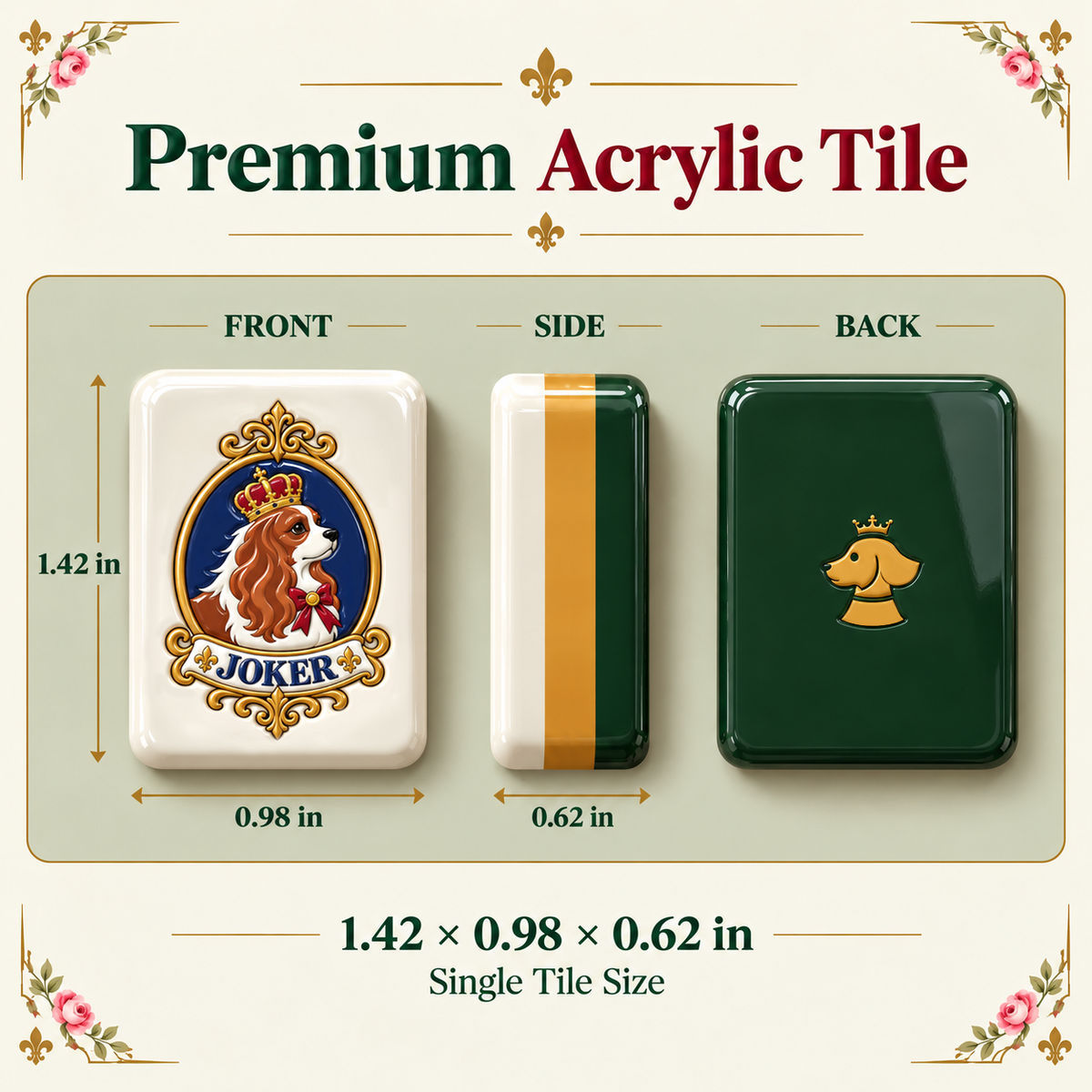
The South wind (南, "Nan") is one of four directional tiles in an American mahjong set, each representing a cardinal compass point. South tiles appear four times among the 152 playing tiles—one set per player position. In American mahjong, you're assigned a wind position at the start (North, East, South, or West) that determines turn order and scoring bonuses; your own wind tile acts as a seat indicator and may qualify for hand bonuses called "seat winds." The tile displays the Chinese character for South, typically in the lower right corner of a set's visual layout. Unlike suits (Bams, Craks, Dots), winds cannot be combined into sequences—only pungs (3), kongs (4), quints (5), or sextets (6) of identical winds score. Learning to identify all four winds and track which player holds which position is essential before your first game; explore the complete breakdown of tiles in an American mahjong set to see winds in context.
The South wind tile is one of 16 wind tiles in an American mahjong set, marked with a distinctive character and tied to your position at the table. Understanding winds is key to reading hands and scoring.
What does the South wind character look like on the tile?
The South wind tile displays the Chinese character 南 (Nan), which means "south." On most acrylic tiles sold for American mahjong, this character appears prominently in the center or lower portion of the face, often with white or light-colored engraving against a colored background. Each wind has its own unique character: North (北), East (東), South (南), and West (西). If you're new to reading tiles, the character alone may look similar to other winds until you study them side by side—keeping a reference card nearby during early games helps. Most best-selling mahjong sets feature clear, readable wind characters scaled for quick recognition at arm's length across a table.

Why is South wind assigned to a seat, not a suit?
American mahjong assigns each of the four players a wind position—North, East, South, or West—before the game begins; these positions cycle with each new hand to rotate dealer advantage and scoring. Your wind position determines your place in the turn order and, critically, whether you can score bonus points if you collect a pung, kong, or higher grouping of your own wind tile. For example, if you're sitting South, holding three 5 Dots and three South wind tiles means both the 5 Dots and the South wind can count toward separate groups in a single qualifying hand, doubling your scoring potential. Winds serve no role in sequences (chows) because American mahjong forbids exposed sequences entirely—only identical-tile groups count. Understanding your wind at the table is step one before even looking at the annual National Mah Jongg League card.
How do the four winds differ from suit tiles?
Winds and suits are both primary tile families in American mahjong, but they function very differently. Suit tiles (Bams, Craks, Dots) are numbered 1–9 and appear four times each in the set, totaling 108 tiles; they can form identical pungs/kongs and, in some hands, may anchor combinations involving other families. Wind tiles are not numbered—there's just one version of each wind per copy, appearing four times total (16 winds across the set). You cannot build a "sequence" of South-East-West or any wind progression because the rule set prohibits chows in American mahjong altogether. Instead, winds pair up with suits or dragons to form special hand patterns. Think of suits as building blocks and winds as position markers that unlock bonus scoring. Learn how jokers substitute in groups to see how jokers work with both suits and winds.

What hand patterns include South wind for scoring?
Qualifying hands on the annual National Mah Jongg League card often highlight "pair winds" (matching your seat wind), "wind combinations," or hands featuring all four winds together. A pung of your own South wind—three identical South tiles—can frequently be exposed as a group and claimed toward a hand. If you hold three South wind tiles plus additional groups matching a card pattern, you may declare "meld" and go out. Some hands reward collecting all four winds in a single hand for maximum complexity and points. Because hand patterns change yearly, you must reference the current card to spot which wind combinations pay off; reading the card efficiently teaches you to scan for wind symbols quickly. A common beginner mistake is underestimating wind groupings and discarding them too early, not realizing they're sitting in a high-scoring hand on the current year's card.
Pattern Type | What It Includes | Why It Matters |
Pair winds | Your own wind + one other | Unlocks seat-specific scoring |
Wind pung | Three identical winds (any wind) | Exposed group; counts any time |
Four winds combo | All winds in one hand | Rare, maximum points |
Wind + suit group | South wind + numbered tile group | Doubles points if aligned on card |
What's the difference between wind tiles and dragon tiles?
Dragon tiles and wind tiles are both honor tiles (non-suit, non-numbered), but dragons represent symbolic creatures while winds represent directions. There are three dragons in American mahjong—Red (goes with Craks), Green (goes with Bams), and White, often called "Soap" (goes with Dots and serves as zero). Like winds, dragons cannot form sequences and only score when grouped identically. A hand might feature "a pung of South winds and a pung of Red dragons" as two separate groups contributing to a single qualifying hand. Wind tiles and dragon tiles never mix—you won't see a hand asking for "South wind and Red dragon together." Both families are learned best by seeing them on an actual set; if you're building your first collection, explore our curated best-selling mahjong sets to practice tile recognition before game day.
🀄 Shop best-selling mahjong sets →
When do you discard South wind safely?
Discarding winds—especially your own seat wind early in a game—is one of the riskiest moves in American mahjong. If another player is hunting a pung or kong of South wind for their hand, exposing a discard signals weakness and invites them to claim it. Before discarding any wind, scan the current card to see how many patterns reward that wind; if South appears in three high-value hands and you have no direct path to one of them, hold it longer. Mid-game, after other players have melded groups, winds become safer to shed because fewer qualifying hands remain available. Late game, when only one or two hands are mathematically possible, a wind discard you've held signals confidence—others may believe you're not hunting it. A practiced table watches who discards which winds and when; your history of wind retention teaches opponents about your likely hand. Never discard your own wind in the first three rounds unless forced.
What to check before you buy
When shopping for a mahjong set to learn winds and other tiles, confirm the tiles are acrylic (durable, readable after years of play), wind characters are clearly engraved, and the set includes a storage bag for protection. Test-read the tiles under normal table lighting to verify the character contrast. A 160-tile set with spare jokers and blanks ensures you have backup tiles if any crack or go missing. If you're hosting weekly games, consider a padded mat to protect tiles and a rack with pushers to stabilize groups and keep your hand organized—both make wind identification faster because tiles stay upright and legible.
✨ Find your Mahstead set — free US shipping →
Mastering South wind and the other three directions opens the door to reading complex hands and competing confidently at the table. Start by learning the character on each wind tile, then practice spotting them quickly during your first few games. After a session or two, recognizing winds becomes automatic, and you'll be able to evaluate hand potential and discard strategy the moment tiles hit your rack. The comprehensive guide to what's in an American mahjong set covers winds in their full context and shows how they interact with suits and dragons in real hands.
🎁 See our most-loved mahjong sets & accessories →

FAQ
Can South wind tiles form a sequence like 1-2-3?
No. American mahjong has no sequences (chows) of any tile type. Winds only score when grouped identically—three or four South tiles together, never South-East-West in any order.
If I'm North wind, can I score with a South wind pung in the same hand?
Yes, if the hand pattern on the card allows both groups. Your seat wind (North) unlocks bonus points, but other winds still count as valid identical-tile groups toward any qualifying hand pattern.
How do I remember which wind is which if I'm new?
Memorize the character shapes: 北 (North) has a cross-like top; 南 (South) looks open at the top; 東 (East) is blocky; 西 (West) has a curved element. Write them on index cards and drill them for five minutes before each game until they stick.
Do I lose points if I discard my own wind and someone calls it?
No penalty, but an opponent may claim it to complete a pung or kong, bringing them closer to winning. Discarding your seat wind early is strategically weak unless you're certain no hand on the card rewards it.
Is South wind always associated with a particular suit?
No. South wind stands alone as an honor tile and pairs with any suit or dragon in different hand patterns. It has no inherent link to Dots, Bams, or Craks like Red (Craks), Green (Bams), or White (Dots) dragons do.


View More
View More
View More
