
Mahjong Keeping Options Open Tips and Strategies
Last updated: Nov 23, 2026
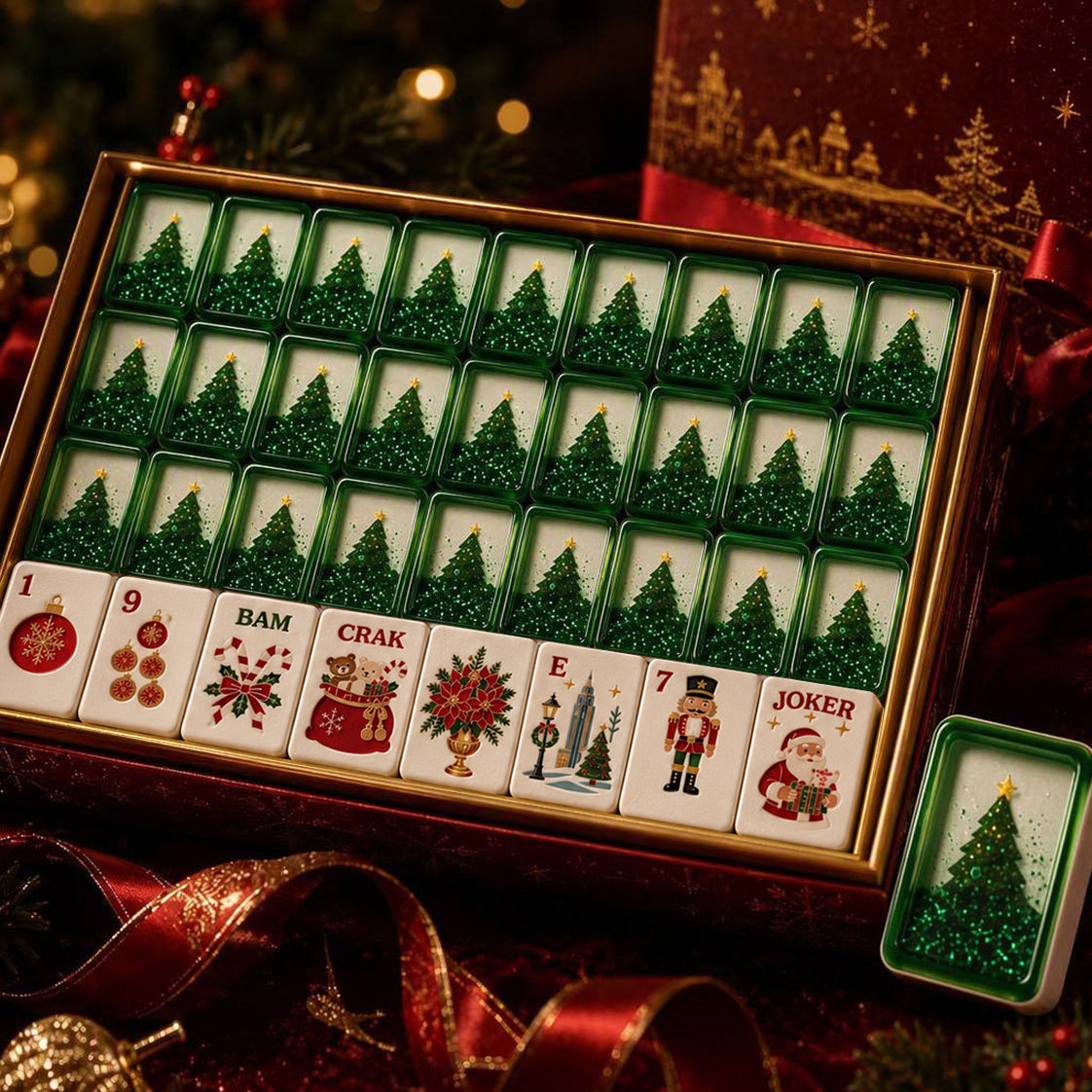
Keeping options open means holding tiles that work in multiple winning patterns on the current National Mah Jongg League card, so you can adapt as the game unfolds instead of locking into one path early. In American mahjong, you draw one tile and discard one each turn; the player who holds 14 tiles wins by declaring a hand that matches the card exactly—with all jokers played according to that hand's rules. Most beginners commit too early to a single pattern, then discard the very tile another hand needs. The strategy is to read the card at the start of your turn, identify all patterns you can reach with your 13 tiles, and hold common tiles that appear in multiple hands until the last possible moment. A well-built set and a quality mat give you the space and clarity to track these options without mistakes, especially during rapid dealer rotations. The payoff: you'll stay in winning range twice as long as players who telegraph their hand too early.
How do you spot a tile that keeps multiple hands alive?
Start by scanning the card for hands that share the same suit and number range. If hand A needs 1–3 Bams and a pung of Winds, and hand B needs 1–3 Bams and a Kong of Dragons, then holding a 2 Bam keeps both alive. Hands that overlap in the middle (numbers 4–6 across suits) are especially valuable because they often appear in completely different patterns. Mark these junction tiles with a quick mental note—or actually stack them slightly forward in your rack so you see them as "pivot tiles." The more hands that touch a single tile, the longer you can hold it without committing.

When should you discard a tile that "belongs" to multiple hands?
Discard an overlapping tile only when you've narrowed your winning options to one or two hands and need to commit to speed. The trap: discarding too early because you think one option is stronger. Instead, hold it until turn 8 or 9 (roughly one-third through the hand); by then, discards from other players will have eliminated some winning patterns, and you'll know which tiles are actually safe to let go. If you discard a 5 Dot on turn 4 and discover on turn 10 that all three of your live hands needed it, you've just locked yourself into a much harder path—or out entirely.
What's the relationship between dead tiles and keeping options?
A dead tile is one that's already been discarded four times (or in a Kong situation, three times—since all four copies are on the wall or in exposed sets). Once a tile is dead, any hand requiring it is also dead. The moment you recognize a dead tile, you eliminate all hands that depend on it, which simplifies your options dramatically. This is why experienced players watch every discard pile: you're not playing to build one hand; you're playing to eliminate impossible hands so the remaining ones crystallize. If a 3 Bam is dead but you're holding 1–2 Bam, hands requiring 1–3 Bam are gone, and you pivot to hands needing 1–2 only. That pivot is keeping your options open.
How do you balance flexibility with commitment?
Use this three-phase decision framework:
Early game (turns 1–4): Hold tiles in three or more patterns. Do not expose any sets yet. Discard only clearly dead or high-danger tiles (Winds and Dragons that no one has called). Build breadth.
Mid-game (turns 5–8): You'll have seen 12–16 discards. Hands are dying. Expose one set (pung, kong, quint, or sextet) that appears in multiple patterns; this signals strength without committing you. Narrow to two or three hands. Build depth.
Late game (turns 9–13): One hand must be live. Discard aggressively around it. Avoid exposing more unless you're very close to winning. Build speed. If you're stuck, an exposed set buys you information: if the tile you need doesn't appear within two turns after you expose, it's dead or locked in an opponent's hand.
The trick: don't move through these phases on a timer. Move through them based on the table—if the game is slow, stay flexible longer. If it's fast, commit earlier.

What mistakes kill flexibility the fastest?
Mistake | What Happens | How to Fix It |
Exposing too early | You signal a pattern; opponents avoid tiles you need. | Wait until turn 6 minimum; expose only when it serves 2+ hands. |
Holding Dragons/Winds too long | They pair rarely and block tile space; opponents sniff them out. | Discard Dragons and Winds by turn 4 unless part of a specific live hand. |
Discarding a tile "just because" it's been in your hand five turns | You panic and throw away a pivot tile. | Discard with purpose: it's dead, or your live hands don't need it, or you're committing. |
Copying another player's hand | You both want the same tiles; only one will win. | Read the card for hands that don't overlap with called sets at the table. |
Memorizing only one winning hand | You miss better options. | Before your first turn, scan the card and list every hand reachable with your 13 tiles. Update this list every turn. |
Keeping options open is not the same as indecision—it's informed patience. You're making micro-choices every turn (hold this, discard that, note what's dead) so that by turn 9, only one or two hands remain and you can rush to win.
🀄 Shop best-selling mahjong sets →
How does your physical setup affect your ability to keep options?
A disorganized rack is a decision killer. If your tiles are stacked randomly, you'll miss that a 4 Crak appears in three hands; you'll forget a tile you're holding; you'll accidentally expose the wrong set. We recommend organizing your rack by suit, then by number, so your eyes can instantly spot which tiles work in multiple patterns. A mahjong mat with a built-in rack space gives you a dedicated zone so tiles don't slide or get bumped by nervous hands. Many of us also use pushers (small sticks that come with racks with pushers) to move tiles within the rack without lifting them—this keeps your hand stable and prevents accidental exposure. When you can see all 13 tiles clearly, your brain can actually process the 5–10 options available to you instead of panicking and defaulting to the first pattern you remember.
Should you ever deliberately close off options?
Yes—but only strategically. If you're far behind and another player is one tile away from winning, you might expose a set that has zero connection to your hand, purely to block their path or buy information. This is called a "sacrifice exposure." Similarly, if you're reading the table and see that one player is building a specific hand (based on discards they're hoarding and passes in the Charleston), you might discard tiles that player needs, forcing them to pivot while you stay flexible. This is advanced play, but it comes from the same principle: every tile you touch should advance your knowledge, whether that's knowledge about your own hand or the table state.
🎁 See our most-loved mahjong sets & accessories →
What to check before you buy
Tile clarity: Can you quickly identify each tile's suit and number without lifting it? Faint engravings or small fonts kill your ability to scan for overlapping patterns.
Rack stability: Do tiles stay where you place them, or do they drift during the game? A rack that slides or tiles that lean will cause you to lose track of what you're holding.
Mat size: Is the discard area large enough that you can see all previous discards at a glance? A cramped mat forces you to lean and squint, slowing your decision-making.
Joker count: American mahjong uses exactly 8 jokers in play. If your set doesn't ship with at least 8 visible jokers, you'll have to borrow or house-rule, which muddies strategy.

FAQ
Is keeping options open the same as playing conservatively?
No. Conservative play means discarding safe tiles (honors, high numbers) to avoid paying out; keeping options open means holding versatile tiles to maximize winning paths. A conservative player might discard all Dragons by turn 3; an open-options player holds a Dragon if it appears in two live hands. One is risk-averse; the other is flexible and strategic.
How many winning hands should I track at once?
Start with all hands on the card that match your 13 tiles, then eliminate one after each discard you see. By turn 6, you should be down to 4–6. By turn 9, only 1–2. If you're still tracking 8+ hands at turn 8, you haven't been paying attention to dead tiles or marked sets.
If I expose a set early, does that close off options?
Yes. Exposing reveals your pattern to the table and usually kills at least one alternative hand, because other players will now avoid tiles that feed that exposed set. Expose only when the set works in multiple hands or you need to signal strength. Otherwise, wait until you've narrowed to one or two live patterns.
What if I'm holding two tiles that appear in only one hand each—should I discard one?
Only if you're ready to commit to that single hand. If you discard prematurely, you've closed off flexibility for no reason. Hold both until at least turn 6, then re-evaluate based on dead tiles and table discards.
How does the Charleston affect my opening options?
The Charleston is the tile-exchange before play begins. During the Charleston, you'll pass tiles to shape your starting hand. After the Charleston, track what you gave away—if you passed three Dots, they're not gone forever, but they're with other players. This helps you guess what hands your opponents are building. For the full mechanics, see the Charleston explained.
Can I use the jokers to keep options open?
Only indirectly. Jokers can represent any tile, but you can't use a joker in a single tile or a pair—only in sets of three or more. So you can't "hold a joker to decide later." Instead, use jokers to complete sets and exposed patterns, then use the tiles you free up to maintain flexibility in unrevealed hands. Learn more about joker rules.
Should I read the card before each turn or just at the start?
Before each turn. The card is fixed, but the game state changes constantly—tiles die, hands become impossible, new opportunities emerge. A 30-second card scan at the start of your turn is the cheapest decision-making tool you have. ✨ Find your Mahstead set — free US shipping →


View More
View More
View More
