
Mahjong jokerless strategy tips: play without wild tiles
Last updated: Nov 23, 2026
Jokerless strategy means planning hands that require zero jokers—a skill that sharpens your whole game. In American mahjong, you may use jokers to fill gaps, but you must always have a backup joker-free path to your hand, because jokers run out mid-game or others hold them. Build hands with natural pairs and multiple pung/kong anchors; track which tiles the table has already exposed; discard safely to avoid feeding your opponents' waiting patterns; and hold onto high-value singletons longer so you control tempo. The National Mah Jongg League card lists jokerless variations of most hands—learn to spot them. Mastering this forces you to read tile flow better, adapt when the wall tightens, and stay dangerous even when your joker count drops to zero.
🀄 Shop best-selling mahjong sets →
Why play jokerless when jokers are in the set?
Jokers run out fast—and when they do, your hand collapses if it depends on them. By the time all eight jokers are drawn and played, three or four are usually on the table in exposed melds, one or two are in hands waiting for specific tiles, and one or two have cycled through the discard. That leaves almost no buffer. You may think: "I have a joker, so I can take this imperfect meld." But what happens when an opponent claims the next joker? You're suddenly stuck holding an unmatched tile in a hand that needed that wildcard. Jokerless hands are insurance. Every competitive player builds two or three hands per game that work without jokers, so when the wall shrinks and jokers vanish, you can pivot instantly. This also teaches you to read the board—to notice which tiles move in pairs and which ones sit alone—and that skill carries into every hand you play.

How do you build a jokerless pung or kong anchor?
A pung is three identical tiles; a kong is four. These are your anchors because they require no joker at all—just matching tiles. To build jokerless anchors, start the game looking for tiles you already see in your hand or that appear in natural pairs on the table. If you hold two 5 Dots, watch for the third; if one sits in an opponent's exposed pung, you still have three more in the set left to draw. After the Charleston, count the tiles you see: your hand, the wall, exposed melds. Work backward: if you need a Red Dragon pung and you see two Reds on the table already, the remaining two are in the wall or undrawn hands—a tighter bet. Prioritize pungs using the most abundant tiles: Dots 1–9 appear in every hand, so your odds of finding a natural pung are highest. Winds and Dragons are rarer; hold them longer before committing to a pung because they're easier for opponents to block. Build at least one no-joker anchor early, then one backup, so you're never forced into a joker-dependent gamble.
What does the mahjong card tell you about jokerless hands?
The National Mah Jongg League card lists every legal hand for the year. Most hands come in multiple versions—some using jokers, some not. A hand marked with no joker icon is jokerless; one with a joker symbol can use jokers but doesn't require them. Learn to scan the card for jokerless variants in your suits. For example, if you're chasing a hand with two pungs and a pair, the card might show two versions: one with a single joker as a wild tile in the second pung, and one using all natural tiles. Jokerless hands often have more restrictive tile requirements—all singletons must match exactly—so they're harder to build early but unbreakable late. Start by identifying five to seven jokerless hands that use your starting tiles, so you have a quick mental list. As play unfolds and you see which tiles move, cross off the hands that became impossible and focus on the ones still alive. This habit shrinks the decision time you waste mid-game and keeps you flexible when jokers vanish.
How do you discard safely when you're holding jokerless hands?
Safe discarding when playing jokerless is about denying your opponents the tiles they need to complete their jokerless hands. Watch the melds on the table. If your opponent has exposed a pung of East Winds and a pair of 1 Bams, they're likely chasing a hand that uses those two melds plus a third. Avoid throwing tiles that would complete a pung or quint in their suit; if you must discard from that suit, choose the number least likely to help them—usually extremes (1 or 9) because they have fewer neighbors. Jokerless players hold safer discard patterns because every tile must count; they rarely throw high-value singletons early. This means when a jokerless player does throw a Dragon or Wind, it's often a signal they're not building that suit. Read it. When you discard, lead with singletons you're sure won't help—usually numbers already visible in multiple copies on the table or in your discards pile. The moment you switch to a jokerless hand mid-game, your discard strategy hardens: throw only tiles that appear redundant on the board or already deeply committed to one opponent's visible melds. This forces your opponents to claim fewer of your throws and slows their progress.

Jokerless hand flexibility: how many backups do you need?
Plan for at least three jokerless paths from the start. After the Charleston, look at your hand and identify hands that use your high-value tiles (Winds, Dragons) without jokers—these are your "nuclear option" because they're rare and your opponents won't expect them. Then find one or two hands using your abundant Dot/Bam/Crak tiles that also work jokerless. Finally, keep a mental "escape hand"—a simple hand like two similar pungs and a pair, all in one suit—that you can build if tiles stop flowing. This three-tier system keeps you flexible: if Winds dry up, pivot to Bams. If your first pung gets blocked, you still have two backup anchors. The best jokerless players constantly update these three paths as tiles move, so by mid-game they're working only on hands with at least a 60% survival chance. Avoid chasing a single jokerless hand unless you're already deep into the wall and the tiles are moving your way. Flexibility beats perfection; a hand that works with high certainty beats a hand that's slightly higher-scoring but dependent on drawing one specific tile sequence.
Comparison: joker-dependent vs. jokerless tile planning
Scenario | Joker-dependent hand | Jokerless hand | Survival edge |
Jokers claimed by opponents (3+ gone) | Collapses; you're dead weight | Stays viable; one path intact | Jokerless wins |
Mid-game pivot needed (original hand blocked) | Requires new joker-friendly tiles | Uses natural matches already drawn | Jokerless wins |
You're 10 tiles from the wall | High risk; jokers may not appear | Low risk; all tiles already known | Jokerless wins |
You're chasing a rare hand (high points) | Jokers make it feasible fast | Nearly impossible; needs exact tile match | Joker-dependent wins |
Opponent discarding risky (exposed melds) | You're exposed too; jokers signal your need | Your discards are safer; harder to read | Jokerless wins |
🎁 See our most-loved mahjong sets & accessories →
What to track: the joker deficit mindset
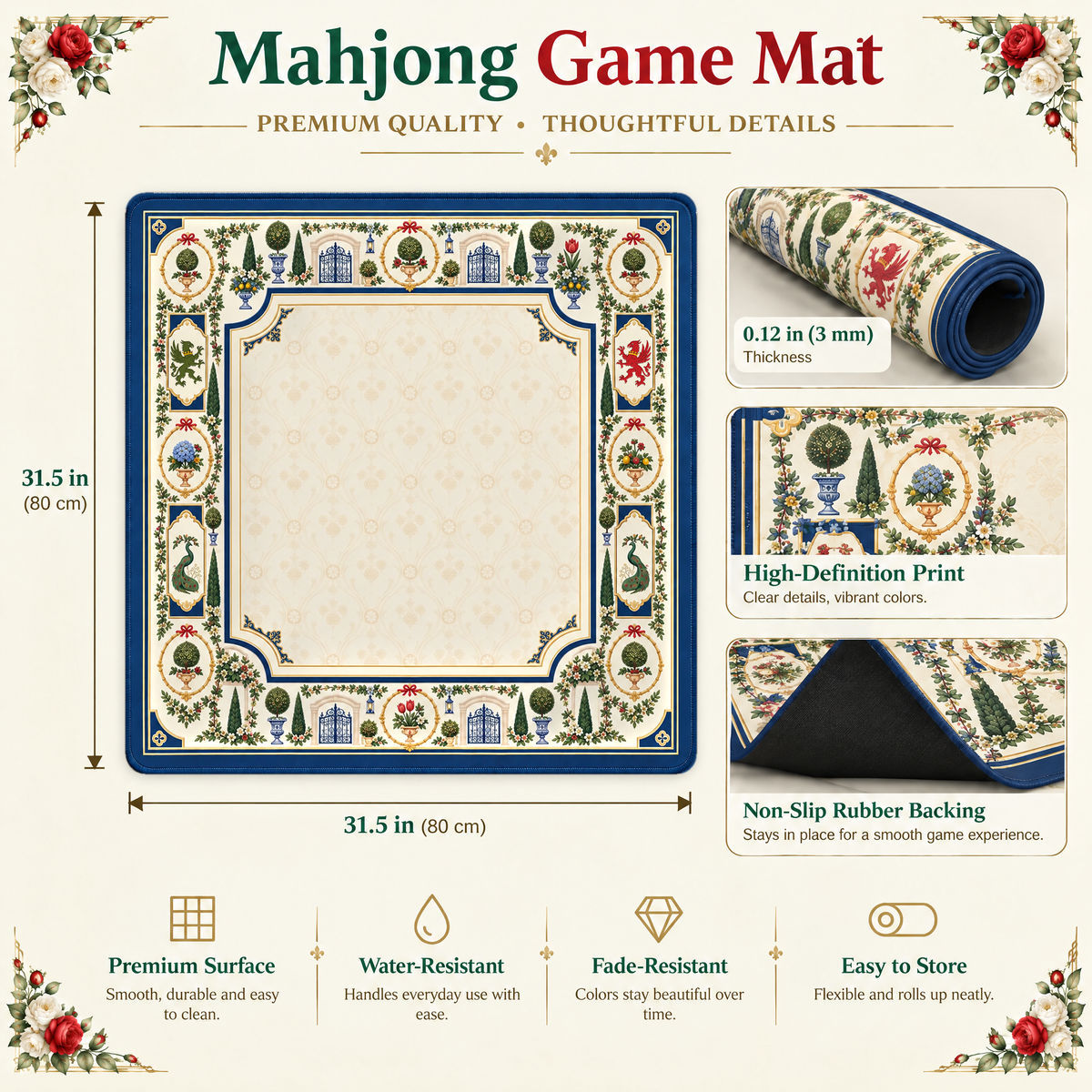
Adopt the "joker deficit" mindset from the start: assume jokers will run out by the time you're two or three tiles from finishing. This means every hand you work on should have a jokerless version alive and viable. Keep a mental tally of jokers you see: one drawn, one claimed, one in an opponent's exposed kong. That's three gone; five remain somewhere. The moment a fourth appears, jokers are scarce and your jokerless backup becomes your primary plan. Some of our best regular players keep a small note—nothing illegal; just a tally of drawn and visible jokers after the first 30 tiles—so they don't rely on memory. When you sit down with a quality mahjong mat that gives you space to organize tiles visually, this counting becomes easier: jokers have a distinct look, and you can glance at every opponent's rack and exposed melds without fumbling. A clear playing surface forces clearer thinking.
The hand-reading edge: what jokerless play teaches you
Mastering jokerless hands trains you to read tile flow—the rhythm of which numbers move together, which suits are "hot," which opponents are feeding each other. When you're forced to build without jokers, you stop leaning on luck and start noticing pattern. You see that East Winds and 2 Dots move together in certain hands; that 5 Bams is the loneliest tile for three rounds; that your opponents always discard high Craks early. This awareness carries over to every hand, even joker-heavy ones. You become faster at spotting which hands are actually alive on the table and which are traps. You also become a safer discarding player overall, because you've trained yourself to think like someone without a safety net. This reputation matters: opponents start to trust your discards less because they know you're building real hands, not hoping for joker bail-outs. Over time, you win more games because you're making conscious choices, not gambling.
✨ Find your Mahstead set — free US shipping →
Before you commit: what to check before you build jokerless
Ask yourself these three questions mid-game before you fully commit to a jokerless hand:
Are both my main anchors reachable? If your pung and your pair both require tiles you've already seen go out in discards, abort and pivot.
Do I have a second jokerless hand alive? If this hand gets blocked, can you flip to another one with 50%+ confidence?
How many tiles are left in the wall? If fewer than 20, jokerless is your only safe bet anyway; if more than 40, you have time to chase easier hands and switch later.
If you answer "no" to any question, don't lock in. Stay flexible until three of the four answers are "yes." The players who excel at jokerless strategy are the ones who know when to walk away from it, not the ones who force it every hand.

FAQ
Can I use a joker in a jokerless hand if I need one mid-game?
No. Jokerless hands are registered on the card without any joker slot. If you use a joker, you've made a different hand. Plan jokerless hands knowing you'll never fill them with a wild tile.
How many jokerless hands should I scan on the card before the game starts?
Scan five to eight jokerless hands that work with your starting tiles and suits. This gives you enough options to pivot without scrambling to read the card later.
Does jokerless strategy change if I'm playing with fewer than four players?
Yes. In two or three player games, jokers move faster and the wall shrinks quicker, making jokerless hands even more valuable. Study two and three player rules to see how tile flow shifts.
If an opponent has exposed a kong using a joker, does that mean jokerless hands are now safer?
Partly yes. One joker is off the board, so fewer are circulating. But your opponent may still be holding a jokerless hand as backup, so don't assume they're weak. Keep your own jokerless paths active.
What's the most common mistake beginners make with jokerless play?
Waiting too long to commit to a jokerless hand. Beginners chase joker-filled hands early and only switch to jokerless when the wall is almost gone, leaving no time to draw the tiles they need. Start with jokerless anchors on hand, then pivot if jokers flow.


View More
View More
View More
