
Mahjong Playing Concealed Hands: Tips for American Game Mastery
Last updated: Nov 23, 2026
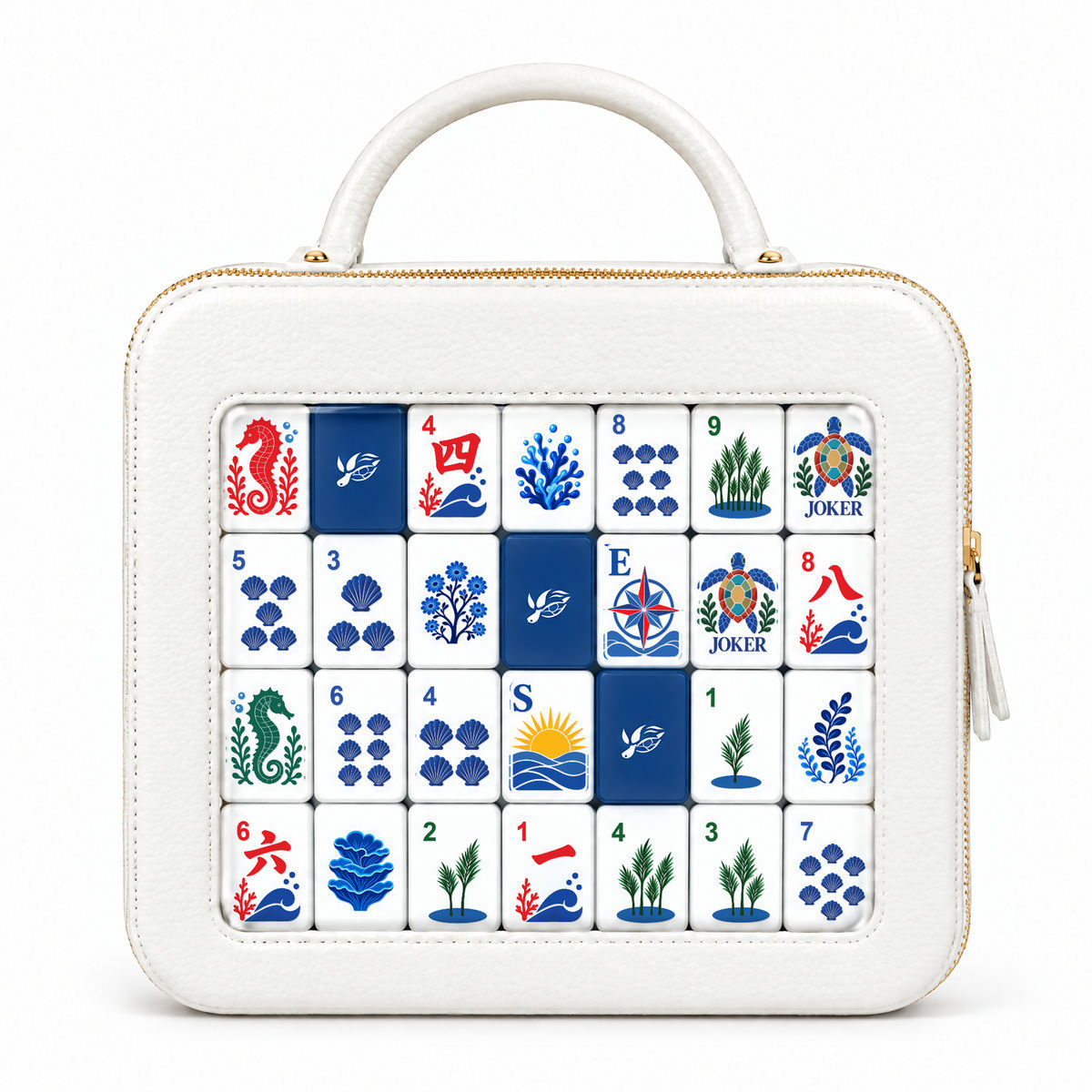
A concealed hand in American mahjong is one where all 14 tiles remain face-down in your rack until you declare a win by calling "Mahjong" and exposing your complete winning hand. This differs from exposed melds (pungs, kongs, quints, sextets), which you can lay down during play to score bonus points—but concealing forces you to rely solely on tile memory, discard tracking, and probability. The hand must still match a valid pattern from the current National Mah Jongg League card. Most players use racks to keep tiles organized and prevent telegraphing your strategy. Winning concealed is worth no extra points in American mahjong scoring, but it's psychologically powerful: opponents can't see your melds coming, making you harder to read and easier to catch off-guard when you discard safely.
🀄 Shop best-selling mahjong sets →
Why keep your hand concealed when you could expose for points?
Exposing pungs, kongs, and quints earns bonus points per the American mahjong scoring system—so why play concealed? The answer lies in information asymmetry. Exposed tiles tell opponents exactly what you're chasing; they'll stop discarding those numbers or colors, forcing you to draw dead tiles or pivot entirely. A concealed player remains a moving target: opponents must assume you're hunting anything, so they discard less strategically. You also preserve flexibility; if your original hand dies (all copies of a key tile already discarded), you pivot silently without opponents knowing your first plan failed. Concealed hands work best in the first round before discard patterns stabilize, or when you're one or two tiles away and can afford to wait for a draw instead of telegraphing your need to the table.

How do you actually track which tiles are safe to discard?
The core of concealed-hand play is discard memory: keeping a mental map of every tile thrown and who threw it. Start by grouping discards mentally into "early" (first 5–6 rounds), "middle" (rounds 7–12), and "late" (final rounds toward your win). Early discards are riskiest because you lack context; a single 5 Dot discarded early might mean East just had it or wants you to throw it away—you can't tell. Middle-game discards become safer to throw because you've seen patterns: if no Winds have appeared, throwing one is lower risk. Late-game discards are goldmines; if North appears at round 14 and nobody else has thrown it, that North is almost certainly safe. Write this rule into your play: never throw a tile you haven't seen from any player. The one exception is a tile from your Charleston (the pre-game tile pass) that came to you; you know it existed in someone's hand. Track suits separately from honors; all nine Bams move differently than Winds, which move differently than Dragons.
What physical rack setup prevents you from leaking your hand?
Your rack is your tell. If you push all your Dots to the left and all your Craks to the right, a sharp opponent watching your push-and-pause patterns learns your hand in three rounds. The solution: organize by hand-type, not by suit. If you're chasing a hand that needs two pungs of Bams and a kong of 2 Dots, cluster those tiles in your own mental zones but push them around subtly when you pick up a new tile—rotate a Bam forward, then slide a Dot back. Never leave a gap where a tile you just drew sits; shuffle and re-organize after every pick so the physical motion looks identical whether you drew the tile you wanted or missed. Use a best-selling mahjong set with clear engraving so you read tiles faster and minimize the dithering and squinting that signals "I'm not sure if I have this tile yet." Keep your rack at chest height so opponents can't angle-watch from the side; if you're using a mahjong mat, sit upright and hold your tiles close.
Concealed-Hand Strategy | What It Means | Mistake It Prevents |
Organize by hand-type, not suit | Group tiles toward the hand pattern you need, not alphabetically | Opponents spot your suit focus and stop discarding that color |
Shuffle after every pick | Move tiles around even if you didn't want the draw | Telegraphing a "dead" draw by leaving it isolated |
Track all discard rounds | Note not just what tile was thrown, but when and from whom | Throwing a tile that's only risky in early rounds at round 14 |
Keep hand at chest height | Prevent angle-watching and side peeks | Skilled players reading your tile positions from across the table |
Use clear tiles | Minimize squinting and re-reads that signal uncertainty | Opponents guessing your hand based on your hesitation pattern |

When should you pivot off a concealed hand if it's not working?
Pivoting early saves you from sinking three rounds into a dead pursuit. If you're chasing a hand that requires four copies of a tile and by round 8 you've seen three copies discarded (or thrown from your starting rack during the Charleston), that tile is mathematically unavailable—you're holding a hand with only one legal copy left in the wall. Pivot immediately by treating your current tiles as a new hand type entirely. This is where how to read the mahjong card matters; familiar players scan the card in 10 seconds and spot which legal hands are close to what they currently hold. Beginners waste a round re-reading, giving away their pivot. The best concealed players keep three rough hand-type options in mind: their primary target, a secondary hand using similar tiles (like swapping one pung for another), and a tertiary all-honor backup that's always one tile away. When primary dies, you shift to secondary without fanfare. When secondary and primary both fail, you chase the honor hand as insurance.
What tells do opponents leak when they're playing concealed?
Reading concealed hands is an art. Watch for tile velocity: how fast someone picks and discards. Fast pick-and-discard means they drew the tile they expected or were already planning to throw it. Slow pick-and-pause means they're deciding between two options—they hit a tile that disrupts their plan or forces a choice. Also watch when someone starts requesting a tile from discards. If East discards a 3 Bam on round 5 and nobody calls, but South calls the second 3 Bam on round 9, you know South just picked up a game-changing tile in rounds 6–8 and is accelerating. Watch the angle of the rack tilt: if someone holds their rack perfectly level for five rounds then suddenly tilts it to read their own tiles, they might be checking if they won (mentally recounting against the card) or recounting after a pivot. The most honest tell is mood shift: confidence early means they're running hot; panic or resignation by round 10 means they've pivoted multiple times and are gambling. None of these are 100%, but in a table of four, two or three tells pointing the same way often signal the same thing.
🎁 See our most-loved mahjong sets & accessories →
What to check before you buy a rack and tiles for concealed play
If you're serious about concealed-hand strategy, your equipment matters. Your tiles need to be large enough to read instantly without picking them up; undersized or faded tiles slow you down and create tells. Your rack needs to be deep enough to hide all 14 tiles from side angles—shallow racks leak tile positions to angle-watchers. The mat you play on should have a recessed player well (the well where your hand sits) so your tiles sit lower than the table surface, making it harder for opponents to peek from across the table. Verify your mahjong set includes exactly 152 playing tiles plus 8 jokers; sets with extra blanks are fine (those are spares) but don't change gameplay. Pick a travel bag if you're hosting at different locations each week—sets that travel get bumped and jostled, so organization and protection matter. Finally, confirm your set matches the current year's National Mah Jongg League card colors and tile shapes; older sets may have outdated Dragon or Flower designs that confuse you mid-game.
✨ Find your Mahstead set — free US shipping →

FAQ
Does winning a concealed hand earn extra points in American mahjong?
No. A concealed hand wins at the same point value as an exposed hand in American mahjong. The advantage is strategic—your opponents can't read your melds—not scoring. You win the payout based on your hand type from the card, not on concealment.
How many tiles do I need to see discarded to know a tile is "safe"?
If you've seen all four copies of a tile discarded or in use, that tile is 100% safe. If you've seen three and only one remains in the wall, throwing it risks giving an opponent their winning tile. Early game (rounds 1–6), even one discard of a tile makes it riskier than an unseen tile.
Should I always pivot if my primary hand dies, or sometimes go all-in on a single tile?
Always pivot if at least two copies of a required tile are gone by round 8. Going all-in works only in the final two rounds when drawing becomes your only option anyway. Early commitment to a dead hand wastes discards you could use to read opponents.
What's the fastest way to spot your winning tile on your opponent's discard?
Scan discards in the order they were thrown, not by suit. Your brain is faster at "last three tiles" than "all red tiles." Most winners appear in the most recent round of discards, so check backwards first.
Can I shift my rack position mid-game to avoid angle-watchers?
Yes, but do it every round (rotate it slightly clockwise or counterclockwise) so it looks natural, not defensive. A sudden 45-degree shift after three rounds signals you're hiding something. Gradual, consistent movement is invisible.
How do I practice concealed-hand discipline if I'm used to exposing?
Play one full game per week where you challenge yourself to keep every hand concealed until the last three rounds. This forces you to memorize discard patterns and pivot cleanly. Your score will drop at first; that's normal. After four weeks, your reads sharpen dramatically.


View More
View More
View More
