
Mahjong in The Joy Luck Club: History, Rules & How to Play
Last updated: Nov 23, 2026
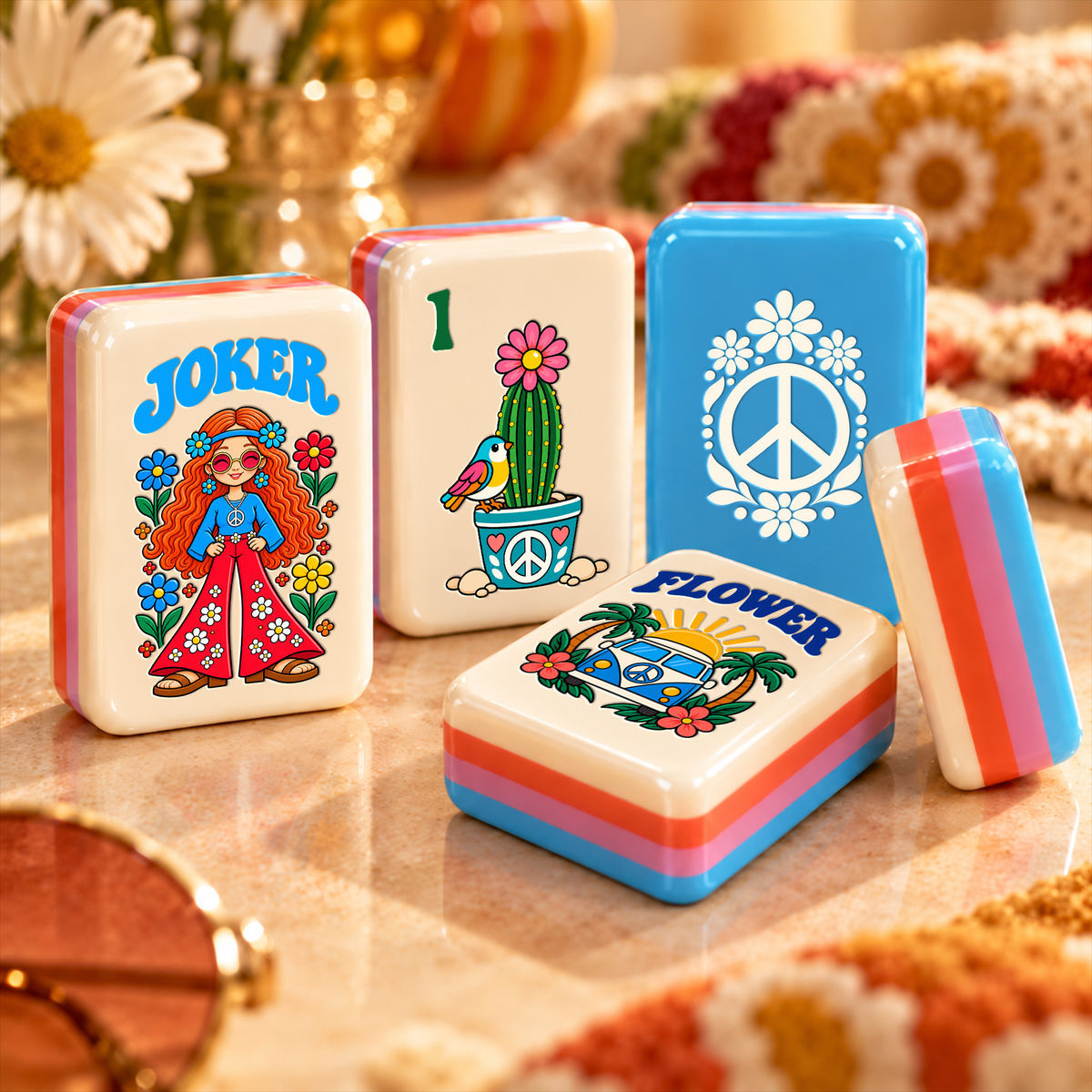
In Amy Tan's 1989 novel The Joy Luck Club and its 1993 film adaptation, mahjong serves as the emotional anchor for four Chinese-American families. The Joy Luck Club itself is a mahjong circle founded in Shanghai during World War II, and the game threads through every relationship. The book doesn't explain American mahjong rules in detail; instead, it captures the ritual—the clicking tiles, the competitive banter, the stakes—as a language of belonging. We play American mahjong using 152 tiles (108 number tiles in three suits: Bams, Craks, Dots; 16 winds; 12 dragons; 8 flowers; 8 jokers). A hand is drawn from that year's National Mah Jongg League card. Games take 30–60 minutes. The novel's resonance comes not from gameplay instruction but from showing how mahjong binds mothers to daughters across continents. Tan's portrayal made the game iconic for American readers; many who read the book later sought out our best-selling mahjong sets to experience that same connection firsthand.
What mahjong scene does The Joy Luck Club show?
The novel opens with Jing-mei sitting at the mahjong table with her three aunts—the surviving members of the Joy Luck Club—after her mother's death. The film shows the women playing in a living room thick with incense and memory. The game itself isn't staged as instruction; instead, Tan captures the texture of play: tile racks, the Charleston (the pre-game tile-passing ritual), moments of silence broken by the click-click-click of pieces being drawn and discarded. The mahjong table becomes a stage where the younger generation learns their mothers' stories. Tan never explains what makes a winning hand or how to read the card; she treats mahjong as universal language, assuming her readers know the ritual matters more than the rules.

Is The Joy Luck Club mahjong American or Chinese?
The novel references Shanghai mahjong, which uses Chinese rules and different tile counts than American mahjong. However, Tan never specifies rules; her mahjong is more metaphor than manual. American mahjong—the modern American variant played with 152 tiles and the current year's National Mah Jongg League card—is what most Western readers learned after reading Tan, inspired to join existing games or start new ones. The distinction matters: Chinese mahjong involves melds called chows (sequences like 4-5-6) and hand-building strategies very different from American play, where only the card determines what hands are legal. Tan's portrayal transcends either system; she captures the emotional logic of the game—competition, memory, belonging—rather than the mechanics. Readers drawn to the book often begin with American mahjong because it's more accessible to newcomers in the West and doesn't require years of prior experience.
Why did The Joy Luck Club make mahjong iconic?
Before Tan's novel, mahjong in American culture was often a punchline—associated with "exotic" stereotypes or treated as a quaint pastime for grandmothers. The Joy Luck Club reframed the game as profound: a keeper of history, a ritual of survival, a bridge between immigrant mothers and American-born daughters. When Jing-mei sits at the table, she's not just learning to play; she's inheriting her mother's hopes, her story, her unfinished life. That emotional weight—the stakes of identity and continuity—transformed how many Americans saw mahjong. The novel's success (popular picks for months, film seen by millions) created a wave of newcomers to the game, particularly among American-born Chinese women and others drawn to the cultural resonance. Today, the book remains the entry point for many who begin playing. If you've read The Joy Luck Club and want to experience that connection, starting with our best-selling mahjong sets lets you join the same tradition—updated for modern play.
🀄 Shop best-selling mahjong sets →
How do you actually play American mahjong?
American mahjong uses 152 tiles: three number suits (Bams, Craks, Dots, each numbered 1–9, four copies each) plus winds, dragons, and flowers. Four players sit around a table. Before each hand, players pass tiles in a ritual called the Charleston. Then one player is East (dealer); players draw and discard in turn. Your goal is to form a winning hand—a specific combination of sets listed on that year's National Mah Jongg League card. A set can be a pung (three identical tiles), a kong (four identical), or a quint or sextet (five or six identical). Jokers are wild tiles that can substitute for any tile in an exposed set, but never in your hand's hidden portion or as a pair. When you have 14 tiles that match a legal hand on the card, you declare mahjong and win the round. The game isn't about strategy alone; it's about luck (which tiles are drawn), card knowledge (knowing what hands are playable this year), and reading the table. How to play American mahjong explains the full turn structure and betting.
What's the difference between reading The Joy Luck Club and playing the game?
The novel captures the feeling of mahjong—the stakes, the silence, the family drama—but almost no rules. Tan's mahjong is a metaphor: it's about mothers and daughters, loss and legacy, the weight of stories. Reading the book doesn't teach you how to form a winning hand; it teaches you why people care about the game beyond winning. When you actually play American mahjong, you discover a different depth: the puzzle of the card (learning to spot hands), the social rhythm of the table, the moments of pure luck, and yes, the family or friendship bonds that form around regular play. The novel created emotional entry; the game itself creates community. Many who read The Joy Luck Club report that playing mahjong deepened their understanding of the book—they now hear the click of tiles and understand the mothers' attachment to ritual and continuity.
🎁 See our most-loved mahjong sets & accessories →

How do you host a mahjong game like the one in the novel?
We host weekly games, and the setup mirrors what Tan describes. You need four players, a quiet room, a flat surface (a dining table works; a padded mahjong mat keeps tiles from sliding), mahjong racks with pushers to organize each player's hand, and a scorepad. Set out a 160-tile mahjong set with the current year's card. Players sit North, East, South, West (East is dealer and goes first). Before the first hand of the session, conduct the Charleston: each player passes tiles right, across, left, and then left again, returning control of the tiles to the center of the table. This ritual—which The Joy Luck Club alludes to but doesn't detail—matters: it randomizes the tiles, reminds everyone they're entering shared time, and echoes the novel's theme of connection. Some players add food, tea, or snacks (as Tan's characters do). Conversation is part of the rhythm; quiet reflection is, too. A session usually runs 2–3 hours and includes 8–12 hands. The game creates a container for storytelling—exactly what Tan showed.
Setting up your first game: a checklist
Element | What it is | Why it matters |
Four players | Seated North, East, South, West | Roles rotate; East is dealer each hand. |
152-tile set | Bams, Craks, Dots, winds, dragons, flowers, jokers | Complete set only; never add spares to play. |
Current-year card | National Mah Jongg League card | Hand legality changes annually. |
Racks | Hold each player's 13 or 14 tiles upright | Keeps hands hidden from others. |
Mat | Padded surface for the table center | Prevents tile damage and slide. |
Scorepad | Tracks points each hand | Determines final winner. |
Charleston | Pre-game tile-passing ritual | Randomizes distribution; sets ceremony. |
✨ Find your Mahstead set — free US shipping →
What mistakes do newcomers make when starting mahjong?
New players often confuse American mahjong with Chinese variants (different rules, different tiles, different hand-building logic). They sometimes think they can skip learning the current year's card or assume old hands still work (the card changes every spring). They may not understand that jokers can only substitute in exposed sets—never in your hidden hand or as a pair—leading to frustrated rule corrections mid-game. Some set up without a proper mahjong mat, causing tiles to scatter or get damaged. Others rush through the Charleston, which randomizes the game; skipping it or doing it carelessly affects fairness. The most common mistake: not reading the rules before the first hand. We recommend playing your first hand with an experienced player explaining each step—not from a book, but live at the table, where the ritual makes sense. The Joy Luck Club inspired many to want that experience; starting with a proper 160-tile set and taking time to learn from a mentor (or a clear guide like the National Mah Jongg League rulebook) ensures you build the right habits from game one.
What to check before you buy a mahjong set
Tile count: Mahstead sells 160-tile sets, which include 152 playing tiles (exactly what you need) plus spares—extra jokers and blanks. Never add spares to active play; use only the 152-tile base. Verify your set includes all three suits (Bams, Craks, Dots), winds, dragons, flowers, and jokers.
Tile size and weight: Acrylic tiles should feel substantial (not hollow or too light) and sit comfortably in a standard rack. Check that corners aren't sharp; they wear smooth with play but shouldn't cut hands initially.
Clarity of symbols: Each tile must be legible—numbers clear, suit symbols distinct, dragons and winds unambiguous. Poor printing leads to misreads at the table.
Complete accessories: Confirm the set includes racks (or plan to buy them separately), a storage bag or case for transport, and current-year card access. Lose-tile-only sets force you to source your own card and storage.
Engraved customization: Mahstead offers engraved American mahjong sets with names, dates, or inside jokes—ideal for gift-givers or groups that want to mark a milestone or inside reference (like a title card for your group or a date for a family tradition).

FAQ
Did Amy Tan explain how to play mahjong in *The Joy Luck Club*?
No. Tan captures the ritual and emotional weight but not the rules. She assumes readers either knew mahjong already or didn't need to learn it from the novel. The book inspired many to seek out actual games.
Is the mahjong in the film the same as the novel?
Yes, thematically. The film shows the same scenes—mothers and daughters at the table, tiles clicking, stories shared. It's faithful to the spirit but, like the book, doesn't teach gameplay.
Can I play mahjong with just the book as a guide?
Not without outside help. You'd need the National Mah Jongg League card, a rulebook, and ideally one experienced player to walk you through a hand. The book is context and inspiration, not instruction.
What's the fastest way to learn if I've read the novel?
Join a weekly game with experienced players, bring the current-year card, and ask questions during play. Most players are patient with beginners, especially those drawn by the book's cultural resonance.
Should I buy a set before I've learned to play?
Only if you're committed to finding a game or have a group ready. A 160-tile set from Mahstead lasts decades and is worth it once you know you'll play regularly. If you're uncertain, attend a game first at a community center or library.
Can I use an old mahjong set from a relative to play American mahjong?
Only if it's a 160-tile American set with 152 playable tiles. Chinese or Japanese sets use different tile counts and symbols. Check the tile variety; if it's missing entire suits or uses non-standard symbols, it won't work for American play.


View More
View More
View More
