
Mahjong for Phase 10 Players: What Transfers and What Doesn't
Last updated: Nov 23, 2026
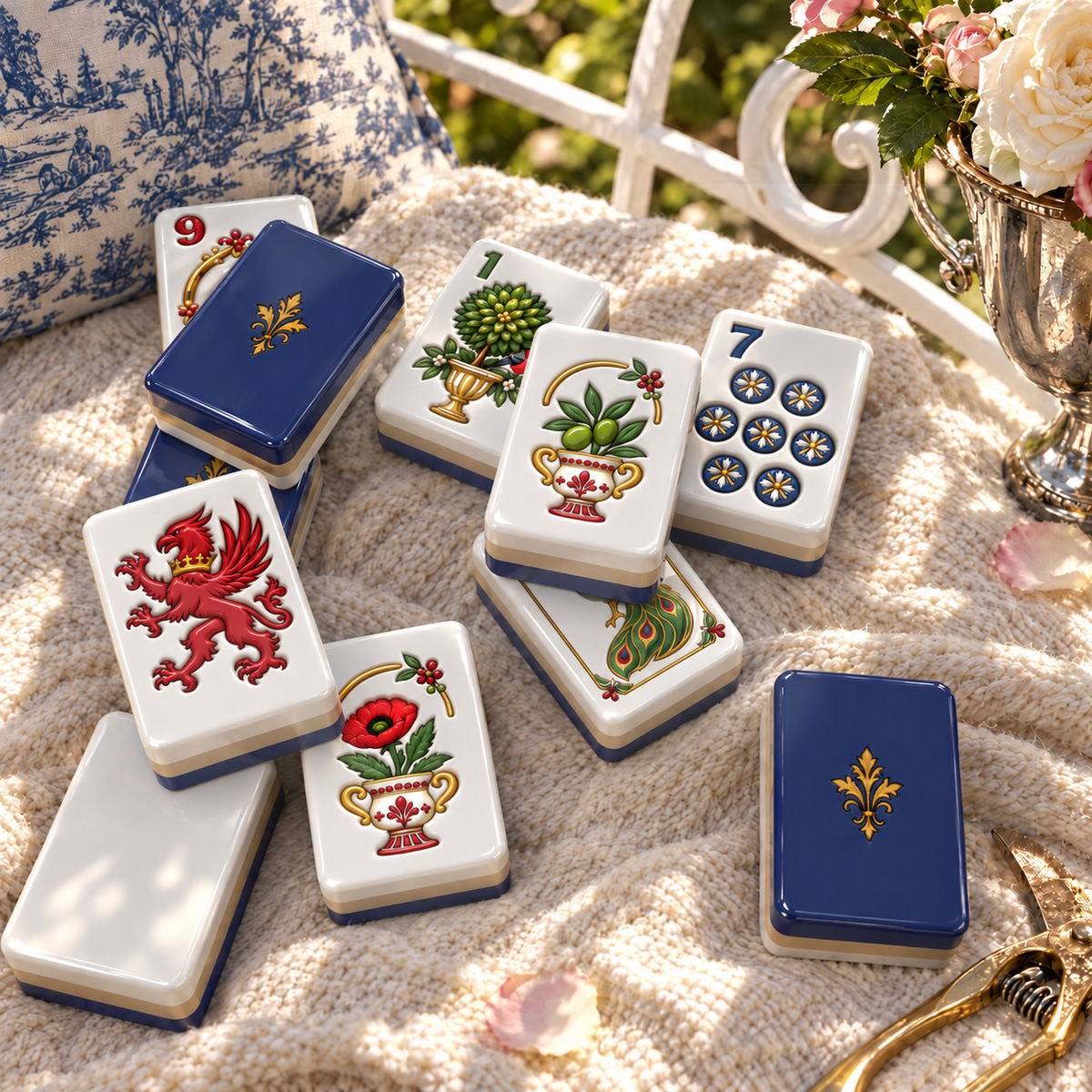
Phase 10 trains you in recognizing patterns and managing sequences, but American mahjong is a different game entirely. In Phase 10, you discard freely and chase 10 phases by laying runs and sets on the table; in American mahjong, you build a single 13-tile winning hand using only patterns from that year's National Mah Jongg League card—no runs or sequences allowed. Your tile-management instinct transfers; your sense of which combinations win does not. American mahjong also adds a pre-game tile-passing ritual called the Charleston, jokers that act as wild tiles in specific roles, and rigid rules about which tiles can be exposed. If you've played Phase 10, you'll pick up tile-reading and hand discipline quickly, but expect 2–3 weeks of practice before hands click. Start with Mahstead's best-selling sets paired with the current year's card to see real patterns in action.
What hand-building skills actually transfer from Phase 10?
Your Phase 10 experience teaches tile counting, discard timing, and hand concealment—three pillars that matter in American mahjong too. You already know how to track which tiles other players hold, when to dump dangerous cards, and how to read a player's strategy from their discard pile. In American mahjong, these instincts keep you safe. You'll also excel at speed—Phase 10 trains fast decision-making, and American mahjong rewards players who can read a hand, identify the card pattern, and call quickly. The core skill of "what do I keep, what do I throw?" remains true in both games. Where Phase 10 players stumble is on the specific combinations that win, because American mahjong allows no runs at all.

Why runs and sequences don't exist in American mahjong
Phase 10 relies on runs (1-2-3 in the same color) as half your winning formula; American mahjong forbids them entirely. Instead, American mahjong lets you expose only pungs (three identical tiles), kongs (four identical tiles), quints (five identical tiles), and sextets (six identical tiles). Your concealed hand must match a pattern on the current year's card. This feels counterintuitive at first—if you're used to laying 5-6-7 of Dots, you'll instinctively reach for that play and find it invalid. The rule shift is absolute: if you play Phase 10 by muscle memory, you'll lose. Spend your first session studying how to read the mahjong card and drilling pungs so the new logic becomes automatic.
The Charleston: a pre-game ritual Phase 10 doesn't have
Before the first hand of American mahjong, all four players perform the Charleston—a three-round tile exchange that levels the starting hand and adds luck. In round 1, you pass three tiles to your right; in round 2, three to your left; in round 3, three across the table. After round 3, players can return up to three tiles to the player they just received from. This ritual is mandatory, ritualistic, and foreign to Phase 10 players. It ensures no one sits with a hand stacked in their favor and builds camaraderie. If you skip it or do it wrong, the entire game feels off. Learn how the Charleston works before your first game so you're not the person asking "wait, do we pass again?"
🀄 Shop best-selling mahjong sets →
Jokers: wildcards that work nothing like you expect
In Phase 10, wildcards are usually single tiles you can use anywhere in a phase. American mahjong jokers are more powerful and more limited. Jokers substitute for any tile in an exposed pung, kong, quint, or sextet—but never in your concealed hand, never as a pair, and never alone. A joker sitting in your rack counts as "in play"; if your hand wins with an exposed pung of 5 Craks that includes one joker, that joker filled the third position, not a freestanding role. Jokers in American mahjong follow strict logic once you see it, but the first few hands feel alien. Phase 10 players often try to "bank" a joker for later, forgetting that jokers must be used when exposed or they become a liability. Treat them as tactical, not strategic.
Reading the card and adapting to one fixed set of valid hands
The National Mah Jongg League card—the rulebook for legal hands—changes every spring. Unlike Phase 10's fixed 10 phases, American mahjong has roughly 80–90 valid hand patterns that rotate yearly. This means you cannot memorize hands; you must learn how to read the card and adapt on the fly. Phase 10 players love this aspect because it rewards pattern recognition and forces you to stay sharp. But it also means your first five games will feel scattered—you'll be flipping the card constantly, asking "does this match?"—and that's normal. The card isn't a reference; it's your legal contract. Set it within arm's reach during every game and treat it as law.
Skill | Phase 10 | American Mahjong | Transfer? |
Tile counting | Essential | Essential | ✓ Yes |
Discard timing | Essential | Essential | ✓ Yes |
Reads and psychology | Yes | Yes | ✓ Yes |
Runs (1-2-3) | Core mechanic | Forbidden | ✗ No |
Laying sequences | Core mechanic | Forbidden | ✗ No |
Single card wildcards | Yes | No (limited) | ◐ Partial |
Managing one hand | Yes | Yes | ✓ Yes |
10 fixed phases | Yes | 80+ yearly patterns | ✗ No |
Pre-game tile exchange | No | Charleston (mandatory) | ✗ No |

When Phase 10 muscle memory sabotages you (and how to break it)
The biggest trap is calling a hand too early. In Phase 10, you lay cards down as soon as the phase completes; in American mahjong, you call Mahjong only when your entire 13-tile hand matches a card pattern exactly, including all concealed tiles. Phase 10 players often spot three or four matching tiles and assume they're winning, only to realize they're missing a critical pair or that the pattern requires a different configuration. The second trap is exposing tiles loosely. In American mahjong, once you expose a pung or kong, all four players can see it—and once seen, it's binding. Phase 10 lets you play and pick up; American mahjong is permanent. The third trap: forgetting that jokers can't be pairs. A joker and a 5 Dot do not make a pair; you need two identical tiles plus zero jokers. Train yourself to ask, "Does this match a pattern on the card exactly?" before calling Mahjong, and you'll avoid 90% of rookie errors.
Setting up your first game: what you'll need
Start with a complete 160-tile mahjong set and the current year's card (ask your host or download it from the National Mah Jongg League). You'll also want a sturdy mahjong mat if you're playing on a soft surface—it keeps tiles from shifting and helps new players see patterns. Racks with pushers are optional but beloved by Phase 10 veterans because they organize your hand like Phase 10 does (you're already comfortable with that). Some players bring a travel bag to move the set between game nights. None of these are mandatory, but each one eliminates a small frustration. Focus on the card first—master reading it, and everything else clicks into place.
🎁 See our most-loved mahjong sets & accessories →
Your transition timeline: what to expect week by week
Week 1: Discard piles make sense; card patterns feel chaotic. Spend 30 minutes before your first game scanning the card and saying patterns aloud (e.g., "pung of 3 Bams, pung of 7 Craks, pung of 2 Dots, pair of Souths"). You won't memorize them, but you'll train your eye.
Week 2–3: The Charleston feels natural; hand-building clicks; you stop asking "is this a valid pattern?" and start knowing. You'll also notice that the card changes how you discard—some patterns feel "hot" (you see many card lines using them), others "cold" (rarely useful).
Week 4+: You'll feel like a real player. You'll make strategic discard choices, anticipate other players' hands, and recognize the year's dominant patterns.
Most Phase 10 players hit comfort around week 3 because tile management was already muscle memory. Don't rush; each game teaches you something new about the card.
What to check before you buy your first set
Confirm the set includes 152 playable tiles plus spare jokers and blanks—this is the American mahjong standard and what Mahstead sets deliver. Avoid sets labeled "144-tile" or "Chinese"; they use different rules. Check that tiles are large enough to read at arm's length (Phase 10 tiles are often smaller, so the upgrade feels luxurious). Look for racks with pushers if hand-holding matters to you—they're especially popular with Phase 10 folks who like organized layout. Finally, buy or print the current year's National Mah Jongg League card before game night; don't rely on someone else's dog-eared copy. You need your own reference so you can study between games.
✨ Find your Mahstead set — free US shipping →

FAQ
Can I use Phase 10 strategy to win at American mahjong?
Partly. Tile counting, discard psychology, and hand awareness transfer perfectly. But American mahjong strategy also depends on reading the yearly card and recognizing which patterns are "live" (other players haven't blocked). Memorizing Phase 10's 10 phases won't help; you must adapt to 80+ new patterns every spring.
How long does it take Phase 10 players to stop making rookie mistakes?
Most Phase 10 veterans feel solid by week 3 because hand discipline and tile management transfer. The biggest learning curve is the card itself and the Charleston ritual. Expect 5–6 games before you stop second-guessing yourself on exposed tiles.
Are there any Phase 10 skills that actively hurt you in American mahjong?
Yes. The instinct to lay runs will lead you to call invalid hands. The habit of laying tiles loose will get corrected by other players. And the tendency to think "wildcards go anywhere" will confuse you because jokers in American mahjong are restricted to exposed sets. Unlearn these three things fast.
Do I need special equipment to transition from Phase 10 to American mahjong?
No, but a proper mahjong set and the current year's card are essential. Racks with pushers and a mat help organize your hand and game space, but they're optional. Most Phase 10 players appreciate racks because the tile-holding habit transfers directly.
Can I find American mahjong groups in my area to practice with Phase 10 players?
Yes. Community centers, libraries, synagogues, and country clubs often host mahjong groups; check Meetup boards and local game-night postings. Many welcome newcomers and run beginner tables. Bring a friend from Phase 10 and you'll speed up together.


View More
View More
View More
