
Mahjong for Hanafuda Players: What Skills Transfer
Last updated: Nov 23, 2026
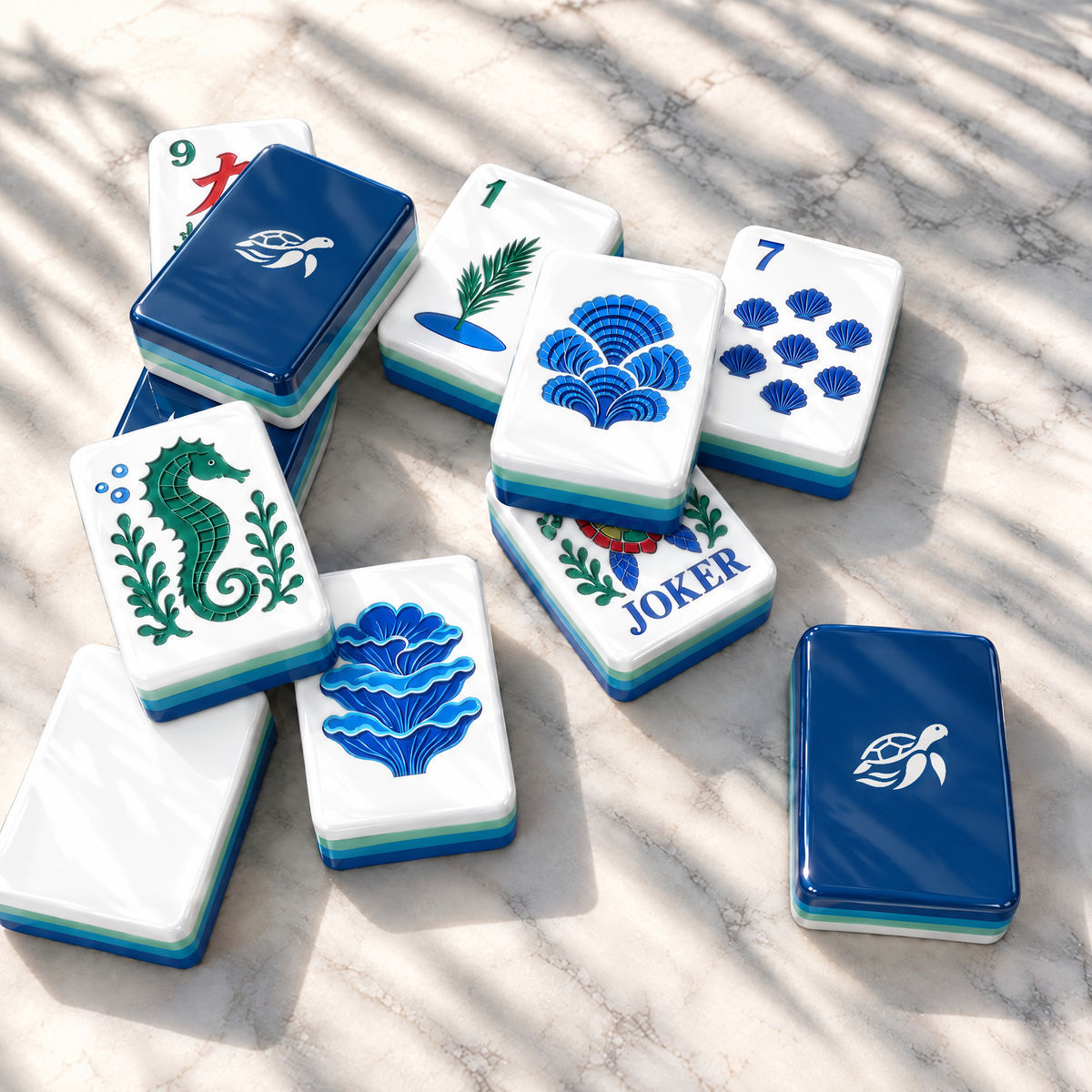
Hanafuda players bring real advantages to mahjong: visual pattern recognition, comfort holding tiles, memory for discards, and strategic hand-building. However, American mahjong is fundamentally different. Hanafuda is a trick-taking, seasonal-scoring game with hand rankings; American mahjong is a solitaire-assembly game where you match the current year's League card, use three passes called the Charleston before play, and expose melds (not tricks). Tile count differs (hanafuda uses 48; American mahjong uses exactly 152 playing tiles). You'll transfer discipline and observation skills, but the strategy, rules, scoring, and tile composition start from zero. Most hanafuda players pick up the core in three to four weeks of weekly play. We recommend best-selling mahjong sets with clear numbering for beginners learning tile values.
What hanafuda skills actually help with American mahjong?
Hand memory and pattern spotting transfer directly. In hanafuda, you track which cards are out; in American mahjong, you track which tiles are discarded and remember what others pick up—the cognitive habit is identical. Tile handling (shuffling, organizing your rack, flicking discards cleanly) carries over unchanged. Bluffing and reading opponents' hesitation matter in both. You're also accustomed to sitting for 45 minutes concentrating on a hand, which is exactly the American mahjong rhythm. Finally, if hanafuda taught you to read Japanese characters, recognizing Bam, Crak, and Dot symbols on tiles becomes natural quickly.

Why American mahjong rules are completely opposite hanafuda's
Hanafuda is trick-based: you play cards in sequence, win tricks with rank, and score by the type of hand (Poetry, Moon, Boar, etc.). American mahjong is draw-discard-assemble: you never play anything; you draw one tile, discard one, and gradually assemble a single completed hand pattern from the League card. Hanafuda scores tricks and rounds; American mahjong scores one hand at the end when someone declares mahjong (complete). Hanafuda punishes bad plays instantly; American mahjong punishes poor hand planning silently—you'll pick 13 tiles and realize none form a valid hand. The card—a legal-size printed guide updated every spring—is your only source of valid patterns; hanafuda rank hierarchy is memorized. This shift from memory-based hierarchy to reference-card-based validity confuses many newcomers, even experienced card players.
How tile count, suit structure, and values differ
Aspect | Hanafuda | American Mahjong |
Total tiles | 48 cards (12 months × 4) | 152 tiles (3 suits × 1–9 × 4 copies, + winds, dragons, flowers) |
Suits | Months (seasonal grouping) | Bams (stick), Craks (wheel), Dots (circles); winds (N/E/W/S); dragons |
Face cards | 1 per month | None; dragons and winds are "honor" tiles |
Scoring unit | Tricks and combinations | Melds (Pungs/Kongs: 3 or 4 identical) and pairs |
Draws per hand | 1 at start + 1 per turn | 13 tiles (via Charleston and draws) |
Hand length | Varies (trick-based) | Always 14 tiles when complete |
The move from seasonal categories to numeric and wind hierarchies is the biggest mental shift. Hanafuda teaches you 48 objects; mahjong requires you to think in relationships (three 5-Dots is a Pung; a sequence 1–2–3 Bams never forms—learn how jokers and melds actually work) rather than objects alone.
🎁 See our most-loved mahjong sets & accessories →
The Charleston: a ritual hanafuda never has
Before any hand of American mahjong, players pass tiles three times in a scripted, enforced order—right, across, left—then a final optional pass. This 90-second "Charleston" is mandatory and changes every hand. Hanafuda has no equivalent; you start each round with dealt cards, fixed. The Charleston serves two purposes: it randomizes every player's starting 13 tiles (preventing dealer advantage) and it doubles as a bluffing moment (holding or passing certain tiles signals strategy). For hanafuda players, this feels like ritual theatre, but it's load-bearing strategy. Understand the Charleston step-by-step before your first game; rushing it creates bottlenecks and table confusion.
How to read the League card (the biggest learning curve)
The National Mah Jongg League card is a single legal-size printout—updated every April—listing all valid hands for that year. Hanafuda players are not used to a reference card at the table; you memorize ranks and let them settle disputes. Mahjong is the opposite: if a hand isn't on the current card, it's invalid, period. The card organizes hands by type (Like Numbers, Consecutive, Pairs, Kongs, etc.) and shows patterns such as "three Pungs in one suit + one Dragon Pung + one pair" with tile examples. To play, you hold the card or a small reference sheet, call out your hand type, and show your tiles. Learning to read the card efficiently saves minutes every round and prevents false claims. Most hanafuda players spend their first three weeks glancing at the card constantly; that's normal.

Exposing vs. hiding: you don't discard in mahjong
Hanafuda requires you to play a card face-up on each turn; everyone sees every move. American mahjong is silent construction: you draw, keep your 13 tiles hidden in your rack, discard face-up one unwanted tile, and no one sees your hand until you declare mahjong. This means hanafuda's constant transparency flips to near-total secrecy. You can expose three or four identical tiles (a Pung or Kong) to signal you're collecting that set, but you usually don't—exposing narrows your options and telegraphs your strategy. Hiding is safer. This secrecy-by-design culture is alien to hanafuda, where bluffing happens through hesitation and expression, not tile-hiding. Many hanafuda converts instinctively show their hand too early; resist it.
🀄 Shop best-selling mahjong sets →
A simple three-week learning checklist
Week 1: Tile names and values. Spend 20 minutes learning the three suits (Bams 1–9, Craks 1–9, Dots 1–9), winds (N, E, W, S), and dragons (Red, Green, White). Use an engraved tile set with clear symbols and English labels.
Week 1: The Charleston drill. Practice passing tiles right-across-left-right (optional) without a full hand; get the rhythm correct before playing stakes.
Week 2: Hand patterns from the card. Pick three common patterns from the current year's card (e.g., "three Craks Pungs + one pair + one Dot tile"). Build them repeatedly with tiles.
Week 2: Discard strategy. Play two or three player mahjong at home to learn which tiles are safe to throw (old discards, high tiles) vs. risky (ones other players may want).
Week 3: Full four-player game. Join a weekly game; expect to lose or break even. Your job is to finish each hand, declare mahjong at least once, and survive 10–12 rounds.
What to check before you buy a set
Beginners often pick sets with ornate designs that look beautiful but obscure tile symbols. When selecting your first set, confirm: (1) Each tile has the suit symbol (Bam stick, Crak wheel, or Dot circle) and number clearly visible; (2) bamboo or plastic tiles don't have worn edges (used sets deteriorate fast); (3) the set includes all 160 tiles (eight jokers as spares) plus a clear tile carrier; (4) the included mahjong mat has labeled spaces if it's your first time (we design ours with position markers). Avoid micro-printed card references—buy a large-print League card separately or a laminated cheat sheet from a local mahjong shop. Many hanafuda players upgrade to mahjong racks with pushers after one month (they organize your hand and hide it from view), so a basic set first is wise.
Misconceptions hanafuda players bring (and how to correct them)
"Mahjong scoring is like trick-counting." False. American mahjong scores the hand type and number of Kongs/exposures once, at the end. No running totals. "I should memorize all the hands on the card." Unnecessary—reference the card every time; memory comes in month six. "Bluffing means mixing my hand order." Irrelevant—your rack is hidden anyway. Bluffing is discarding ambiguous tiles to confuse opponents about your hand type. "Jokers are wild cards I can use anywhere." False—jokers substitute only for called/exposed tiles (Pungs, Kongs, Quints, Sextets), never for your concealed hand or a single pair. "The eldest player goes first, like in hanafuda." Wrong—in American mahjong, a dice roll determines dealer and turn order each hand, resetting every round.
✨ Find your Mahstead set — free US shipping →

FAQ
Can I use my hanafuda tile-handling speed in mahjong?
Yes—shuffling and organizing your rack directly transfer. However, mahjong requires slower draws than hanafuda card play because you're building one hand silently over 10–12 minutes, not playing each turn instantly. Pace yourself.
Do I need to memorize the League card before my first game?
No. Bring the card or a reference sheet to your first five games. Hanafuda taught you memory discipline; use it to absorb patterns through play, not cramming beforehand. Most players reference the card every hand for their first month.
Will my hanafuda friends also enjoy mahjong?
Usually, yes—if they like the social table dynamic and tile play. However, mahjong has a steeper rule curve and requires the current year's card; hanafuda is more portable. Invite them to observe one full round before committing.
What's the biggest mental shift from hanafuda?
Hanafuda trains you to react to each card as it appears (trick-by-trick awareness); mahjong trains you to plan your entire hand in advance and adapt silently. You'll feel slower at first—that's correct.
Should I buy a luxury set or a beginner set?
Start with a mid-range set with clear tile marking, a good mat, and racks. After three months of weekly play, upgrade to an engraved set with custom designs if you want. A beautiful set you can't read from across the table wastes money.


View More
View More
View More
