
Window of Opportunity in American Mahjong: When to Call a Hand
Last updated: Nov 23, 2026
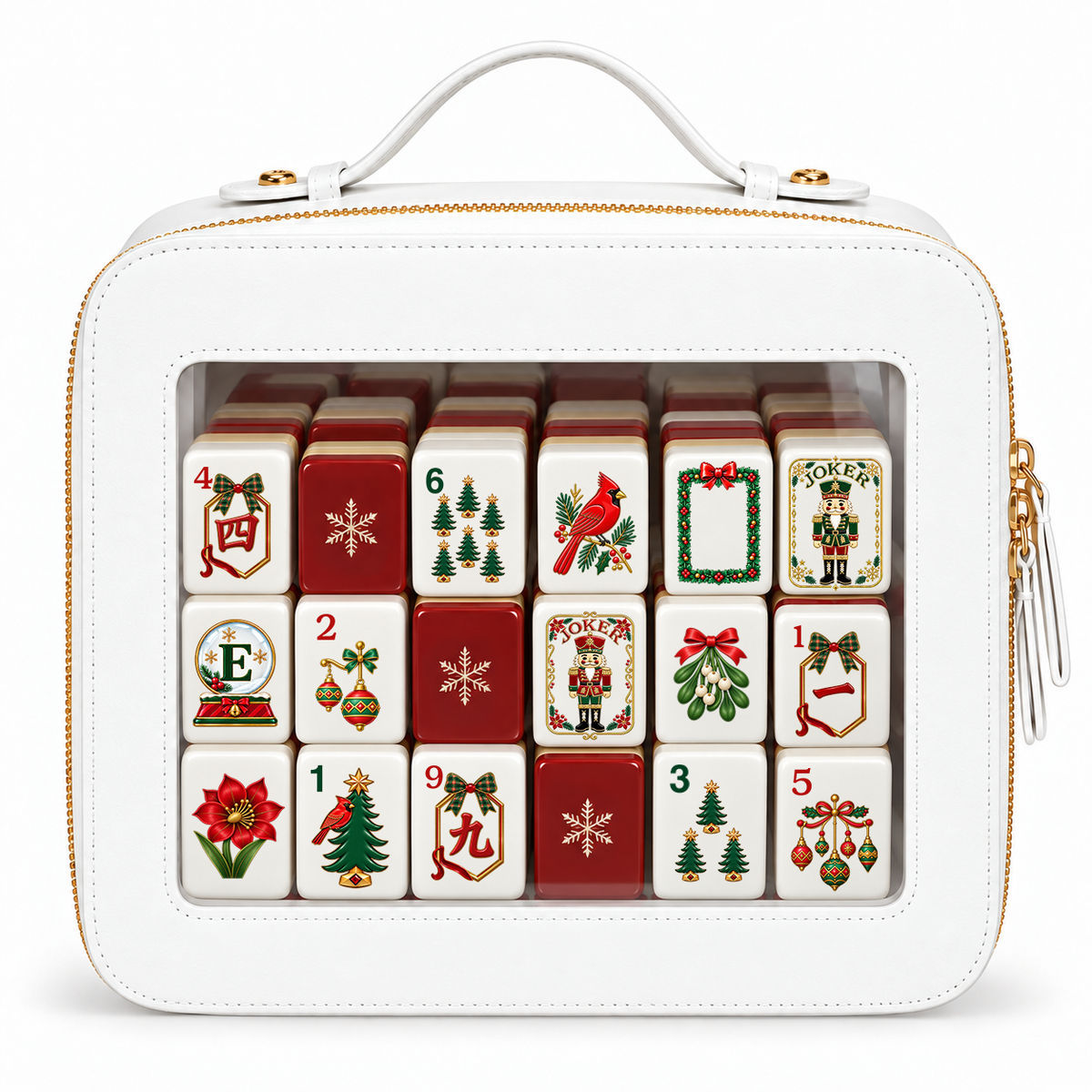
The window of opportunity in American mahjong is the moment when your 14 tiles (or 13 for the discarder) match a hand printed on the current year's National Mah Jongg League card. You can call only on your own turn after drawing a tile—never on someone else's discard unless you're last to draw in that round. Your hand must be complete: all melds (pungs, kongs, quints, sextets) plus a pair must match the card exactly, including suit and number sequence. Jokers substitute for any tile you lack, but a pair can never contain a joker, and a single tile cannot be joker-only. Once you call "Mahjong!" your hand is sealed and scored. If your hand doesn't match the card or contains an error, you're out of play for that round and incur a penalty. We recommend keeping the current year's card and a quality mat at your table so all players can verify hands clearly.
When exactly can you call your hand in American mahjong?
You call your hand only on your own turn, immediately after you draw a tile from the wall or claim a discard. You cannot call during another player's turn, even if you've had a winning hand sitting on the table for three rounds. The moment you draw tile 14 (or 13 if you're last discarder), you have the window to declare it. If you pass that opportunity—by discarding instead—the window closes. On your next turn, you must draw a fresh tile to open a new window.

What's the difference between calling on your own draw versus another player's discard?
In American mahjong, you call "Mahjong!" only after your own draw from the wall. You cannot claim someone else's discard to complete your hand, even if it's the exact tile you need. This rule separates American mahjong from Chinese and Hong Kong variants, where discard calls are common. Once you discard, your window closes, and play moves to the next player. If another player discards the tile you're waiting for, you must watch it go. The only exception is the final draw phase, where if someone discards and you're the last player to draw that round, you may call their tile—but this is rare and depends on the specific hand pattern.
How do you know if your hand matches the card?
Pull out the current year's National Mah Jongg League card and scan the sections (usually organized by hand type: Like Pung, Consecutive Pung, Quint patterns, or Consecutive Quint). Each listing shows the melds needed, the suit order, and the number sequence. Your 14 tiles must match one row exactly—including the exact suit and count of jokers allowed. For example, if a hand calls for "three Pungs of Bams (1, 2, 3), one Kong of Dragons, and a Pair of Winds," your tiles must match that structure precisely. Jokers can replace any single tile within a meld, but they cannot form a pair and cannot stand alone. Check the pair last: if it's a pair of Dragons, for instance, only two identical Dragon tiles (no jokers) qualify. Many players spread their tiles on a mahjong mat and align them with the card row-by-row before calling, to triple-check and avoid dead hands.
What happens if you call and your hand is wrong?
If you call "Mahjong!" but your hand doesn't match the card or contains a rule violation, you've declared a false mahjong—also called a "dead hand." You're immediately out of play for that round and pay a penalty to the winner and sometimes to all other players (penalty amounts vary by house rules, so confirm them before the first deal). Your tiles are returned to the wall, and play continues with the remaining players. False mahjong calls are rare if you verify your hand against the card beforehand, which is why most players take 10–15 seconds to double-check before calling. Never rush to declare; the window stays open until you discard or draw again.
How do jokers affect your window of opportunity?
Jokers extend your options within the window. Because a joker substitutes for any tile, you may complete a hand earlier than without them. However, jokers also carry strict limits: they cannot form a pair, cannot stand as a single tile, and cannot be used if a natural (non-joker) tile of that suit and number is available in your hand to fulfill the requirement. Some hands on the card require zero jokers; others allow or require up to four. When you're building toward a hand, count your jokers and compare them to the hand's joker limit on the card. If you've used all your jokers and draw a tile that would need a joker to complete the meld, that tile doesn't open a window—it's a dead tile for that hand. See how jokers work in detail for more nuanced rules around replacement and exposure.

What's the difference between a window and a wait?
A "wait" is the state you're in while holding 13 tiles, hoping to draw the one tile that completes your hand. The "window" is the moment when that tile arrives and you hold 14 complete tiles. During your wait, you discard regularly and watch the wall and discards. Once the window opens—you draw tile 14 and it matches your hand on the card—you have seconds to call. If you hesitate, another player may draw next and your window closes. A wait can last many turns; a window lasts only as long as it's your turn. Experienced players use racks with pushers to keep their tiles organized during long waits, so they spot the window instantly when it opens.
🀄 Shop best-selling mahjong sets →
Why do players sometimes miss their window?
The most common reason is confusion about the card. A player draws the 14th tile, believes it matches the card, and discovers mid-call that the suit is wrong or the joker count exceeds the limit. Other misses occur because players don't organize their tiles clearly—they can't find the matching pair or a meld and waste precious seconds in doubt. Stress and distraction also close windows: if another player is talking or discards loudly, focus breaks. Lastly, some players forget that the window is their turn only. They spot a completing tile in someone else's discard and anticipate calling it later, only to learn that American mahjong doesn't allow discard calls. To protect your window: organize tiles by suit and number on a mat, have the card visible and annotated with your hand, and call the moment you verify the match. Never call unless you're 100% certain.
How does the window differ in other mahjong variants?
American mahjong windows are tight: you call only after your own draw, never on a discard. Chinese mahjong and Hong Kong mahjong allow calling on another player's discard (called "winning off the discard"), which opens windows more frequently and speeds up play. Riichi mahjong also permits discard calls and includes sophisticated waiting patterns (tile combinations that win in multiple ways), expanding the moment of decision. Taiwanese mahjong has its own card-based hands and allows discard calls in some rule sets. If you're switching from American to another variant, prepare for far more calling opportunities and a faster game rhythm. Learn how to play American mahjong from the start if you're new to the American window rules.
What's the best way to track your window and prepare for it?
As tiles are discarded and drawn, keep a mental or written note of which tiles are "dead" (already played or exposed). This helps you predict which hand is still possible and which is no longer reachable. Some players use a small notepad beside the mat to cross off tiles they've seen. Arrange your tiles on a mahjong rack with pushers so you can spot your complete meld groupings instantly. Highlight or mark the current year's card row that matches your hand, so when you draw, you need only glance at one line, not the entire card. Position the card and your tiles so all four players can see them when you call—this prevents disputes and confirms your window to the table.
🎁 See our most-loved mahjong sets & accessories →
Comparison: Common mistakes that close your window
Mistake | Why it happens | How to avoid it | Consequence |
Wrong suit in meld | Misread card or assumed joker fills suit | Use a ruler or your finger to track row on card | False mahjong, penalty, out of round |
Joker in the pair | Thought joker could substitute anywhere | Memorize: pairs are natural tiles only | False mahjong, penalty |
Called on discard, not draw | Confused with other mahjong variants | Confirm American rules before game starts | Not a valid call, hand rejected |
Missed the tile in your rack | Tiles scattered or disorganized | Use a mat and rack with pushers | Didn't call when window was open |
Forgot the card row | Too many rows to remember | Mark or highlight the target hand row | Drew wrong completing tile, window passed |
Hesitated too long | Nervous or double-checking | Trust your preparation; verify before play | Next player drew; window closed |
What to check before you buy:
Before hosting or joining a game, confirm that all players have access to the same year's National Mah Jongg League card (issued each spring). Ensure your tile set has all 152 playing tiles plus 8 jokers in working order. Agree on house rules for false mahjong penalties before the first game. Use a mat and organized racks so windows are spotted instantly. If you're shopping for a set to ensure quality and consistency at your table, our engraved American mahjong sets are designed for readability and durability during peak play moments.
✨ Find your Mahstead set — free US shipping →

FAQ
Can you call a hand on someone else's discard in American mahjong?
No. You call only after drawing your own tile from the wall. If another player discards a tile you need, you cannot claim it to win. This is a key rule that separates American mahjong from Chinese and Hong Kong variants.
What if you draw tile 14 but it doesn't match the card?
Your window is closed. You discard that tile and pass your turn. The window does not reopen until you draw again on a future turn. If you're still waiting for a different hand, you continue the wait.
Can a joker ever be part of a pair?
Never. Jokers cannot form or complete a pair in American mahjong. If a hand requires a pair, both tiles must be natural (non-joker). This is a hard rule and a frequent source of false mahjong calls.
How long do you have to call your hand after you draw?
There's no official time limit, but seconds matter. Once it's the next player's turn, your window has closed. Most players call within 5–10 seconds of confirming their hand matches the card.
If I'm waiting for a specific tile and another player picks it from the wall, does my window close?
Yes. Only you can draw that tile on your turn. If another player draws it first, that tile is gone and you must pivot to a different hand or wait for jokers to substitute.
Do house rules ever change when the window opens?
Rarely, but yes. Some casual games allow "calling off the discard" in specific final-round scenarios. Always confirm house rules at the start of your game. If you're playing in a league or formal setting, windows follow the National Mah Jongg League rules strictly.


View More
View More
View More
