
Mahjong for Expats: Finding Your Game Abroad
Last updated: Nov 23, 2026
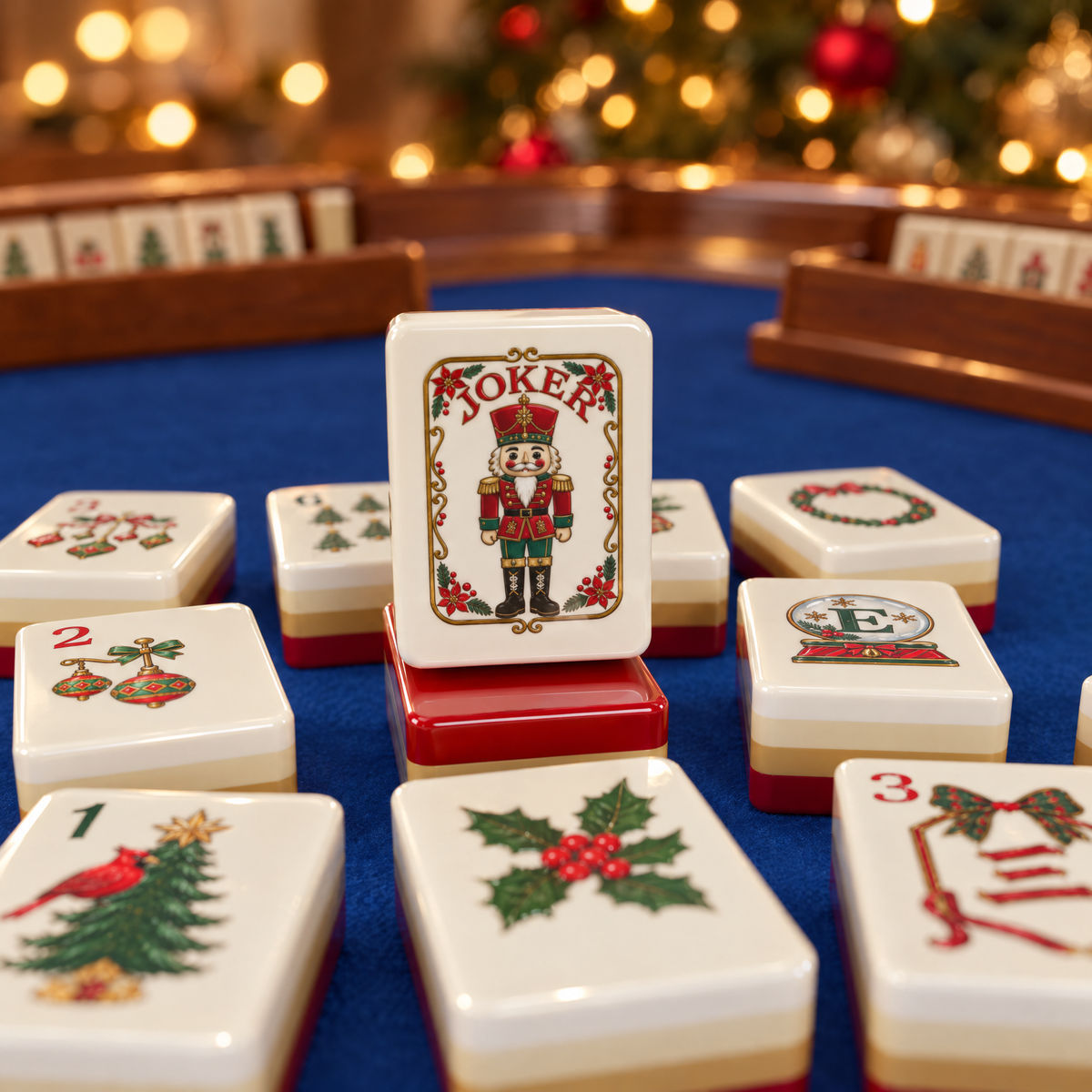
Expats find mahjong through libraries, community centers, synagogues, country clubs, and Meetup boards in their new city; rules vary by region (American uses 152 tiles and hands only from the current-year card; Chinese and Riichi play differently), so confirming the local variant before joining is essential. Most expat players either join existing groups, teach friends the game from scratch, or start their own weekly table—all three paths thrive globally. A travel-friendly mahjong set with a protective case and mat packs flat, costs less to ship than you'd expect, and becomes the easiest way to introduce your new neighbors to the game or maintain the hobby you loved at home.
Moving abroad often means leaving behind the rhythms of home—your favorite coffee spot, the Tuesday game, the faces around the table. But mahjong players know a secret: the game is genuinely portable, the community is genuinely global, and starting fresh in a new country can actually deepen your love for the tiles.
We've watched expats from Singapore to Stockholm, Montreal to Melbourne, arrive in unfamiliar cities and rebuild their mahjong lives from nothing. Some lucky ones land in cities with established clubs. Others teach the game to locals who become best friends. A few brave souls learn a completely different variant to fit in. What every one of them told us: the hardest part isn't learning new rules or finding players—it's knowing which version of the game you're actually looking for, and having the right tiles to play with on day one.
Which mahjong variant do people play where you're moving?
This matters more than you'd think. American mahjong is most common in North America and parts of Australia; it uses 152 tiles, hands come only from the current annual card, and the Charleston is non-negotiable. Chinese (including Cantonese) dominates Asia, the UK, and multicultural communities worldwide; it has no annual card, includes sequences (chows), and plays by regional house rules. Riichi (Japanese) is huge in Japan and growing in North America. Hong Kong, Taiwanese, and other variants each have passionate followings.
Before you move or join a group, ask directly: "What variant do you play?" Not "What do you call it?"—rules drift with time and house rules, so seeing a hand or looking at their tiles matters more than the name. If you're in doubt, learn American mahjong rules first, since it's the most standardized and the easiest to explain to newcomers. Then adjust.

Where do expats actually find mahjong games?
Most expat mahjong happens in one of four places:
Community centers & libraries often host open mahjong clubs, especially in North America and Australia. Ask the front desk; most have bulletin boards or online schedules.
Faith communities—synagogues, Chinese cultural associations, Buddhist temples—frequently run regular games. These groups tend to be welcoming to newcomers and stable across years.
Meetup boards, Facebook groups, and local WeChat networks are where expats advertise tables. Search "[your city] mahjong" or "[your neighborhood] board games"; expat groups often cross-post.
Friendships & word-of-mouth still build the most games. Tell one person you play. Within three months, you'll likely know four tables.
Country clubs & retirement communities sometimes have standing games, especially in established suburbs. Call ahead—membership rules vary wildly.
The fastest move: Google "[your city] mahjong club," check the community center website, then post in a local expat Facebook group asking if anyone plays. You'll usually get a response within 48 hours.
What tiles should you bring or buy abroad?
If you already own a set, bring it. If you don't, buy one before you move—international shipping is simpler from your home country, and you'll have the game waiting on day one instead of hunting for weeks.
What works best for expats:
Feature | Why it matters | What to choose |
Compact case | Fits luggage, trains, car trunks; survives airport security | Travel bag with shoulder strap or hard case |
Lightweight acrylic tiles | Won't add bulk; durable through customs; won't crack in baggage | Standard acrylic; avoid bamboo/bone for travel |
English numerals + symbols | Instantly readable for teaching; no translation delays with new friends | Modern acrylic sets with Arabic numerals |
Mat included | Saves buying locally; defines the play space; quiets tile noise | Choose a mat or bundle with one |
Rack & pushers | Makes one-handed play easier; levels the experience for newer players | Modern pushers, not heavy bamboo stands |
Our best-selling sets are designed exactly for this: acrylic, lightweight, marked clearly, and most come with mats and cases. We ship free across the US; if you're moving to Canada, UK, or Australia, international carriers are available at checkout.
Practical tip: Buy a set with a mat and carrying case bundled together. One box, one payment, one item to track. You'll unpack it and host your first game within a week.
🀄 Shop best-selling mahjong sets →
How do you teach mahjong to people who've never played?
Teaching in a foreign language, or to people from a different mahjong tradition, is actually an advantage: it forces you to explain clearly and lets you set house rules before bad habits form.
The expat-tested approach:
Explain the goal in one sentence: "Make four groups of three identical tiles plus a pair, using only hands on the card (if American) or standard winning patterns (if Chinese)."
Show, don't tell. Lay out a real hand from the card or a winning Chinese pattern. Let them touch the tiles. Point to the pung, the kong, the pair. Say it three times.
Start with a practice hand. Don't score yet. Draw, discard, call, repeat. Stop after five minutes. Ask: "Questions?"
Play two slow games. Keep the card or hand list visible. Remind people what to look for. Don't keep score seriously.
By game three, you can keep score. They'll ask questions. That's when teaching sticks.
Most new players need three games to feel confident, five to feel comfortable, ten to feel bored (then they start experimenting with strategy). Expats often learn faster because they're motivated—they're joining a new community and genuinely want to belong.
Avoid this: Don't explain all 152 tiles, all wind rules, all scoring combinations on day one. Don't assume they'll remember tile faces. Do assume they're smarter than they sound—they just need repetition and permission to ask.

How do you adapt to playing a different variant?
You've played American your whole life. You land in Hong Kong, and the game has no card, no annual reset, and sequences allowed. Or you move to Japan and discover Riichi, with its own hand hierarchy and risky calls.
How expats handle the switch:
Get the rules in writing. Ask for a rulebook, screenshot the house rules, or watch a YouTube tutorial of the specific variant played in your city (rules drift regionally). Don't guess.
Attend as a spectator first. Watch one full game before sitting down. Bring the rules sheet. Take notes on what you see, not what the rules say. Ask one clarifying question per hand.
Mention you're learning. Say it at the table, not apologetically—cheerfully. "I just moved here; this is my first [variant name]. I'll be slow." Good tables slow down for newcomers. Bad tables aren't worth your time.
Play for fun, not money, for the first five games. Removes pressure. Lets you ask "stupid" questions.
Don't mix variants mid-game. Pick one and stick with it for a session. Switching rules breaks focus and frustrates regulars.
The good news: if you understand American mahjong and tile-reading basics, learning a new variant takes two weeks of casual play, not two months.
🎁 See our most-loved mahjong sets & accessories →
What should you check before buying a set for your new country?
Voltage & power: Not relevant—mahjong is entirely mechanical.
Tile size & weight: Check that your hands are comfortable. Most acrylic tiles are standard; some lightweight travel sets are slightly smaller. See product dimensions.
Language & numerals: Ensure the tiles have symbols (bamboos, circles, characters) and Arabic numerals or pinyin. Non-English readers won't struggle; English speakers won't be lost.
Set completeness: American sets should have exactly 152 playing tiles; spares are included but never added to the table. Confirm you're getting a full, playable set—not a display piece.
Case durability: You're moving. Check that the case has a shoulder strap, reinforced corners, and a latch that doesn't break with TSA inspection.
Mat material: Felt or neoprene? Felt is quieter and softer; neoprene is more durable for frequent travel. Both pack flat. Choose based on whether you value silence (felt) or longevity (neoprene).
Racks & pushers included? Travel-friendly racks are smaller and lighter. Check dimensions if you have arthritis or hand fatigue—good pushers matter.
Before checkout: read the product description, check the included items, and confirm the case is included. Ask via email if you're unsure. A five-minute question saves a month of awkward unpacking.
What's the easiest way to host your first expat mahjong game?
You've found players. Now set the table.
Before people arrive:
Clean and clear a flat surface at least 3 feet × 3 feet (larger is better).
Lay down your mat—it defines the space, quiets the tiles, and looks intentional.
Set out the tiles and rack with pushers.
Have water, tea, or light snacks nearby—not directly on the mat.
Print or display the scoring card (American) or hand list (Chinese) on a phone or tablet.
When people arrive:
Ask which variant everyone plays. If mixed, choose one and commit.
Do the Charleston quickly (American only). Explain once, do it once, then play.
Announce: "First game is slow, for learning. Second and third are normal speed. Questions at any time."
During play:
Keep the card or rules visible for everyone.
Let beginners take their time. No timer needed on game one.
When someone wins, explain why their hand won—what pattern matched what.
After the game:
Ask: "Same time next week?" Most expats say yes on the spot.
The magic: a clean surface, one clear set of rules, and genuine patience. Players will remember the game, not how fast you moved.
✨ Find your Mahstead set — free US shipping →
What to check before you buy
Set completeness: Does it include 152 tiles (American) or the correct count for your variant? Confirm the quantity in the listing.
Case & travel durability: Reinforced corners, shoulder strap, TSA-friendly latch?
Tiles are readable: Arabic numerals, clear symbols, good contrast between colors.
Mat is included: Saves a separate purchase and travel headache.
Racks & pushers: Are they lightweight and included? Check product photos.
Shipping to your country: Free US shipping is standard; international options vary. Check at checkout.

FAQ
Can I learn a new mahjong variant if I already know American mahjong?
Yes. American tile-reading transfers directly. The main differences are hand patterns, calling rules, and scoring—learnable in two weeks of casual play. Start as a spectator at one game, then join at full speed by game three.
Will my old mahjong set survive a long move?
Acrylic and wood tiles travel well if packed in a hard case. Bamboo-and-bone sets are fragile; they shift during travel and tiles crack easily. If you're moving internationally, buy a new lightweight acrylic set—cheaper than replacing broken tiles.
What if I can't find an existing mahjong group in my new city?
Post on Meetup, Facebook community groups, or Nextdoor saying "Looking for mahjong players in [neighborhood]." You'll get responses. If none come, invite three friends to learn and host a weekly game yourself—you become the organizer, and others will join.
Is mahjong expensive to get started as an expat?
One acrylic set with mat and case is the only purchase needed—see current price on the product page. Most expat groups play for no money or small friendly stakes. You'll spend less than a weekly coffee habit.
Do I need to learn the language of the country I'm moving to in order to play mahjong?
No. Mahjong tiles use visual symbols (bamboos, circles, characters) that are universal. Arabic numerals on modern sets make them readable to English speakers immediately. Language helps with social chat, but it doesn't block play.
What's the biggest mistake expats make when joining a mahjong table?
Assuming the rules are the same as what they learned at home. Always ask "What variant?" and watch one full game before playing. House rules vary everywhere, and five minutes of observation saves frustration.


View More
View More
View More
