
Mini Mahjong Set for Beginners: What to Choose & Why
Last updated: Nov 23, 2026
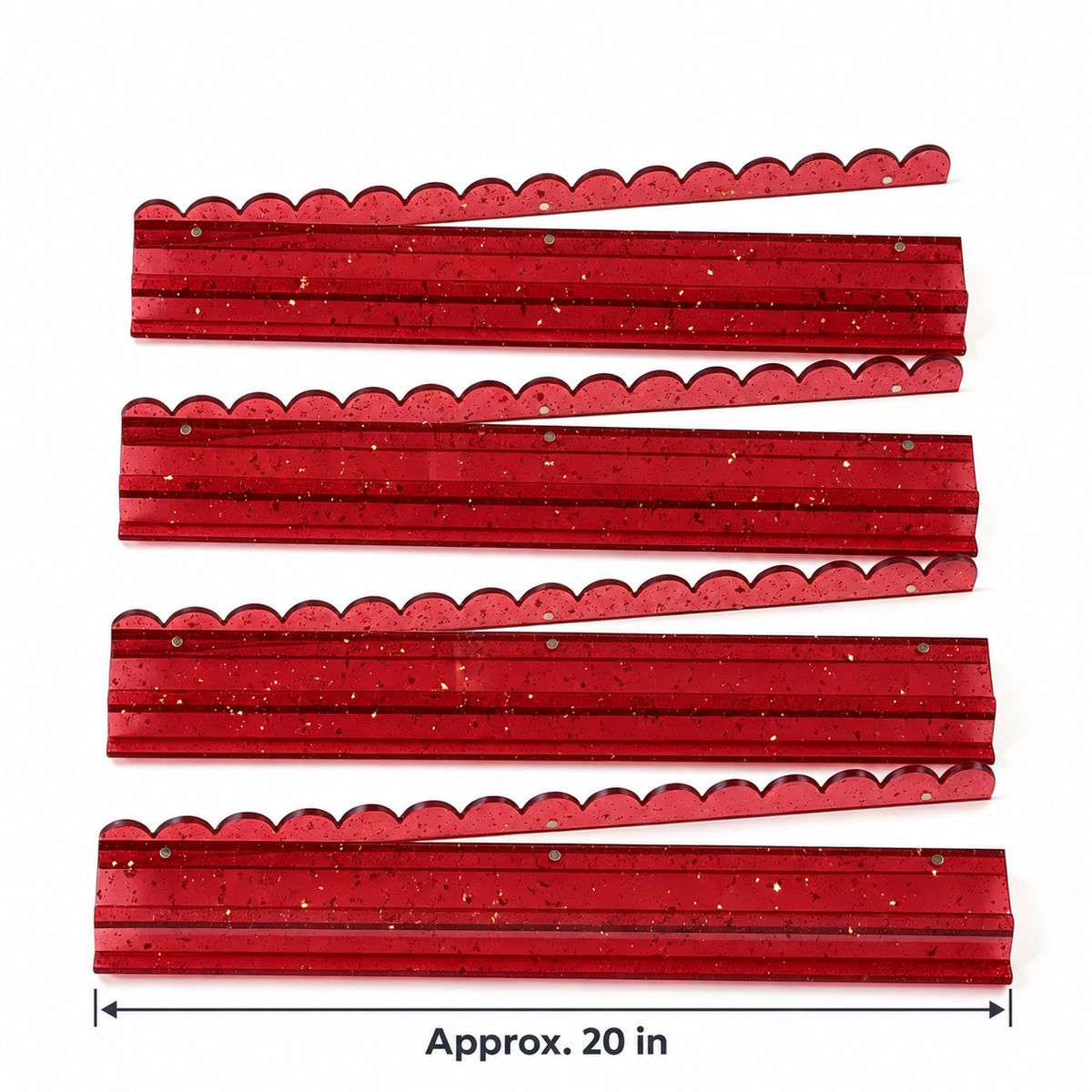
A mini mahjong set for beginners isn't just a smaller version—it's a deliberate choice for learning. We'll help you pick the right size, tile quality, and design so your first game goes smoothly.
Why Do Beginners Choose Mini Sets Instead of Full-Size?
Mini sets appeal to beginners for two practical reasons: space and confidence. If you're learning in a dorm, small apartment, or at a coffee table rather than a dedicated game room, a full-size set with standard racks demands more real estate than you have. A mini set lets you practice the Charleston, memorize tiles, and play hands without clearing your dining table for three hours. Second, beginners sometimes feel intimidated by the "serious" aesthetic of a traditional set—the weight, the click of large tiles, the table presence. A mini set removes that psychological barrier; it feels like you're learning a game, not joining a club. Over time, many newcomers graduate to full-size sets once they know they'll stick with the game. That's not failure; it's the natural progression.
🀄 Shop best-selling mahjong sets →

What's Actually Inside a 160-Tile Mini Mahjong Set?
Every American mahjong set—mini or not—contains the same tile inventory: 152 tiles in play plus 8 jokers, totaling 160 tiles. That means three suits (Bams, Craks, Dots) numbered 1–9 with four copies each, 16 winds (four each: North, East, West, South), 12 dragons (four each: Red, Green, White), 8 flowers, and 8 jokers. The difference in a mini set is scale and packaging. Tiles are typically about 3⁄4 inch wide instead of 1 inch, fitting comfortably in compact racks (usually made of lightweight acrylic or bamboo rather than heavy wood). The mat might be smaller too—around 28×28 inches instead of 35×35 inches—though some mini sets use standard mats. Since the rules and hands come only from the current year's National Mah Jongg League card, size doesn't change gameplay; you'll learn the exact same hands and scoring whether you use a mini or full-size set.
Mini vs. Standard vs. Travel: Which Size Fits Your Learning?
Set Type | Tile Size | Best For | Key Advantage | Main Trade-Off |
Mini | ~3⁄4 inch | Small spaces, apartment play | Fits desks and compact mats | Harder to read tiles; small racks |
Standard | ~1 inch | Most weekly game hosts | Clear tile visibility; stable racks | Takes up a full table |
Travel (mini rack only) | ~3⁄4 inch | Carrying a set in a bag | Lightweight; goes in luggage | Requires your own mat and discs |
Choose mini if your game space is permanent but small. Choose standard if you host games weekly or want tiles that are easy to read from across the table. Choose travel-focused racks if you already own a set but need something for trips. None of these choices affects which hands you can play—only your comfort and convenience while learning.
What to Look For When Comparing Mini Sets Online
Before you order, check four things: tile material, rack weight and stability, mat dimensions, and whether custom engraving is available. Acrylic tiles click clearly and feel durable; bamboo tiles are quieter and traditional-looking but can chip if dropped. Lightweight plastic racks are easier for beginners to manipulate but less satisfying to use long-term; some sets balance price and feel by combining acrylic tiles with lightweight acrylic racks. Ask whether the mat is included and what size it is—a 28-inch mat is compact; a 32-inch mat gives you more working space without being full-size. Engraving (your name, a date, a joke) turns a set into a gift and helps you identify your tiles if you play in multiple groups. All Mahstead sets ship free across the US, so don't let shipping cost drive your choice. Look at the best-selling mahjong sets collection to compare what's popular now; experienced players' choices reveal what actually works.
🎁 See our most-loved mahjong sets & accessories →

Common Mistakes Beginners Make When Choosing a Mini Set
Mistake 1: Buying a set smaller than 3⁄4-inch tiles. Some listings call anything under standard size "mini." If tiles are much smaller than 3⁄4 inch, they become hard to shuffle and read, especially for players over 50 or with astigmatism. You'll spend more energy identifying tiles than learning hands.
Mistake 2: Skipping the mat. A mini set without a mat forces you to play on a bare table or your lap. You lose the drawn tile track, the game setup structure, and that satisfying click-and-slide. Some beginner bundles pair a set with a mahjong mat; others don't. Verify before ordering.
Mistake 3: Choosing a set based purely on price. The cheapest mini set may use tiles that stick together (warped plastic), racks that wobble (weak hinges), or discs that don't stay put (cheap paint). A mid-range acrylic set outperforms a budget vinyl set after two weeks of play. You're investing in learning a game that lasts decades; spend enough to enjoy it.
Mistake 4: Forgetting the National Mah Jongg League card. A beautiful set is useless without the current year's card. New players sometimes buy a set and assume hands are timeless. The card changes every spring. You need a copy—digital or printed—to know which hands are legal. This isn't Mahstead's responsibility, but it's yours.
What You'll Need to Start Playing
You have the set. Now gather: the current year's National Mah Jongg League card (check your library, synagogue, or mahjong club; it's published every March), a way to track score (paper, phone app, or pen), and ideally one pair of dice (included in some sets). If you're hosting, a mat with pushers and racks speeds setup and keeps tiles organized. If you're traveling with a mini set, a bag or case protects your investment and keeps tiles from spilling. None of these are essential to play your first hand, but they make the experience feel intentional and fun.
✨ Find your Mahstead set — free US shipping →
What to Check Before You Buy
Size alignment: Measure your game table and compare to the listed mat dimensions. If your mat is 28×28 inches and your table is 30×30 inches, you have just enough room. If it's 24×24 inches, you'll feel cramped.
Tile readability: Can you see suit symbols and numbers on the tile close-ups? If the photo is blurry or doesn't show tiles up-close, ask the seller. Don't assume small = automatically hard to read; well-designed mini tiles are quite legible.
Rack stability: Do the racks have pushers (small sticks you use to slide tiles forward)? Are hinges metal or plastic? Metal lasts longer and feels sturdy.
Shipping timeline: Mahstead ships free across the US. Confirm the expected delivery window so you're not surprised.
Return policy: Verify whether the set is returnable if it's not what you expected. Beginner sets are often bought sight-unseen; you want recourse.
Beginner-to-Player Progression: When to Upgrade
Most beginners play on a mini set for 4–12 weeks before deciding whether to continue. If you love the game, you'll likely want a standard-size set for several reasons: tile readability improves during competitive play; larger racks feel steadier as you get faster; and you'll want to join a weekly game group, where sets are usually standard size. Upgrading isn't an insult to your mini set—many players keep both. The mini set becomes your travel companion or the one you use to coach friends. The engraved custom sets designed for specific jokes or dates become keepsakes. Think of the progression as natural, not wasteful.

FAQ
Can I use a mini mahjong set to play with experienced players?
Yes, if everyone agrees. Experienced players often prefer full-size for speed and visibility, but the rules and hands are identical. Many clubs have loaner sets; ask before you commit to buying.
Do I need the National Mah Jongg League card to play on a mini set?
Yes. American mahjong hands come only from the current year's card, regardless of set size. Buy or borrow a copy (updated every March) before your first game.
Are mini tiles harder to shuffle than standard tiles?
Slightly, because they have less surface area and weight. If you have arthritis or hand tremors, ask to try shuffling before buying. Some players use a tile shuffler (a mechanical tool) to avoid this entirely.
Should I buy a mini set if I'm learning online?
Yes, it helps you practice tile recognition and hand memory. Online play shows you card positions, but handling actual tiles trains your muscle memory and prepares you for in-person games.
Can a beginner use a mini set to practice alone?
Absolutely. Many new players draw hands from the card and lay them out to check validity. A mini set takes up less space on your desk or bed, so this solo practice is easier than with a standard set.
Will I regret buying a mini set if I later want to play seriously?
Not if you understand the trade-off: you're buying for learning and space, not for competitive tournament play. Most serious players own both a mini and a standard set. Your mini becomes a travel asset, not a mistake.


View More
View More
View More
