
Riichi Mahjong Hand Reading: Discard Patterns and Waits
Last updated: Nov 23, 2026
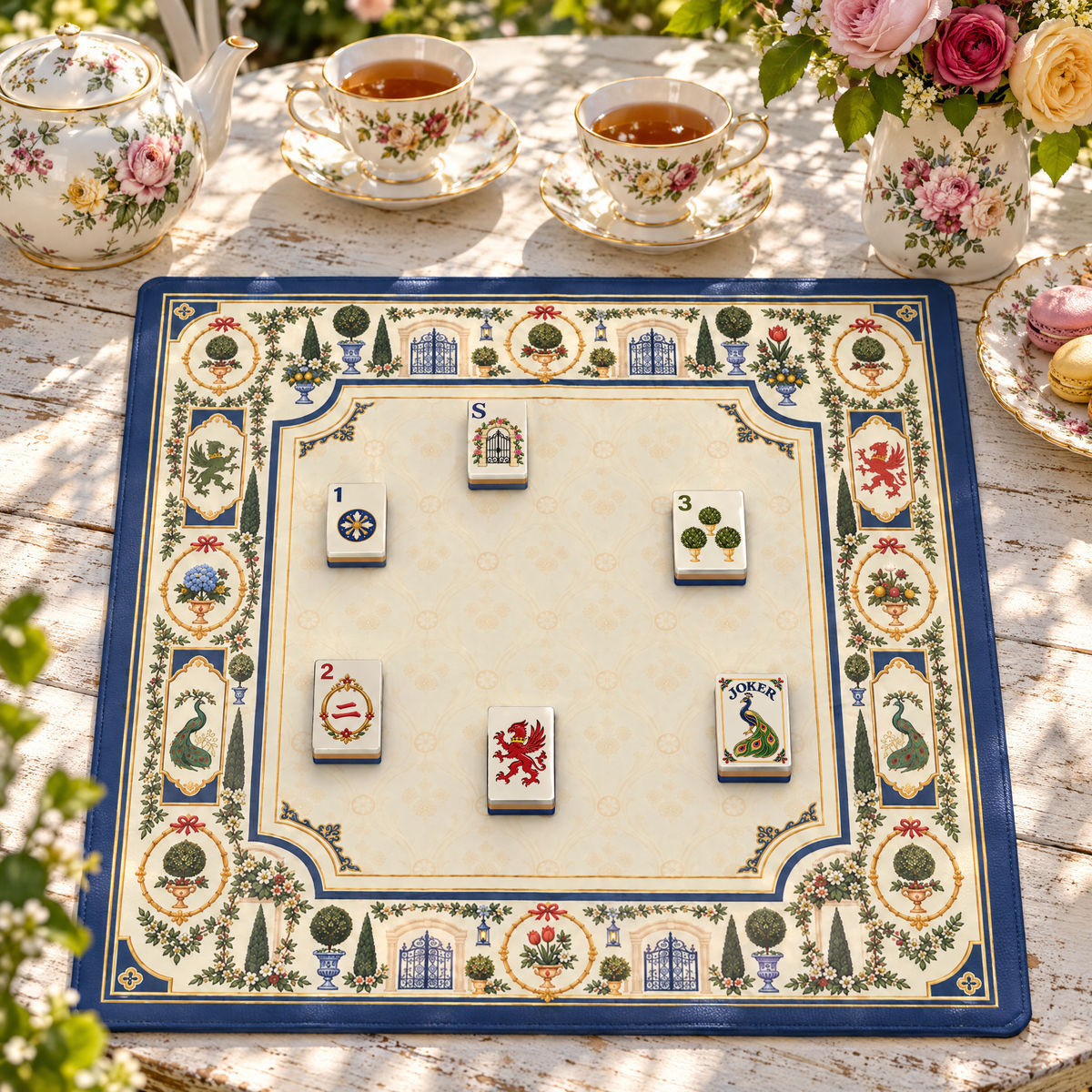
Hand reading in riichi mahjong is the practice of deducing an opponent's possible winning hand (their "wait") and dangerous tiles by analyzing the order and pattern of their discards. Unlike American mahjong, riichi is played with a standard 34-tile Chinese set (1–9 of Bamboo, Characters, Dots; four Winds; three Dragons), where players draw and discard one tile per turn in real-time. The goal is to recognize discard patterns—tiles that are discarded early versus late, sequences that suggest a specific suit preference, and gaps in a player's discards that reveal what they're holding. A hand reading mistake is assuming one discard proves safety; instead, riichi players build a timeline of each opponent's tiles and adjust their own play accordingly. We recommend learning hand reading by playing live games and reviewing hand records; no software can replace the pattern recognition that comes from sitting at the table.
What are the core principles of riichi discard reading?
Riichi hand reading rests on four pillars: honor vs. suit discards, early vs. late timing, sequence logic, and safe tile zones. Honor tiles (Winds and Dragons) appear early in a hand when a player is not yet close to winning. Suit tiles follow patterns—a player holding 3-6 of Bamboo will discard 1 and 9 early to keep the middle. If a player discards 2-3-4 of Bamboo in sequence, they likely hold 1 or 5. The biggest beginners' mistake is trusting a single safe discard; in riichi, even a tile that looked safe becomes dangerous once the opponent draws closer to their wait. Build your discard reading frame by turn number and suit temperature.

How do you identify what wait an opponent is aiming for?
A riichi player's wait becomes clearer when you notice which tile they haven't discarded. If Player B has discarded 1, 5, and 9 of every suit and all four Winds by turn 8, they're likely building a hand in one suit with a pair in a honor tile. Once they riichi (declare), their discard reveals their tile group size: a five-tile gap usually means a pair + triplet + triplet + pair, hinting at a two-sided (ryanmen) or edge (penchan) wait. If their last three discards are honors from different families, they've locked into a suit. The most common misread is assuming the last discard was random; it never is—it's the tile they most recently decided wasn't needed. Mark each opponent's discard order on paper or memorize the sequence by quadrants of the discard pile.
What's the difference between safe tiles in riichi versus the honor/suit rule?
In riichi mahjong, a tile is "safe" if no opponent has declared riichi yet, or if you've seen all four copies discarded. Once someone riichi, the calculus shifts: tiles that are safe for one opponent may be dangerous for another. A tile that matches no one's visible melds and appears in the discard piles of multiple players is safer than a tile matching another player's half-completed melds. Unlike American mahjong, where you're matching hands to a printed card, riichi requires you to track live probability—each tile drawn reduces the pool, and each discard confirms a tile is not in someone's hand. The honor/suit rule (honors first, then suits by suit) describes play order, not safety. True safety comes from reading the discard timeline and spotting a tile that no player has needed, even as they approached their wait.
How do you read a riichi declaration and adjust your play?
When an opponent declares riichi, they've announced a complete hand with one unknown tile—their wait. Their final pre-riichi discard is your strongest clue. If they discarded 9 Bamboo before riichi, they're not waiting on 7-8-9 Bamboo. If they discarded an honor, they're not waiting on honors. The most dangerous opponent to you is one whose riichi happens early (by turn 10–12), because they drew an unusually good starting hand and their wait is likely common (middle suit tiles). A late riichi (turn 14+) often means they were building something specific and their wait may be rare. Once riichi is declared, never discard a tile that could complete a simple triplet in any suit unless you have no choice—this is the number-one error that costs pots. Create a mental map: riichi player's last three discards vs. the overall discard pile, then play the tile least likely to be their wait.
What common hand-reading mistakes do Western players make?
Western players often apply American mahjong logic to riichi and fail because the game is live, real-time, and player-dependent rather than fixed to a card. Mistake 1: trusting a single "safe" tile—in riichi, context changes every draw. Mistake 2: assuming all opponents read the discard pile as you do; some beginners play loose, leaving real clues by accident. Mistake 3: overweighting recent discards and ignoring the full timeline—a tile discarded on turn 5 matters less than one on turn 12. Mistake 4: not accounting for suji (one-away tiles)—if an opponent discards 4 Characters, tiles 3 and 5 become safer because many wait patterns skip one number. Mistake 5: playing too fast and missing the discard order entirely. Slow down. Write down the sequence. Ask opponents to wait while you review the pile.
Hand Reading Decision Framework for New Players
Use this checklist to build a hand reading habit:
Step | Action | What to note |
1. Discard timeline | Record each opponent's tile as they play | Suit, number, honor, turn number |
2. Honor vs. suit | Mark when they switch from honors to suits | Early = exploratory; late = committed |
3. Suit temperature | Count how many of each suit they've discarded | Heavy discard = weak suit |
4. Gaps | Spot tiles they haven't discarded in a suit | Gap = likely holding or waiting |
5. Riichi signal | If declared, note the last three discards | Most reliable guide to their wait |
6. Suji logic | For each discard, mark ±1 tiles as safer | Example: discard 5 → 4 and 6 slightly safer |
7. Meld reaction | Watch what they keep after you discard | Do they make a pung? Which suit? |

What to Check Before You Play Riichi
Learn the core hand types first. Riichi is played for roughly 14 hand patterns (standard winning combos); if you don't know them, you'll misread what an opponent is building.
Play at least 20 hands before trusting your reads. Hand reading is learned pattern recognition; it takes time.
Use a pen and paper at casual games. Writing the discard sequence is not cheating; it's discipline. Regulars expect it.
Ask experienced players to explain their reads post-game. This accelerates learning faster than solo study.
Recognize that luck matters in riichi more than American mahjong. A bad hand is a bad hand; reading skill improves your odds, not certainty.
🀄 Shop best-selling mahjong sets →
How riichi hand reading differs from American mahjong strategy
American mahjong players study a printed card; riichi players study their opponents. In American mahjong, your hand is fixed before play begins—you're matching it to the card. In riichi, your hand grows and changes every turn, and so does your reading target. American mahjong emphasizes memorizing hand patterns and the rules of the card; riichi emphasizes adapting to live discard data. Because American sets use eight jokers and American hands can include sequences (chows), the discard pile looks messier and less revealing. Riichi sets use 136 tiles with no jokers; every discard is a pure signal. American mahjong is a game of memorization; riichi is a game of inference. Both demand respect, but the skill set is nearly opposite. If you're learning riichi after American mahjong, unlearn the card dependency and embrace the discard timeline instead.
The role of suji and safer tiles in reducing riichi losses
Suji (素地) refers to tiles one step away from a discard. If Player C discards 5 Craks, the tiles 4 and 6 Craks become statistically safer—many waits in riichi are two-sided (like waiting for 4 or 6 to complete 3-4-5 or 5-6-7), so a discard of 5 means 4 and 6 didn't complete that hand. This is not an absolute rule but a probability shift. The second safest tiles are those already fully visible: if all four copies of 8 Bamboo have been discarded or are in your hand, no opponent can wait on 8 Bamboo. The most dangerous tiles are those in the middle of a suit (4, 5, 6 of any suit) and honors that appear late in a riichi opponent's discard sequence. Suji reading improves your survival rate in multi-riichi situations (when two or three opponents have declared). At competitive tables, players mentally calculate suji rankings before every discard.
Building a practice routine for hand reading
Start with a simple habit: one game per week, one opponent, one notebook. Record the full discard sequence for that opponent alone. After the game, review: Did their riichi (if any) align with your prediction? Which tiles did you misread? Over 10 games, patterns emerge—some players are conservative, some aggressive; some focus early on honors, others on suits. Once you're comfortable with one opponent's style, track two. Within 10 weeks of weekly play, you'll have internalized dozens of hand sequences and can spot a similar pattern instantly. Competitive players review hand records (kifu) between games, but casual players improve by just showing up to live games and staying mindful. Playing online alone is not enough because you can't see your opponents' hidden hands; you need the discard pile and the face-to-face feedback.
🎁 See our most-loved mahjong sets & accessories →
When hand reading fails—and when to abandon it
Hand reading fails when you don't have enough data (early in a hand) or when an opponent plays poorly and discards randomly. In both cases, fall back on suji and full-tile visibility: discard tiles that are fully visible or suji-safe rather than betting on your read. Hand reading also breaks when an opponent is bluffing—in very high-level riichi play, a player sometimes discards ambiguously to confuse readers. Don't overthink this at casual tables; bluffing costs too much attention and rarely pays off in short games. Another failure point is tilt blindness—once you've made one wrong read and taken a loss, the temptation is to trust your read too much next time to "prove" you were right. Step back. Hand reading is probabilistic, not deterministic. A correct read still loses 30% of the time by chance. Trust the process, not the individual hand.
Choosing the right set and tools for riichi play
Riichi sets differ from American sets; they use 136 tiles instead of 160, no jokers, and smaller denominations. If you're playing riichi regularly, invest in a standard-sized Chinese set with clear Arabic numerals and suit symbols—you'll spend hours reading discards, so legibility matters. A durable acrylic set avoids wear on the tiles, which matters because worn tiles can be mislabeled by sight. For hand reading practice, pair your set with a mat that includes discard zones; many riichi mats have a dedicated area where each player's discards are arranged in rows, making the timeline crystal clear. Paper and pen remain your best accessories; a notebook per player helps you track reads over multiple sessions. We've found that players who use engraved or custom sets for riichi tend to stay more engaged because the set feels like theirs—they're less likely to skip games or play distracted.
✨ Find your Mahstead set — free US shipping →

FAQ
Is hand reading in riichi mahjong mandatory to win?
No, but it's essential at competitive tables. Casual players win on tile luck; experienced players win on reads and game flow awareness. Start learning it early; it accelerates your climb.
Can I hand-read if I play only online?
Online platforms don't reveal hidden tiles, so live hand reading is impossible. Online improves your speed and hand recognition but not your defensive reads. Play live to develop hand reading.
What's the hardest hand-read pattern for beginners?
Closed hands (players with no visible melds) are hardest because you have only discards to go on. Open hands (with visible melds) are easier—their melds tell you what they're not holding.
Does suji always work?
No. Suji is a probability tool, not a guarantee. It improves your odds, but a riichi opponent can still wait on a suji tile by chance, especially early in a game. Combine suji with discard timeline analysis.
How long does it take to get good at hand reading?
Most players see a real improvement after 20–40 live games (about 2–4 weeks of casual play). Competitive level reading takes 3–6 months of consistent play and review.
What's the most common hand-reading mistake in riichi?
Trusting a single discard too much. Instead, build a timeline of all discardsand adjust your read as new information arrives.


View More
View More
View More
