
Exposed Hand Mahjong Rule Explained: What You Can Show
Last updated: Nov 23, 2026
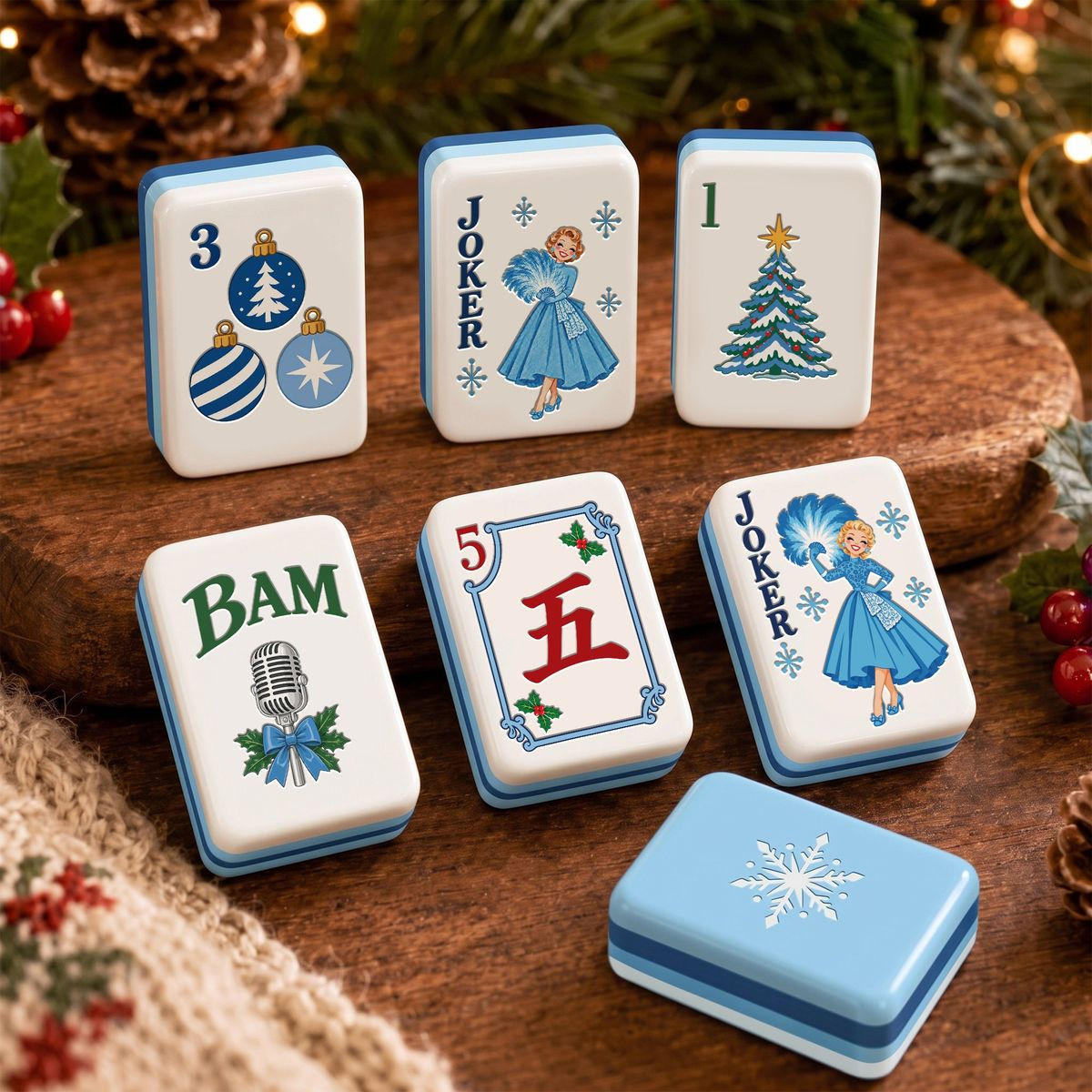
An exposed hand in American mahjong means laying down three or more identical tiles face-up on the table before completing your hand. You can legally expose pungs (three identical tiles), kongs (four identical), quints (five identical), or sextets (six identical)—all from the current year's National Mah Jongg League card-called hand. You cannot expose sequences or chows (like 1-2-3 of the same suit) because American mahjong does not allow runs; it only recognizes sets of matching tiles. Jokers never appear in a single tile or pair position, and when used in exposed sets, they substitute for one identical tile within that group. Exposure happens after you've drawn from the wall or claimed a discard: you announce the set, lay it down, and draw a replacement tile to maintain your 14-tile hand. Mahstead players track exposed tiles visually on mats designed with space for them, making the distinction between concealed and showing sets crystal-clear during play.
What tiles can you legally expose?
You can expose only identical tiles: three of the same tile (pung), four of the same tile (kong), five of the same tile (quint), or six of the same tile (sextet). Exposure must match a hand pattern on the current year's card. For example: three Red Dragons, four 2 Craks, or five 7 Bams all qualify. You cannot expose a sequence like 4-5-6 Dots, or a pair by itself, or mixed tiles. The tiles must be identical in suit and number.

When can you expose—and when must you stay concealed?
You can expose a set after drawing a new tile from the wall or when calling a discard from another player. Once you've announced the set and laid it down, you draw a replacement tile to bring your hand back to 14 tiles. You must keep your hand concealed until that moment. Strategic players sometimes wait to expose late in the hand to keep options open or disguise what they're holding. Timing exposure is a key skill: expose too early, and opponents read your strategy; expose at the wrong moment, and you block yourself from winning.
What happens when jokers are in an exposed set?
A joker can substitute for one tile within a pung, kong, quint, or sextet you've already decided to expose. If you lay down three 9 Bams and one is a joker standing in for a 9 Bam, that's legal. However, a joker alone, or in a pair, violates the rule: jokers only work as wildcards within larger groups. The joker takes the visual place of the missing identical tile. When you expose a set with a joker substituting, that joker is locked into that position and cannot be moved or reused elsewhere.
Why American mahjong bans sequences but allows identical sets only
American mahjong inherited its tile set and rules from Chinese and Japanese games but simplified winning conditions to focus on set combinations rather than runs. The National Mah Jongg League card, issued each spring, lists only pung, kong, quint, and sextet patterns—never 1-2-3 sequences. This design choice makes the game faster to read, harder to accidentally hide a winning hand, and more dependent on memory and board positioning. Each year the card changes, so hands that won last year may not be legal this year. Compare this to how to play American mahjong, where learning the card structure itself is half the skill.
Common mistakes players make when exposing hands
Mistake 1: Mixing suit or number in an exposed set. Laying down 1 Dot, 1 Crak, and 1 Bam (same number, different suits) is not a legal pung—all three tiles must be identical.
Mistake 2: Exposing a sequence. Showing 4-5-6 of the same suit looks tidy but is illegal in American mahjong.
Mistake 3: Using a joker incorrectly in exposure. Putting a joker as a single tile or in a pair breaks the rule that jokers only substitute within pung-or-larger groups.
Mistake 4: Exposing too late or too early. Exposing with one tile left to draw risks being called "mah jongg" by opponents before you complete. Exposing early telegraphs your hand and invites discards that hurt you.
Mistake 5: Forgetting the current year's card. A hand pattern valid in 2025 may not appear on the 2026 card. Always reference the year-specific card before claiming a win.
To avoid errors, verbalize your exposure aloud: "Three Green Dragons" or "Four 5 Dots, one joker." Teammates and opponents hear confirmation, and you lock in your intent.
Exposure Type | Tiles Required | Can Use Joker? | Legal Hand Pattern? | Example |
Pung | 3 identical | Yes (1 only) | Yes, if on card | Three 1 Bams |
Kong | 4 identical | Yes (1 only) | Yes, if on card | Four White Dragons |
Quint | 5 identical | Yes (1 only) | Yes, if on card | Five 3 Dots |
Sextet | 6 identical | Yes (1 only) | Yes, if on card | Six 8 Craks |
Sequence (1-2-3) | 3 in order | N/A | No—banned | 4-5-6 Dots ✗ |
Pair | 2 identical | No | Concealed only | Two Red Dragons |
🀄 Shop best-selling mahjong sets →

How to track your exposed vs. concealed tiles during play
Set up your rack or hand space so exposed sets sit in front and slightly separate from your concealed 14 tiles. A mahjong mat with dedicated zones for each player's melds makes this layout automatic: the mat shows where exposed sets go. If you use racks with pushers, they naturally hold only your concealed tiles; exposed melds lay in front. At the start, all 14 tiles are hidden. Each time you expose a set, move those three or more tiles out of the rack and onto the mat zone before drawing your replacement. This visual system prevents confusion and speeds up play—especially when players call "pung" or "kong" in rapid succession.
Step-by-step: exposing a pung correctly
Announce the set aloud: "Pung of Red Dragons" or "Kong of 2 Craks."
Verify it's on the current year's card as part of a legal hand pattern (ask the scorekeeper if unsure).
Verify you have three or more identical tiles in your hand (or drew/claimed the third).
Lay the tiles face-up in front of your hand, organized by suit and number so the table can count them.
Draw a tile from the wall (or from the dead wall if exposing a kong) to maintain 14 concealed tiles.
Keep exposed tiles untouched until the hand ends; do not move or rearrange them.
Recount your concealed hand silently: 14 tiles should remain in your rack or hand.
If a joker replaces one tile in your exposure, position the joker so others see which tile it represents (for example, the joker sits in the spot where the third 5 Bam would be).
🎁 See our most-loved mahjong sets & accessories →
How exposure affects your winning odds
Exposing sets narrows your options and telegraphs your direction to opponents. If you expose two kongs of Bams, players know you're hunting for a Bam-heavy or honor-heavy hand and will discard Bams strategically. The trade-off: you're closer to completion, so the risk is worth it if you're ahead. Experienced players expose late—only when they're confident a hand is reachable—or not at all, keeping everything concealed until the winning tile arrives. The National Mah Jongg League card changes annually, so check this year's card before deciding to expose; a pattern that locks you in may not close into a legal win if the card has shifted. Learn to read the card sections (simples, honors, consecutive, like kinds, and mixed) so you know which hands reward early exposure and which punish it.
✨ Find your Mahstead set — free US shipping →
What to check before you buy or refresh your mahjong set
Tile clarity: Can you quickly see if three tiles are identical under table lighting? Acrylic tiles with engraved numbers and suit markers work best.
Joker count: A standard 160-tile set includes extra jokers for spares; verify your set has enough if you play frequently and lose or damage tiles.
Rack fit: If using racks, check that your tiles fit smoothly and pushers glide without jamming—worn pushers slow down exposure.
Mat zones: A mahjong mat with clear player zones keeps exposed sets organized and prevents "my pung" disputes.
Storage: After each game, pack exposed and concealed tiles together in a mahjong bag or case so nothing shifts in transit.
Investing in clean, well-marked tiles and a structured mat eliminates ambiguity about what's exposed and what's hidden—critical when stakes are high or players are new to the game.

FAQ
Can I expose a pair by itself before I win?
No. Pairs must always remain concealed in your hand. You expose only when calling mah jongg, and only as part of a complete five-group hand (two pairs plus three groups of three or more).
What if I expose a set and then realize it's illegal on this year's card?
Call the scorekeeper or refer to the current card immediately. If the pattern is not on the card, you cannot claim mah jongg from that hand. Take back the exposed tiles, mix them into your hand, and continue. Most groups treat this as a live lesson, not a penalty, especially for newer players.
Can I move a joker from one exposed set to another during the hand?
No. Once you place a joker in an exposed set, it is locked there for the rest of the hand. Jokers are single-use wildcards within one meld only.
If I have five identical tiles (a quint), do I have to expose it, or can I keep it hidden?
You can keep it hidden until you call mah jongg. Exposure is optional anytime before you win. Many players hold quints concealed to disguise their direction and avoid giving opponents information.
What's the difference between "calling" a pung and "exposing" it?
"Calling" is the verbal announcement; "exposing" is the act of laying it down. You call and expose simultaneously. The terms are often used interchangeably: "I'm exposing a pung" = "I'm calling and showing a pung."
Can I expose a set that includes a blank tile?
Blank tiles are spare extras and are never part of the active 152-tile game. All exposed sets must use only tiles from play: numbered Bams, Craks, Dots, winds, dragons, flowers, and jokers—never blanks.


View More
View More
View More
