
Mahjong for Canasta Players: What Skills Transfer
Last updated: Nov 23, 2026
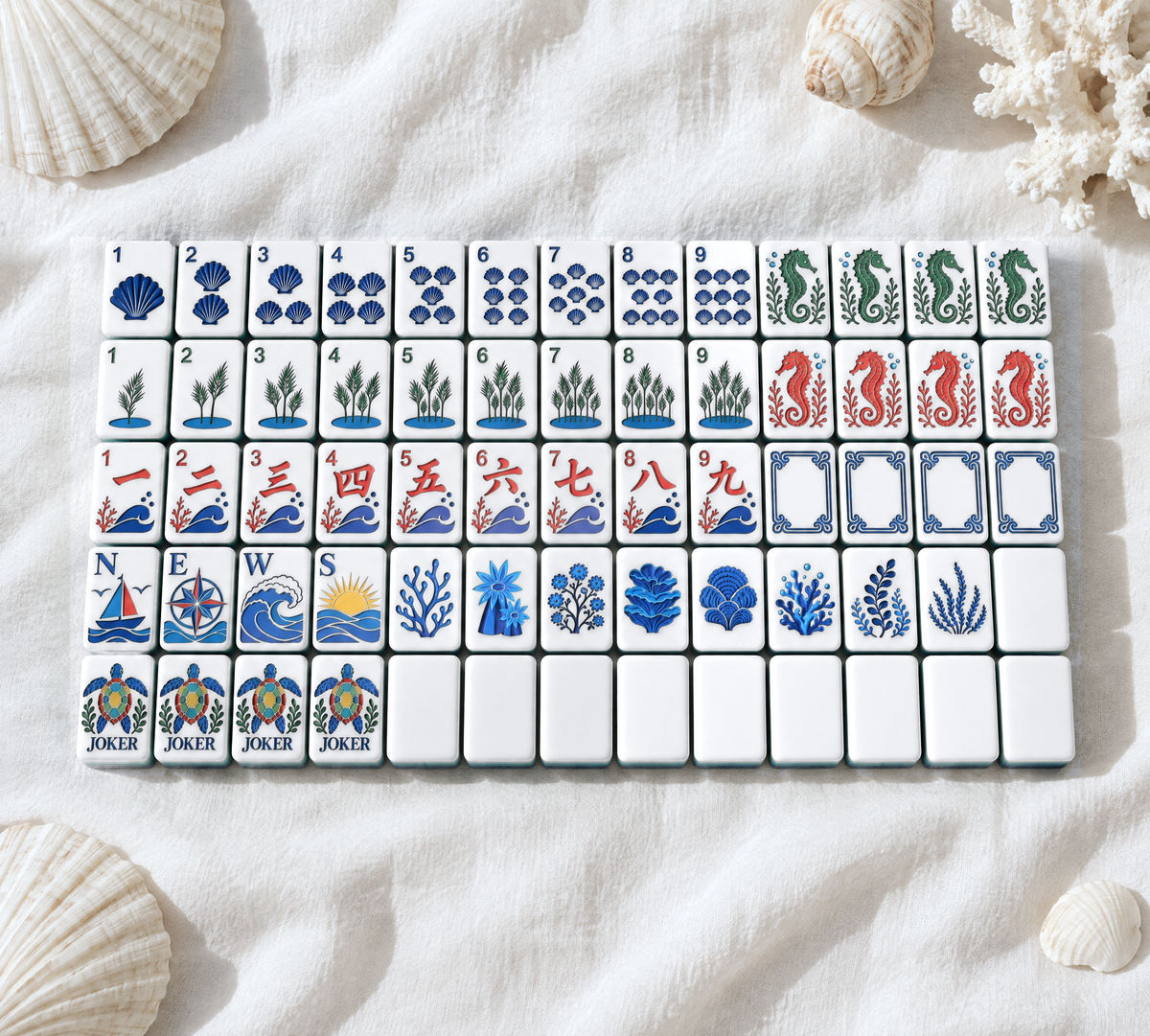
Canasta and American mahjong both reward pattern recognition, hand management, and table awareness, so your meld-building intuition transfers directly. But mahjong replaces canasta's runs and melds with pungs (three identical tiles), kongs (four identical), and a rigid hand framework pulled from the National Mah Jongg League card each spring. You draw one tile per turn, must discard one, and cannot call or expose sequences—only fixed groups. Jokers are wild and can replace any tile in a group, making them strategically different from canasta's jokers. The Charleston (a tile-passing ritual before play) has no canasta equivalent. American mahjong uses 152 tiles across three suits (Bams, Craks, Dots), winds, dragons, and flowers; a 160-tile set adds spares so you're always match-ready. You'll learn the card system in one session, but reading opponent strategy takes weeks—exactly as in canasta.
How is hand-building strategy different in mahjong?
In canasta, you meld runs (Q-K-A) and sets (three queens), build and add to melds, and carry unmelded cards in hand. Mahjong gives you one fixed hand list from the card: you must complete exactly that pattern to win. You can't customize or adapt mid-hand; instead, you read the card, pick your target, and chase it. You'll see a line like "Pung Pung Pung Pair" and know you need three groups of identical tiles plus two matching tiles for a pair. Canasta taught you to read opponents' discards and calculate meld probability; mahjong asks the same but demands you commit to one path before anyone melds. The skill overlaps perfectly—you're already trained to spot what's fishable and what's been played.

Which canasta skills kill in mahjong?
Your discard discipline carries over directly. Canasta trains you to track which cards opponents want (they reach for them) and what they've thrown away (dangerous or protected). Mahjong amplifies this: each discarded tile tells the table what someone doesn't need, and you'll learn to read those signals fast. Your ability to count unplayed cards—a core canasta tactic—becomes even sharper in mahjong because you can see the wall (undrawn tiles) shrink in real time. Hand management is identical: hold tiles that serve multiple patterns, ditch singles early, and protect your discards. The killer advantage? You've already trained your eye to spot patterns in mixed suits and numbers. Canasta players tend to master the card system in one session because they already think in layers.
What canasta skills don't transfer?
Runs and sequences are mahjong's blind spot for you. In canasta, a run (5-6-7 of hearts) can be played and built on; in American mahjong, sequences don't exist at all—you can only play groups of identical tiles. This is the hardest mental reset. You'll instinctively want to call "three 5s" when you see 4-5-6, but that's a Riichi or Chinese mahjong rule, not American. You'll also miss canasta's flexibility: you can't add a tile to a pung like you can with a canasta meld. A pung is locked at three unless you draw the fourth tile (a kong), and kongs must be declared immediately. Joker logic differs too: canasta jokers can be any card in a run, but mahjong jokers fill any single tile in a group—you can't use jokers in a pair or as a loose tile. Building melds over turns doesn't happen; groups are exposed as complete or stay hidden.
What's the learning curve compared to canasta?
You'll know the rules in an hour and play competent mahjong in four sessions—faster than learning canasta from scratch because you already own the hardest skill: reading a table. Canasta taught you to balance defensive and offensive play; mahjong demands the same. The card system looks like alphabet soup at first—rows of tiles and numbers—but canasta players decode it faster because you're used to patterns. Expect one to two weeks before you stop asking "Can I do X?" and start making reads like "She's fishing for dragons; I'm safe with a Crak." The biggest gap is the Charleston: a tile-passing ritual that has no card equivalent, but it's muscle memory after one game. Learn how to play American mahjong in full, then treat your first five games as a translation period where your canasta brain adapts to mahjong rhythm.
🀄 Shop best-selling mahjong sets →
Do you use jokers the same way?
No—this trips up every new player. In canasta, jokers are wildcards that fill any card in any run or meld. In mahjong, jokers fill any single tile in a group, but they have strict limits: you cannot use a joker in a pair, you cannot use a joker as a loose tile (the single tile at the end of a hand), and you cannot use two jokers in the same group. How jokers work is the first rule canasta players get wrong. Canasta thinking says "joker = flexible fix"; mahjong says "joker = specific tile replacement inside a group." This matters because in canasta you'd throw a joker late; in mahjong you might hoard jokers early to lock down a winning hand. Your joker instinct will hurt you for three games, then recalibrate. The card tells you exactly which hands can hold jokers, so print the card and circle every joker hand before you sit down.
Skill | Canasta Mastery | Mahjong Payoff | Notes |
Discard reading | Blocks melds; signals needs | Tells whole table your status | Mahjong reading is 30% sharper |
Hand counting | Tracks played vs. deck | Sees undrawn wall; counts faster | Direct carry-over, no retraining |
Pattern spotting | Finds runs and sets | Reads card lines instantly | Your strongest advantage |
Meld flexibility | Add to melds over turns | Locked groups declared at once | Mental reset; takes two games |
Sequence thinking | 5-6-7 = playable | No sequences exist in American rules | Hardest break; unlearn this fast |
Joker use | Wildcard in any position | Single tile in group only | Joker limits are your top stumble |
🎁 See our most-loved mahjong sets & accessories →

What equipment do canasta players usually need?
A standard American mahjong set, a mat to hold tiles, and the current year's card. Canasta was played with cards; mahjong is played with tiles, so your card table becomes a mahjong playing surface. Most canasta groups used a score pad and a deck holder; mahjong groups use a mat with tile racks and a pushers. Racks with pushers organize your hand and let you slide tiles forward to announce your ready status—this is new to you. The mat keeps tiles from sliding and marks the discard area. A 160-tile set from Mahstead includes all tiles you need (152 for play, plus spares) and comes ready to ship. If you're hosting a canasta-to-mahjong conversion night, buy one set per player or at least two sets so the host can teach. Bags and cases protect sets on the way to game night. You don't need scorekeeping software; the card and a pencil work fine.
What mistakes do canasta players make first?
Calling "Mahjong!" too early: You think you're one tile away from winning, but the card rules say you need exactly that pattern. You'll shout "Mahjong!" with 12 tiles in hand because canasta trained you to watch for meld completion. Wait for 14 tiles in the exact pattern on the card.
Playing sequences: You'll see 1 Bam, 2 Bam, 3 Bam and want to declare them as a run. Mahjong doesn't allow sequences; only identical tiles (three 2 Bams, for example) form a group. This mistake costs you one hand, then vanishes.
Misreading joker limits: You'll want to fill an entire hand with jokers like canasta lets you. Mahjong's joker rules forbid jokers in pairs and loose tiles, and you can use only one joker per group. Read how jokers work before game one.
Discarding your winning tile: In canasta, you hold a hand until you're ready; in mahjong, you must discard one tile every turn. New players—especially canasta veterans used to holding cards—accidentally throw away the tile they need. This happens twice, then you stop.
Skipping the Charleston: The pre-game tile exchange feels weird. Do it anyway. Canasta had a deal phase; mahjong has a Charleston. It's not optional, and every hand depends on it.
What to check before you buy
Set completeness: A 160-tile set contains 152 playing tiles plus spares. Count the tiles or buy from a trusted source (Mahstead ships complete 160-tile sets with free US shipping).
Tile size and readability: Canasta used small cards; mahjong tiles are physical objects. Ensure tiles have clear symbols and enough contrast so you can read them across a table.
Mat fit: Your canasta table size may not match a standard mahjong mat. Measure your table and choose a mat that leaves room for racks, discards, and a wall.
Rack comfort: If you have arthritis or hand fatigue (common in long-time card players), try racks with pushers; they reduce hand strain compared to holding tiles.
Storage: Mahjong sets are fragile. If you're moving between homes or storing after game night, buy a bag or case to protect tiles.
✨ Find your Mahstead set — free US shipping →
The translation path: from canasta to mahjong
Your first session should be read-the-rules, not competitive. Sit with someone who plays, let them call out what's happening ("She discarded a dragon, that means she's not fishing for dragons"). Your second game, play for fun; your third, play for points. By game five, you'll catch yourself making reads like "That's the third Crak she's thrown; I can discard a Crak safely." That's your canasta brain kicking in, and it's exactly right. Week two, you'll start to see hands on the card and recognize them mid-hand before anyone announces. That's the card system becoming automatic—the same way you stopped reading every canasta meld rule and just saw melds. Week three, you'll make your first expert move: spotting that an opponent is one tile away from winning and blocking it before they call. That's your reading the mahjong card skill plus canasta's defensive instinct combined into mahjong mastery.

FAQ
Can I teach a canasta group to play mahjong?
Yes. Canasta players learn mahjong 40% faster than non-card players because they understand hand strategy and discard pressure. Teach one game with the card in front, play two casual rounds, then move to scoring. Expect side conversations about why sequences don't work and joker limits—that's normal.
Do I need to unlearn anything from canasta?
Yes—runs, sequences, and flexible jokers. Mental reset takes two games, then muscle memory switches. Your brain will still reach for a sequence; ignore the instinct and move to the next turn.
Which canasta skill matters most in mahjong?
Reading discards. Canasta trained you to watch what others throw away and infer their hand; mahjong amplifies this because discards are public and permanent. Your best canasta players become your best mahjong players.
Can I play mahjong with the same people and groups?
Absolutely. If your canasta group wants to try mahjong, buy one 160-tile set per player, print the card, and run a Charleston before your first hand. You'll notice the same personalities (aggressive players, cautious players, bluffers) transfer directly.
How long before I'm as good at mahjong as I am at canasta?
Three months of weekly play. You'll be competent in two weeks, confident in six weeks, and strategic by week twelve. Canasta taught you the hard part (reading tables); mahjong just adds tile-specific rules on top.
What if I forget whether something is allowed in mahjong?
Check the current year's card or ask the group before you play. Unlike canasta, mahjong rules are stricter and codified. The card is your referee; trust it. Print one for every player during your first session.


View More
View More
View More
