
Mahjong Tournaments in Boise: How to Find & Join Games
Last updated: Nov 23, 2026
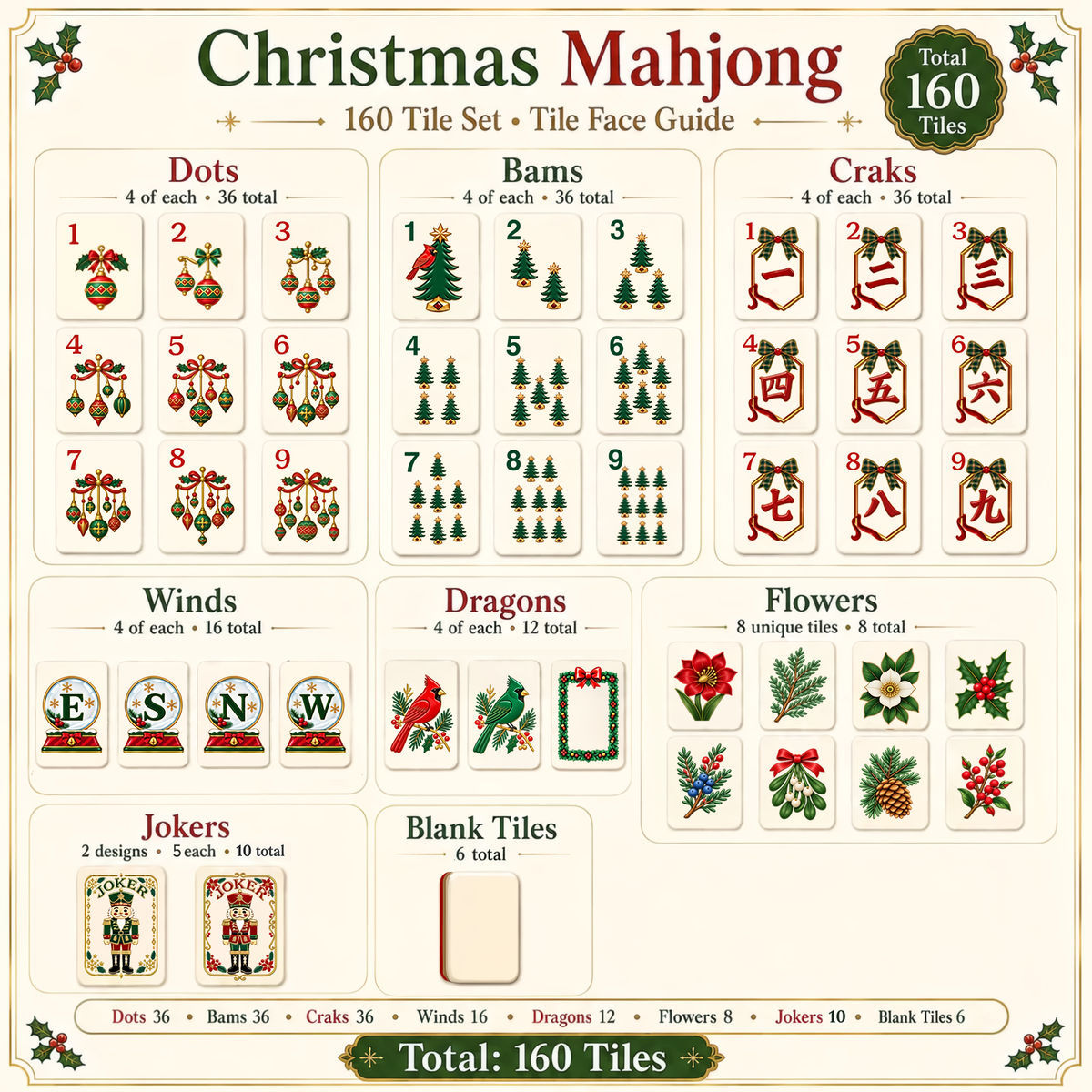
Boise's mahjong scene centers on community centers, libraries, and private clubs that host weekly games and seasonal tournaments. American mahjong—the version most commonly played in the western US—follows the National Mah Jongg League card issued each spring; check community boards, local libraries, and recreation departments for current schedules. Most tournaments run 8–12 weeks and cost a modest entry fee per session; casual drop-in games are often free or invite-only. You'll need a 152-tile American set with eight jokers (our best-selling mahjong sets come with everything required), a mat, and a current-year league card. Visit Boise Parks & Recreation, check synagogues and country clubs, and search community bulletin boards for hosting details. Always confirm the variant (American vs. Chinese or Riichi) before attending, as rules differ significantly.
Boise's mahjong community has grown steadily over the past decade, with players gathering everywhere from municipal recreation centers to private homes. We've watched newcomers arrive without knowing a single hand, and seasoned tournament players rotate through clubs. The city isn't a major tournament hub like Las Vegas or California, but it offers genuine weekly play and seasonal events.
Where do Boise mahjong tournaments actually happen?
Boise Parks & Recreation operates several community centers that host games year-round. Call ahead or visit their website to ask which facilities run mahjong groups and whether they're organizing tournaments this season. Libraries—especially the main branch downtown—often post flyers for ongoing games and beginner workshops. Synagogues and country clubs in the Boise area have traditionally hosted private games; a polite inquiry at the front desk can point you to organizers. Check Meetup, Craigslist community boards, and Facebook groups for "Boise mahjong" to find active players advertising drop-ins. Start with your local recreation department: they know which instructors are teaching and which clubs meet weekly.
🀄 Shop best-selling mahjong sets →

What's the difference between a casual game and a tournament?
Casual games meet at someone's home or a public space and play for fun, with no entry fee or scorekeeping beyond the table. Tournaments run on a set schedule (usually eight to twelve consecutive weeks), require registration and payment per session, follow strict National Mah Jongg League rules, and rank players by cumulative score. Tournaments impose a hard cutoff for hand selection and tile calling, whereas casual play lets experienced players bend timing slightly. Both require the same 152-tile American mahjong set, but tournaments demand accuracy and speed. If you're new, casual games let you ask questions without slowing the table; tournaments move fast and assume you know the rules.
How do I know if I'm ready to play in Boise?
You need to understand how to play American mahjong at a conversational level: recognize a pung, call a tile correctly, and read the league card without help. Play at least five casual games with experienced players before entering a tournament. Ask the organizer whether the group welcomes beginners in their tournament format; many run separate beginner and intermediate sections. If you can complete a hand without assistance and understand the Charleston (the tile-passing ritual), you're tournament-ready. Attend a casual game first—you'll know instantly whether you need more practice. Many clubs run teaching games before tournament play begins.
What equipment do you need for Boise games?
Every player brings or accesses a complete American mahjong set (152 tiles plus eight jokers), and the host typically provides a mat. If you're joining a home game, bring your own 160-tile acrylic set so you're never caught without tiles. A mahjong mat keeps tiles quiet and organized during play and is almost always provided by the host, but owning one shows commitment. Racks with pushers are optional but common in tournament play; they speed up hand building and prevent accidental tile flips. Bring a current-year National Mah Jongg League card (buy at the table or online). A travel bag or case protects your set on the drive. Most Boise groups use wind dice to determine seating; these are included in standard sets.
🎁 See our most-loved mahjong sets & accessories →

What variant does Boise play—American, Chinese, or Riichi?
Nearly all organized play in Boise follows American mahjong rules, which differ fundamentally from Chinese, Hong Kong, and Riichi variants. American mahjong uses only the current year's National Mah Jongg League card, has no chows (sequences), allows only pungs, kongs, quints, and sextets as exposed melds, and never permits jokers in a single tile or pair. Chinese mahjong uses 144 tiles, allows sequences and concealed play, and varies by region. Riichi (Japanese) follows strict drawing and discarding rituals and uses invisible hands. Confirm with the organizer before your first game—showing up with only Riichi knowledge to an American tournament will derail your session. Boise's recreational groups stick almost entirely to American rules, making it beginner-friendly if you've studied the right variant.
Quick equipment comparison
What you need | For casual play | For tournaments | Why it matters |
Mahjong set | Required (host may provide) | You bring your own | Tournaments assume ownership & speed |
Mat | Host usually has one | Host provides; optional own | Protects tiles, quiets play |
Racks & pushers | Optional | Common | Tournaments move fast; racks prevent errors |
Current-year card | Required | Required | League card changes every spring; old cards are invalid |
Travel bag | Optional | Highly recommended | Protects acrylic tiles during transport |
Dice | Usually provided | Included in set | Determines starting player & wind |
How to join your first Boise game: a step-by-step checklist
Call Boise Parks & Recreation to ask which community centers host mahjong and what day/time.
Search online for "Boise mahjong club" or "Boise mahjong Meetup" and filter for groups near you.
Ask at your local library whether staff know of active players or posted tournament flyers.
Contact synagogues or country clubs and ask for a name of the mahjong organizer (don't expect an immediate answer).
Confirm the variant: call or email and explicitly ask whether the group plays American, Chinese, or another variant.
Ask about beginner games: many clubs run slower, teaching-focused sessions before league play.
Buy or borrow a set: our best-selling mahjong sets arrive ready to play with free US shipping.
Get a current-year card: ask the organizer where to buy one, or acquire it at the table on game day.
Show up 15 minutes early: introduce yourself and watch one hand so you're not surprised by pace or house rules.
Play three casual games before entering a tournament: you'll be far more confident and welcome.
What to check before you buy a set for Boise play
Tile count matters. Our sets are 160 tiles (152 playing tiles plus spares), which is the American standard. Never buy a 144-tile set expecting to play American mahjong in Boise—it will have missing tiles.
Acrylic vs. bamboo. Acrylic tiles are loud and durable, ideal for travel and home play in Boise's dry climate. Bamboo tiles are heavier and quieter but costly and fragile. Most casual Boise games use acrylic; tournaments vary.
Joker count. American play always uses exactly eight jokers during a game. Check that your set includes eight; if a set is labeled with extra jokers, those are spares, not playing tiles.
Set condition upon arrival. Open the box immediately when it arrives and verify all tiles are present and that no acrylic is chipped. Damaged tiles in a tournament setting are embarrassing and may be ruled unplayable. Our sets ship safely, and we're happy to help if something arrives damaged.
Mat thickness. A thin mat (around 3–4 mm) folds into a travel bag without creasing; thicker mats are sturdier but harder to transport. For Boise home games, a standard thickness works fine.
Racks optional until tournament time. Casual play doesn't require racks with pushers, but they're essential if you join a tournament where tables move fast. Buy them once you're confident you'll play regularly.
✨ Find your Mahstead set — free US shipping →
What makes a good Boise mahjong group?
The best groups welcome newcomers, explain house rules upfront, and don't penalize slow play in casual sessions. Watch for red flags: if nobody answers your questions or the game moves so fast you feel lost, it's not the right fit yet—find a beginner-focused alternative. Friendly groups often lend spare tiles or cards if you forget yours. Honest scorekeeping and fair dealing matter; avoid tables where players conceal their tiles or rush through discards. Most Boise players are genuinely welcoming; if your first experience feels rushed, try another club before giving up.
When are tournaments typically held?
Most Boise tournaments run September through May, following the National Mah Jongg League season calendar. A few clubs host summer play but at a slower pace; some hold one-off weekend tournaments outside the season. Check community center schedules in August—that's when fall tournaments usually post their dates. Spring tournaments are often the busiest and most competitive. If you're starting in mid-season, ask whether the group accepts late entries or has a beginner section starting fresh. Casual games run year-round in homes and some clubs, so you're never completely without play.

FAQ
Can I play mahjong in Boise if I've never played before?
Yes. Most clubs run teaching sessions or beginner-friendly casual games. Attend one, learn the basics, and return weekly until you're confident. American mahjong has a steep learning curve, but five to eight casual games usually suffice to join a tournament.
Where can I buy a mahjong set locally in Boise?
Check game shops, gift stores, and online retailers. Our best-selling mahjong sets ship free across the US and arrive within days; local shopping often means limited selection or higher prices.
Do I need to own a set, or can I borrow one?
You can borrow one for casual play, but owning a set is expected once you join tournaments. Most organizers assume each player has their own tiles so games don't slow down while waiting for borrowed sets to pass around.
What's the difference between the league card and house rules?
The league card shows which hand combinations are valid in that year; house rules cover timing, calling, and scoring disputes. Always ask the host about their house rules before play begins.
How much do Boise mahjong tournaments cost?
Entry fees vary by club and season; ask the organizer directly. Many charge a modest per-session fee, and some require a small seasonal fee. Casual games are often free or host-dependent.
Can I play Chinese mahjong in Boise, or is it all American?
Boise's organized play is almost entirely American. Chinese mahjong groups exist but are smaller; ask at community centers or post on local boards if you're seeking them specifically.


View More
View More
View More
