
Mahjong Classes for Beginners in West Palm Beach
Last updated: Nov 23, 2026
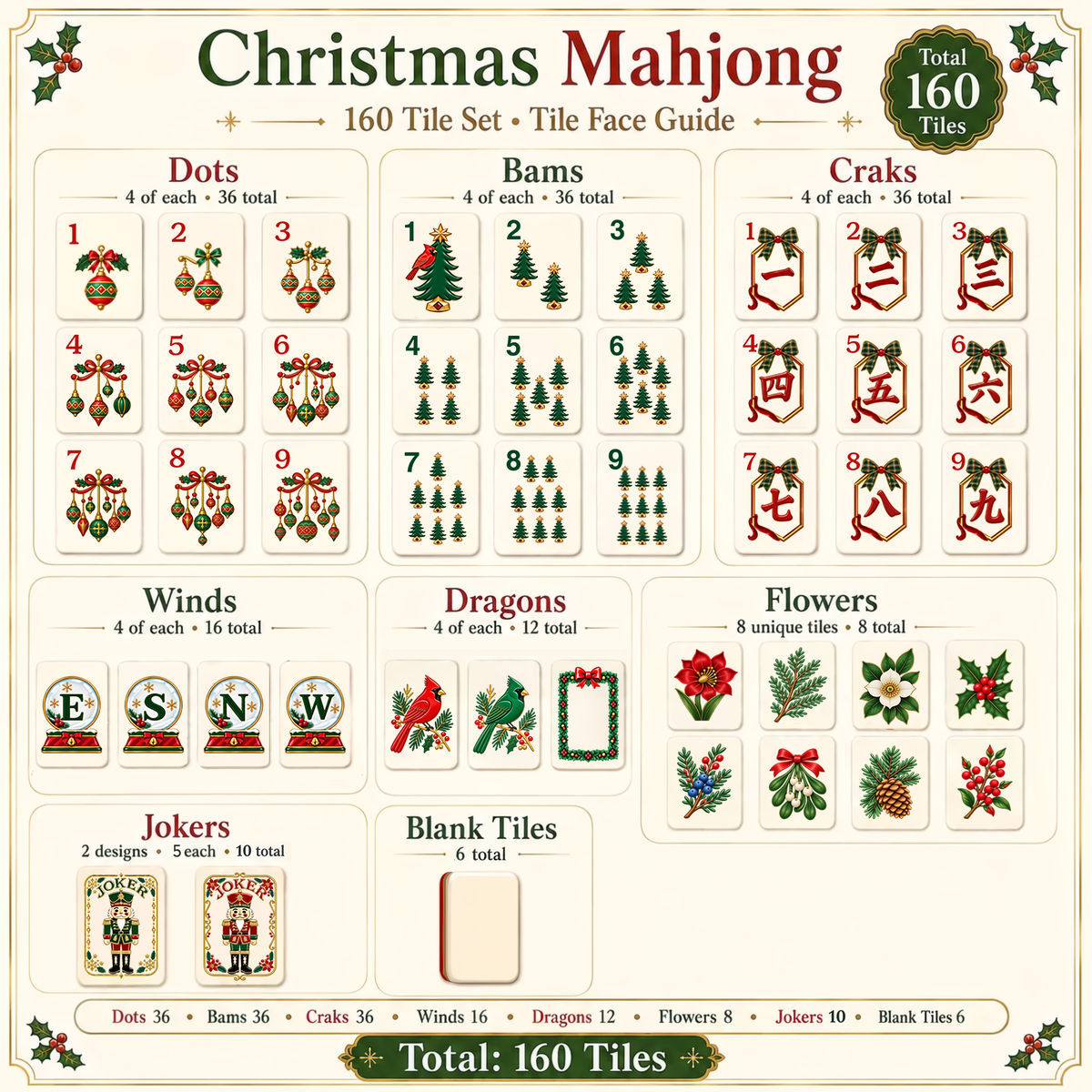
West Palm Beach beginners can find mahjong classes through community centers (check Parks & Recreation departments), public libraries, synagogues, country clubs, and Meetup boards listing local game groups. Most beginner courses run 4–8 weeks and teach American mahjong: tile recognition, how to read the National Mah Jongg League card (updated each spring), hand-building strategy, and the Charleston tile exchange before each game. Expect to spend 2–3 hours per session. Cost varies by venue but typically ranges from modest per-class fees to small group rates. Before enrolling, confirm the instructor teaches American mahjong (not Chinese variants), uses the current year's official card, and can show you quality equipment—many groups share sets or loan them, so owning a 160-tile acrylic set with clear markings helps you practice at home between classes.
Where do West Palm Beach beginners find mahjong classes?
Start with your city or county Parks & Recreation department—most offer mahjong classes through community centers. Check your local library's program calendar; many libraries partner with instructors or host ongoing game groups. Synagogues and JCCs often welcome new players at low cost. Country clubs, senior centers, and retirement communities frequently run mahjong programs. Search Meetup.com for local mahjong groups; many post weekly meetups or beginner sessions. Facebook community boards and neighborhood apps sometimes list instructors offering private lessons. Call ahead and ask whether the class is for absolute beginners, uses American mahjong, and provides tiles or expects you to bring your own.

What do beginner classes actually teach in the first session?
Class one covers tile identification: the three suits (Bams, Craks, Dots numbered 1–9), winds (North, East, West, South), dragons (Red, Green, White), flowers, and jokers. You'll learn how to read the mahjong card, which shows the legal winning hands for that year. Instructors demonstrate the Charleston—the tile-passing exchange before play begins. You'll practice drawing and discarding. Most classes skip scoring initially and focus on recognizing tiles and finding one complete hand. Bring pen and paper; many new players jot tile names or hand patterns to remember them. A good instructor will pass around a quality set so you can feel the tiles—acrylic sets are durable and easier to read than bone.
🀄 Shop best-selling mahjong sets →
How many weeks does it take to go from complete beginner to playing a full game?
Most students grasp tile names and one or two hand patterns within two weeks. By week four, they can follow the Charleston, play a complete four-player game, and recognize 3–5 common hand types. Weeks five through eight focus on strategy: tile discarding logic, reading what opponents are building, and handling jokers correctly. Playing weekly at home outside class accelerates learning. Expect to feel confident after 4–6 games played in a real group. Many beginners continue casual play indefinitely; others join established groups or host their own weekly games. The National Mah Jongg League card changes each March, so every player restarts slightly—beginners actually have an advantage playing in their first season because no one is comparing old patterns.
Should you buy your own set before taking a class?
You don't need a set immediately. Most classes provide tiles or expect you to share. However, buying a best-selling 160-tile acrylic set within your first month is a smart investment if you plan to practice at home or continue playing. Acrylic tiles are durable, easier to see than bone, and won't crack if knocked over. A decent set includes a mat to define the playing surface, racks with pushers to organize your hand, and often a bag for easy transport. Practicing alone or with family at home between classes cements the patterns and builds speed. Don't buy until you're sure you'll keep playing—many players borrow sets for months before committing.
Scenario | Buy Now? | Why | What to Get |
Taking a 4-week class, unsure if you'll continue | No | Test the game first; borrow from class | Nothing |
Finished class, playing weekly in a group | Yes | You'll need your own for home practice | Basic acrylic set + mat |
Hosting weekly games at home | Yes | You'll need reliable, clear tiles | Full set with racks, bag, mat |
Giving a gift to someone interested | Yes | Starter sets work for couples or casual players | Engraved set or themed collection |

What mistakes do West Palm Beach beginner classes avoid teaching?
Poor instructors teach outdated hands (from old League cards) or mix American mahjong with Hong Kong or Chinese rules—confusing students mid-game. Some skip the Charleston or don't emphasize that every hand must match the current year's card exactly. A common pitfall: new players think they can play chows (sequences like 1-2-3)—American mahjong does not allow exposed sequences, only groups of identical tiles (pungs, kongs, and higher sets). Instructors who rush scoring before students understand hand recognition make the game feel impossible. The best classes stick to American rules, use the current card, slow down tile-reading, and celebrate small wins. Ask your instructor upfront: "Do you teach only American mahjong?" and "Do you use this year's League card?" If they waver, find another class.
🎁 See our most-loved mahjong sets & accessories →
What should you check before signing up for a class?
Use this checklist:
Instructor credentials: Ask if they've played for ≥2 years and belong to a local game group or the National Mah Jongg League.
Rules variant: Confirm the class teaches American mahjong, not Chinese, Hong Kong, or other variants.
Current card: Ask which year's League card they use. If they say "any card works," leave.
Class size: Fewer than 12 students means better feedback; larger groups feel rushed.
Equipment provided: Do they have tiles, mats, and racks, or must you bring your own?
Schedule fit: Beginner classes often run weekday evenings or weekend mornings; confirm it matches your availability.
Cost: Ask the total for the full course, whether materials are included, and if drop-in rates are available.
Practice time: Do they recommend games outside class, and will they connect you to a weekly group afterward?
Most classes offer a trial session—attend one before paying the full course fee. A solid beginner program teaches hands-on, answers questions without rushing, and welcomes absolute newcomers.
✨ Find your Mahstead set — free US shipping →
How to practice at home what your West Palm Beach class teaches
After each session, set aside 20 minutes to review. Lay out tiles by suit and number to reinforce recognition. Use the current year's League card to identify one hand pattern shown in class, then manually arrange tiles to match it. Recruit a friend or family member to practice the Charleston with you—just passing tiles, no scoring yet. This muscle-memory work cuts weeks off your learning curve. Many instructors provide a photo or printout of the League card; study it while watching videos or reading the official League rules online. After week four, find a local game group through Meetup or your class instructor and play weekly—real games expose gaps you can bring back to your instructor.
Your home setup doesn't need to be fancy. A basic mahjong mat defines the play area and protects your table. If you buy a set, choose engraved or themed collections that suit your style; new arrivals rotate regularly. A rack with pushers lets you organize your hand neatly, and a durable bag makes transport easy if you move between games. Serious players eventually want dice and scorekeeper tools, but those come later. Start simple: a set, a mat, and the current League card printed out.

FAQ
Can I find mahjong classes in West Palm Beach if I'm over 60?
Yes—senior centers, retirement communities, and community center programs often have dedicated mahjong classes for older adults. Call your local Parks & Recreation department or senior center directly; most can recommend instructors or active groups.
What's the difference between American mahjong and the mahjong my grandmother played?
American mahjong uses a yearly printed card to define legal hands and emphasizes strategy over luck; no sequences (chows) can be exposed. Chinese and Hong Kong mahjong use hand memory, allow chows, and have different tile sets and scoring. Classes should specify which variant they teach; confirm before enrolling.
Do I need to own a mahjong set before class?
No—most beginner classes provide shared sets or expect you to borrow from the instructor. Buy your own set only after you've attended 2–3 sessions and know you want to continue playing. A quality 160-tile acrylic set supports long-term practice.
How much does a mahjong class typically cost in West Palm Beach?
Cost varies by venue and instructor. Community center classes often run $50–$150 for a 4- to 8-week session. Private lessons or group coaching may cost more. Always ask whether materials, tiles, and mats are included in the quoted price.
If I learn American mahjong, can I play other variants?
Some rules carry over (tile recognition, basic strategy), but you'd need to relearn hand patterns, scoring, and play sequence for each variant. Most casual players stick to one variant. American mahjong has the largest active community in the US.
What should I do after I finish a beginner class?
Ask your instructor to connect you to a weekly game group or regular meetup. Practice at home with the current League card. Join Meetup or library-sponsored groups to find ongoing players. Many groups welcome graduates and play socially without betting.


View More
View More
View More
