
Designer Mahjong Tote: How to Choose One for Your Game
Last updated: Nov 23, 2026
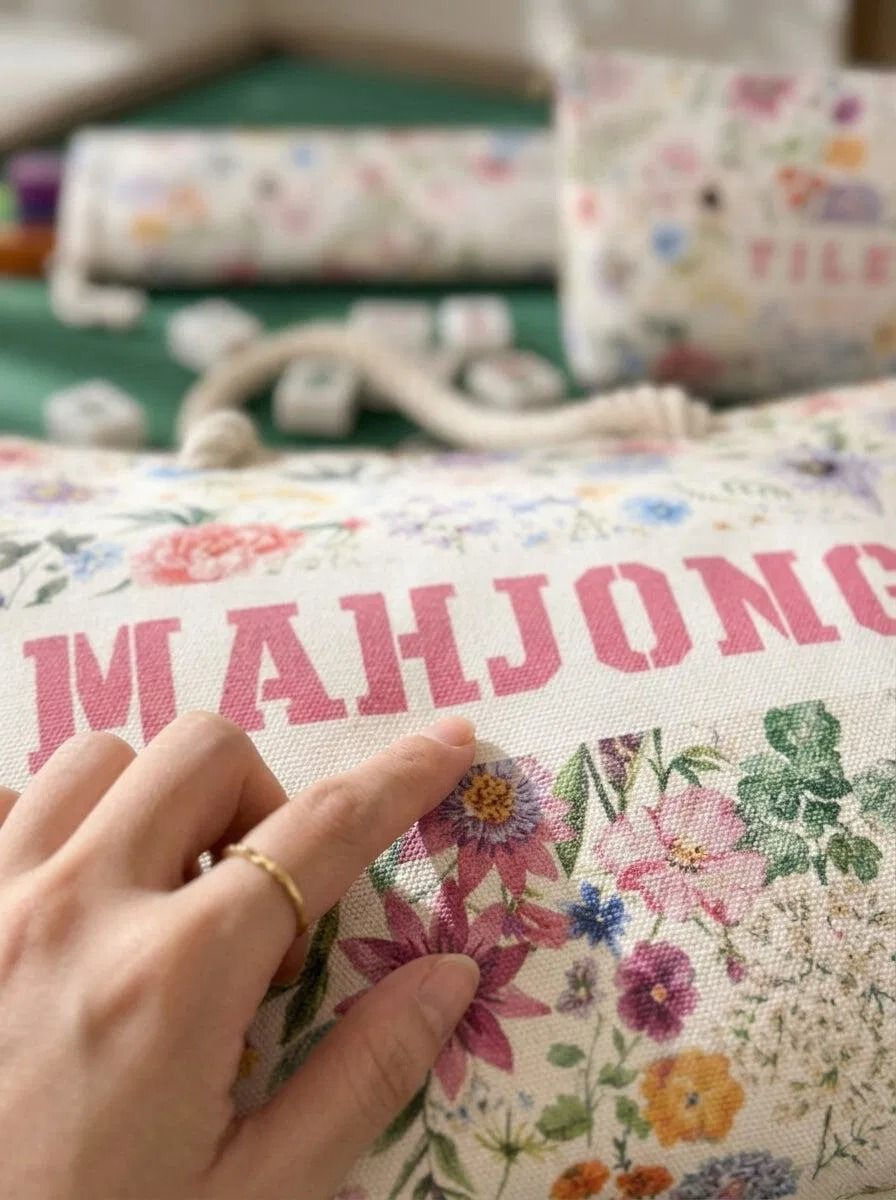
A designer mahjong tote is a carrying bag sized and padded for a full 160-tile acrylic American mahjong set, typically with pockets for a mat, racks with pushers, scorepad, and dice. Mahstead offers canvas and reinforced-material totes in several designs—from classic to witty prints—with enough room for a standard set plus playmat without bulging. Most hold everything a four-player game needs for a full evening. Capacity ranges from compact single-set carriers to spacious totes that fit multiple sets and a rolled mat. Cost basis depends on material durability and design; see current price on the product page. Avoid bags without internal padding, which risks tile damage in transit, and bags marketed as "universal" that leave little cushioning room. The right tote keeps tiles organized between games and protects an expensive set during transport. 🀄 Shop best-selling mahjong sets →
What size do you actually need?
Mahjong totes come in three practical widths. Small totes fit one 160-tile set and a scorepad snugly—ideal if you host at home and rarely move your gear. Medium totes (the most common) hold one set, a mat rolled lengthwise, racks, and dice with breathing room. Large totes fit two sets, a mat, and backup accessories for players who travel weekly or co-host multiple games. Measure your mat rolled: a standard playmat is roughly 27 inches long and 4 inches in diameter when rolled. If your mat barely fits, you'll struggle to access tiles during play. We recommend medium as the starting point—most of us find it holds everything a single game night needs without excess weight.

How much padding matters for tile safety?
Acrylic tiles are durable but can chip if jostled hard against a car door or stair rail. A tote with quarter-inch foam or quilted interior significantly reduces risk; plain canvas offers none. When you open the bag at a table, you'll unpack tiles onto a rack or directly onto the mat—if the tiles have been sliding loose, you may miss a few that stayed wedged in a corner. Interior compartments (a small zippered pocket, elastic loops for dice) keep pieces from mixing with your scorepad or car keys. We've seen players lose jokers in the car-door gap because they were tossed into a flimsy bag. Padding isn't luxury; it's math: one chipped tile affects the entire game's integrity if you're using a sealed deck without spares.
What design and material fit your life?
Mahstead totes come in canvas and premium reinforced blends, often with custom engravings or playful graphics. Canvas breathes well, feels classic, and works for players who store the bag indoors year-round. Reinforced materials (polyester or canvas-poly blends) handle car trunks, humidity shifts, and weekly transport better—the seams hold tighter after 50 uses. Engraved designs let you personalize a tote with your initials, your game's name, or a mahjong-themed motto; these make memorable gifts for regular players. Witty or artistic prints appeal to players who like their gear to spark conversation. Plain solid colors are timeless and show less dirt. Think about where the bag sits most: a home-game host might prefer a beautiful canvas tote for display on a shelf; a weekly traveler needs durability over style. Both matter, but for different reasons.
🎁 See our most-loved mahjong sets & accessories →

Interior organization: pockets, dividers, and layout
The best totes have a main compartment lined with foam, a zipped or velcro pocket for dice and scorecards, and elastic loops or a side slot for rolled mats. Some include a removable padded divider to separate tiles from accessories. A tote without dividers forces you to pack everything in one nest, which works if you stuff the mat first, then nest the set box inside; it's slower to unpack. Divided layouts let you grab the tile set without disturbing the mat or accessories—useful if you're setting up quickly at a restaurant or community center. Check the product photos carefully: a single large pocket is simpler but less organized; multiple small pockets are handy for dice, pen, and scoring chips but can feel fussy if overstuffed. We prefer one main foam-lined section plus one secure pocket for small pieces; anything more is rarely used.
✨ Find your Mahstead set — free US shipping →
Comparison table: common tote types
Tote Type | Who It's For | Capacity | Durability | Best Feature |
Canvas compact | Home hosts, short distances | 1 set, no mat | 2–3 years | Lightweight, classic look |
Reinforced medium | Weekly players, car travel | 1 set + rolled mat + racks | 5+ years | Padding, seams hold, organized pockets |
Engraved premium | Gift recipients, serious players | 1–2 sets + mat + extras | 5+ years | Custom personalization, statement piece |
Artistic print | Social players, table display | 1 set + rolled mat | 3–4 years | Conversation starter, playful design |
What to check before you buy
Measure your tiles and mat. Place your 160-tile set (in its original box, if you have one, or loose in a soft pouch) inside the tote. Roll your playmat and place it alongside. If both fit without crushing, you're safe. If the mat bends sharply or tiles are pressed against a hard edge, size up.
Read the interior dimensions. A tote's external size always feels bigger than its interior. If width and depth are listed, use them—don't guess from a photo. Most of us underestimate how much space a rolled mat takes.
Check the handles. Dual reinforced handles carry weight better than single or thin-webbing handles. If you're carrying a 160-tile set plus accessories weekly, thin handles fail first. Look for stitched-through construction at the base.
Feel the padding thickness. Even a product photo can hide thin padding. If the listing or description doesn't mention foam thickness or material, ask whether the interior is quilted or padded. Bare canvas with a thin lining is not adequate.
Verify compartment security. Zippered pockets survive jostles better than velcro or button closures. If your dice or scoring pen could fall out, the organization isn't worth much.
Look for ventilation or breathability. If the tote will sit in a hot car between games, breathable material (canvas or mesh panels) keeps moisture from pooling inside, which can warp a wooden mat or cause mildew on a fabric one.
Our collection of mahjong bags and cases includes totes paired with matching best-selling sets and engraved American mahjong sets—pick a set, add a tote that fits your travel style, and you're ready for game night. We ship free across the US, and most totes are packed with extra care to survive the carrier's rough hands intact.

FAQ
Can I fit two 160-tile sets in a single medium tote?
Only if the tote is explicitly designed for dual sets; most medium totes hold one set comfortably plus a mat. Forcing two will crush tiles against the sides and create dead space at the top. A large tote is safer.
What's the difference between a mahjong tote and a regular canvas bag?
Mahjong totes have interior padding, sized compartments for mats and accessories, and reinforced construction at stress points (handles, corners, seams). A regular canvas bag will puncture acrylic tiles or let them slide around unprotected.
Do I need a tote if I play at home every time?
Not strictly, but a tote keeps your set and mat dust-free between games and makes cleanup faster—you pack once after play instead of leaving tiles scattered. It's also handy for storing seasonal sets or as a gift carrier.
Can I wash or spot-clean a mahjong tote?
Canvas and most reinforced fabrics can be spot-cleaned with mild soap and water; do not machine wash, as it can warp internal padding and loosen seams. Check the product care instructions—they vary by material.
Should I buy an engraved tote or a plain one?
Engraved totes are memorable gifts and mark your set as yours in a shared collection; plain totes are versatile and hide wear better over years of use. Pick engraved if you love personalization and display your gear; plain if you prioritize durability and resale neutrality.
What do I do if my tiles don't fit in the tote I bought?
Return it (check the store's return policy). Do not force tiles in—crushing them into a bag causes chipping along edges, which ruins the set. Size matters; it's worth exchanging for a larger tote.


View More
View More
View More
