
Mahjong Character Suit Meaning in American Play
Last updated: Nov 23, 2026
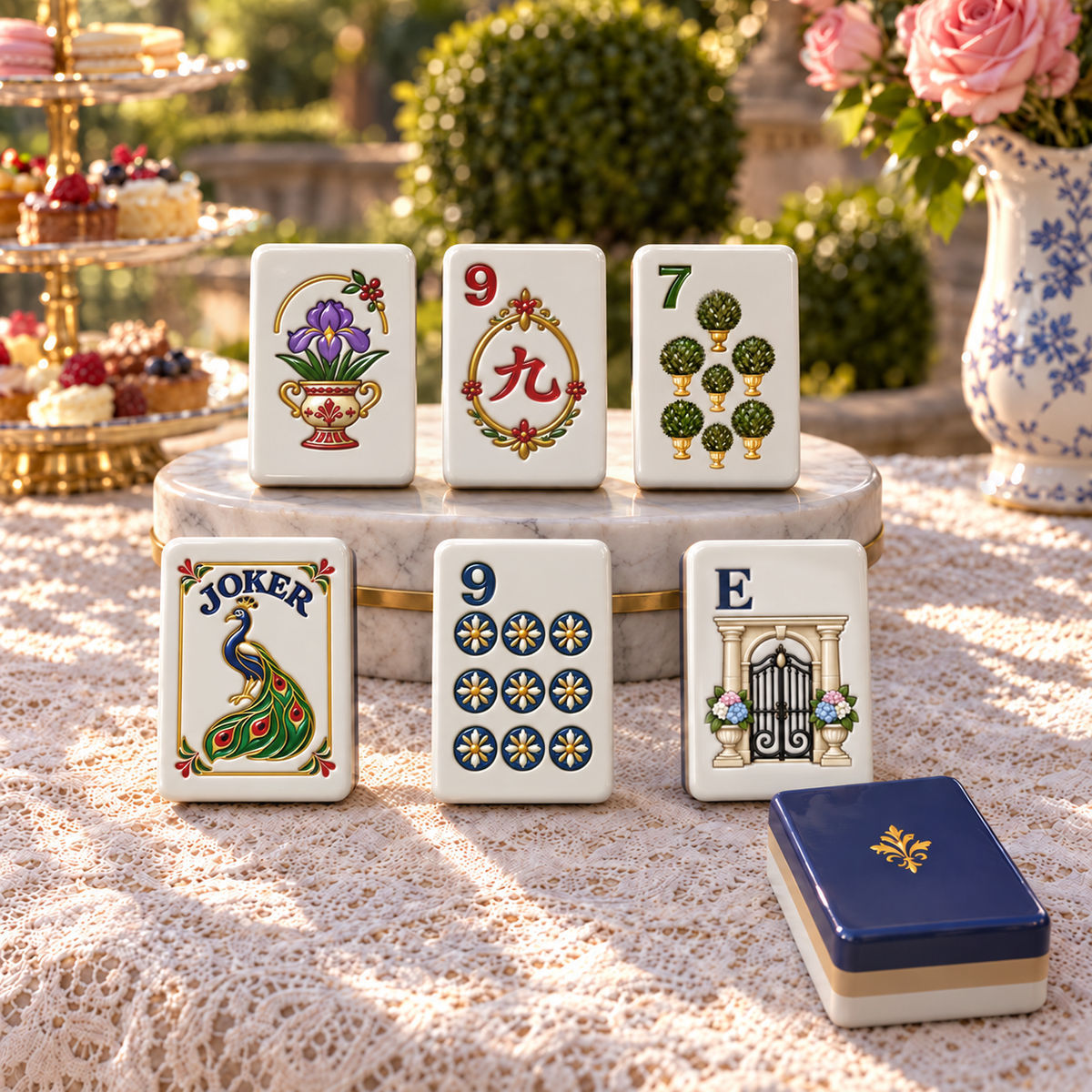
The Character suit (Craks) comprises 36 tiles in American mahjong—numbers 1 through 9, each appearing four times. Traditionally, Craks represent coins in old Chinese playing cards; the numeral and decorative pattern (often coin imagery) appear on each tile. In gameplay, Craks function exactly like Bams and Dots: they form pungs (three identical Craks), kongs (four identical), quints (five), sextets (six), and pairs. The Red Dragon tile associates with Craks in suit-based hands on the National Mah Jongg League card. Symbolically, Craks carry meanings of wealth and commerce, but American players focus on tile count and pattern matching rather than symbolism. When building hands from what's in an American mahjong set, treat all three suits identically: the suit you choose depends on the hand pattern on your year's card, not on any special power or value. 🀄 Shop best-selling mahjong sets →
What Do Craks Look Like Compared to Bams and Dots?
Each Character (Crak) tile displays a numeral (1–9) and a unique image—traditionally coins, patterns, or glyphs. Bams show bamboo stalks; Dots show circles. All three suits use the same nine numbers and come in four copies each, so a 1 Crak looks distinct from a 1 Bam, but both count as a "1" when pairing or exposing. On our best-selling mahjong sets, tile artwork varies by design—some feature bold character glyphs, others simplified patterns—but the number and suit remain instantly readable during fast play.

Why Does Traditional Symbolism Matter If It Doesn't Change Gameplay?
Understanding tile symbolism helps newer players remember which suit is which at a glance and connects you to mahjong's 4,000-year history. Craks (coins) pair with Red Dragons; Bams (bamboo) pair with Green Dragons; Dots (circles) pair with White Dragons. This pairing appears on hand patterns requiring suit-specific combinations. While American mahjong doesn't use symbolism for scoring or hand validity—only the tile count and pattern on your card matter—recognizing the imagery accelerates your mental speed during draws and helps you spot valid hands faster.
How Do I Identify a 1, 5, or 9 Crak on a Physical Tile?
The numeral appears at the top or bottom of the tile in Arabic or Chinese form, depending on the set design. Craks are printed or engraved with that numeral plus the suit's distinctive image. The 5 Crak often features a more ornate design or a visual pause in the pattern. When choosing mahjong tiles with large, clear numerals, you'll spot Craks instantly even in dim light. Acrylic tiles with engraved numerals (rather than printed ink) hold their legibility across hundreds of games.
When Building a Hand, How Often Will You Need Craks?
On any given year's National Mah Jongg League card, roughly one-third of valid hands include at least one Crak element. Some hands demand a specific Crak sequence (e.g., 1–2–3 Craks exposed as a pung with a joker); others reward suit-free patterns (like quints of any suit, or winds and dragons). Check your current year's card to count Crak-required vs. Crak-optional patterns; seasoned players memorize this distribution to focus their draw strategy. You'll encounter Craks equally often as Bams and Dots over a full game season.

What Common Mistakes Do Beginners Make With the Character Suit?
Mistaking Craks for Bams or Dots during fast Charleston. The three suits look different—take a breath before passing tiles, not after. Beginners often confuse a 5 Crak with a 5 Dot because both display dense patterns; check the numeral, not just the image.
Believing Craks are "higher" or "better" than other suits. They are not. All three suits have equal standing in American mahjong; hand validity depends on your card, not on suit hierarchy.
Forgetting the Red Dragon–Crak pairing. When you expose a pung of Red Dragons, the hand pattern you're chasing often has Craks nearby on the card. This link helps you spot hand opportunities faster.
Holding too many Craks hoping for a "suit hand." American mahjong doesn't reward "all Craks" or "all Bams"—only hand patterns on the card matter. Hoard tiles that build that specific pattern, not an entire suit.
Comparison: Why Suit Symbolism Varies Across Mahjong Variants
Variant | Character Suit Name | Symbolism | Gameplay Impact |
American | Crak | Coins; wealth; Red Dragon pairing | None—purely memory/history |
Chinese (Classic) | 萬 (Wan) | 10,000 numerals | Forms sequences (1-2-3 chows called and exposed) |
Hong Kong | 萬 | Same as Chinese | Calls and exposures allowed; scoring uses suit combinations |
Riichi | 萬 | Same as Chinese | Sequences legal; "all terminals and honors" is a high hand |
Taiwanese | 筒 (Barrel) | Coins (visual variant) | No chows; only pungs/kongs exposed; scoring varies |
Key takeaway: American mahjong strips symbolism from gameplay—Craks are interchangeable with Bams and Dots—but Chinese, Hong Kong, and Riichi variants embed suit meaning into hand legality and scoring.
🎁 See our most-loved mahjong sets & accessories →
What to Check Before You Buy a Mahjong Set
Tile clarity. Can you read the Crak numeral without tilting the tile? Engraved numerals outlast printed ink after repeated shuffles.
Suit distinction. Hold a 5 Crak, 5 Bam, and 5 Dot side-by-side. Do they look clearly different, or do the images blur together?
Thickness and weight. Acrylic tiles should feel solid in your hand and slide smoothly across a mat, not stick or feel flimsy.
Joker and tile count. American mahjong always plays with 152 tiles and 8 jokers—no more, no fewer. A 160-tile set includes spares for breakage.
Bag or case fit. If you host weekly games or travel, verify your set includes or pairs with a bag that protects tiles during transport.
What You'll Need to Play with Confidence
A complete American mahjong set with clear, readable tiles. Engraved American mahjong sets with custom titles or themes make hosting more memorable and help newer players distinguish your set from others.
A mat with clear position markings. Craks, Bams, and Dots are easier to organize into suit rows when a mat shows dedicated zones for each player's hand.
A rack with pushers. Racks hold 13–17 tiles upright, freeing both hands for the Charleston and draws; pushers let you advance tiles one at a time without fumbling.
See our curated mahjong mats and mahjong racks with pushers to complete your setup.
✨ Find your Mahstead set — free US shipping →
Related Mahjong Fundamentals
If you're new to American mahjong, the Character suit is just one piece. Understand how how jokers work to replace any tile—including Craks—in your hands, and master how to read a mahjong card to spot which Crak patterns are legal this season. Beginners often benefit from a guide to mahjong for beginners that covers all three suits together.

FAQ
Is the Character suit the same as the Wheel or Circle suit?
No. Circles (Dots) are a separate suit. Character (Crak) tiles traditionally show coin imagery; Dots show round patterns. Both are number suits 1–9; treat them identically in American play, but distinguish them on your tile rack by sight.
Why is a Red Dragon paired with Craks and not with Bams or Dots?
Traditional Chinese symbolism links coins (Craks) with wealth and luck, embodied by the Red Dragon. This pairing appears on the National Mah Jongg League card in specific hand patterns. American mahjong preserves this association for historical continuity, but gameplay-wise, suit pairings only matter when your year's card requires them.
Can I swap a Crak for a Bam or Dot if I lose a tile?
No. Craks, Bams, and Dots are distinct suits. Losing a tile means either replacing it with a spare from your set or sitting out that hand. Never substitute a tile from a different suit; it creates illegal hands and breaks the game's integrity.
If I'm a beginner, should I learn Crak symbolism first?
Focus on reading numerals and recognizing suit images by sight, then learn the symbolism as enrichment. For your first 10 games, speed of recognition matters more than knowing why Craks mean coins. Symbolism helps you remember which suit pairs with which dragon, useful after your first month.
Do Chinese mahjong players use Craks differently than American players?
Yes. In Chinese mahjong, the Character suit (萬, Wan) forms sequences (1-2-3) that can be called and exposed during play; in American mahjong, Craks only form pungs, kongs, and higher combinations, and sequences are never called—only patterns on the card matter.
Why do some mahjong sets make Craks harder to see than Bams?
Tile design varies by manufacturer. Sets with small numerals, faint ink, or detailed images sometimes obscure the suit at a glance. When shopping, compare a sample Crak to a Bam and Dot in the same set; readability under table light is the real test.


View More
View More
View More
