
Luxury Mahjong Travel Bag: Choose the Right Case for Your Set
Last updated: Nov 23, 2026
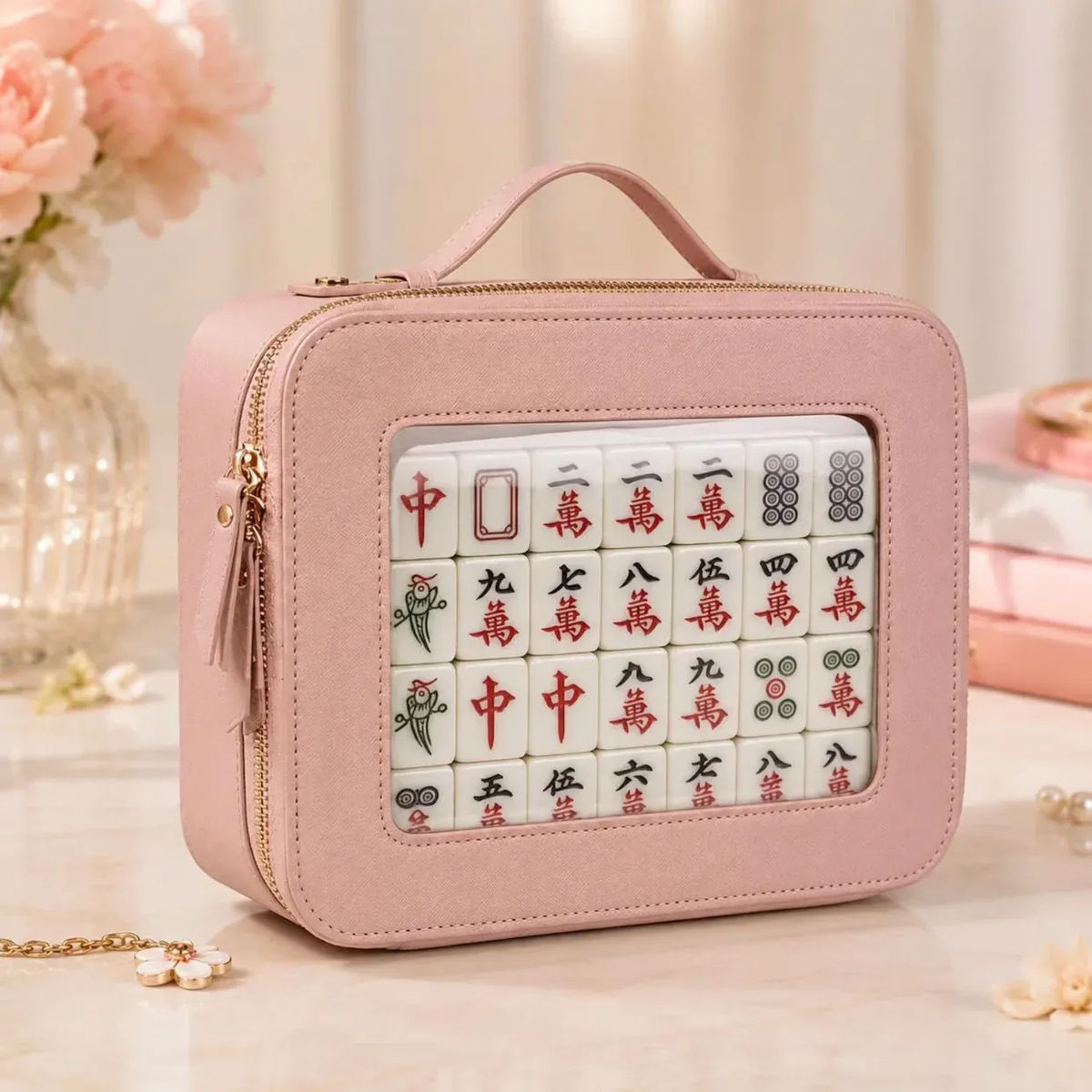
A luxury mahjong travel bag is a padded or hard case designed to protect a 160-tile acrylic set, mat, racks, and accessories during transport. Mahstead offers several travel bag and case options ranging from soft canvas carriers to structured compartmentalized cases, each suited to different players—weekend hosts, frequent travelers, and tournament regulars. Most hold a complete set plus a mat and racks; construction ranges from canvas with padding to reinforced materials with dividers. Cost varies based on durability, compartment design, and whether it's branded or custom-engraved. Choose one by counting what you carry, how often you travel, and whether you prioritize weight, organization, or aesthetic appeal. Avoid bags without padding if your tiles are acrylic; avoid overstuffed cases that force zippers or break clasps over time.
What's inside your mahjong set that needs protecting?
Before buying a bag, inventory what you're carrying. A complete 160-tile set includes tiles, a mat, racks with pushers, and jokers. Many of us also pack dice, a score pad, a mahjong card reference, and replacement jokers. That's roughly 8–12 pounds depending on tile material and mat density. Acrylic tiles are heavier than bamboo or bone but resist cracking during jostling. A padded interior divides weight and prevents tiles from sliding into corners. Check what's in a standard American set to confirm you're not forgetting racks or jokers before ordering a bag that can't fit them all. A well-designed luxury bag includes dedicated slots for racks, a mat pocket, and a zippered accessory pouch for dice and score sheets. Over-packing forces seams and zippers; under-utilizing means your bag is too large and tiles shift during travel.
🀄 Shop best-selling mahjong sets →

How do you travel with your mahjong set most often?
Your travel pattern determines the bag style that works best. Weekly home hosts who load a car rarely walk more than 50 feet; they benefit from a larger soft-sided bag with simple straps and a single main compartment. Players who fly, take buses, or move sets between friends' houses need a bag that fits airline overhead bins, survives baggage handling, and keeps accessories organized so nothing gets lost. Tournament players and serious travelers want hard-shell or semi-rigid cases with interior foam cutouts that prevent any tile movement. If you host at a fixed location and bring the set only to annual reunions, a canvas bag with shoulder straps is lightweight enough. If you play at a different venue every week, a case with wheels or a backpack-style carry saves your shoulders on stairs. Consider whether you'll need to carry it solo, hoist it into car trunks, or pass it hand-to-hand across tables. Each design trades lightness for protection and organization.
Canvas, foam-lined, or hard shell: which construction lasts?
Canvas bags with padding offer comfort and style but provide moderate impact protection. The fabric breathes, resists odor, and feels durable during casual transport—ideal for players who rarely drop or crush their bags. Foam-lined cases add a middle layer; internal cushioning absorbs shock and keeps tiles from rattling. These cases resist water splash better than plain canvas and often include dedicated pockets for mats and racks. Hard-shell or semi-rigid cases (molded plastic, reinforced resin) deliver the highest protection; they survive airport baggage claims, car trunk pressure, and accidental drops. Hard shells are heavier and take more space in closets. They're worth it if you fly with your set, play in cars, or share bags among multiple households. Canvas suits weekly car trips; foam suits frequent travel with uneven handling; hard shell suits airports and shared transport. None last indefinitely—zippers wear, seams fray, handles tear—but quality stitching and reinforced stress points extend lifespan by years. Check before buying whether the bag's bottom is reinforced (tends to wear first) and whether handles are sewn through the bag body rather than surface-glued.
🎁 See our most-loved mahjong sets & accessories →

Should you buy a branded or custom bag?
Mahstead's branded and custom-engraved travel bag collection lets you personalize your case with initials, titles, or art. A branded bag signals to other players that you invest in the game; custom bags become gifts or keepsakes. Comparison: a plain high-quality canvas bag is neutral, affordable, and works with any set aesthetic. A branded Mahstead bag builds team identity if you host a regular group. A custom-engraved bag with your name or a phrase (e.g., "East Wind Crew" or a player's nickname) becomes a talking point and a theft deterrent—distinctive bags get returned if left at a venue. The trade-off is turnaround time (custom orders require production time) and cost. Plain bags ship immediately; custom bags require 1–2 weeks for engraving or embroidery. If you play weekly and want instant gratification, a plain branded bag or canvas option is practical. If you gift a set to a friend or mark a milestone (50 games hosted, first tournament), a custom bag justifies the wait. Avoid ordering a custom bag days before a trip; plan ahead so production doesn't rush.
Compartments, pockets, and organization: what layout works?
A poorly organized bag means you spend five minutes at the table hunting for dice or score sheets while everyone waits. A luxury travel bag includes: a main compartment deep enough for tiles and mat (typically 12–16 inches long); a secondary pocket for racks or a mat (avoids creasing your mat); and a zippered accessory pouch for dice, jokers, and papers. Some bags add a front slip pocket for a mahjong card reference. Compare your needs to the bag's layout: if you always carry two mats or four racks (for teaching or simultaneous games), check the bag accommodates multiples. If you play solo and bring only one set, extra pockets are unnecessary weight. Bags with dividers inside the main compartment prevent tiles in one box from crushing tiles in another. Bags with elastic straps hold mats flat so creases don't permanently indent them. Check the bag's width—a set box is typically 11–13 inches wide; a bag narrower than 14 inches will force the box in at an angle and strain the zipper. Look at zipper quality: metal zippers last longer than plastic; double zippers on opposite sides (top and bottom) distribute stress. Test the bag's handle grip; thin handles cut into your hand after a 10-minute walk.
Bag Type | Best For | Weight | Protection | Key Check |
Canvas with padding | Weekly home hosts | Light | Moderate | Bottom reinforcement |
Foam-lined case | Frequent travelers | Medium | High | Dedicated rack/mat pockets |
Hard-shell case | Airport travel, shared use | Heavy | Very high | Interior foam fit to tile boxes |
Backpack-style bag | Solo players, stairs | Light | Moderate | Shoulder strap padding |
Wheeled case | Large groups, many trips | Heavy | Very high | Wheel durability, handle alignment |
✨ Find your Mahstead set — free US shipping →
What to check before you buy
Measure your set box. Most 160-tile sets are 11–13 inches long, 4–5 inches tall, 3–4 inches deep. Confirm the bag's interior dimensions accommodate this length plus padding.
Count what you carry. List your set, mats, racks, dice, score pad, mahjong card, and any backup jokers. Tally approximate weight (a full set with mat and racks is 8–12 pounds). Pick a bag with capacity 20 percent larger than your total—overstuffing breaks zippers.
Test the zipper. If buying in person, zip and unzip the bag fully. Check that the zipper moves smoothly and doesn't snag at corners. If ordering online, read reviews for zipper durability.
Examine handles and straps. Shoulder straps should be at least 1.5 inches wide and well-padded. Grab handles should be reinforced at stress points (where handle attaches to bag body). Avoid thin rope handles for regular heavy use.
Feel the interior material. Soft fabric (canvas, polyester) prevents tile scratches. Hard plastic interiors can crack tiles if the bag is dropped. Padded or foam interiors absorb shock.
Check ventilation and moisture. Canvas breathes and resists mildew; fully sealed plastic can trap moisture. If you store the bag in humid climates, prioritize breathable materials or buy silica packets.
Ask about warranty or returns. Mahstead ships free across the US, and you can contact them about product durability or fit concerns if a bag arrives too small or zippers fail early.

FAQ
Can I fit two mahjong sets in one luxury travel bag?
Yes, if the bag is 16+ inches long and 8+ inches wide. Most Mahstead bags hold one set comfortably; larger cases hold two. Check interior dimensions against both set boxes before ordering.
What's the difference between a mahjong bag and a generic game storage bag?
A mahjong-specific bag includes compartments sized for tile boxes, mats, and racks—not generic dividers. It also uses thicker padding to protect acrylic tiles from impacts that would damage softer game pieces.
Do I need a custom-engraved bag, or is plain fine?
Plain bags work perfectly; custom engraving is for group identity, gifting, or theft prevention. A custom bag takes 1–2 weeks production, so order early if you need it by a specific date.
Will a hard-shell case fit in a car or closet?
Hard shells are compact but heavier than canvas. A standard case fits car trunks and closet shelves; check specific dimensions on the product page before ordering if space is tight.
How often do zippers need replacing on a mahjong bag?
Quality metal zippers last 100+ uses with gentle care. Plastic zippers may fail sooner if over-packed or forced. Avoid overstuffing and smooth zipper operation to extend lifespan.
Can I wash a canvas mahjong bag?
Spot-clean canvas with a damp cloth and mild soap. Do not machine wash or submerge; water can degrade padding and seams. Air-dry thoroughly before storing tiles inside.
What's the best way to pack a bag so tiles don't shift during transport?
Place the tile box flat on the bag's bottom; position the mat folded alongside; stand racks vertically in a pocket. Fill remaining space with the accessory pouch or lightweight items. Avoid stacking loose tiles or forcing a box into a tilted position.


View More
View More
View More
