
How to Play Korean Mahjong: Rules, Tiles & Setup
Last updated: Nov 23, 2026
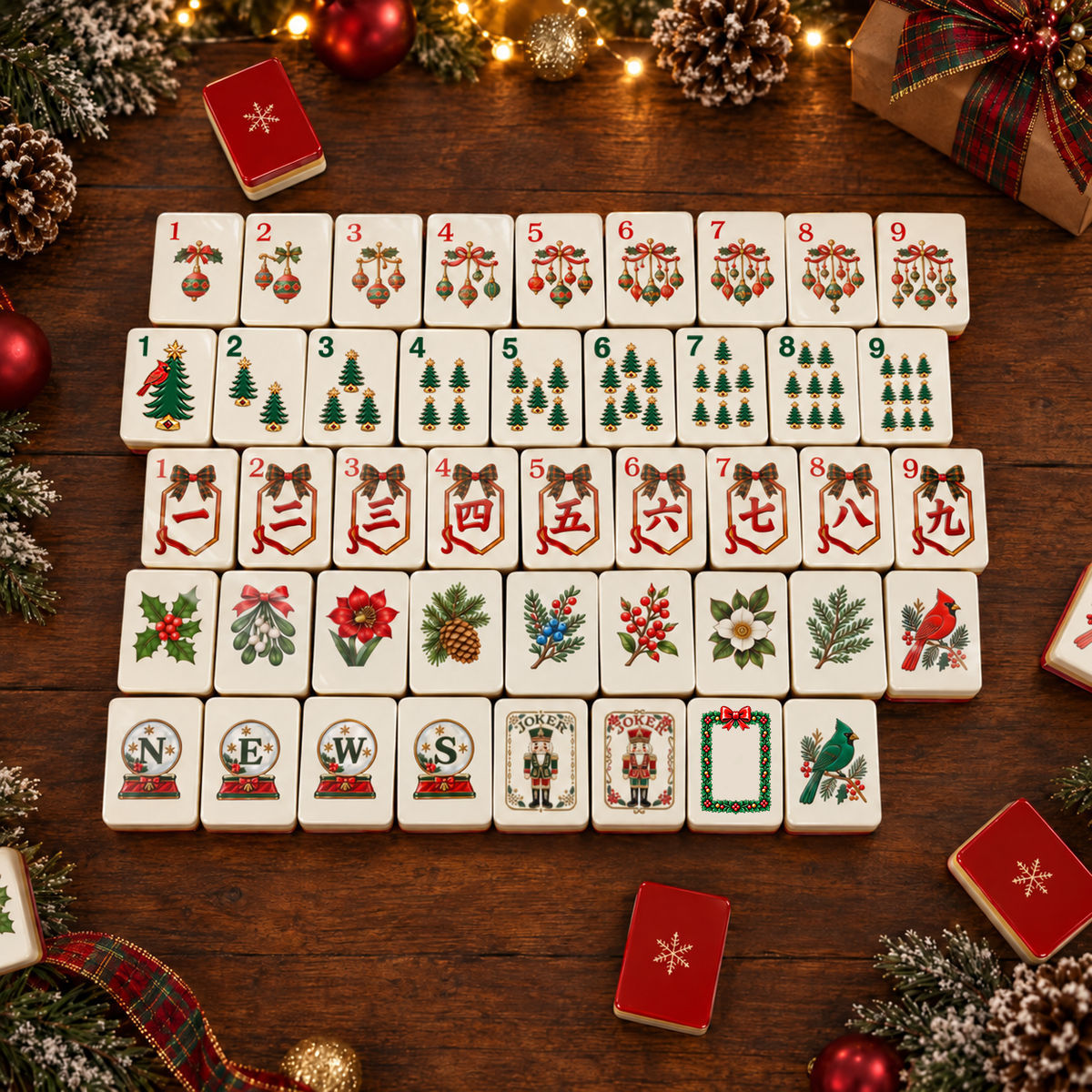
Korean mahjong uses 108 tiles (one copy each of Bams 1–9, Craks 1–9, Dots 1–9, plus 16 Winds and 8 Dragons—no Flowers or Jokers). Players draw and discard to form hand combinations: Pungs (three identical), Chows (three consecutive in one suit), and Kongs (four identical). It plays faster than American mahjong because hands aren't tied to a yearly card; any completed 14-tile pattern wins. Four players sit at a table; the game flows East–South–West–North, with each player being Dealer once. A round takes 20–30 minutes. Unlike American mahjong's rigid patterns, Korean mahjong rewards speed and memory. You can buy quality acrylic sets designed for American play that work well for learning, though dedicated Korean sets may differ slightly in tile size or markings.
How is Korean mahjong different from American mahjong?
American mahjong requires hands from the National Mah Jongg League card; Korean mahjong accepts any legal 14-tile combination. American sets contain 152 tiles (with four of each number, plus Flowers and Jokers); Korean sets use exactly 108 tiles with one copy of each tile. American players cannot call or expose Chows (sequences); Korean players routinely call Chows as melds. American jokers are wildcards; Korean mahjong has no jokers at all. American rounds can run 45–90 minutes; Korean rounds finish in 20–30 minutes. For beginners, Korean mahjong feels less rigid but requires faster pattern recognition.

What tiles do you need and how do you set up?
Korean mahjong requires 108 tiles: 36 Bams (1–9, four tiles each), 36 Craks (1–9, four tiles each), 36 Dots (1–9, four tiles each), 16 Winds (4 North, 4 East, 4 South, 4 West), and 8 Dragons (4 White, 4 Red—no Green or other symbols). No Flowers, no Jokers, no blanks. Shuffle all tiles face-down on the table. Each player sits at a cardinal direction: East (Dealer), South, West, North. The Dealer draws 14 tiles and arranges them on a tile rack; other players draw 13 each. The Dealer discards first, then play moves East–South–West–North. Players draw one tile from the wall and discard one. When any player melds (Pung, Chow, Kong), they call it aloud, show the tiles, and place them on the table. The game ends when someone completes a winning hand or the wall empties (draw).
What are valid winning hands and melds?
A winning hand is 14 tiles: four melds (Pung, Chow, or Kong) plus one pair. A Pung is three identical tiles (e.g., 5 Dot, 5 Dot, 5 Dot). A Chow is three consecutive tiles in one suit (e.g., 4 Crak, 5 Crak, 6 Crak). A Kong is four identical tiles. A pair is two identical tiles. Unlike American mahjong, Chows can be called and exposed mid-game; you may also "steal" a discard to complete a Chow, Pung, or Kong. Example: Player A discards a 6 Dot; if you hold 4 Dot and 5 Dot, you can claim the 6 Dot, call "Chow," and lay all three on the table. If you hold two more 6 Dots, you can claim it as a Pung instead. Winning hands do not score points by complexity; the winner collects from all three opponents equally.
Can jokers or wild tiles be used in Korean mahjong?
No. Korean mahjong contains no jokers, no blank tiles, and no wildcards whatsoever. Every tile in the 108-tile deck is fixed: one copy of each combination. This is one of the clearest differences from American mahjong, where jokers work as flexible wildcards. The rigidity of Korean mahjong—no substitutes, no options—is what makes it fast and memory-intensive. If you need a specific tile and no one discards it, you simply don't complete that meld or hand. This forces players to adapt quickly and read opponents' intentions from their discards.
🀄 Shop best-selling mahjong sets →

How do you adapt American mahjong knowledge to Korean play?
If you already play American mahjong, you know tiles, suits, and the flow of a game. Transfer those skills: suit recognition (Bams, Craks, Dots), tile order, and table etiquette carry over. However, unlearn these American habits: (1) Hands are not from a card—any legal combination wins. (2) Chows are called and exposed anytime, like Pungs. (3) There are no Jokers to worry about. (4) Games move faster, so anticipate discards. (5) Scoring is flat: winner takes equal chips from each player. For our weekly players, the mental shift takes one or two practice rounds. One tip: if you're hosting American mahjong players trying Korean for the first time, slow the first round and call out each phase (draw, discard, meld call). Use a quality mahjong mat to keep the table organized; tiles move faster in Korean play, and a clear mat surface prevents missed melds.
What equipment do you need to host Korean mahjong?
You need a 108-tile Korean mahjong set, a flat playing surface, and ideally racks with pushers for each player to organize tiles neatly. A mahjong mat creates a non-slip surface and defines the play zone, especially useful when tiles move quickly in Korean play. Because games run 20–30 minutes, you might also want a bag or case if you travel to different venues or hosting homes. Many Western players buy American mahjong sets from our best-selling collection and use them for both variants—the American tiles work well for Korean play, though dedicated Korean sets exist. Dice are optional for Korean mahjong (some players use them to determine the starting wall; others simply agree on a starting point). Keep the setup clean and well-lit; Korean rounds are brisk, and poor visibility slows calls.
Setup Element | Why It Matters | Best For |
108-tile set | Mandatory; no Flowers, Jokers, or Blanks. | Any Korean game. |
Tile racks & pushers | Keep tiles upright and organized; speeds play. | Four-player setup with clean sight lines. |
Mahjong mat | Non-slip surface; defines play zones; prevents tile creep. | Home venues and frequent games. |
Dice | Determines starting wall or player order (optional). | Formal or tournament play. |
Bag or case | Protects tiles during transport; keeps set complete. | Players who host at multiple locations. |
What common mistakes should you avoid?
Calling a meld too slowly: In Korean mahjong, the discard window closes fast. If you hesitate, another player may claim it first. Practice recognizing your Chows and Pungs instantly. Forgetting the tile count: With only 108 tiles, one missing tile breaks the entire game. Before starting, count the deck and place all tiles in your pouch or on the table. Misreading tile similarities: Bams and Dots can look alike if tiles are worn or lit poorly. Use a well-lit space and ask for clarification if unsure. Assuming American scoring applies: Korean mahjong is flat—winner takes from each player equally, no bonus points. Don't carry American scoring into Korean play. Discarding dangerous tiles too early: Watch what opponents call and avoid tiles adjacent to their melds. If Player A calls 4, 5, 6 Craks, don't discard a 3 or 7 Crak—they might complete a Kong or extend the meld.
🎁 See our most-loved mahjong sets & accessories →
What to check before you buy a Korean mahjong set
Tile count: Confirm 108 tiles total (or verify the set includes spares for replacements).
Tile material: Acrylic is durable and easy to clean; bone-and-bamboo sets are heavier and noisier but traditional.
Markings: Check that Bams, Craks, and Dots are clearly distinguishable—poor contrast wastes table time.
Tile size: Standard tiles are roughly ¾ inch wide; ensure racks (if purchased separately) match your set.
Completeness: Make sure you have exactly 36 Bams, 36 Craks, 36 Dots, 16 Winds, and 8 Dragons—no more, no fewer.
Wear testing: If buying used, test a few tiles for cracks or fading; Korean play generates fast friction.
Many Western players find our best-selling mahjong sets work equally well for American and Korean play—the American standard tile is the global standard. If you prefer dedicated Korean designs, verify the set before purchase, as Korean-specific markings and layouts vary by manufacturer.
✨ Find your Mahstead set — free US shipping →

FAQ
Do I need a special Korean mahjong set or can I use an American set?
You can use an American set to learn and play Korean mahjong. The tile suits, numbers, and Winds are identical. The only missing pieces are Flowers and Jokers, which Korean play doesn't use anyway. American sets work fine; dedicated Korean sets may have different markings but function the same way.
How long does a game of Korean mahjong take?
A single round (one player as Dealer) typically takes 20–30 minutes. A full session (each player Dealer once) runs 80–120 minutes, depending on player speed and whether you replay ties. Korean mahjong is significantly faster than American mahjong, which often runs 45–90 minutes per round.
Can I call a Chow mid-game like I do in Chinese mahjong?
Yes. Unlike American mahjong, Korean mahjong lets you claim any discard to complete a Chow (sequence), Pung (triplet), or Kong (quad). You call it aloud, show the tiles, and place them face-up on the table. The next player then draws and plays.
What happens if the wall runs out of tiles before anyone wins?
The hand is a draw. No one scores; the Dealer role passes to the next player (East–South–West–North), and you start a new round. Draws are common in Korean mahjong, especially if players block each other's melds.
How do I score in Korean mahjong?
Korean mahjong uses flat scoring: the winning player collects an equal amount from each of the three other players. There are no bonus points for hand complexity, speed, or dealer status. Some groups use chips; others play for nominal stakes. Agree on the amount per game before starting.
Is Korean mahjong easier or harder than American mahjong?
Korean mahjong has simpler rules (any winning combination, no yearly card), but faster play and no jokers make it feel harder tactically. American mahjong rewards memory of the card; Korean mahjong rewards speed and tile reading. Most players find the learning curve gentler but the gameplay more intense.


View More
View More
View More
