
Mahjong Bams Explained: Your Guide to the Bamboo Suit
Last updated: Nov 23, 2026
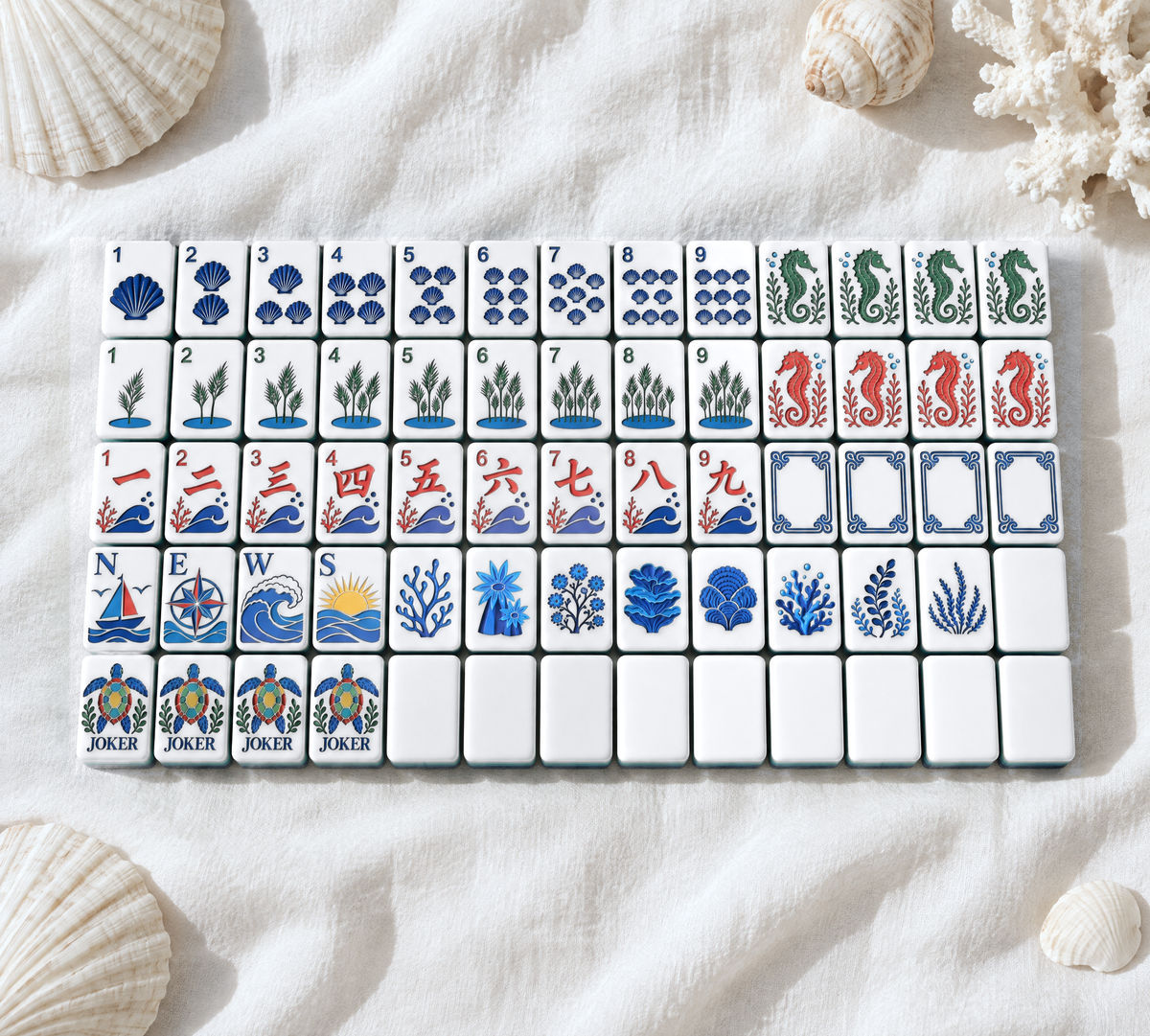
Bams (bamboo) form one of three number suits in American mahjong, alongside Craks and Dots. Each suit runs 1–9, with four identical copies of each number in a standard 152-tile deck, giving 36 Bams total per set. The 1 Bam features a bird (usually a crane or sparrow) instead of a single bamboo stalk—a design quirk that catches beginners off guard but makes it easy to spot. Bams appear as vertical stalks on the tile face and are named for their visual resemblance to bamboo. You'll use Bams to form pungs (three identical tiles), kongs (four identical), or higher multiples when matching hands from the current year's National Mah Jongg League card. Unlike Chinese or Riichi mahjong, American play forbids sequences (1–2–3 is illegal); you can only expose groups of identical Bams. A full hand typically includes Bams mixed with Craks, Dots, winds, dragons, and jokers. Learning to distinguish Bams from other suits takes one game—the bamboo symbol is unmistakable once you've handled them. --- 🀄 Shop best-selling mahjong sets →
What do the symbols on Bams look like?
Bams display vertical bamboo stalks, usually three or four thin lines grouped together on each tile. The higher the number, the more stalks shown: a 5 Bam has five stalks, a 9 Bam has nine. The 1 Bam is the exception—it replaces the single stalk with a bird, a design convention that dates back decades and serves as a visual anchor for new players. Once you've held a set, you'll never confuse a Bam with a Dot (circular pips) or Crak (character-based symbols). The visual distinction is intentional and absolute.

Why does the 1 Bam have a bird on it?
The bird on the 1 Bam is a traditional design choice in mahjong tile art, believed to add visual interest and prevent the single-stalk tile from looking too plain or being confused with other tiles in poor light. The bird—often depicted as a crane, sparrow, or abstract feathered form—makes the 1 Bam instantly recognizable even from across the table. This quirk is standard across nearly all American mahjong sets sold today. Beginners sometimes ask whether the bird counts as a wild symbol; it does not. The bird simply identifies the tile as a 1 Bam and nothing else.
How many Bams are in a standard American mahjong set?
A standard American mahjong set contains 36 Bams: four copies each of 1 Bam through 9 Bam. This mirrors the structure of the Crak suit and Dot suit, ensuring balanced play across all hands drawn from the current National Mah Jongg League card. The 36 Bams account for exactly one-third of the 108 numbered tiles in a 152-tile set; the remainder includes 36 Craks, 36 Dots, 16 winds, 12 dragons, 8 flowers, and 8 jokers. If your set is missing Bams or tiles are chipped, the game becomes unfair because certain hands become unplayable. Always verify your set's inventory before a session.
Can you make a sequence with Bams in American mahjong?
No. American mahjong does not allow sequences (also called chows)—combinations like three consecutive numbers such as 3–4–5 Bam are illegal and cannot be exposed during play. This is a major difference from Chinese, Hong Kong, and Riichi variants, which reward sequences as valid melds. In American play, you can only expose identical groups: a pung (three 5 Bams), a kong (four 5 Bams), a quint (five 5 Bams), or a sextet (six 5 Bams). Jokers can substitute for missing tiles in these groups but never form pairs or stand alone. Many players switching from Asian mahjong struggle with this rule at first, so double-check your house rules before your first game.
How do you use Bams to match a winning hand?
Every hand on the current year's National Mah Jongg League card specifies which tiles and groups you need. A hand might call for two pungs of Bams—say, three 2 Bams and three 7 Bams—plus other suit combinations and a pair. You draw tiles one at a time from the wall and discard unwanted tiles. Once your hand matches a card exactly, you declare "Mahjong" and win the round. The card uses shorthand notation that takes practice to read; hands often mix Bams with Craks, Dots, winds, dragons, and jokers. A hand cannot include a sequence of Bams even if the card description looks like it might. If you're new to reading the card, work through how to read the mahjong card first, which walks through real examples and card abbreviations.
🎁 See our most-loved mahjong sets & accessories →
Bams in context: How they fit the full game
A working knowledge of Bams is essential to playing American mahjong well. You'll encounter them on nearly every hand because the National Mah Jongg League card rotates hands yearly, and Bams appear across hundreds of valid combinations. They work alongside Craks and Dots to form the 108 numbered tiles, which make up roughly two-thirds of the deck. The remaining tiles—winds (North, East, West, South), dragons (Red, Green, White), flowers, and jokers—fill out the hand and add complexity.
Many house games include a Charleston—a ritual exchange of tiles before play starts—where players pass tiles face-down without knowing what they're sending. This is when Bams, Craks, and Dots move between hands unpredictably, creating the chaos that makes mahjong thrilling. Understanding Bams helps you track what's likely still in the wall and what other players might need.
Quick Bams reference table
Bam Tile | Visual | Count | Used For |
1 Bam | Bird symbol | 4 in deck | Pungs, kongs, pairs, wilds (joker substitute) |
2–9 Bams | Vertical stalks (2–9) | 4 each | Identical groups only; no sequences |
All Bams | Bamboo suit | 36 total | Mix with Craks, Dots, winds, dragons to complete hands |

What to check before you buy a mahjong set
Before purchasing a set, confirm:
Tile count: You need exactly 152 playing tiles plus spares. A full set includes four copies of each Bam from 1–9.
Bam clarity: Bams should have crisp, dark bamboo symbols. Faded or misaligned symbols make them hard to read under table lights.
Material feel: Acrylic tiles are durable and standard for American play. Verify they're not brittle or prone to chipping.
Jokers and extras: Your set should include 8 jokers for play. Extra jokers or blank tiles are spares and never mixed into the deck.
Our best-selling mahjong sets come with acrylic tiles printed on both sides for legibility and include all 152 standard tiles plus spares. Engraved options add personal flair; check the engraved American mahjong sets collection if you're hosting a group or giving a gift.
Setting up your first game: Bams and tile distribution
When you open a new set, sort all 152 tiles (including all 36 Bams) face-down into the wall—a square perimeter shared by all four players. The wall is drawn from in clockwise order, and the Charleston redistributes tiles before play. Once tiles are in hand, you'll see your Bams alongside Craks, Dots, and special tiles. You need to recognize Bams instantly because discards happen fast; hesitation slows the game and frustrates your opponents. Spend five minutes sorting your personal rack (if using racks with pushers) by suit and number before the first hand begins. This ritual is part of the game's rhythm and builds card-reading muscle memory.
✨ Find your Mahstead set — free US shipping →
Common Bam mistakes and how to avoid them
Mistake 1: Treating 1 Bam like a wild. The bird is decorative. A 1 Bam is a 1 Bam, not a joker. Many beginners wrongly assume the unusual design means the tile has special power. It does not. The bird is purely visual identification.
Mistake 2: Calling a sequence with Bams. In American play, three consecutive Bams (e.g., 3–4–5) cannot be exposed or counted as a valid group. This breaks the game's core rule. Only identical Bams form legal melds. Check your house rules before play; some casual groups ignore this, but official American mahjong forbids it.
Mistake 3: Confusing a Bam with a Dot. Under poor light or with worn tiles, a Bam's stalk symbol can blur with a Dot's pip circles. Always examine your tile up close before discarding. A mistake that goes unnoticed spreads confusion fast.
Mistake 4: Not sorting Bams in your rack. If you mix Bams randomly with Craks and Dots, you'll miss hands you can play and hesitate during discards. Organize by suit and number (1–9 Bam, then 1–9 Crak, then 1–9 Dot, then winds, dragons, flowers, and pair). This takes 30 seconds and saves minutes over a game.
Mistake 5: Assuming all Bam tiles are identical. In some older or wear-prone sets, Bams may vary in print darkness or tile thickness. Before a game with strangers, verify all tiles match in appearance and weight. A "dead" tile that looks wrong can cause arguments.
Why learning Bams matters for faster play
Speed comes from recognition, not skill. The moment you see Bams as distinctly as you see red and blue, you'll play faster and enjoy the game more. Beginners who know all three suits (Bams, Craks, Dots) by sight reduce their turn time by half and catch better plays. You'll mentally sort hands in seconds instead of seconds-plus-confusion.
Once Bams are second nature, you'll start tracking which Bams are out (discarded or exposed) and which are still in the wall. This strategic depth is where mahjong shifts from luck-based tile-drawing to skill-based probability. You'll anticipate what opponents need and block plays more effectively.
Setting up a regular game: Equipment tips
Hosting a weekly game? A quality mahjong mat keeps tiles from sliding and marks each player's area clearly. The Bams, Craks, and Dots display better on a mat's textured surface than on a bare table. Pair your mat with a travel bag to transport your set safely; spilled sets are a common frustration, and Bams scattered across a floor are hard to retrieve.
If your group plays every week, consider engraved sets personalized with your game's name or your initials. They're durable, look professional, and help you claim your tiles quickly after a session. Bam recognition is equally clear whether tiles are engraved or plain, so choose based on how often you host.

FAQ
Is the bird on the 1 Bam a wild tile like a joker?
No. The bird is a design feature that makes the 1 Bam easy to spot. It functions as a 1 Bam only and has no special power. Jokers are separate tiles that can substitute for Bams in exposed groups.
Can I use a Bam in a sequence like 1–2–3 in American mahjong?
No. American mahjong forbids all sequences (chows). Only identical Bams form legal groups: pungs (three 1 Bams), kongs (four 1 Bams), or higher multiples. Other mahjong variants allow sequences; American does not.
How do I tell a Bam apart from a Dot if my tiles are old or worn?
Bams show vertical stalk lines; Dots show small circular pips. Under good light, the difference is clear. If tiles are too worn, consider replacing your set. Check the best-selling mahjong sets for durable acrylic options.
Why are there four copies of each Bam (1–9) in a set?
Four copies per tile ensure that every hand drawn from the National Mah Jongg League card can be played fairly and that multiple players can use the same tile number. With fewer copies, some hands would be unplayable.
Do I need to know Bams to understand how to play American mahjong?
Yes. You cannot read hands on the card or track tile probability without recognizing Bams, Craks, and Dots instantly. Start with mahjong for beginners to build a full foundation, then focus on suit recognition.
What's the difference between Bams, Craks, and Dots in how they're used?
None. All three suits function identically in play—you form groups of identical tiles only, no sequences. The names and symbols distinguish them visually so players can read hands from the card. The card specifies which suit you need for each hand.


View More
View More
View More
