
Cantonese Mahjong for Beginners: Rules, Tiles & How to Start
Last updated: Nov 23, 2026
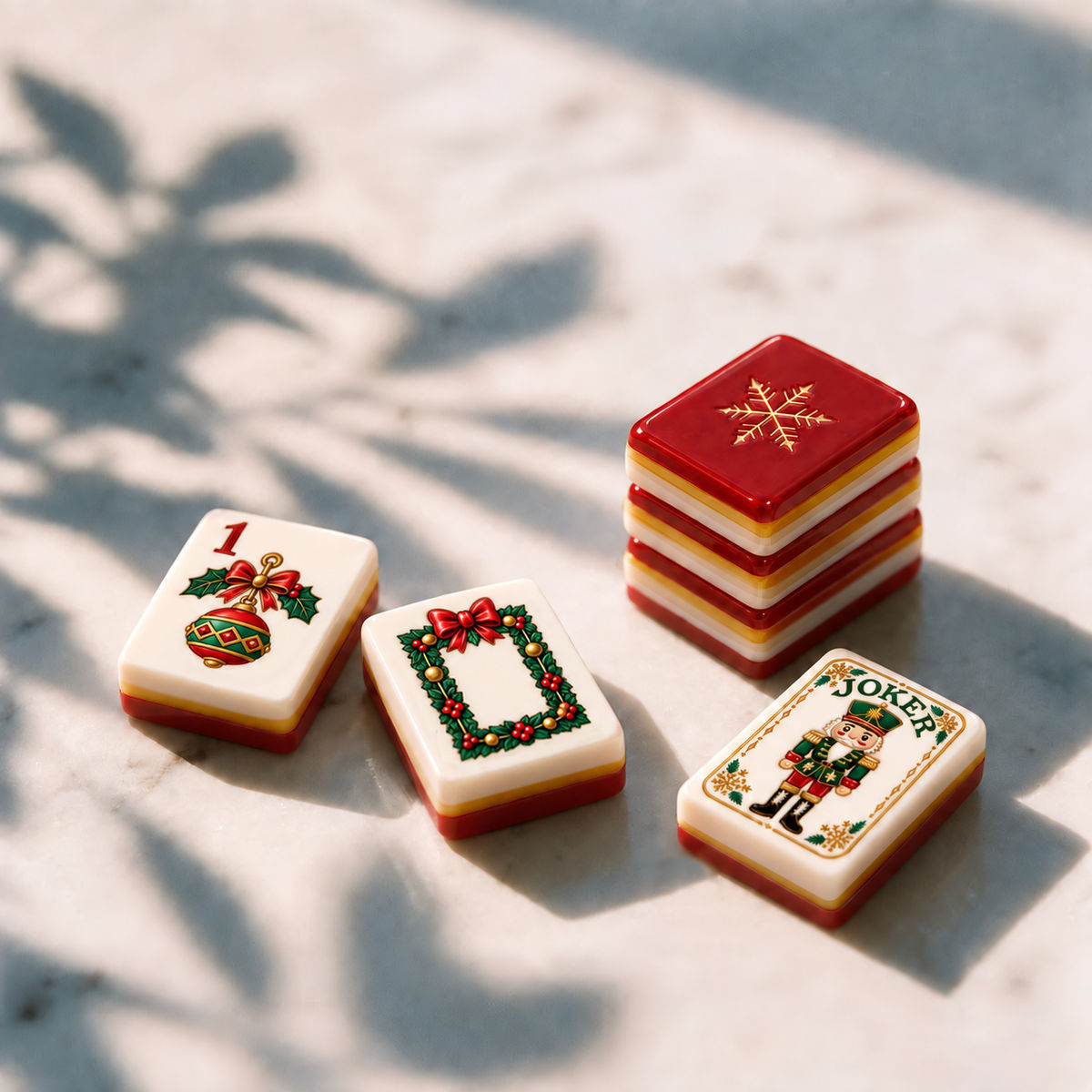
Cantonese mahjong uses 144 tiles (not 152) and four players. The tile set includes suits (Bamboo, Character, Dot), winds, dragons, and flowers—similar to American in name but different in quantity and function. Unlike American mahjong, Cantonese has no printed hand card; hands are memorized patterns or learned through play. Players build winning hands using sequences (chows: three consecutive numbers in one suit) and triplets (pungs: three identical tiles), plus jokers and special combinations. A typical game lasts 15–30 minutes per hand. Scoring depends on the winning pattern and method. You can find beginner classes through community centers, libraries, and local Hong Kong associations in most cities; many players start with a structured intro set from a best-selling mahjong collection designed for learning, then add personal preference for tiles or mats as they play regularly.
Cantonese mahjong is a fast, social variant played across Hong Kong, Southeast Asia, and diaspora communities worldwide. It differs sharply from American mahjong in tile count, hand-building, scoring, and the tiles themselves—but the pace and social joy are universal. If you've played American mahjong or watched Cantonese players around a table, you'll recognize the tiles but feel immediately disoriented by the flow. This guide walks you through the fundamentals so you can join a game or host one at home.
What is the actual tile set in Cantonese mahjong?
Cantonese mahjong uses 144 tiles: Bamboo (Bam), Character (Tiao/万), and Dot (Wan) suits, each numbered 1–9 in four copies (108 tiles); 16 winds (four of each direction); 12 dragons (four of each color); and eight flowers (four blooms, four seasons). Some sets add jokers or blank tiles beyond the 144-tile base, but the standard play set is exactly 144. This is eight tiles fewer than American mahjong's 152, and the tile roles differ: sequences (chows) are valid winning combinations, pungs (triplets) work the same way, and jokers function in both roles—unlike American, where chows are forbidden and jokers have strict rules. The 1 Bamboo often bears a bird image, much like the 1 Bam in American sets. All suits use the same Chinese characters or symbols on each tile; only the color background and number change.

How do you build and recognize a winning hand?
A Cantonese winning hand is called "hu" or "win." It consists of four melds (combinations) plus one pair, or special patterns like "all pungs" or "all chows." A meld is either a pung (three identical tiles: 5-5-5 Character) or a chow (three consecutive numbers in one suit: 4-5-6 Dot). The pair is always two identical tiles. Unlike American mahjong, which restricts hands to one printed pattern per year, Cantonese hands are defined by meld structure and are played year-round—a beginner can learn five to ten core patterns in the first few sessions. Common winning patterns include "pung + pung + pung + chow + pair" or "chow + chow + chow + chow + pair." Jokers replace one tile in any meld except the pair; using a joker in a meld reduces the score. Each combination is built in hand, then declared at the table. Speed is valued: a player who "sees" a win instantly and declares it fast earns respect. Memorizing these meld shapes, not memorizing card positions, is the learning curve.
What are the biggest rule differences from American mahjong?
American mahjong forbids chows and requires every hand to match the official National League card (refreshed yearly). Cantonese mahjong has the opposite: chows are fundamental, there is no card to consult, and hands are learned through repetition and play. American mahjong uses exposed melds and jokers strategically; Cantonese play is often more concealed until the win. American has a formal tile-passing ritual (the Charleston) before each hand; Cantonese often begins with a quick shuffle and draw. Scoring in American is based on pattern rarity and tile value; in Cantonese, scores rise based on how the hand was completed (self-drawn vs. called discard), the meld structure, and whether special conditions apply (like a hand of all pungs or all chows). Cantonese games are usually faster: a full session of eight games might take 90 minutes to two hours, whereas American rounds often run longer. The social atmosphere in Cantonese play is noisier, more rapid-fire, and celebrates quick thinking; American play is quieter and more strategic. Both are deeply social and addictive once learned.
How do you actually draw tiles and play a turn?
Setup begins when 144 tiles are shuffled face-down in a wall. Each of the four players draws 13 tiles into their hand (held or racked upright). The dealer (南 South, by convention) draws one additional tile, giving them 14. The player to the dealer's left (East) begins by drawing the top tile from the wall, then discarding one tile face-up into the center—this starts play. Each turn follows: draw one tile, discard one. Other players who want to win by calling the discard do so immediately; if no one calls, play moves to the next player. If you draw a winning tile, you declare the win and the hand scores. If the wall runs out with no winner, the hand is a draw (called "no one wins"). Play moves quickly: each person's turn lasts seconds. The sound of tiles clicking and discards landing is unmistakable. Beginners should watch a full hand before playing to absorb the rhythm—it feels chaotic at first, then natural.

What are the most common beginner mistakes to avoid?
Mistake 1: Memorizing one winning pattern. A beginner learns "pung-pung-pung-chow-pair" and expects to always win that way. Reality: you'll see dozens of hands in an hour, and rigid pattern-thinking slows you down. Solution: Learn five core patterns, then understand that chows and pungs are building blocks, not rigid templates. Flexibility wins.
Mistake 2: Holding onto a high tile (like a 9 or a dragon) too long. Beginners think rare tiles are valuable. In Cantonese, they're often dead weight if you can't complete a meld fast. Solution: Discard freely; chases are shorter, and a "safe" tile might block your win.
Mistake 3: Not watching other players' discards. You learn nothing if you daydream. Cantonese requires active table awareness: what tiles are gone? What patterns might your neighbor be building? Solution: Keep eyes on the center pile and watch what gets called.
Mistake 4: Calling a discard too eagerly. You see a tile you want and call it instantly. But if the meld doesn't fit your overall hand shape, you've just blocked a faster win or exposed your strategy to others. Solution: Pause two seconds. Does this tile move me closer to a win?
Mistake 5: Not learning the hand notation or call phrases. Cantonese play uses verbal calls ("吃"—chow, "碰"—pung, "和"—win). If you don't know the words, you'll miss your window or hold up play. Solution: Attend a live game or watch YouTube tutorials in your preferred language; hand signals are universal, but verbal calls matter for speed.
Comparison: Cantonese vs. American Mahjong at a Glance
Feature | Cantonese | American |
Tile count | 144 | 152 |
Chows (sequences) | Yes, core to play | Forbidden |
Hand source | Memorized patterns | National League card (yearly) |
Scoring method | Completion method + meld structure | Pattern rarity + tile value |
Time per hand | 10–20 minutes | 20–40 minutes |
Joker role | Replaces one tile; reduces score | Strategic placement; never in pairs |
Card consulted | None | Yes, required |
Social pace | Fast, loud, rapid-fire | Strategic, quieter |
Difficulty (beginner) | Medium: pattern fluency | Medium: card reading + strategy |
Best for | Speed-lovers, diaspora players | Pattern-hunters, rule-followers |
🀄 Shop best-selling mahjong sets →
Where to find beginner games and how to get started
Most cities with a significant Asian community host informal mahjong clubs at community centers, libraries, or cultural associations—search online for "Cantonese mahjong near me" or ask at a local Chinese restaurant. Many clubs have beginner nights or a player willing to teach. Alternatively, find games through meetup boards or Facebook groups. If you can't locate a live group, YouTube channels dedicated to Cantonese mahjong offer step-by-step tutorials; watching a full hand played slowly (slowed-down videos are common) demystifies the mechanics. Once you decide to play regularly at home, invest in a clear tile set and a mat to protect your table. A mahjong mat with grid markings helps beginners place discards neatly and keeps hands organized. Pairing a mat with racks and pushers makes sorting your 13 tiles quick and keeps them from sliding. Many beginners also grab a travel bag if they move between homes or host rotating games; it protects tiles during shuffling and keeps everything in one place.
What to check before you buy a set for Cantonese play
Tile clarity. Cantonese relies on reading tiles quickly by sight; if numbers or characters are faint, you'll stumble during play.
Weight and feel. Heavier tiles (especially acrylic or resin) feel better during shuffles and stack neatly. Lightweight plastic tiles are noisier and shift easily.
Spacing on the mat. If you buy a mat, ensure its grid is wide enough for 13 tiles in a row plus a discard zone—cramped layouts frustrate new players.
Joker quantity. Some beginners ask for extra jokers; standard Cantonese uses jokers from the set itself, not added blanks. Confirm your set's joker count matches your group's house rules.
Language preference. Some players want Chinese characters only; others prefer sets with character names in English or pinyin alongside characters. Know your preference before purchase.
🎁 See our most-loved mahjong sets & accessories →
The path to Cantonese mahjong fluency is steep but joyful. Your first hand will feel like organized chaos; by your tenth, you'll recognize patterns in milliseconds. The social bond forms instantly—there's something about sitting in silence, drawing and discarding, then erupting in celebration or laughter when someone wins that builds community fast. Start by watching, then by playing slowly, then by racing. The tiles are the same everywhere; the rhythm is universal. Join a game, stay humble, and let the speed grow organically.
✨ Find your Mahstead set — free US shipping →

FAQ
Can I play Cantonese mahjong with an American mahjong set?
No. American sets have 152 tiles, Cantonese sets have 144. The tile mix, distribution, and hand patterns are incompatible. You need a proper 144-tile Cantonese set to play by the rules.
How long does it take to become competent at Cantonese mahjong?
After attending 5–10 live games (10–15 hours), most beginners can recognize core patterns and play a hand without slowing the table. Fluency (reading tiles instantly, predicting opponents' hands) takes 30–50 hours. Mastery is endless; seasoned players still discover nuances after years.
Is Cantonese mahjong the same as Hong Kong mahjong?
Yes. "Cantonese" and "Hong Kong" mahjong refer to the same game, played in Guangdong Province and Hong Kong. Regional house rules exist (some groups allow ties, others use different scoring), but the core game and tile set are identical.
What's the minimum number of players for Cantonese mahjong?
Cantonese is designed for four players. Three-player variants exist but are less common and use a modified set; two-player Cantonese is very rare. If you have fewer than four, ask your local group if they play three-player variants or wait for a fourth.
Are jokers required to play Cantonese mahjong?
No. Some sets include jokers; others don't. Many beginner groups play without jokers to reduce confusion. Confirm your group's house rules before your first game—if they use jokers, the set should include them; if not, you can ignore any jokers included.
How does scoring work in Cantonese mahjong?
Scoring depends on how you won (self-drawn or called discard), the hand's meld structure (all chows, all pungs, mixed), and special conditions (like winning on the last tile of the wall). Unlike American mahjong, there's no printed scoring card; scores are memorized or announced by the winner. House rules vary by region, so always ask before your first game.


View More
View More
View More
