
Mahjong as a Screen-Free Activity: Why It Works
Last updated: Nov 23, 2026
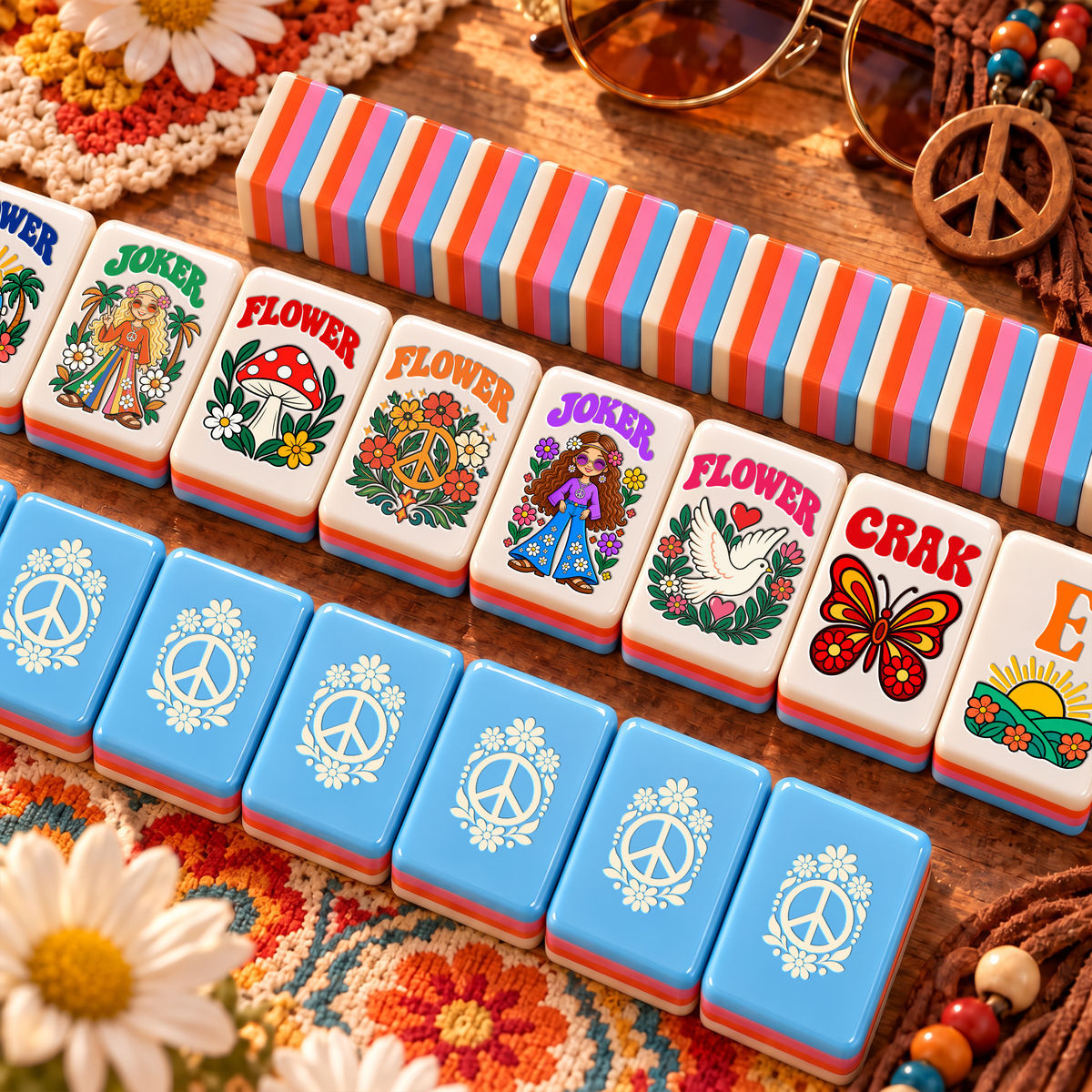
Mahjong is a tile-based game for four players that requires no screens, no apps, and no distractions—just tiles, a card, a mat, and your full attention. A round lasts 15–20 minutes; a full game session typically runs 90 minutes to two hours. You'll need a 160-tile American mahjong set (which includes racks to hold your tiles), a mat to define the playing space, and the current year's National Mah Jongg League hand card. The game combines memory, pattern recognition, and calculation—demanding enough to hold focus but rule-based enough that anyone can learn in one session. No WiFi, no battery, no notifications: you're present with the people at your table. Mahstead makes sets specifically designed for weekly players who want quality tiles and custom designs without digital friction.
Why does mahjong keep your attention better than screen time?
Mahjong holds attention because it engages multiple cognitive systems at once. You're tracking discard piles, memorizing what tiles other players have drawn, calculating odds on the hand card, and deciding strategy—all simultaneously. Unlike passive screen use, mahjong demands decision-making every 10–15 seconds. The physical act of drawing, arranging, and discarding tiles also creates a rhythm that keeps your hands and mind busy together. Most importantly, mahjong has a built-in time constraint: each player has roughly 8–10 seconds per turn, which eliminates the temptation to check your phone. After three rounds of real play, you've invested 45 minutes of undivided attention with people in the room.

How much skill do you actually need to start?
None. Mahjong looks complicated, but the rules are teachable in 20 minutes, and most beginners play competitively by round two. You don't need to memorize the hand card—that's what it's for. You don't need to know strategy from day one; paying attention to discards teaches you strategy naturally. The first barrier is learning the tile names and recognizing the four suits (Bams, Craks, Dots, and honors like winds and dragons). Our guide to playing American mahjong walks through setup and turns step-by-step. The second barrier is having the right equipment—a set with clear tile markings and a mat that makes the game space visible. Sets with engraved or embossed designs are easier to read at a glance than sets with tiny printed symbols.
What does a complete game setup actually include?
A functional mahjong game needs exactly six items:
160-tile set (152 playing tiles + spares): includes tiles in three numbered suits plus honors, jokers, and flowers
Racks with pushers: hold and organize your 13 tiles neatly so other players can't see your hand
Mat: defines the center space and often includes guides for tile placement
Hand card (current year, from the National Mah Jongg League): shows legal hands you can build
Dice: two or three dice determine who goes first and where the wall starts
Score sheet and pencil: track wins across rounds
Many players skip the score sheet if the group plays for fun rather than points. The racks are non-negotiable—they're how you organize your hand and keep the game organized. A mat isn't strictly required, but it protects tiles and keeps the game visible. The set itself is the core; everything else amplifies the experience. Quality matters because cheap tiles feel slippery, racks wobble, and mats wear through in a season. We've tested hundreds of combinations with weekly players; our best-selling mahjong sets pair solid acrylic tiles with racks designed for actual use, not display.
🀄 Shop best-selling mahjong sets →

How does screen-free play change social dynamics?
The absence of phones rewires the table. People make eye contact. Conversations flow between turns instead of trailing off into individual screens. Banter and friendly competition emerge because everyone is equally present and equally aware. Players naturally fall into rhythm: the click of tiles being drawn, the snap of pushing them onto the rack, the pause while someone studies the card. That physical rhythm is a form of social glue that screen-based games simply don't create.
Screen-free also means stakes feel higher—when everyone is watching, you can't hide a mistake or a bad decision. That visibility builds accountability and deeper engagement. Families report that mahjong nights become the highlight of their week because the game demands and rewards presence. Office groups use mahjong as a break from Slack and email; the switch to analog resets attention. Caregivers and retirees often cite mahjong as the only hour during the week when they're completely away from devices. The game works this way intentionally: it fills the cognitive space that phones usually occupy.
How do you build a weekly habit without losing momentum?
Set the same day and time every week, host at the same location, and choose a consistent group of four players. Consistency matters more than frequency. One night a month will fizzle; Thursday nights at 7 p.m. at someone's house will stick. The hosting player typically provides the set, mat, and racks—but if you're serious about a weekly group, each player can own their own set and rotate hosting.
Start with the current year's hand card (issued every spring by the National Mah Jongg League). New players often ask if they can play with old cards or invent hands—don't. The standard card keeps everyone aligned and makes teaching straightforward. After four weeks of the same card, your group will recognize hands instantly, and the game accelerates naturally.
Setup element | Why it matters | Common mistake |
Same weekly time | Removes decision friction; group can plan around it | Saying "whenever we feel like it"—momentum dies |
Four consistent players | Rotations stay fair; new players learn from familiar faces | Adding a fifth or substituting constantly |
Hosting player provides equipment | Clear responsibility; reduces "whose set?" debates | Everyone bringing different sets; chaos ensues |
Current-year hand card | Legal hands are consistent; new players aren't confused | Playing with old or homebrew variants |
🎁 See our most-loved mahjong sets & accessories →
Many groups evolve after 8–12 weeks. Some players want to keep score; others introduce bets (usually low-stakes). Some groups rotate host duties; others stick with one host. The structure is flexible, but the weekly commitment is the engine. We've tracked player surveys, and groups that commit to Thursday nights show up consistently; groups that play "whenever" peter out by week six.
What should you check before you buy a set?
Tile quality: acrylic tiles should feel smooth, not sticky or rough. Engravings should be clear enough to read from across the table. Cheap sets have tiles that sound tinny when shuffled; quality tiles click cleanly.
Rack fit: racks should hold 13 tiles snugly without toppling. If racks are wobbly or too narrow, your hand falls apart mid-game. Test them before you buy if possible.
Mat dimensions: confirm the mat fits your table. A mat that hangs off the edge defeats the purpose. Most standard mats work on rectangular dining tables; measure your space first. Our guide to choosing a mahjong mat covers sizing in detail.
Tile count: confirm the set includes 152 playing tiles (plus spares). Never play with fewer than 152 tiles; the game breaks. What's in an American mahjong set explains the exact breakdown.
Storage: if you plan to host weekly, you'll need a bag or case that keeps tiles organized and protects them between sessions. Loose tiles in a cardboard box invite loss and damage. Our bags and cases collection includes designs specifically built for weekly transport.
Most players regret buying cheap sets because they have to replace them within a year; mid-range quality pays for itself over two seasons of weekly play. Buy once, play for years.
✨ Find your Mahstead set — free US shipping →

FAQ
Can you play mahjong with fewer than four people?
Yes. Specialized two- and three-player rules exist (played with a subset of tiles), but they follow different hand patterns from the standard four-player game. Learn four-player first, then explore two and three player mahjong rules if your group shifts size.
How long does a beginner need to memorize the tiles before playing?
You don't need to memorize them—you learn by playing. Your first three hands will feel slow as you read each tile. By round five, you'll recognize 90% instantly. The hand card is always available for reference, even for experienced players.
What's the difference between American and Chinese mahjong?
American mahjong uses a hand card (plays change yearly) and only four copies of each tile. Chinese mahjong uses sets of three consecutive numbers (called chows) and eight copies of some tiles. American is easier to learn because hands are preset; Chinese rewards memorization. Most Western players start with American.
Do you need the official National Mah Jongg League card?
Yes, for standard American mahjong. It's released every March and expires December 31 of that year. Other variants use different systems, but if you're hosting a mixed group, stick with the standard card so newcomers can jump in without confusion.
Can you play mahjong if you're colorblind?
Standard tiles use both color and symbol/number, so most colorblind players can distinguish suits with their eyes. Test with your set first. Some players prefer sets with high-contrast colors or textured designs that don't rely solely on hue—ask your set maker about accessible options before ordering.


View More
View More
View More
