
How Long Does a Game of Wright-Patterson Mahjong Take?
Last updated: Nov 23, 2026
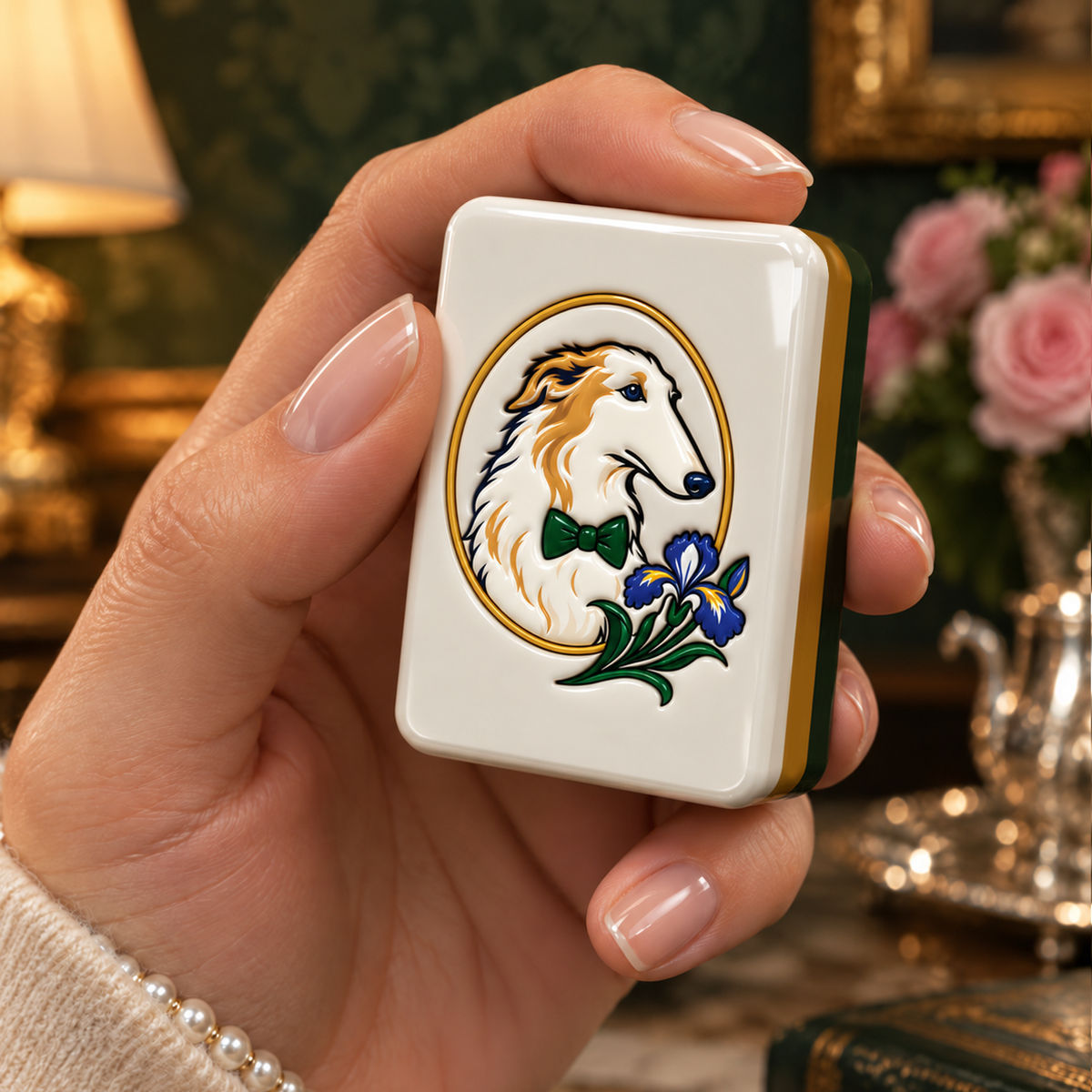
Wright-Patterson mahjong, played primarily at Wright-Patterson Air Force Base in Ohio, follows a modified American ruleset with tighter timing and simplified hand patterns. A single hand lasts 15–25 minutes on average; a full game of four hands (one wind rotation) takes 1.5–2.5 hours. The Charleston tile-passing phase takes 3–5 minutes. Beginners or players unfamiliar with the simplified pattern card may add 10–15 minutes per hand. Unlike standard American mahjong, Wright-Patterson uses a condensed hand reference that emphasizes speed and clarity. Scoring resolves quickly because fewer exotic combinations are permitted. If you play Wright-Patterson regularly, you'll notice that consistency beats speed; rushed calls and sloppy tile tracking cost far more time than careful play. Mahstead's best-selling American mahjong sets work perfectly for Wright-Patterson games once you confirm your group's exact tile count and pattern card.
What makes Wright-Patterson timing different from regular American mahjong?
Wright-Patterson mahjong strips away the complexity of the National Mah Jongg League card. Instead of 40+ hand patterns per section, players work from a streamlined card with roughly 15–20 patterns total, organized by suit and pung/kong combinations. This reduction cuts decision time dramatically. Players spend less time cross-checking possibilities and more time drawing, discarding, and calling. Hand resolution—the moment someone melds and declares—happens faster because fewer verification disputes arise.
The trade-off: less variety means games feel repetitive if you play weekly, but new players breeze through because the learning curve flattens instantly. A typical hand that might take 22 minutes in a casual American game runs 16–18 minutes in Wright-Patterson. Over four hands, that's a 20–30 minute time savings.

How does the Charleston affect total game duration?
The Charleston is the tile-passing ceremony before the first hand begins. In Wright-Patterson, the Charleston follows American rules: three passes, each involving three tiles from each player. A practiced table completes it in 2–3 minutes; a table of newer or distracted players takes 5–7 minutes.
Charleston doesn't repeat between hands—only before the first hand of the game. Once play starts, each hand's duration depends solely on tile flow and hand availability. If no one can form a winning hand within 8–10 minutes, the hand is typically declared dead and the wind rotates. This "dead hand" rule is common in Wright-Patterson to keep games on schedule.
What's a realistic timeline for one complete hand?
Phase breakdown (one hand):
First draw and discard: 1–2 minutes
Active play (drawing, discarding, tracking melds): 10–14 minutes
Call and verification: 1–2 minutes
Scoring (if hand wins) or reset: 2–3 minutes
Total: 14–21 minutes per hand, assuming no long pauses.
If a hand goes "dead" (no one can complete within 8–10 minutes), reset takes 1 minute and the wind passes. Dead hands are faster than completed hands because scoring is skipped. A table that averages one dead hand per game (common among beginners) will finish four hands in 1 hour 45 minutes instead of 2.5 hours.
Scenario | Avg. time per hand | 4-hand game total |
Mixed experience, quick pace | 17 min | 1 h 45 min |
Beginners or new card | 22 min | 2 h 15 min |
One dead hand per game | 16 min (avg.) | 1 h 40 min |
Very experienced players | 14 min | 1 h 10 min |
How do player experience and familiarity speed things up?
A table of four regular Wright-Patterson players who know the card by heart finishes a hand in 12–15 minutes. The same four after four months away stretches it to 18–21 minutes as they relearn pattern sequences and tile values. New players often pause to verify their hand against the card, adding 2–4 minutes per hand until they've played 20+ games.
One concrete advantage: if your group plays the same card every session (many Wright-Patterson tables do), you'll build muscle memory. After three or four months of weekly play, you'll recognize viable patterns instantly—no card consultation needed. This cuts verification time almost to zero and keeps hands flowing.
To speed up learning, print the card or keep it laminated and visible. Better yet, if you host, invest in quality mahjong racks with pushers so players can organize their tiles clearly. Organized racks reduce misreads and false calls.
🀄 Shop best-selling mahjong sets →

What common delays should you avoid?
Tile miscount or shuffle error: If the wall isn't built correctly, the hand halts for a recount. Build the wall slowly and verify the count every time until it becomes automatic. A 30-second recount beats restarting the hand.
Ambiguous discards: If a discard tile sits unclear (partly in the discard row, partly on the rack), the next player may call incorrectly or hesitate. Keep discards neat and clearly visible. Use a mahjong mat with printed discard zones to enforce discipline.
Unclarity about exposures: If a player melds a pung but doesn't announce it clearly, the next player may discard into a trap. Call "pung" or "kong" aloud every time. No silent melds.
Scoring disputes: Keep a scorepad visible and update it after every hand. A 2-minute scoring argument isn't worth the delay. Assign one player as scorekeeper if arguments recur.
Distracted play: Phone notifications, side conversations, and food breaks add 10–15 minutes to a four-hand game. Set expectations before play: phones away, one 5-minute break after hand two.
Together, these habits can cut 20–30 minutes off total game time without sacrificing accuracy or fun.
🎁 See our most-loved mahjong sets & accessories →
How does Wright-Patterson compare to other American mahjong timing?
Standard American mahjong (using the current National Mah Jongg League card) typically runs 2–3 hours for four hands because the card contains 40+ patterns per section and verification takes longer. Wright-Patterson's simplified card cuts this to 1.5–2.5 hours.
Riichi mahjong (Japanese variant) feels faster because players can call and meld mid-hand, so active play is compressed into 10–12 minutes per hand. However, Riichi uses different scoring and hand-building logic, so the comparison isn't one-to-one.
Two- or three-player mahjong (American rules) runs 45–75 minutes per game because fewer players mean faster rotations and fewer decision branches. Wright-Patterson is designed for four players, so timing assumes that setup.
If your group plays multiple variants, expect 5–10 minute ramp-up time when switching from one ruleset to another, as players recalibrate to the new card and timing rhythms.
What to check before you buy for Wright-Patterson play
Tile count: Wright-Patterson uses standard American mahjong sets (152 playing tiles + 8 jokers). A 160-tile Mahstead set includes spare tiles—perfect for long sessions or damage replacement.
Tile visibility: Ensure tiles are large enough to read quickly. Worn or tiny tiles slow play. Mahstead's acrylic engraved sets stay crisp after years of shuffling.
Rack clarity: Racks should hold 16–18 tiles comfortably so you can see your full hand at a glance. Poor racks force double-takes that add seconds per turn.
Mat size: A mat should accommodate the wall build, discard area, and all four hands. Standard mats work; oversized mats reduce crowding and speed play.
✨ Find your Mahstead set — free US shipping →

FAQ
Is Wright-Patterson mahjong played outside the base in Ohio?
Yes, but rarely. A handful of clubs and military-adjacent groups in the Midwest and mid-Atlantic play it. Most civilian American mahjong uses the National Mah Jongg League card. Ask your local mahjong club or library to confirm which ruleset they follow.
Can I use a standard American mahjong set for Wright-Patterson?
Absolutely. Wright-Patterson uses the same tiles as American mahjong (152 tiles + 8 jokers). Only the hand patterns differ. Any quality acrylic or bone set works.
How long does a hand take if everyone plays slowly?
25–30 minutes. This usually signals the need for a brief rules refresher or an agreement to move faster. Most groups set a 20-minute soft limit; hands running longer are declared dead.
Do jokers affect game speed in Wright-Patterson?
Slightly. Jokers can substitute in melds, so players spend a few extra seconds deciding where to place them. This adds less than 1 minute per hand on average.
What's the best way to teach Wright-Patterson timing to new players?
Play three practice hands before the "real" game, timing each hand aloud. After three rounds, most players internalize the pace. Announce the time at the start of each hand so players feel the rhythm.
Should we use a timer for Wright-Patterson games?
No timers are standard, but some groups use a 20-minute hand timer as a soft guideline. This works only if all players agree in advance. Timers add social pressure and may cause rushed calls.


View More
View More
View More
