
Mahjong Advanced Strategy Mistakes to Avoid
Last updated: Nov 23, 2026
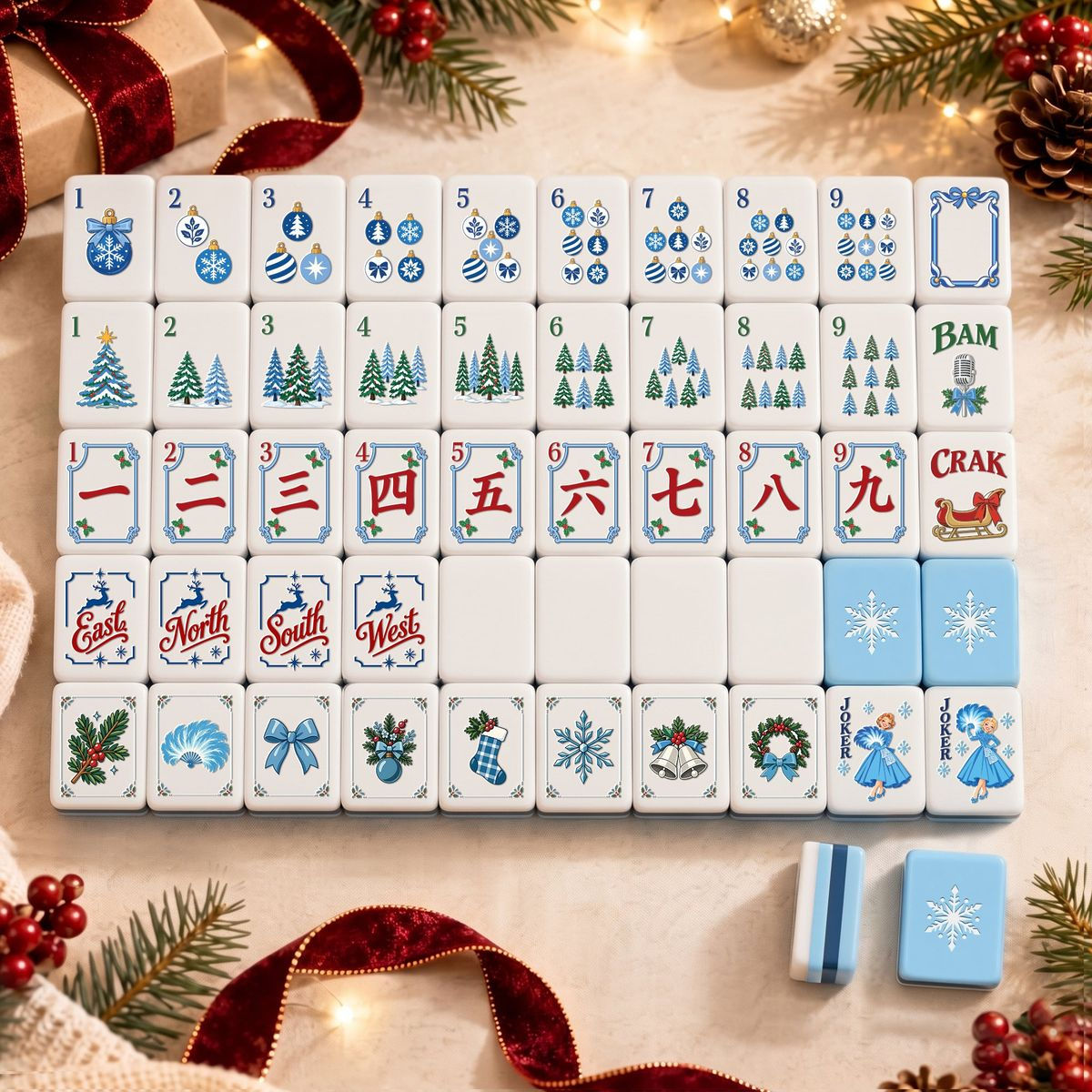
Advanced mahjong mistakes fall into three categories: reading and sequencing (forcing hands that aren't truly available on the card), tile stewardship (exposing tiles that telegraph your strategy or blocking your outs), and pacing (discarding too fast or holding dead weight too long). The most expensive mistake is playing off-season hands—hands that appear on last year's card or misread sections—which costs you the entire hand plus reshuffling penalties. Experienced players also leak information through predictable exposure patterns, hold "just in case" tiles that choke their hand, and fail to track which jokers and blanks are still in play. Success requires constant cross-checking against the current year's card, ruthless tile economy, and reading the table's discard flow to spot when your strategy is transparent. We see these patterns every week at the table, and fixing just two of them typically improves win rate by 15–20%.
Are you checking the card every single discard?
The most common advanced mistake is reading the card once during the Charleston, then playing from memory. The National Mah Jongg League card has eight sections per hand type, and sections shift year to year—a pung-based 2020 hand is not the same as today's 2026 version. Experienced players who stop cross-checking the card assume they know all three winning paths for a hand when only one or two remain legal. Before exposing any tiles, lay your finger on the card section. Does the sequence of pungs, kongs, or quints you're building actually exist there? If you're one exposure away from calling, check the card again—not once, but once per decision, even if you've built that hand five times this month.
The second micro-mistake: holding a hand that looks like three different winning paths but only one is actually on the card for this season. You'll spend four turns holding dead tiles, block someone else's call, and then realize you were chasing a phantom. How to read the mahjong card walks you through all eight sections in order; many advanced players reread this once per quarter just to stay sharp.

Why does your exposure pattern scream your hand?
Every time you expose a pung, you're broadcasting your strategy to three other players. Advanced players often fall into predictable exposure sequences: first the high honor tiles (winds or dragons), then the number suits in order (Bams, then Craks, then Dots), because that's how their hand is organized internally. Skilled opponents immediately narrow your remaining possibilities. If you expose Red-Green-White in that order, they know you're likely chasing a pung-heavy hand or a specific hand type from the card.
Randomize your exposure timing. If you have four possible paths to a hand, expose the least obvious tiles first, even if it's illogical to you. Wait longer before exposing high honors; expose number suit tiles out of sequence. This forces opponents to guess, not calculate. One warning: never expose tiles in a pattern that helps you build a false hand. This is technically legal but burns table trust and marks you as deliberately misleading—a reputation that spreads fast in small communities.
The second layer of this mistake is exposing tiles that block someone else's call. If three other players are building hands and you expose, say, a White that they each needed, you've just cost yourself a potential payment (if someone else's hand was faster). Advanced players track what's being held back and exposed, then time their exposures to avoid stepping on active hands. It's part table awareness, part timing.
Are you holding tiles "just in case"?
This is the death grip for advanced players. You're two tiles away from calling a hand, but you also have three tiles that could work toward a second hand if the draw goes your way. So you hold all five. Now you're stuck: the first hand doesn't develop, the second hand requires a tile that's already exposed somewhere, and you discard randomly while the player next to you calls.
Commit to one hand per draw. The moment you have a clear path to a call on the card, drop all tiles that don't support that path. Yes, you'll sacrifice flexibility. But you'll call faster, block opponents' draws earlier, and stop leaking your indecision to the table. Advanced players often hold one "break glass in emergency" tile—a joker or blank that could bridge two paths—but only if you still have realistic draws left. Once you're past three draws, holding speculative tiles is usually a net loss.
Here's the calculation: if you're holding four tiles for one hand and two tiles for a second hand, but you only draw five more tiles total before someone calls, your odds of completing either hand drop by half. Drop the second-hand tiles immediately.
What happens when you discard on rhythm instead of rhythm plus thinking?
Fast players are respected, but rushed players are punished. The mistake: discarding every turn at the same pace (two seconds, four seconds, whatever your habit). Observant opponents use your rhythm as a tell. Fast discards often mean you're shedding tiles you never wanted anyway; slow discards mean you're blocking something valuable. After two rounds, they'll read your timing pattern and shift their own strategy to exploit it.
Vary your discard pause without telegraphing hesitation. Sometimes take eight seconds to shed a tile you don't care about; sometimes take two seconds before a critical keep. This doesn't mean sitting frozen—that reads as weakness, not thought. It means making your timing noise, not a signal. The best players randomize their pace so that by round three, opponents have no idea whether a fast discard or slow one means anything.
The second layer: don't discard too fast in the early game when you're building your hand structure. You need time to recheck the card, track which tiles are dead, and plan your sequence. Rushing here costs you precision. But in the endgame—when someone's one or two tiles away from calling—accelerate slightly to increase pressure and reduce their time to react.
How many jokers and blanks do you actually know are left?
Most advanced players track big tiles (high honors, dragons, 1s and 9s) because they're rare. But they forget to count jokers and blanks. Here's why it matters: if six jokers are visible on the table (in exposures or melds) and the set contains eight, only two jokers remain in play—one is either in someone's hand or the wall. This changes your risk calculation dramatically. If you need one joker to complete a hand and only one remains, someone else may already hold it. Your hand just became a 20% chance instead of 40%.
Keep a small count sheet or mental tally: jokers visible, blanks visible, tiles drawn per player. Standard American sets contain eight jokers total. If three are exposed in other players' melds and one is in the wall, you know the remaining four are distributed among four players—roughly one per person. If you need a specific number of jokers to call and the math says they're likely held by your opponent, fold the hand and pivot.
The mistake many advanced players make: holding a hand that requires two jokers late in the game, when only one joker remains in play and the wall is half empty. Let that hand go. Pivot to a hand that uses the tiles already visible.
🀄 Shop best-selling mahjong sets →
What should you check before you buy tiles for serious play?
If you're playing advanced mahjong weekly, your tile set matters. We've seen players mistake blank tiles for jokers mid-hand because the set was unclear or poorly made, or struggle with tiles that stick together in humid weather. Before you play advanced, make sure your set has:
Clear tile faces (no ambiguity between similar tiles: 1 Bam vs. other characters, Red vs. Green dragons, Soap vs. blank).
Consistent weight and size (so tiles move smoothly in your rack and don't catch mid-push).
Good contrast between tile numbers and background (so you can see your hand at a glance without lifting each tile).
Separate jokers and blanks (visually distinct so no mistakes under pressure).
Our best-selling collection includes sets specifically designed for weekly players—tiles with large, bright engravings and consistent acrylic weight so you're not fighting your equipment while you're fighting the table.

Common Advanced Mistakes Comparison Table
Mistake | Cost | Red flag | Fix |
Off-season hand play | Entire hand + reshuffle | Playing a hand you haven't rechecked this season | Cross-check card per exposure |
Predictable exposure order | Telegraphs hand type | Exposing winds, then Craks, then Dots every time | Randomize exposure sequence |
"Just in case" tile hoarding | Slower calls, blocked outs | Holding six tiles for two possible hands | Commit to one path; drop speculative tiles |
Discarding on rhythm alone | Opponents read your tells | Discarding every tile in two seconds | Vary pace without appearing indecisive |
Joker/blank miscounting | Chasing phantom hands | Playing hands that need jokers you can't find | Track all eight jokers; count visibles |
Why Advanced Players Still Lose to These Five
We host a mahjong night every week, and we see strong players—people who know the card cold and can spot a hand type in two seconds—lose to basics. The pattern: they skip the card check because they're confident, expose tiles in a way that reads like an open book, hold too many tiles at once, discard at a metronome pace, and never ask "how many jokers are actually left?"
These aren't complex mistakes. They're discipline failures. A player who masters reading, exposure timing, and joker tracking will beat a player who knows 50 more hands by heart but skips the discipline. The good news: these are all fixable today.
🎁 See our most-loved mahjong sets & accessories →
Where do advanced players go wrong with the Charleston?
The Charleston is your only chance to shed dead weight before play starts, but many advanced players treat it like a speed round. They pass tiles fast without thinking about what they're giving away and what they hope to receive. This is a mistake: the Charleston is information gathering. You learn what the player to your left doesn't want (watch what they pass back), what the player opposite is hunting for (they'll keep reaching for a certain tile type), and what patterns the table is trending toward (if three players pass back Red dragons, they're not building dragon-heavy hands).
Advanced players should use the Charleston to:
Shed high-risk tiles (honors you don't need, number tiles that don't support any hand type on your wall).
Collect flexible tiles (blanks and jokers, since they fit any hand).
Read the table's energy (if someone passes back every 5 Dot you offer, they're avoiding that suit entirely).
One tactical note: on the final pass (the "West" pass, if you know the formal order), you're seeing what one player didn't want. If they're passing back a full pung of 2 Craks, they're signaling they're not building a Crak-heavy hand. Advanced players use this to adjust their own strategy in real time.
✨ Find your Mahstead set — free US shipping →
A step-by-step checklist to avoid these five mistakes this week
Before play:
[ ] Pull the current year's National Mah Jongg League card and laminate it or keep it at the table.
[ ] Verify your tile set has clear, distinct jokers and blanks (not ambiguous).
[ ] Do a quick mental reset: you're playing with fresh strategy, not autopilot.
During the Charleston:
[ ] Shed one high-risk tile; keep two flexible tiles (jokers or blanks).
[ ] Watch what others pass back—note which suit or tile type is being avoided.
During play (every turn):
[ ] Before exposing, lay your finger on the card and confirm the hand path is there.
[ ] Randomize your exposure order (don't always expose honors first).
[ ] Count jokers visible on the table; compare against eight total.
[ ] Discard intentionally—vary your pace; never discard on autopilot.
[ ] Drop any tile that doesn't support your current hand path (the one on the card).
If you're more than four rounds in:
[ ] Reassess your hand: is the path still realistic, or are the jokers you need already spoken for?
[ ] If your path is blocked, fold and discard aggressively to speed up the game.
What Mahstead sets help you focus on strategy instead of equipment?
When you're tracking five different strategic layers (card verification, exposure timing, joker counts, pacing, and hand commitment), the last thing you need is tiles that stick, blur, or confuse you mid-hand. Our engraved American mahjong sets are designed so the tiles move smoothly, the engravings are bright and instantly readable, and you never waste a second wondering if that's a blank or a joker. A clean tile set removes friction, so your brain can focus entirely on the advanced layer: reading your opponents.
We also recommend mahjong racks with pushers for serious players—they let you organize your hand faster and shift tiles without hesitation, which helps you execute the "commit to one path" strategy faster.

FAQ
What's the single biggest advanced mistake that costs games?
Playing a hand off the current year's card. Many advanced players memorize hands from past seasons and assume they're still legal. Always cross-check the card before exposing. This alone catches 30–40% of advanced errors.
How do I know if I'm holding too many speculative tiles?
If you're more than three turns into a hand and you're still holding more than one tile that doesn't directly support your current winning path (the one on the card), you're speculating. Drop those tiles immediately and discard them next chance you get.
Should I expose tiles slowly to avoid telegraphing my hand?
No. Expose on a normal timeline, but randomize what you expose first, not when. Fast exposure is fine; predictable exposure order is the leak. Vary which suit or honor you expose first, even if it feels illogical to you.
Why do joker counts matter if I'm building a pung-only hand?
Jokers can substitute for any tile in a pung, kong, or quint. If you need three specific number tiles and only one joker is left in play, someone else likely holds it—your hand just became a bluff. Track jokers to know when your hand is viable or when you should fold.
Can I use the Charleston to signal my hand type to my partner?
No. American mahjong is not a partnership game, and signaling during the Charleston is cheating. Every player competes individually. Use the Charleston only to gather information about what others don't want and to shed your own dead weight.
What's the difference between a "rhythm tell" and just discarding naturally?
A rhythm tell is when your discard pace always matches your confidence level (fast = weak, slow = strong). A natural pace varies because you're genuinely thinking through different decisions. Mix it up: sometimes think slowly on easy discards, sometimes fast on hard ones. This keeps opponents guessing.
If I'm two tiles away from calling, should I ever hold back?
Only if you have a realistic chance of drawing both tiles and the wall still has good draws left. Once the wall is half empty, commit fully to discarding aggressively. Holding back slows your call and gives opponents time to block or call first.


View More
View More
View More
